
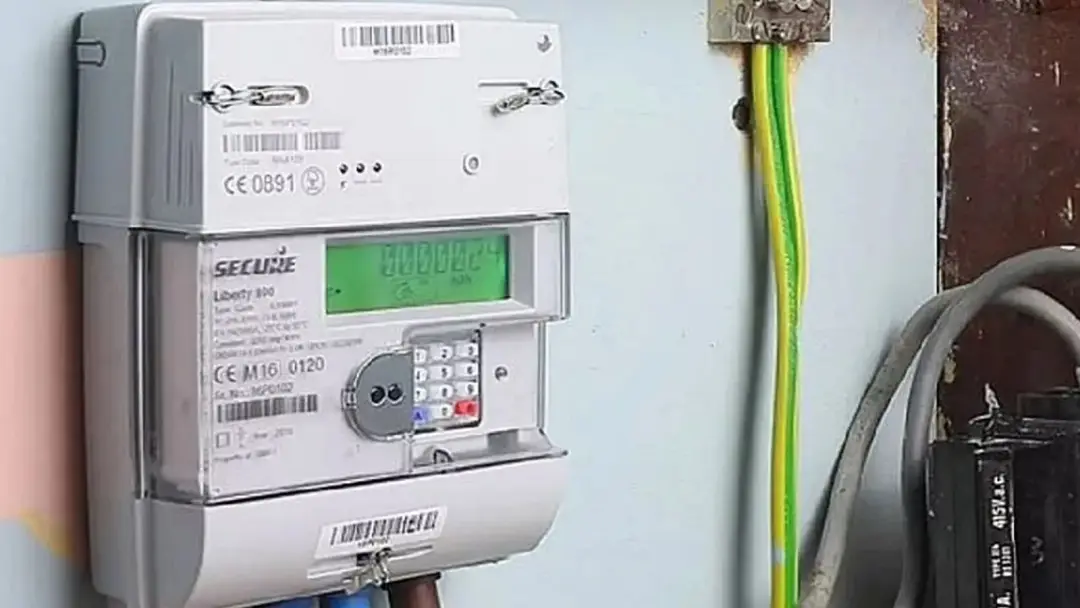
Domestic chips mandatory in smart meters by mid-2028: Power Secretary
The government plans to mandate the use of domestically designed chips in smart meters by mid-2028 to address cybersecurity issues, Power Secretary Pankaj Agarwal said at the 2nd Indian Power Sector Conference organised by FICCI. A smart meter chip currently costs between $8 and $10 apiece. Under the Revamped Distribution Sector Scheme, 20.33 crore smart meters have been sanctioned and 5.73 crore installed so far. Overall, 7.24 crore meters have been installed nationwide under various schemes.
Source
Indian Express — India · read the original report ↗
Desk check · compared with the source
What the desk checked (5)
- Government plans to mandate domestically designed chips in smart meters by mid-2028 for cybersecurity reasons. — Directly attributed to Power Secretary Pankaj Agarwal, speaking at the 2nd Indian Power Sector Conference organised by FICCI.
- A smart meter chip currently costs between $8 and $10 apiece. — Figure appears in source, attributed to Agarwal; no supporting breakdown given.
- 20.33 crore smart meters sanctioned under RDSS; 5.73 crore installed under the scheme and 7.24 crore overall. — Attributed in source to government data; internally consistent with component figures of 19.79 crore consumers, 52.53 lakh DTs and 2.05 lakh feeders.
- Draft National Electricity Policy note sent to the Union Cabinet for inter-ministerial consultation, to replace the 2005 policy. — Attributed to Agarwal; source notes draft was issued in January this year.
- AI data centres will add 26.3 GW of load by 2031-32. — Source attributes this to information given by the Power Ministry to Parliament in July.
Analysts’ view opinion
This is an attempt to turn public procurement into industrial policy. With 20.33 crore smart meters sanctioned and only 7.24 crore installed so far, the remaining pipeline is large enough to make the Secretary's argument — that no separate incentive is needed because government buying guarantees a market — economically plausible. The real question is whether domestic chips can match imported ones on cost and supply reliability by the mid-2028 deadline.
- A chip currently costs $8–10 apiece, and the story notes chip design is a significant share of meter manufacturing cost, so local design could lower input costs.
- Only 7.24 crore of the 20.33 crore sanctioned meters are installed, which is the basis for the claim of an assured market without subsidy.
- If prices do not fall, the extra cost ultimately lands on discoms, RDSS funding and indirectly on consumer tariffs.
- A roughly three-year runway favours domestic chip designers, testers and fabs, but meter makers dependent on imported chips face supply-chain switching costs.
- The cybersecurity benefit is hard to price, yet the economic logic is that the cost of a grid disruption can far exceed any chip price premium.
What to watch — Watch when domestic chips clear validation and enter commercial production, and how meter prices move in upcoming tenders.
The story does not establish the actual cost or capacity of domestic chips, nor what happens if the timeline slips — this remains a stated plan, not a notified mandate.
Deep dive
Research brief · 8 facts · 7 dates · exam-readyThe brief
Context
India is rolling out prepaid smart electricity meters at scale under the Revamped Distribution Sector Scheme (RDSS) to cut distribution utility losses and improve billing. The chips inside these meters are currently imported, raising cybersecurity concerns for the power grid. Speaking at the 2nd Indian Power Sector Conference organised by FICCI, Power Secretary Pankaj Agarwal said the government intends to mandate "design in India" — and possibly "make in India" — chips in smart meters by mid-2028. He also said the draft National Electricity Policy, which will replace the 2005 policy, has gone to the Union Cabinet for inter-ministerial consultation.
Key facts
- Power Secretary Pankaj Agarwal said the government plans to mandate domestically designed chips in smart meters by mid-2028 to address cybersecurity-related issues.
- A smart meter chip currently costs between $8 and $10 apiece, according to Agarwal.
- Under RDSS, smart metering works for 19.79 crore consumers, 52.53 lakh Distribution Transformers and 2.05 lakh feeders — totalling 20.33 crore smart meters — have been sanctioned.
- 5.73 crore smart meters have been installed under RDSS so far; 7.24 crore have been installed nationwide under various schemes including state plans.
- Agarwal said a Make in India requirement mandating design-in-India chips, including fabricated-in-India chips, for smart meters has already been issued with the same timeline.
- No separate incentive is planned for domestically designed chips, as government procurement will provide an assured market, Agarwal said.
- The draft National Electricity Policy has been sent to the Union Cabinet for inter-ministerial consultation; it will replace the NEP notified in 2005.
- The Power Ministry told Parliament in July that AI data centres will add 26.3 GW of load by 2031-32, to be served primarily by renewable capacity.
Timeline
- 2005The existing National Electricity Policy is notified; it remains in force for about two decades.
- January this yearMinistry of Power issues the draft National Electricity Policy (NEP).
- JulyA data breach exposes information linked to the Kudankulam Nuclear Power Plant (KKNP).
- JulyCentral Electricity Authority notifies cybersecurity regulations to strengthen resilience of power systems against cyber threats.
- JulyPower Ministry informs Parliament that AI data centres will add 26.3 GW of load by 2031-32.
- Nearly eight months after the January draftMinistry sends the draft NEP note to the Union Cabinet after incorporating stakeholder comments; Agarwal announces the mid-2028 chip mandate at the FICCI conference.
- Mid-2028 (planned)Government expects to mandate 'design in India' and possibly 'make in India' chips in smart meters.
Who has a stake
- Ministry of Power / Power Secretary Pankaj Agarwal — Driving the chip localisation mandate, grid cybersecurity and the new National Electricity Policy.
- Smart meter manufacturers — Must switch to domestically designed chips by mid-2028; stand to gain from lower input costs if local chips cut the $8-$10 chip price.
- Domestic chip developers — Some chips are already designed or under design; need validation and testing before commercial production, with assured government procurement as the market.
- Distribution utilities and states — Executing 20.33 crore sanctioned smart meters under RDSS; 5.73 crore installed so far under the scheme.
- Electricity consumers — 19.79 crore consumers covered by sanctioned smart metering works; affected by meter costs and data security.
- Data centres and green hydrogen producers — Gigawatt-scale loads that inject grid fluctuations; will face flexibility mandates and grid duties under the new policy.
- Central Electricity Authority — Notified cybersecurity regulations in July to protect power systems from cyber threats.
Why it matters
Smart meters are the backbone of India's plan to fix distribution utility finances, but each is a networked device inside critical power infrastructure — making imported chips a national security question, underlined by the July Kudankulam data breach. Localising chip design could also lower meter costs, since chip design accounts for a significant share of manufacturing cost. Simultaneously, the first new National Electricity Policy since 2005 must handle gigawatt-scale new loads like AI data centres and green hydrogen on a grid with 300 GW of non-fossil capacity.
UPSC angle
Prelims pointers
- RDSS (Revamped Distribution Sector Scheme): 20.33 crore smart meters sanctioned; 5.73 crore installed; 7.24 crore installed nationwide under all schemes.
- Sanctioned RDSS smart metering covers 19.79 crore consumers, 52.53 lakh Distribution Transformers and 2.05 lakh feeders.
- Target date for mandating design-in-India chips in smart meters: mid-2028; current chip cost $8-$10 per unit.
- Draft National Electricity Policy issued in January this year will replace the NEP notified in 2005.
- Central Electricity Authority notified power sector cybersecurity regulations in July; Kudankulam Nuclear Power Plant data breach also occurred in July.
- AI data centres to add 26.3 GW load by 2031-32; India already at 300 GW non-fossil capacity.
Mains framing
India's smart metering drive — 20.33 crore meters sanctioned under RDSS, with 7.24 crore installed nationwide — has created a vast attack surface of networked devices embedded in critical power infrastructure, while the chips at their core are imported. The government's response is a procurement-led localisation mandate: design-in-India, and possibly fabricated-in-India, chips in smart meters by mid-2028, with the Power Secretary arguing that assured government procurement removes the need for separate incentives. The move has a dual logic — cybersecurity resilience, reinforced by the Central Electricity Authority's July cybersecurity regulations and the Kudankulam data breach, and cost reduction, since chip design is a significant share of a meter's manufacturing cost at $8-$10 per chip. The risks lie in execution: chips must still be tested and validated before commercial production, and a hard deadline without proven domestic capacity could disrupt the metering rollout. The parallel reform is the new National Electricity Policy, now before the Cabinet for inter-ministerial consultation, which must replace a 2005 framework designed for entirely different challenges — today's issues being grid management, transmission build-out, 300 GW of non-fossil capacity, and flexibility mandates for gigawatt-scale loads like data centres (26.3 GW extra by 2031-32) and green hydrogen. The way forward is sequencing: validate and scale domestic chip supply in step with the mandate, and pair demand-side flexibility obligations with the supply security large consumers seek.
Key terms
- RDSS (Revamped Distribution Sector Scheme)
- Central scheme under which smart metering works for consumers, distribution transformers and feeders are sanctioned to states and distribution utilities.
- Smart meter
- Networked electricity meter that enables remote reading and billing; its chip currently costs $8-$10 and is largely imported, raising cybersecurity concerns.
- National Electricity Policy (NEP)
- Overarching policy framework for the power sector; draft issued in January this year to replace the version notified in 2005.
- Design in India / Make in India chip
- Requirement that smart meter chips be designed, and eventually fabricated, domestically — targeted for mandate by mid-2028.
- Flexibility mandates
- Obligations the new policy proposes for very large loads such as data centres and green hydrogen plants to help the grid absorb fluctuations.
- Central Electricity Authority
- Body that notified cybersecurity regulations in July to enhance the cybersecurity and resilience of power systems against cyber threats.
Practice questions
- Localisation of smart meter chips is being pursued primarily as a cybersecurity measure rather than an industrial policy measure. Critically examine, with reference to India's smart metering rollout under RDSS.
- India's National Electricity Policy of 2005 is being replaced after nearly two decades. What new challenges must the revised policy address, and how should it handle gigawatt-scale loads such as AI data centres and green hydrogen?
- Discuss the cybersecurity vulnerabilities of India's power sector and evaluate the adequacy of recent regulatory responses.
Grounded only in the source report — figures and dates are the source's, not inferred.