
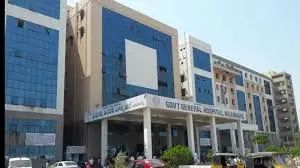
Nizamabad GGH outpatient numbers exceed Hyderabad hospitals
Amid a viral fever outbreak, the Government General Hospital in Nizamabad has surpassed Hyderabad's Osmania and Gandhi hospitals in outpatient registrations. The 750-bed facility recorded its highest count of 2,680 patients on August 28. Patients are arriving from Nizamabad, Kamareddy, Nirmal, Jagtial and neighbouring Maharashtra. Dengue, chikungunya and typhoid cases have also been reported. Deputy superintendent Prof. Dr N. Balraj said special arrangements have been made to treat fever cases.
Source
Nizamabad — health · read the original report ↗
Desk check · compared with the source
What the desk checked (5)
- Nizamabad GGH has surpassed Osmania and Gandhi hospitals in Hyderabad in outpatient registrations. — Stated by the report without citing hospital data or an official source; attribute to the publication.
- The 750-bed hospital recorded its highest figure of 2,680 patients on August 28. — Specific figures appear in the source; no issuing authority named.
- Special arrangements and infrastructure are in place to treat fever cases, and dengue cases were reported. — Attributed to GGH deputy superintendent Prof. Dr N. Balraj.
- Patients from Nirmal prefer Nizamabad GGH as Hyderabad is unaffordable and distant. — Attributed to named patient T. Prabhakar of Mudhole, Nirmal district.
- Poor sanitation and mosquito breeding in the rainy season have worsened cases despite camps and door-to-door surveys. — Presented as reporter's assessment; no source given.
Analysts’ view opinion
A 750-bed district hospital out-registering Osmania and Gandhi in outpatient numbers is less a story about Nizamabad's success than about the thinness of the tier below it. The GGH is absorbing demand from Kamareddy, Nirmal, Jagtial and even across the Maharashtra border because, as one patient in the story puts it, Hyderabad is unaffordable in distance terms and Adilabad or Nanded are further away — which is a verdict on referral design, not on any one hospital. The other half of the problem sits outside the health department's gate: the story attributes the worsening to poor sanitation and mosquito breeding in the rains, meaning municipal and panchayat performance is driving the hospital load.
- A single regional hospital drawing patients from four districts and another state signals that intermediate-level facilities — area and community health centres — are not holding their share of the caseload.
- The peak of 2,680 outpatients against 750 beds is essentially an OP-desk and manpower problem before it is a bed problem, and the story does not establish whether staffing was augmented to match.
- Officials describe 'special arrangements' and available infrastructure; that is an input claim, and the governance test is output — waiting times, diagnostic turnaround and how many fever cases needed admission.
- Prevention appears to be the weaker link: fever surveys and medical camps are being run, but the story itself flags sanitation and stagnant-water control as the driver, which is a local-body mandate rather than a hospital one.
- The parallel surge in private hospitals suggests households are paying out of pocket where public capacity is stretched — a familiar equity pattern in monsoon disease spikes.
What to watch — Watch whether the state responds only with hospital-side surge measures or also with accountability on municipal and panchayat vector control, and whether additional doctors, lab capacity and sub-district fever units are sanctioned for the Nizamabad belt before the season ends.
The story does not establish confirmed case or death numbers, how many of the fevers were laboratory-confirmed dengue or chikungunya, what the hospital's staffing and sanction strength actually are, or how this season compares numerically with previous years.
Deep dive
Research brief · 8 facts · 2 dates · exam-readyThe brief
Context
A monsoon-season viral fever outbreak in north Telangana has pushed the Government General Hospital (GGH) in Nizamabad ahead of Hyderabad's larger Osmania and Gandhi hospitals in outpatient registrations. The 750-bed district-level facility is drawing patients not only from Nizamabad but from Kamareddy, Nirmal, Jagtial and adjoining Maharashtra, because Hyderabad and other district headquarters are farther away and costlier. Alongside viral fever, dengue, chikungunya and typhoid cases have been reported across the district, with poor sanitation and mosquito breeding cited as aggravating factors.
Key facts
- Nizamabad GGH has overtaken Hyderabad's Osmania and Gandhi hospitals in outpatient registrations amid the viral fever outbreak.
- The hospital has 750 beds and recorded its highest single-day figure of 2,680 outpatients on August 28.
- After that peak, the hospital remained either first or second in Telangana in outpatient registrations.
- Patients are coming from Nizamabad, Kamareddy, Nirmal and Jagtial districts and from neighbouring Maharashtra.
- Viral fever, dengue, chikungunya and typhoid cases have been reported from across Nizamabad district, affecting all age groups.
- Patients suffer for a minimum of five days to a week or more with body pain, cough, cold and high temperature.
- GGH deputy superintendent Prof. Dr N. Balraj said special arrangements and infrastructure are in place for fever cases, and confirmed dengue cases.
- The health department is conducting medical camps and door-to-door fever surveys, but case numbers have increased alarmingly this time.
Timeline
- August 28Nizamabad GGH clocks its highest outpatient count of 2,680 patients.
- After August 28The hospital stays at first or second place in Telangana in outpatient registrations.
Who has a stake
- Government General Hospital, Nizamabad — Handling record outpatient loads with 750 beds; must sustain special fever arrangements and staff capacity.
- Patients from Nizamabad, Kamareddy, Nirmal, Jagtial and Maharashtra — Depend on GGH Nizamabad as the nearest affordable and trusted option instead of distant Hyderabad, Adilabad or Nanded.
- Telangana health department — Running medical camps and door-to-door fever surveys as cases rise alarmingly.
- Prof. Dr N. Balraj, GGH deputy superintendent — Responsible for arrangements and infrastructure to treat the fever surge.
- Private hospitals in the region — Seeing brisk business from fever cases, reflecting the scale of demand beyond public facilities.
- Local bodies in villages and towns — Lack of sanitation and high mosquito breeding in the rainy season is worsening dengue and vector-borne illness.
Why it matters
A district hospital outpacing two of Hyderabad's biggest teaching hospitals in outpatient numbers shows both the intensity of the monsoon fever outbreak and how much rural and border populations rely on one public facility. It also underlines that travel distance and affordability, not just medical capacity, decide where patients seek care. The clustering of dengue, chikungunya and typhoid alongside viral fever points to sanitation and vector control gaps that surveillance camps alone have not contained.
UPSC angle
Prelims pointers
- Nizamabad GGH is a 750-bed facility; peak outpatient count 2,680 on August 28.
- Osmania and Gandhi hospitals are the large government hospitals in Hyderabad referenced for comparison.
- Districts sending patients to Nizamabad GGH: Nizamabad, Kamareddy, Nirmal, Jagtial, plus Maharashtra.
- Diseases reported in the outbreak: viral fever, dengue, chikungunya, typhoid.
- Dengue and chikungunya are mosquito-borne; the source links rainy-season mosquito breeding and poor sanitation to the rise.
- Health department response tools cited: medical camps and door-to-door fever surveys.
Mains framing
The Nizamabad GGH surge illustrates how monsoon-season vector-borne and viral disease outbreaks concentrate pressure on a handful of public hospitals in India's districts. The immediate drivers named in the source are heavy viral fever transmission touching almost every household in Nizamabad and Kamareddy, plus dengue, chikungunya and typhoid amplified by lack of sanitation in villages and towns and high mosquito breeding in the rains. The demand pattern is also structural: patients from Nirmal and even Maharashtra choose Nizamabad because Hyderabad is unaffordable due to distance, and Adilabad or Nanded are farther, so a single 750-bed hospital absorbs a multi-district catchment while private hospitals profit from the overflow. Implications include crowding, longer illness episodes of five days to a week or more, and out-of-pocket spending for those who turn to private care. The way forward suggested by the reporting itself is to strengthen what is already being done — medical camps and door-to-door fever surveys — while tackling upstream sanitation and mosquito breeding, and ensuring the district hospital's infrastructure and special fever arrangements match the caseload rather than relying on referral to distant tertiary centres.
Key terms
- Government General Hospital (GGH)
- A state-run general hospital; the Nizamabad GGH here has 750 beds and serves several districts.
- Outpatient registration
- Count of patients who come for consultation without being admitted; used as a measure of hospital footfall.
- Dengue
- A mosquito-borne viral disease reported during the outbreak, linked in the source to rainy-season mosquito breeding.
- Chikungunya
- Another mosquito-borne viral illness reported across Nizamabad district during the outbreak.
- Typhoid
- A bacterial infection reported alongside viral fevers in the district during the outbreak.
- Door-to-door fever survey
- Health department exercise of visiting households to detect fever cases early during an outbreak.
Practice questions
- Why do district hospitals such as Nizamabad GGH sometimes record higher outpatient numbers than large tertiary hospitals in state capitals? Discuss with reference to accessibility and affordability of public healthcare.
- Examine the role of sanitation and vector control in preventing monsoon-season outbreaks of dengue and chikungunya in India.
- Evaluate the effectiveness of medical camps and door-to-door fever surveys as outbreak response measures, and suggest what else district health administrations need.
Grounded only in the source report — figures and dates are the source's, not inferred.