
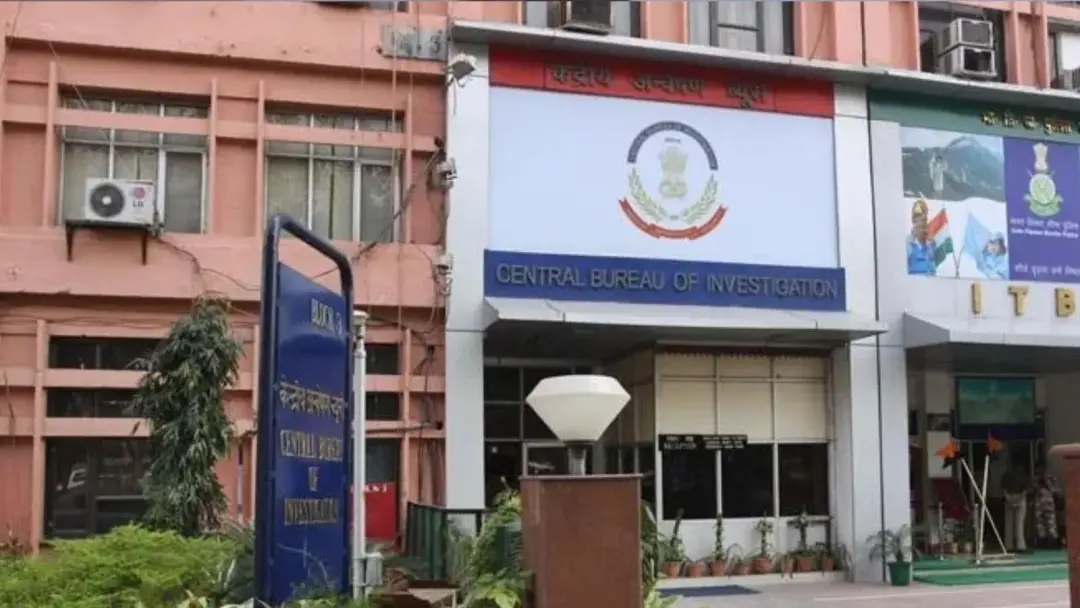
Rs 80 lakh of diverted CREST funds bought Goa property: CBI
In a chargesheet filed before a Special CBI court in Chandigarh on September 11, the CBI alleged that Rs 80 lakh of Rs 95 lakh diverted from CREST was used to buy immovable property in Canacona, Goa. The accused are IFS officer and former CREST CEO Navneet Kumar Srivastava and his wife Anupam. The agency said Vipam Consultancy, where Anupam is director with 95 per cent shares, had no genuine dealings with CREST. The probe covers alleged misappropriation of Rs 75.4 crore.
Source
Indian Express — Cities · read the original report ↗
Desk check · some claims need care
What the desk checked (5)
- Rs 80 lakh of Rs 95 lakh diverted from CREST was used to buy property in Canacona, Goa — Attributed to CBI chargesheet filed on September 11; figures appear in source, not independently verifiable.
- CBI is probing alleged misappropriation of Rs 75.4 crore from CREST — Figure appears in source and is attributed to the CBI probe.
- Vipam Consultancy Pvt Ltd, in which Anupam Srivastava is director with 95% shares, had no genuine business dealings with CREST — Attributed to CBI allegation in the chargesheet; company's response not recorded in source.
- Navneet Kumar Srivastava allegedly deleted WhatsApp messages and destroyed his mobile phone — Allegation attributed to the chargesheet; no independent corroboration in source.
- Chargesheet filed under BNS provisions and the Prevention of Corruption Act — Stated in source; note source inconsistently cites the Act as 1988 (amended 2018) and as 2018.
Analysts’ view opinion
A chargesheet is an accusation, not a finding — everything in the CBI's September 11 filing before the Special CBI Court in Chandigarh remains an allegation until tested at trial. Legally, the document's centre of gravity is the attempt to link a public office-holder's alleged acts to a family-controlled conduit: the agency's case is that Vipam Consultancy had no genuine dealings with CREST, so the Rs 95 lakh it received, and the Rs 80 lakh property purchase in Goa, cannot be explained as business. That framing is what allows the CBI to reach the spouse through the abetment route under the Prevention of Corruption Act read with the Bharatiya Nyaya Sanhita, rather than treating her merely as a beneficiary.
- The charges span two statutes — criminal conspiracy, criminal breach of trust, cheating, forgery and destruction of evidence under the BNS, alongside bribery, criminal misconduct and abetment under the Prevention of Corruption Act — and each requires separate proof of intent, not just proof that money moved.
- The prosecution's stated case against Anupam Srivastava is derivative: it rests on her role as director and 95 per cent shareholder and on the claim that she received a benefit on her husband's behalf, so the abetment charge will likely turn on whether knowledge and a corrupt purpose can be shown.
- The alleged deletion of WhatsApp messages and destruction of a mobile phone is a distinct offence and, if established, can also be used as circumstantial evidence of consciousness of guilt — though courts generally require the underlying loss of evidence to be proved, not assumed.
- The CBI's own language — "prima facie" case, proceeds of "scheduled criminal activity" — signals a threshold standard for framing charges and hints at a possible parallel money-laundering angle, but the story does not establish that any such proceeding exists.
- Because the agency says parts of the probe continue, including tracing the onward money trail and ultimate beneficiaries, supplementary chargesheets and additional accused remain legally open.
What to watch — Watch the court's cognisance and charge-framing stage, any discharge applications by the accused, and whether the CBI files a supplementary chargesheet naming further beneficiaries as the money trail is traced.
Nothing here establishes guilt: the allegations are untested, the accused have not been convicted, and the story does not carry their response or defence, nor any judicial finding on the Goa property or the wider Rs 75.4 crore figure.
Deep dive
Research brief · 8 facts · 4 dates · exam-readyThe brief
Context
The CBI is investigating the alleged misappropriation of Rs 75.4 crore from the Chandigarh Renewable Energy and Science and Technology Promotion Society (CREST), a government body. Its former CEO/Additional CEO, Indian Forest Service officer Navneet Kumar Srivastava, and his wife Anupam Srivastava have been chargesheeted before a Special CBI court in Chandigarh on September 11 for alleged "criminal conspiracy to divert public funds". The agency alleges Rs 95 lakh was routed from a CAPCO Fintech Services account to Vipam Consultancy Pvt Ltd, in which Anupam is a director with 95 per cent shares, and that Rs 80 lakh of this was used to buy immovable property in Canacona, Goa.
Key facts
- CBI chargesheet filed before a Special CBI court in Chandigarh on September 11 against Navneet Kumar Srivastava and Anupam Srivastava.
- The larger probe concerns alleged misappropriation of Rs 75.4 crore from CREST.
- Vipam Consultancy Pvt Ltd allegedly received Rs 95 lakh diverted from CREST between November 14, 2024 and February 14, 2025.
- Rs 80 lakh of the Rs 95 lakh was allegedly used to buy immovable property in Canacona, Goa.
- Anupam Srivastava is a director of Vipam Consultancy Pvt Ltd and holds 95 per cent shares; CBI says the firm had "no genuine business dealings" with CREST.
- Alleged benefits to Navneet included a demand draft of Rs 5 lakh in his own name and cash through people linked to co-accused Ribhav Rishi.
- CBI alleges the conspiracy ran between August 21, 2023 and November 30, 2025, involving bankers Ribhav Rishi, Abhay Kumar, Seema Dhiman and others.
- Srivastava allegedly deleted WhatsApp messages exchanged with Rahul Kumar and others and destroyed the mobile phone containing evidence.
Timeline
- August 21, 2023 to November 30, 2025Period during which Navneet Kumar Srivastava allegedly acted with bankers Ribhav Rishi, Abhay Kumar, Seema Dhiman and others in Chandigarh and elsewhere to divert CREST funds.
- November 14, 2024 to February 14, 2025Vipam Consultancy Pvt Ltd allegedly received Rs 95 lakh fraudulently diverted from CREST via the CAPCO Fintech Services account.
- After receipt of funds (date not stated in the source)Rs 80 lakh of the Rs 95 lakh allegedly used to buy immovable property in Canacona, Goa; part transferred to Anupam Srivastava's personal account.
- September 11CBI files chargesheet before the Special CBI court, Chandigarh, alleging criminal conspiracy to divert public funds.
Who has a stake
- CREST (Chandigarh Renewable Energy and Science and Technology Promotion Society) — The government society whose funds — allegedly Rs 75.4 crore in the wider probe — were misappropriated; its financial controls and credibility are at issue.
- Navneet Kumar Srivastava, IFS officer and former CEO/Additional CEO of CREST — Chargesheeted for criminal misconduct, bribery, breach of trust, forgery and destruction of evidence as a public servant and authorised signatory.
- Anupam Srivastava — Alleged to have received bribe on her husband's behalf through Vipam Consultancy; charged with abetment under Section 12 of the Prevention of Corruption Act.
- Vipam Consultancy Pvt Ltd and CAPCO Fintech Services — Entities alleged to have been conduits for the Rs 95 lakh diversion despite no genuine business dealings with CREST.
- Co-accused bankers Ribhav Rishi, Abhay Kumar, Seema Dhiman — Alleged to have facilitated changed email/mobile records, fake bank documents and unauthorised withdrawals.
- CBI — Must complete pending investigation into the onward money trail and ultimate beneficiaries, and sustain charges in court.
Why it matters
The case shows how funds of a government-promoted renewable energy and science society can allegedly be siphoned through shell-like private companies and family members, with bank records manipulated from the inside. It raises questions about audit and signatory controls in state-level societies that handle large public outlays. The CBI itself says the money trail and ultimate beneficiaries remain to be traced, so the exposure may extend beyond the transactions identified so far.
UPSC angle
Prelims pointers
- CREST stands for Chandigarh Renewable Energy and Science and Technology Promotion Society; probe involves alleged misappropriation of Rs 75.4 crore.
- Section 12 of the Prevention of Corruption Act, 1988 (amended 2018) covers abetment of offences under the Act — invoked against Anupam Srivastava.
- Section 61(2) of the Bharatiya Nyaya Sanhita, 2023 deals with criminal conspiracy — read with the PC Act charge.
- Chargesheet invokes BNS offences of criminal conspiracy, destruction of evidence, criminal breach of trust, cheating, forgery and using forged documents.
- Rs 95 lakh was allegedly routed from CAPCO Fintech Services to Vipam Consultancy Pvt Ltd; Rs 80 lakh bought property in Canacona, Goa.
- CBI cases in Chandigarh are tried by a Special CBI court.
Mains framing
The CREST case illustrates a familiar architecture of public fund diversion: a senior officer holding both executive and authorised-signatory powers, allegedly complicit bankers who help alter registered email and mobile details and generate fake statements, and a family-controlled private company with no genuine business activity acting as the terminal recipient. The CBI's own framing — that Rs 95 lakh moved through CAPCO Fintech Services to Vipam Consultancy, of which the accused's wife holds 95 per cent shares, and that Rs 80 lakh became immovable property in Goa — points to conversion of allegedly diverted funds into hard assets, which is why the agency describes them as "proceeds of the scheduled criminal activity". The alleged deletion of WhatsApp messages and destruction of a mobile phone highlights how digital evidence is central and fragile in economic offences. Implications run to the governance of state-level societies that sit outside the tightest treasury controls: concentration of financial powers in one CEO, weak separation between sanctioning and payment, and delayed reconciliation of bank records. A way forward, grounded in the facts alleged, lies in separating signatory from executive authority, independent verification of any change in registered bank contact details, mandatory vendor due diligence before payments, and quicker completion of the pending money-trail investigation the CBI says is still open.
Key terms
- CREST
- Chandigarh Renewable Energy and Science and Technology Promotion Society, the government body whose funds were allegedly misappropriated.
- Chargesheet
- The final report of investigation filed in court listing accused and offences; here filed before a Special CBI court, Chandigarh, on September 11.
- Prevention of Corruption Act, 1988 (amended 2018)
- Law penalising bribery and criminal misconduct by public servants; Section 12 covers abetment, invoked against the officer's wife.
- Bharatiya Nyaya Sanhita, 2023
- India's criminal code replacing the IPC; here used for conspiracy, breach of trust, cheating, forgery and destruction of evidence.
- Proceeds of scheduled criminal activity
- Property derived from a listed predicate offence; CBI says Navneet knowingly received or benefited from such property.
- Prima facie case
- Evidence sufficient on its face to proceed to trial, as CBI claims on criminal misconduct here.
Practice questions
- Examine how the concentration of executive and financial signatory powers in officials heading state-level societies enables fund diversion. Suggest institutional safeguards, using the CREST case as illustration.
- Discuss the role of digital evidence in investigating economic offences, with reference to allegations of deleted messages and destroyed devices in the CREST chargesheet.
- Compare the scope of the Prevention of Corruption Act, 1988 (as amended in 2018) and the Bharatiya Nyaya Sanhita, 2023 in prosecuting corruption involving family members of public servants.
Grounded only in the source report — figures and dates are the source's, not inferred.