
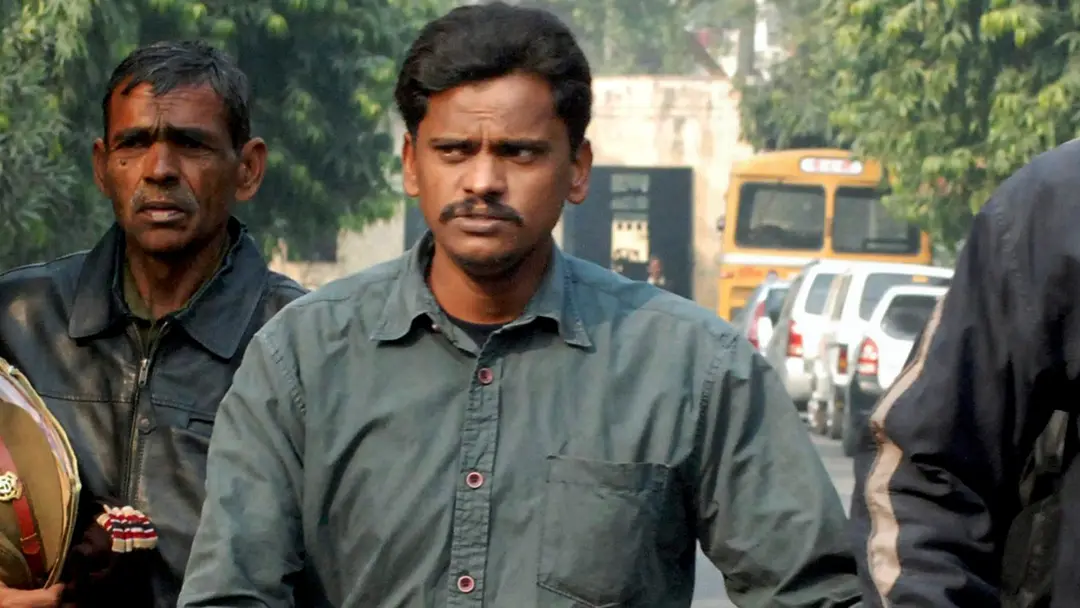
Surendra Koli, acquitted in Nithari case, found dead in Haridwar
Surendra Koli, acquitted in November 2025 in the last remaining case linked to the Nithari killings in Noida, was found dead inside a tea stall in Uttarakhand's Haridwar under suspicious circumstances, police said on Friday. Officer Kundan Singh Rana said no suicide note was found. Koli, from Mangrukhal village in Almora, had lived in Haridwar for months, working as a security guard before renting the stall. His family was informed and an investigation initiated.
Source
Hindustan Times — India · read the original report ↗
Desk check · some claims need care
What the desk checked (5)
- Surendra Koli was found dead inside a tea stall in Haridwar under suspicious circumstances — Attributed to police on Friday; cause of death not established in source.
- No suicide note was found and an investigation has been initiated — Attributed to Uttarakhand police officer Kundan Singh Rana.
- The Supreme Court acquitted Koli on November 11, 2025 in the last remaining Nithari case — Date and ruling appear in source; court reasoning quoted as 'travesty of justice'.
- Koli, from Mangrukhal village in Almora, had lived in Haridwar for months and worked as a security guard before renting the stall — Attributed to the same police officer; not independently corroborated in source.
- Police earlier alleged Koli lured and murdered children and women, with some cannibalism — Presented in source as past police claims; courts found key evidence unreliable.
Analysts’ view opinion
Surendra Koli's death points to a gap in India's criminal justice system: what happens after an acquittal. In November 2025 the Supreme Court acquitted him, holding that it would be a "travesty of justice" for a single conviction to survive when the same confession and the same "recoveries" had been rejected as unreliable in 12 other cases — a strong restatement of the principle that the rule of law must be applied consistently. With the death now described as suspicious, the procedural path is not an ordinary inquiry: it would typically involve registering an unnatural death, a post-mortem and magisterial-level scrutiny.
- The acquittal turned on evidentiary weakness and a flawed investigation, which means the victims' families are left with crimes that remain legally unresolved.
- Courts rejecting reliance on a confession recorded after weeks in custody and on dubious recoveries reinforces settled principles on voluntariness of confessions and preservation of evidence.
- The absence of any clear statutory mechanism for rehabilitation, security or compensation for an acquitted person is the broader rights question this episode raises.
- Police saying no suicide note was found does not establish cause of death; post-mortem and forensic findings are what carry legal weight.
- However grave the original allegations, an acquitted person retains the right to life and equal protection of the law — that is the core constitutional point here.
What to watch — Watch the post-mortem and forensic findings and how the unnatural-death inquiry is classified — natural, suicide, or criminal involvement — since the next legal steps flow entirely from that.
The story does not establish what caused Koli's death or whether anyone else was involved; it says only that police have called the circumstances suspicious and begun an investigation.
Deep dive
Research brief · 8 facts · 6 dates · exam-readyThe brief
Context
Surendra Koli was the prime accused in the Nithari killings, which surfaced in December 2006 when a child playing cricket spotted a human hand in a drain between two houses in Noida's Nithari; digging revealed multiple skulls, bones and children's clothes. Koli, a domestic worker at a house of businessman Moninder Singh Pandher, was accused of luring, murdering and in some cases eating victims. On November 11, 2025, the Supreme Court acquitted him in the last remaining case, holding that his 2011 conviction could not stand after acquittals in 12 identical cases. He has now been found dead inside a tea stall in Haridwar, Uttarakhand, under suspicious circumstances.
Key facts
- Surendra Koli was found dead inside a tea stall in Haridwar, Uttarakhand, under suspicious circumstances, police said on Friday.
- Uttarakhand Police officer Kundan Singh Rana said no suicide note was found and an investigation has been initiated.
- Rana said Koli had started the tea stall days ago and had been living in Haridwar for the past few months, earlier working as a security guard.
- Koli was from Mangrukhal village in Almora; his family there has been informed.
- The Supreme Court acquitted Koli on November 11, 2025, in the last remaining Nithari case, setting aside his 2011 conviction.
- The court said it would be a "travesty of justice" to let one conviction survive when he was acquitted in 12 identical cases on the same evidence, confession and flawed investigation.
- The killings surfaced when a drain in Nithari was dug up in December 2006, yielding multiple skulls, bones and tattered children's clothes.
- The CBI took over the probe in January 2007 and relied on Koli's confession recorded after weeks in custody and on dubious recoveries.
Timeline
- December 2006A child playing cricket spots a human hand in a Nithari drain; digging reveals skulls, bones and children's clothes. Crowds trample evidence as investigators arrive.
- January 2007The Central Bureau of Investigation takes over the Nithari investigation.
- 2011Koli is convicted in the case that would remain the last surviving conviction against him.
- November 11, 2025The Supreme Court acquits Koli in the last remaining Nithari case, finding "no principled basis" to uphold one conviction after 12 acquittals.
- Months before his deathKoli lives in Haridwar, works as a security guard, and days before his death rents and starts a tea stall.
- Friday (date not stated in the source)Police say Koli was found dead inside the tea stall; no suicide note found; family in Almora informed.
Who has a stake
- Surendra Koli — Prime accused in the Nithari killings, acquitted in November 2025, now found dead in Haridwar under suspicious circumstances.
- Koli's family in Mangrukhal village, Almora — Informed of his death; awaiting findings of the police investigation.
- Uttarakhand Police — Investigating the circumstances of the death; officer Kundan Singh Rana is the source of official details.
- Central Bureau of Investigation — Took over the probe in January 2007; its reliance on Koli's custodial confession and recoveries was rejected by courts.
- Supreme Court — Held that the rule of law must be applied consistently, acquitting Koli in the last case in November 2025.
- Moninder Singh Pandher — Businessman at whose house Koli worked; accused of complicity and exploitation in the Nithari case.
- Families of Nithari victims — Killings of children and women remain without a surviving conviction after the acquittals.
Why it matters
The death of Koli months after his acquittal closes, without answers, one of India's most notorious criminal cases, where courts found the prosecution's own evidence unreliable. It underlines how a botched crime scene, a custodial confession and doubtful recoveries can collapse an entire prosecution, leaving victims' families without justice and the accused without closure.
UPSC angle
Prelims pointers
- Nithari killings: crime surfaced in Noida (Uttar Pradesh) in December 2006 after remains were found in a drain.
- CBI took over the Nithari probe in January 2007.
- Supreme Court acquitted Surendra Koli on November 11, 2025, in the last remaining Nithari case; his conviction dated to 2011.
- Koli had been acquitted in 12 identical cases before the final acquittal, all resting on the same confession and recoveries.
- Koli hailed from Mangrukhal village, Almora district, Uttarakhand; he was found dead in Haridwar.
- Moninder Singh Pandher, the businessman at whose house Koli worked, was accused of complicity and exploitation.
Mains framing
The Nithari case, and Surendra Koli's death months after his acquittal, illustrate how investigative failure can defeat criminal justice at both ends: a horrific crime goes unpunished and an accused spends nearly two decades in custody before courts hold the evidence against him worthless. The source records specific failures: crowds trampling through the excavation site in December 2006 before investigators arrived, the \"recovery\" of a knife from beneath a terrace tank forming the backbone of the prosecution though courts found such recoveries unreliable, and the CBI's reliance from January 2007 on a confession recorded after weeks in custody. The Supreme Court's reasoning in November 2025 rested on consistency of the rule of law: with 12 acquittals on identical facts, there was \"no principled basis\" to let the 2011 conviction stand, and doing so would be a \"travesty of justice\". The implications point to scientific crime-scene protection, corroborated rather than confession-led investigation, and independent forensic rigour, especially in sensational cases where public pressure drives the probe. Koli's suspicious death in a Haridwar tea stall, with no suicide note and an investigation just initiated, adds the question of what social reintegration and protection exist for a person acquitted after long incarceration.
Key terms
- Nithari killings
- Series of killings of children and women that surfaced in Noida's Nithari in December 2006 when remains were found in a drain.
- Central Bureau of Investigation (CBI)
- Central investigating agency that took over the Nithari probe in January 2007.
- Acquittal
- Judicial finding that the prosecution has not proved guilt; Koli was acquitted in 12 cases and then the last one in November 2025.
- Custodial confession
- Confession recorded while the accused is in police or agency custody; Koli's was recorded after weeks in custody and rejected as unreliable.
- Recovery evidence
- Objects allegedly recovered on an accused's disclosure, such as the knife from beneath a terrace tank; courts found these unreliable here.
- Travesty of justice
- Phrase used by the Supreme Court to describe letting one conviction survive when identical cases had ended in acquittal.
Practice questions
- The Nithari case collapsed because of investigative failure rather than judicial leniency. Examine, with reference to crime-scene handling and reliance on custodial confessions.
- Discuss the evidentiary value of confessions and recoveries in Indian criminal trials in the light of the Supreme Court's November 2025 acquittal of Surendra Koli.
- What institutional reforms can prevent wrongful prolonged incarceration in high-profile criminal cases? Suggest a way forward.
Grounded only in the source report — figures and dates are the source's, not inferred.