
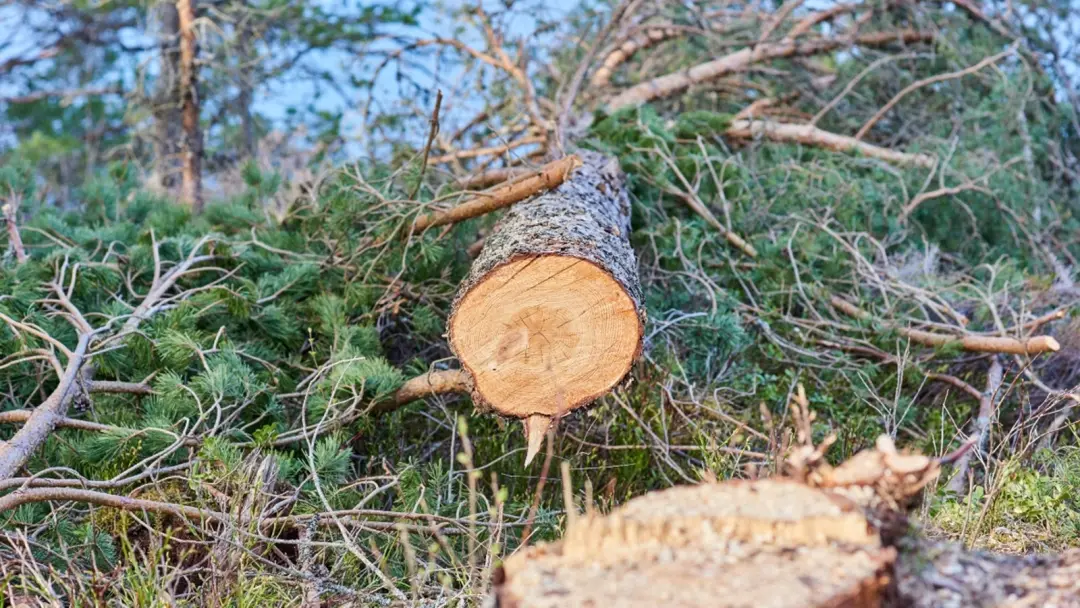
NGT orders 7,000 trees planted after 700 felled in Bhopal
The National Green Tribunal has directed the Madhya Pradesh Forest Department to plant 7,000 trees as compensation for the felling of around 700 trees for a road being built for a proposed cricket stadium in Bhopal. The bench of Judicial Member Sheo Kumar Singh and Expert Member Sudhir Kumar Chaturvedi said the work must be completed by September 30, 2026, with 100% survival of plants. The order followed a plea by environmentalist Nitin Saxena over construction in the Bhoj Wetland catchment, a Ramsar site, near Neelbad-Barkheda Nathu.
Source
Indian Express — India · read the original report ↗
Desk check · compared with the source
What the desk checked (5)
- NGT directed the Madhya Pradesh Forest Department to plant 7,000 trees as compensation for felling about 700 trees. — Attributed to the tribunal's order, with a direct quote reproduced in the source.
- Deadline for the plantation is September 30, 2026. — Quoted order says September 30, 2026, though an earlier line in the source says only 'September 30'; internal date detail slightly inconsistent.
- Bench comprised Judicial Member Sheo Kumar Singh and Expert Member Sudhir Kumar Chaturvedi. — Names appear in the source as the hearing bench; no independent verification possible.
- The stadium is being built without the requisite Town and Country Planning approval. — Presented as an allegation by applicant Nitin Saxena; unproven in the source.
- Plantation was delayed due to non-availability of budget and land. — Attributed to state officials Shweta Singh (SDO) and Priti during the hearing.
Analysts’ view opinion
This is an accountability test for the administration, dressed as an environmental case. A marquee cricket stadium and its access road enjoy broad political backing in Bhopal, but the fact that compensatory plantation for some 700 felled trees had not been done — with officials themselves citing lack of budget provision and land before the tribunal — is politically awkward for the state machinery. That the site lies in the catchment of the Bhoj Wetland, a Ramsar site, gives the dispute the potential to grow from a local grievance into a prestige issue.
- By ordering ten-fold plantation, insisting on 100 per cent survival and demanding a photographic action-taken report, the tribunal has shifted the Forest Department from paper compliance to measurable obligation.
- The applicant's claim that funds were already deposited with the Revenue Department while planting lapsed, set against officials' budget-and-land explanation, hands the opposition an easy line on inter-departmental drift.
- The allegations that the stadium lacks Town and Country Planning approval and that revenue records reserve part of the land for a proposed lake are politically riskier than the tree count — but they remain, at this stage, allegations.
- This is not an outright defeat for the government: no stay on the project is recorded, so official quarters can plausibly project both continuity of development and compliance with green obligations.
- The September 30, 2026 deadline matters — until it passes, the case stays alive as a running question mark over the government's environmental credibility.
What to watch — Watch the photograph-backed action-taken report the Forest Department files at the next hearing, how land for the plantation is arranged, and how far the tribunal presses the questions over the stadium's approvals.
The story does not establish any political actor's role, any deliberate violation, or that approvals were in fact breached; the TNCP and reserved-lake claims stand as the applicant's contentions.
Deep dive
Research brief · 8 facts · 4 dates · exam-readyThe brief
Context
The National Green Tribunal (NGT) has been hearing a plea against the felling of more than 700 trees and construction activity in the catchment area of the Bhoj Wetland near Neelbad-Barkheda Nathu in Bhopal, where a cricket stadium and an associated road are being built. The Bhoj Wetland, comprising Bhopal's Upper and Lower Lakes, is a Ramsar Site of international importance protected under the regulatory framework governing wetlands. Environmentalist Nitin Saxena, the applicant, argued that trees were cut for the road but the mandatory compensatory plantation was never carried out even though funds had been deposited with the Revenue Department. The tribunal has now ordered plantation of 7,000 trees at a 10:1 ratio.
Key facts
- NGT directed the Madhya Pradesh Forest Department (Social Forestry) to plant 7,000 trees as compensation for felling of around 700 trees for a road for a proposed cricket stadium in Bhopal.
- The plantation ratio ordered is 10 times the number of trees felled, and the exercise must be completed by September 30, 2026.
- The bench comprised Judicial Member Sheo Kumar Singh and Expert Member Sudhir Kumar Chaturvedi; the direction came on a Wednesday.
- The order says: 'the Forest Department must ensure that it is compensatory plantation and survival of the plants must be up to 100%.'
- An action-taken report along with photographs must be filed before the next date of hearing after completion of plantation.
- The trees were felled in the catchment area of the Bhoj Wetland near Neelbad-Barkheda Nathu, Bhopal; the wetland (Upper and Lower Lakes) is a Ramsar Site.
- Applicant Nitin Saxena alleged compensatory plantation was not undertaken despite funds having been deposited with the Revenue Department.
- State counsel Prashant M. Harne said plantation steps were being taken in the current rainy season; officials Shweta Singh (SDO) and Priti cited delay due to non-availability of budgetary provisions and non-availability of land.
Timeline
- Before the hearing (date not stated in the source)More than 700 trees felled for road construction linked to the proposed cricket stadium in the Bhoj Wetland catchment; funds deposited with Revenue Department but no compensatory plantation done.
- Wednesday (exact date not stated in the source)NGT bench hears the matter; State counsel and officials submit that plantation is being taken up in the current rainy season after budget allocation.
- Same hearingNGT orders 7,000 trees to be planted at a 10:1 ratio in the present season with 100% survival, and an action-taken report with photographs before the next hearing.
- By September 30, 2026Deadline set by the tribunal for completion of the compensatory plantation exercise.
Who has a stake
- National Green Tribunal (NGT) bench — Enforcing compensatory plantation and scrutinising construction in a Ramsar site catchment; must verify compliance at the next hearing.
- Madhya Pradesh Forest Department (Social Forestry) — Must plant 7,000 trees by September 30, 2026 with 100% survival and file an action-taken report with photographs.
- Nitin Saxena, environmentalist and applicant — Sought action over 700+ trees felled, missing compensatory plantation, and construction in the Bhoj Wetland catchment.
- Madhya Pradesh government / State counsel Prashant M. Harne, officials Shweta Singh (SDO) and Priti — Answerable for delays attributed to budget and land unavailability; must show plantation progress.
- Revenue Department — Holds funds deposited for compensatory plantation; land records show a portion reserved for a proposed lake.
- Proposed cricket stadium and road project — Faces scrutiny over alleged absence of Town and Country Planning (TNCP) approval and location within the wetland catchment.
- Bhopal residents and the Bhoj Wetland ecosystem — Long-term impact of catchment construction and tree loss on the Upper and Lower Lakes that supply the city's ecological system.
Why it matters
The case tests whether compensatory afforestation is real greening or a paper exercise: the tribunal had to explicitly insist on 100% survival and photographic proof because plantation had not happened even after funds were deposited. It also raises the larger question of how a Ramsar-listed wetland's catchment is protected when large infrastructure such as a stadium and access road is cleared, allegedly without Town and Country Planning approval.
UPSC angle
Prelims pointers
- Bhoj Wetland, Bhopal, comprises the Upper and Lower Lakes and is a Ramsar Site of international importance.
- NGT ordered 7,000 trees (10:1 ratio) for around 700 trees felled, to be completed by September 30, 2026, with 100% survival.
- NGT bench in the case: Judicial Member Sheo Kumar Singh and Expert Member Sudhir Kumar Chaturvedi — NGT benches combine judicial and expert members.
- Site of felling: catchment area of Bhoj Wetland near Neelbad-Barkheda Nathu, Bhopal.
- TNCP (Town and Country Planning) approval was allegedly not obtained for the cricket stadium.
- Compensatory plantation funds in this case were deposited with the Revenue Department.
Mains framing
The Bhopal case illustrates the gap between environmental compliance on paper and on the ground: trees were felled for a stadium access road inside the catchment of the Bhoj Wetland, a Ramsar site, and compensatory plantation was not carried out even though funds had been deposited with the Revenue Department, with officials citing lack of budgetary provision and unavailability of land. The NGT's response — a 10:1 plantation ratio of 7,000 trees, a hard deadline of September 30, 2026, insistence on genuine compensatory plantation with 100% survival, and an action-taken report with photographs — reflects judicial distrust of self-reported afforestation figures and the recognition that planting is meaningless without survival. The deeper issues raised by the applicant are regulatory: construction within a wetland catchment, an alleged absence of Town and Country Planning approval, and revenue records showing part of the land reserved for a proposed lake, all of which point to weak pre-clearance scrutiny of infrastructure in ecologically sensitive urban areas. A credible way forward, on the tribunal's own logic, lies in ring-fencing and timely release of plantation funds, advance identification of plantation land, survival audits with photographic and verifiable reporting, and ensuring statutory planning approvals precede tree felling rather than follow it.
Key terms
- National Green Tribunal (NGT)
- Specialised environmental tribunal whose benches include judicial and expert members; here it issued directions on compensatory plantation in Bhopal.
- Ramsar Site
- A wetland recognised as of international importance; the Bhoj Wetland (Upper and Lower Lakes) holds this status.
- Bhoj Wetland
- Bhopal's Upper and Lower Lakes system, described in the source as one of the city's most important ecological systems.
- Catchment area
- The land area that drains into and feeds a water body; construction here can affect the lakes' ecology, per the applicant.
- Compensatory plantation
- Planting of trees to offset felled ones; the NGT ordered 7,000 trees for 700 felled and required 100% survival.
- TNCP approval
- Town and Country Planning clearance for construction; the applicant alleged the stadium lacked this requisite approval.
Practice questions
- Compensatory afforestation often fails at the survival stage rather than the planting stage. Examine this with reference to the NGT's directions in the Bhoj Wetland catchment case.
- Discuss the challenges of protecting Ramsar-listed urban wetlands from infrastructure projects in their catchment areas, using the Bhopal stadium and road case as an example.
- How effective are tribunals such as the NGT in enforcing environmental compliance when delays are attributed to budgetary and land constraints by state departments?
Grounded only in the source report — figures and dates are the source's, not inferred.