
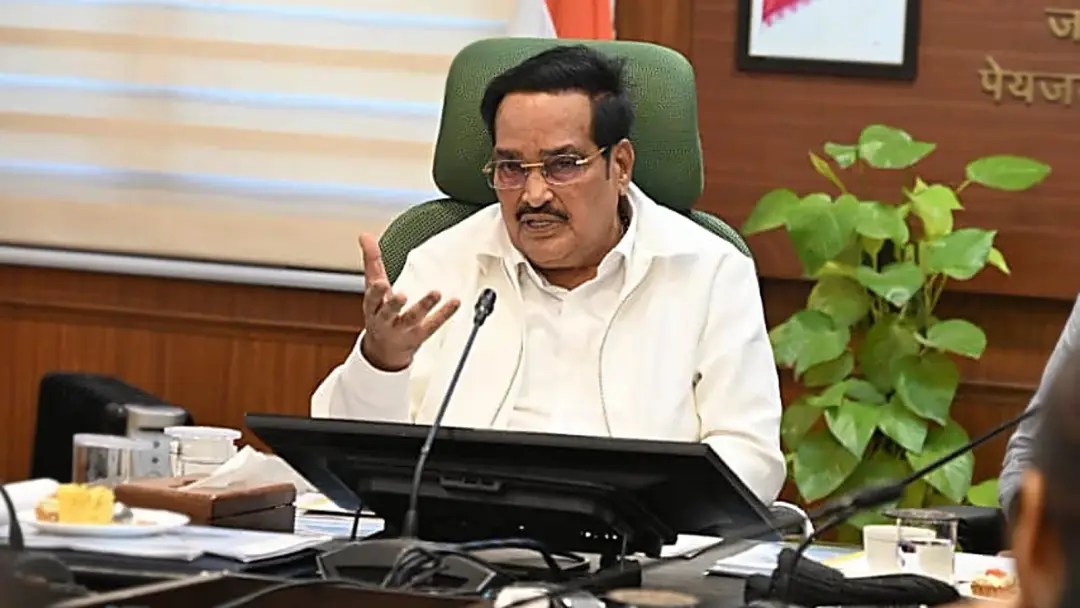
‘Swachhata Hi Seva 2026’ campaign begins across country
The 2026 edition of the annual Swachhata Hi Seva campaign commenced on Thursday. Announcing it on Wednesday, Union Jal Shakti Minister C R Patil said this year's theme is ‘Swachhata Mein Sahbhag, Swachh Bharat, Viksit Bharat’. He said 5.25 lakh villages have been declared free of open defecation and 12.22 crore individual household toilets built in rural areas since 2014. Over 18 crore citizens joined last year, including 14 crore from rural areas. The Department of Drinking Water and Sanitation has launched Swachh Seva Aankalan for gram panchayat self-assessment.
Source
Indian Express — India · read the original report ↗
Desk check · compared with the source
What the desk checked (5)
- The 2026 edition of Swachhata Hi Seva began on Thursday, with theme 'Swachhata Mein Sahbhag, Swachh Bharat, Viksit Bharat'. — Attributed to Union Jal Shakti Minister C R Patil, who announced the campaign on Wednesday.
- 5.25 lakh villages have been declared free of open defecation. — Figure appears in source, quoted directly from the minister; no independent data cited.
- 12.22 crore individual household toilets built in rural areas since 2014. — Ministerial claim as quoted in source; not independently verified.
- Over 18 crore citizens participated last year, including 14 crore from rural areas. — Attributed to Patil; source gives no supporting documentation.
- Department of Drinking Water and Sanitation has launched Swachh Seva Aankalan for gram panchayat self-assessment. — Stated by the minister; consistent within the source text.
Analysts’ view opinion
‘Swachhata Hi Seva’ is not merely a sanitation drive — it is one of the BJP's most durable pieces of political messaging. Launching the campaign on September 17, the Prime Minister's birthday, and tying it to a ‘Viksit Bharat’ theme, links cleanliness directly to Modi's leadership brand. Framing the numbers — 5.25 lakh villages, 12.22 crore toilets, over 18 crore participants — against a ‘since 2014’ benchmark turns delivery data into a political scorecard.
- The campaign's start coinciding with the Prime Minister's birthday follows a familiar political practice of binding a government programme to personal leadership prestige.
- Yoking ‘Swachh Bharat’ to ‘Viksit Bharat’ positions a decade-old flagship as continuous with the government's current development slogan.
- The stress on 14 crore rural participants signals that the rural voter remains the campaign's political centre of gravity.
- Self-assessment by gram panchayats under ‘Swachh Seva Aankalan’ pushes a central scheme down to the lowest tier of elected representatives — an asset for the Centre, but also a route by which responsibility for shortfalls can shift locally.
- Opposition parties typically contest the quality and ground reality behind such figures, though no such reaction is recorded in this story.
What to watch — Watch how fully state governments — especially non-BJP-ruled ones — engage with the campaign, and whether the Opposition challenges the minister's figures.
The story does not independently verify the minister's numbers, nor does it establish that the launch date was chosen for political effect.
Deep dive
Research brief · 8 facts · 4 dates · exam-readyThe brief
Context
Swachhata Hi Seva is an annual national cleanliness campaign that urges citizens to step out and take ownership of their surroundings. Its 2026 edition began on Thursday, September 17, which also marks Prime Minister Narendra Modi's birthday, and was announced a day earlier by Union Jal Shakti Minister C R Patil. The campaign is run through the Department of Drinking Water and Sanitation under the Ministry of Jal Shakti, which implements the Swachh Bharat Mission (Grameen) for rural sanitation.
Key facts
- The 2026 theme of Swachhata Hi Seva is 'Swachhata Mein Sahbhag, Swachh Bharat, Viksit Bharat', announced by Union Jal Shakti Minister C R Patil.
- 5.25 lakh villages in the country have been declared free of open defecation, according to Patil.
- 12.22 crore individual household toilets have been built in rural areas since 2014.
- Over 18 crore citizens participated in the Swachhata Hi Seva campaign last year.
- Of last year's participants, 14 crore were from rural areas.
- The Department of Drinking Water and Sanitation has launched Swachh Seva Aankalan for Swachh Bharat Mission (Grameen) programmes.
- Under Swachh Seva Aankalan, gram panchayats will undertake self-assessment of rural sanitation service delivery.
- The 2026 edition began on Thursday, September 17, which is also PM Narendra Modi's birthday.
Timeline
- Since 201412.22 crore individual household toilets built in rural areas; 5.25 lakh villages declared free of open defecation.
- Last year's editionOver 18 crore citizens participated in Swachhata Hi Seva, including 14 crore from rural areas.
- Wednesday (September 16)Minister C R Patil announces the 2026 campaign and its theme, and the launch of Swachh Seva Aankalan.
- Thursday (September 17)Swachhata Hi Seva 2026 commences across the country, coinciding with PM Modi's birthday.
Who has a stake
- Ministry of Jal Shakti / Union Minister C R Patil — Announces and leads the campaign; accountable for rural sanitation outcomes and citizen mobilisation.
- Department of Drinking Water and Sanitation — Implements Swachh Bharat Mission (Grameen) and has launched Swachh Seva Aankalan for self-assessment.
- Gram panchayats — Will self-assess rural sanitation service delivery under Swachh Seva Aankalan and drive village-level improvement.
- Rural citizens — Primary beneficiaries of household toilets and open-defecation-free status; 14 crore participated last year.
- States and panchayats generally — Expected to participate so that "every state, every village, every panchayat and every person" joins the movement.
Why it matters
Sanitation coverage figures cited — 5.25 lakh ODF villages and 12.22 crore rural household toilets since 2014 — show how far India's sanitation push has gone, but sustaining such gains depends on day-to-day service delivery rather than one-time construction. The new Swachh Seva Aankalan shifts some of that responsibility to gram panchayats through self-assessment, linking cleanliness to local governance. The campaign also frames sanitation as a mass movement of people's participation rather than a purely government programme.
UPSC angle
Prelims pointers
- Swachhata Hi Seva is an annual campaign; the 2026 theme is 'Swachhata Mein Sahbhag, Swachh Bharat, Viksit Bharat'.
- Swachh Bharat Mission (Grameen) is run by the Department of Drinking Water and Sanitation under the Ministry of Jal Shakti.
- Swachh Seva Aankalan: new tool for gram panchayat self-assessment of rural sanitation service delivery.
- 5.25 lakh villages declared open defecation free; 12.22 crore rural individual household toilets built since 2014.
- Over 18 crore citizens joined the campaign last year, of which 14 crore were from rural areas.
- Union Jal Shakti Minister: C R Patil; campaign launched on September 17, PM Modi's birthday.
Mains framing
India's sanitation drive since 2014 has been built on scale — 12.22 crore individual household toilets in rural areas and 5.25 lakh villages declared open defecation free, as stated by the Union Jal Shakti Minister — combined with mass mobilisation, with over 18 crore citizens (14 crore rural) joining the last Swachhata Hi Seva campaign. The 2026 theme, 'Swachhata Mein Sahbhag, Swachh Bharat, Viksit Bharat', explicitly ties cleanliness to the broader development goal and to citizen participation, positioning sanitation as a mass movement rather than only a government programme. The key institutional shift flagged in the story is Swachh Seva Aankalan, under which gram panchayats will self-assess rural sanitation service delivery — an attempt to move from infrastructure creation to continuous improvement and sustained service quality at the village level. The way forward, on the source's own terms, lies in universalising participation across every state, village and panchayat while using panchayat-level assessment to keep improving the sanitation system; the source does not detail verification mechanisms or funding, so those remain open questions.
Key terms
- Swachhata Hi Seva
- Annual national campaign encouraging citizens to step out and take ownership of the cleanliness of their surroundings.
- Swachh Bharat Mission (Grameen)
- Rural arm of the sanitation mission, run by the Department of Drinking Water and Sanitation under the Ministry of Jal Shakti.
- Swachh Seva Aankalan
- Newly launched exercise under which gram panchayats self-assess their rural sanitation service delivery.
- Open Defecation Free (ODF)
- Status declared for villages where open defecation has been eliminated; 5.25 lakh villages so declared.
- Individual Household Latrine/Toilet
- Household-level toilet built under the rural sanitation programme; 12.22 crore built since 2014.
- 'Swachhata Mein Sahbhag, Swachh Bharat, Viksit Bharat'
- The 2026 campaign theme, linking participation in cleanliness with a clean and developed India.
Practice questions
- Discuss how the Swachh Bharat Mission (Grameen) has moved from toilet construction to sustaining sanitation outcomes. What role can gram panchayat self-assessment play in this shift?
- "Cleanliness has become a mass movement through people's participation." Critically examine this claim in the light of the participation and coverage figures cited for Swachhata Hi Seva.
- Evaluate the significance of decentralised monitoring tools such as Swachh Seva Aankalan for rural service delivery in India.
Grounded only in the source report — figures and dates are the source's, not inferred.