
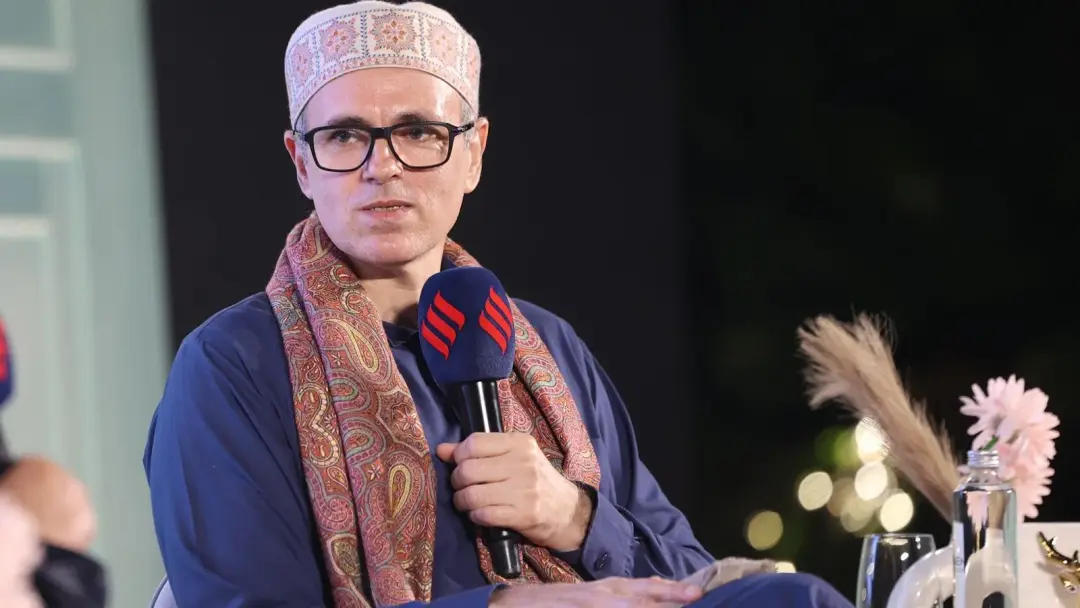
Bring UCC through Parliament, not backdoor: Omar Abdullah
Jammu and Kashmir Chief Minister Omar Abdullah said on Tuesday that the BJP should introduce the Uniform Civil Code Bill in Parliament rather than through individual states or the backdoor. He said not all NDA partners agree, adding he had heard the JDU said it would not be implemented in Bihar. A law applying only to BJP-ruled states is not universal, he said, as "the whole country is not a BJP ruled state". He called the BRICS joint statement's condemnation of the 2025 Pahalgam attack a foreign policy success.
Source
Indian Express — India · read the original report ↗
Desk check · compared with the source
What the desk checked (5)
- Omar Abdullah said the BJP should bring the UCC Bill through Parliament and not via states or the backdoor. — Directly attributed to Omar Abdullah in quotes given to mediapersons outside his house.
- JDU has said UCC will not be implemented in Bihar. — Reported by Omar Abdullah as hearsay ('from what I hear'); no JDU source cited in the text.
- The BRICS Summit joint statement condemned the 2025 Pahalgam attack. — Stated in source and referenced in Omar Abdullah's quote; no document cited.
- Modi and Xi Jinping met on the sidelines of the BRICS Summit in New Delhi. — Appears in source as context; no separate attribution given.
- Omar Abdullah said 'one nation, one election' and reservation legislations have not been brought to Parliament. — Attributed quote reflecting his opinion, not independently verified.
Analysts’ view opinion
Omar Abdullah has picked a shrewd line of attack: instead of arguing the merits of the Uniform Civil Code, he challenges the BJP on procedure and on the arithmetic of its own coalition. By demanding a Bill in Parliament, he shifts the burden onto the NDA to demonstrate consensus that, by his account, it does not have — pointing to the JDU's reported reluctance in Bihar. It is opposition politics designed to widen a fault line inside the ruling alliance rather than to fight a straight ideological battle.
- Framing UCC as a parliamentary question rather than a religious or cultural one lets Omar oppose it on constitutional-procedure grounds, which is harder to caricature as minority appeasement.
- His "the whole country is not a BJP-ruled state" formulation is aimed less at Kashmir's voters than at the national conversation, positioning the National Conference inside the broader opposition argument on federalism.
- Naming the JDU's reported position on Bihar is a deliberate attempt to make UCC an alliance-management problem for the BJP, which typically prefers to keep such differences quiet.
- By bracketing UCC with 'one nation, one election' and reservation as issues not taken to Parliament, he builds a pattern-based critique of the government's legislative approach rather than a one-off objection.
- His praise for the BRICS statement mentioning the Pahalgam attack, alongside his caution against seeking foreign 'certificates', lets him look nationally responsible on security while still criticising the government — a calibrated posture for a Chief Minister who must work with the Centre.
What to watch — Watch whether the JDU or other NDA partners publicly clarify their position on UCC, and whether other opposition parties adopt the same 'bring it to Parliament' framing rather than debating the Code's substance.
The story does not establish the JDU's official stance — Omar himself says it is based on what he has heard — nor does it establish any government timeline or intention to bring a UCC Bill to Parliament, or the BJP's response to his remarks.
Deep dive
Research brief · 8 facts · 3 dates · exam-readyThe brief
Context
Jammu and Kashmir Chief Minister Omar Abdullah has objected to the way the Uniform Civil Code (UCC) is being advanced, saying the BJP should legislate it in Parliament rather than through individual states or "the backdoor". The UCC is a common set of personal laws on matters such as marriage, divorce, inheritance and adoption, replacing community-specific personal laws. Omar argued that a code applied only in BJP-ruled states cannot be called "universal", and that BJP's own NDA allies are not agreed on it — citing what he had heard about the JDU saying it would not be implemented in Bihar. He spoke to reporters outside his house on Tuesday, also commenting on the BRICS Summit joint statement that condemned the 2025 Pahalgam attack.
Key facts
- J&K CM Omar Abdullah said on Tuesday that the BJP should bring the Uniform Civil Code Bill through Parliament, not via different states or through the backdoor.
- He said UCC "is the job of the Parliament" and if the BJP has the numbers it should legislate there.
- He said not everyone in the NDA agrees, and that from what he had heard the Janata Dal United (JDU) had said UCC will not be implemented in Bihar.
- He said he does not believe the BJP will be able to get the Bill passed in the House given the reluctance of allies.
- He argued that if the UCC applies only to BJP-ruled states it is not a universal law, as "the whole country is not a BJP ruled state".
- He said legislations such as "one nation, one election" and reservation have also not been brought to Parliament.
- On the BRICS Summit, he called the joint statement condemning the 2025 Pahalgam attack a "big thing" and "a big success of our foreign policy", noting how many allies of Pakistan were in the room.
- On China lauding India's foreign policy after the Modi–Xi Jinping meeting on the BRICS Summit sidelines in New Delhi, he asked, "Why do we look for certificates from others?"
Timeline
- 2025The Pahalgam attack, later condemned in the BRICS joint statement.
- Recently concluded (date not stated in the source)BRICS Summit; PM Narendra Modi and Chinese President Xi Jinping meet on its sidelines in New Delhi; joint statement mentions the Pahalgam attack.
- Tuesday (exact date not stated in the source)Omar Abdullah speaks to mediapersons outside his house on UCC, BRICS and foreign policy.
Who has a stake
- Omar Abdullah, Chief Minister of Jammu and Kashmir — Argues UCC must be decided by Parliament representing the whole country, not by individual states.
- Bharatiya Janata Party (BJP) — Accused of routing UCC through states rather than Parliament; faces questions about numbers in the House.
- NDA and Janata Dal United (JDU) — Allies reportedly not on the same page; JDU said to have ruled out UCC implementation in Bihar.
- Parliament — Presented as the only forum with national representation competent to decide a law of this nature.
- BRICS grouping and Indian foreign policy establishment — Joint statement's mention of the 2025 Pahalgam attack cited as a diplomatic gain despite Pakistan's allies being present.
Why it matters
The UCC debate is shifting from a national legislative question to state-level enactments, raising the issue of whether a "universal" code can emerge piecemeal from states governed by one party. The remarks also spotlight coalition strain within the NDA, with a key ally reportedly unwilling to apply UCC in its state. Separately, the comments question the practice of treating foreign praise as validation of India's foreign policy.
UPSC angle
Prelims pointers
- Uniform Civil Code (UCC): a common set of personal laws for all citizens, replacing community-specific personal laws.
- Omar Abdullah is the Chief Minister of Jammu and Kashmir (source).
- Janata Dal United (JDU) is an NDA constituent; reportedly said UCC will not be implemented in Bihar.
- BRICS Summit joint statement condemned the 2025 Pahalgam attack — cited by Omar as a foreign policy success.
- PM Narendra Modi met Chinese President Xi Jinping on the sidelines of the BRICS Summit in New Delhi.
- Other pending legislative issues named by Omar: "one nation, one election" and reservation.
Mains framing
The controversy over routing the Uniform Civil Code through state legislatures rather than Parliament raises a core question of federal design and legislative propriety: can a law claiming universality be built state by state, and by states governed by a single party? Omar Abdullah's objection rests on two grounds — representation (a matter affecting all communities across the country should be settled in the forum that represents the whole country) and coalition consent (he says NDA allies including the JDU are not on board, making passage in the House doubtful). The counter-consideration, not addressed in the source, is that personal law subjects allow state legislation; but politically, piecemeal enactment risks a patchwork of family-law regimes and litigation over uniformity. He extends the same critique to "one nation, one election" and reservation, which he says have not been brought to Parliament. The way forward he suggests is straightforward: introduce a Bill in Parliament and test the numbers, building consensus among allies and states first. On foreign policy, his caution against seeking "certificates from others" argues for judging outcomes — such as the BRICS statement's mention of the 2025 Pahalgam attack before Pakistan's allies — rather than external praise.
Key terms
- Uniform Civil Code (UCC)
- A common civil code for all citizens; Omar Abdullah says it is "not universal" if applied only in BJP-ruled states.
- NDA
- The BJP-led coalition; Omar says its constituents are not in agreement on UCC.
- Janata Dal United (JDU)
- NDA ally which, per Omar, has said UCC will not be implemented in Bihar.
- BRICS Summit
- Grouping's summit whose joint statement condemned the 2025 Pahalgam attack; Modi met Xi Jinping on its sidelines in New Delhi.
- Pahalgam attack (2025)
- Terror attack in J&K referenced in the BRICS joint statement's condemnation.
- "One nation, one election"
- Simultaneous-elections proposal which Omar says has also not been brought to Parliament.
Practice questions
- Should a Uniform Civil Code be enacted by Parliament or can states legislate it individually? Discuss the implications of state-wise enactment for the idea of "universality".
- Coalition politics as a check on major legislation: examine with reference to the reported NDA differences over the UCC.
- "We should not give too much importance to what other countries say about our foreign policy." Critically evaluate this view in the light of the BRICS joint statement's reference to the 2025 Pahalgam attack.
Grounded only in the source report — figures and dates are the source's, not inferred.