
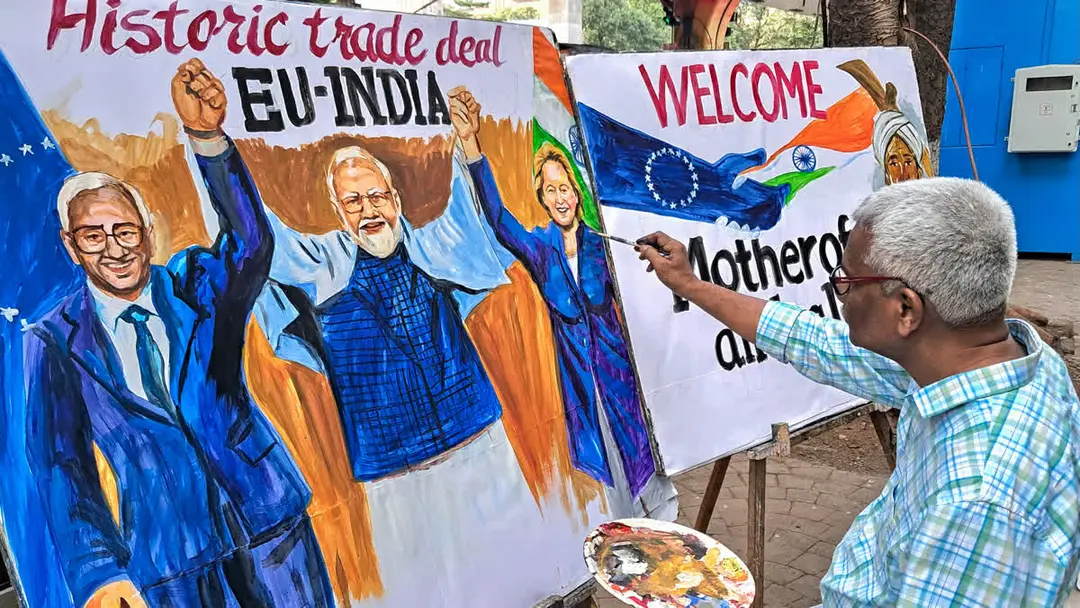
European Commission sends India-EU FTA to Council for approval
The European Commission on Friday sent the proposed India-EU Free Trade Agreement to its Council for signature. If cleared, it will conclude nearly two decades of negotiations that began in 2007 and become the largest trade deal ever concluded by both sides. Per an EU statement, tariffs will be cut or removed on 96% of EU goods exports to India, saving about EUR 4 billion a year, while 91-95% of Indian exports to the EU turn duty-free from day one. Bilateral goods trade was EUR 118 billion in 2025.
Source
European Union · read the original report ↗
Desk check · compared with the source
What the desk checked (5)
- The European Commission sent the proposed India-EU FTA to its Council for signature on Friday. — Attributed in source to the European Commission; date given as September 11, 2026.
- The deal will eliminate or reduce tariffs on 96% of EU goods exports to India, saving about EUR 4 billion a year in duties. — Figures appear in source and are attributed to a statement from the EU side.
- Tariffs will fall to zero on 91-95% of India's exports to the EU from day one, rising to over 99% within seven years. — Figures appear in source, attributed to the EU statement; not independently verifiable here.
- Bilateral goods trade was EUR 118 billion and services trade EUR 67 billion in 2025. — Figures appear in source without a named agency; presumed from the EU statement.
- Negotiations began in 2007 and the deal would be the largest ever concluded by both sides. — Stated in source; the 'largest ever' claim is conditional on Council approval.
Analysts’ view opinion
రెండు దశాబ్దాల చర్చల తర్వాత ఈ ఒప్పందం సంతకం దశకు చేరడం ఆర్థికంగా పెద్ద మలుపు — ఎందుకంటే 2025లో 11,800 కోట్ల యూరోల వస్తు వాణిజ్యం ఉన్న సంబంధంలో సుంకాల అడ్డంకులు దాదాపు తొలగిపోతాయి. భారత్కు తక్షణ లాభం స్పష్టం: 91-95 శాతం ఎగుమతులపై తొలి రోజు నుంచే సుంకాలు సున్నా అవుతాయి, అంటే వస్త్రాలు, రసాయనాలు, లోహాలు, యంత్రాల వంటి శ్రమ- ఎగుమతి ఆధారిత రంగాలకు ధరల పోటీతత్వం పెరుగుతుంది. ఈయూ వైపు లాభం ఏటా సుమారు 400 కోట్ల యూరోల సుంక ఆదా రూపంలో, ప్రధానంగా పరిశ్రమ ఉత్పత్తులు, రవాణా పరికరాలు, రసాయనాలపై. మొత్తానికి ఇది ఇరుపక్షాలకు లాభదాయకంగా కనిపిస్తున్నా, దేశీయంగా కొన్ని రంగాలకు పోటీ ఒత్తిడి తప్పదు.
- భారత ఎగుమతిదారులకు ఇది GSP ఆధారపడటం నుంచి బయటపడే మార్గం — ప్రస్తుతం భారత ఎగుమతుల్లో కేవలం 38 శాతమే GSP ప్రయోజనాలకు అర్హమైనవి, FTA దానిని ఖాయమైన, విస్తృతమైన సున్నా-సుంక ప్రవేశంతో భర్తీ చేస్తుంది.
- సుంక తగ్గింపుల రూపేణా ఖర్చు తగ్గడం ముందుగా దిగుమతిదారులు, తర్వాత వినియోగదారులకు చేరుతుంది — భారత్లో యూరోపియన్ యంత్రాలు, ఆటో విడిభాగాలు, రసాయనాల ధరలు తగ్గే అవకాశం ఉంది, ఇది దేశీయ ఉత్పత్తి వ్యయాన్ని కూడా దిగువకు నెడుతుంది.
- అదే సమయంలో 96 శాతం ఈయూ ఎగుమతులపై సుంకాలు తగ్గడం అంటే భారత దేశీయ పరిశ్రమలకు — ప్రత్యేకించి ఆటోమొబైల్, మెషినరీ, రసాయన రంగాల్లో — పోటీ తీవ్రమవుతుంది; సర్దుబాటు వ్యయం భరించేది ఈ రంగాలే.
- పెట్టుబడి అసమతుల్యత గమనార్హం: 2024లో ఈయూ FDI నిల్వ 13,280 కోట్ల యూరోలు, భారత్ FDI నిల్వ 1,370 కోట్ల యూరోలు — ఒప్పందం స్థిరత్వ సంకేతంగా పనిచేస్తే ఈ అంతరం మరింత పెట్టుబడి ప్రవాహాన్ని ఆకర్షించవచ్చు.
- పెద్ద ఆర్థిక వ్యవస్థలు వాణిజ్య అనిశ్చితిని ఎదుర్కుంటున్న తరుణంలో, ఈయూ ప్రకటనలోనే పేర్కొన్న 'వైవిధ్యీకరణ' లక్ష్యం భారత్కు సరఫరా గొలుసు మళ్లింపు రూపంలో మధ్యకాలిక అవకాశం.
What to watch — కౌన్సిల్ ఆమోదం, సంతకం, ఆ తర్వాత అమలు తేదీ — అలాగే CBAM (కార్బన్ సరిహద్దు పన్ను) వంటి సుంకేతర అంశాలు ఆచరణలో ఎలా పరిష్కారమవుతాయో గమనించాలి, ఎందుకంటే లోహాలు, రసాయనాల ఎగుమతుల నికర లాభం దానిపైనే ఆధారపడి ఉంటుంది.
ఈ కథనం ఒప్పందం ఇంకా ఆమోదం పొందిందని లేదా అమల్లోకి వచ్చిందని చెప్పడం లేదు; రంగాలవారీ మినహాయింపులు, వ్యవసాయ-పాల ఉత్పత్తులపై షరతులు, ఉద్యోగాలు లేదా GDP వృద్ధిపై పరిమాణాత్మక ప్రభావం, అమలు కాలపరిమితి వంటివి ఇందులో పేర్కొనబడలేదు.
Deep dive
Research brief · 8 facts · 6 dates · exam-readyThe brief
Context
The European Commission on Friday forwarded the proposed India-EU Free Trade Agreement to the Council of the EU for signature, a procedural step that, if authorised, would close negotiations first launched in 2007. The deal would be the largest trade agreement ever concluded by either the EU or India. The EU is a major economic partner for India — its 9th largest goods trading partner globally and 6th for services — with bilateral goods trade of EUR 118 billion in 2025. Until now, Indian exports have relied partly on the EU's Generalised Scheme of Preferences (GSP), whose coverage has shrunk as Indian sectors "graduated" out of preferences.
Key facts
- The European Commission sent the India-EU FTA to the Council for signature on Friday, September 11, 2026.
- Negotiations on the agreement began in 2007, spanning nearly two decades.
- The deal will eliminate or reduce tariffs on 96% of EU goods exports to India, saving around EUR 4 billion per year in duties on European products.
- Tariffs will fall to zero on 91-95% of India's exports to the EU from day one, rising to over 99% within seven years.
- Bilateral trade in goods stood at EUR 118 billion in 2025; trade in services at EUR 67 billion (EU exports EUR 29.2 billion, EU imports EUR 37.8 billion).
- In 2024, EU FDI stock in India was EUR 132.8 billion, while India's FDI stock in the EU was EUR 13.7 billion.
- India is the EU's 9th largest goods trading partner globally and 6th for trade in services.
- At present only around 38% of India's exports to the EU are eligible for GSP preferences, after several sectors graduated out.
Timeline
- 2007India-EU Free Trade Agreement negotiations begin.
- 2024EU FDI stock in India recorded at EUR 132.8 billion; India's FDI stock in the EU at EUR 13.7 billion.
- 2025Bilateral goods trade reaches EUR 118 billion and services trade EUR 67 billion.
- September 11, 2026European Commission forwards the proposed FTA to the Council of the EU for signature.
- Day one of entry into force91-95% of India's exports to the EU become duty-free.
- Within seven years of entry into forceDuty-free coverage for Indian exports scales to over 99%.
Who has a stake
- European Commission — Negotiated the deal and has now proposed it to the Council for signature; pursuing its trade openness and diversification agenda.
- Council of the EU — Must authorise signature of the agreement for the nearly two-decade negotiation to conclude.
- Government of India — Secures duty-free access for 91-95% of exports to the EU from day one, rising above 99% in seven years.
- European companies and exporters — Save around EUR 4 billion a year in duties and get easier, more level-playing-field access to the Indian market.
- Indian exporters in machinery, chemicals, textiles, metals and petroleum products — Main export sectors to the EU that stand to gain from tariff elimination beyond limited GSP coverage.
- Indian sectors graduated out of GSP — Only about 38% of India's EU-bound exports still qualify for GSP; the FTA would replace shrinking unilateral preferences with treaty-based access.
Why it matters
The agreement would be the biggest trade deal either side has ever concluded, locking in market access for India's largest export destination bloc at a time when unilateral GSP preferences now cover only about 38% of Indian exports to the EU. The EU frames it as a geopolitical signal too — a joint commitment with the world's most populous country and fifth largest economy to a rules-based trading system and to diversifying supply chains.
UPSC angle
Prelims pointers
- India-EU FTA talks began in 2007; the European Commission sent the deal to the Council for signature on September 11, 2026.
- Tariff cuts cover 96% of EU goods exports to India, saving European firms about EUR 4 billion a year in duties.
- 91-95% of Indian exports to the EU go duty-free on day one; over 99% within seven years.
- India is the EU's 9th largest goods trading partner and 6th largest services trading partner.
- EU-India goods trade: EUR 118 billion (2025); services trade: EUR 67 billion (2025).
- Under the EU's Generalised Scheme of Preferences (GSP), only about 38% of India's exports to the EU remain eligible after sector graduation.
Mains framing
The India-EU FTA's movement to the Council for signature marks the culmination of negotiations begun in 2007, driven on the European side by a diversification agenda and on India's by the erosion of unilateral GSP preferences — now covering only about 38% of its EU-bound exports as competitive sectors graduated out. The asymmetry in the headline numbers is instructive: the EU secures tariff cuts on 96% of its goods exports worth roughly EUR 4 billion in annual duty savings, largely in industrial products, machinery, transport equipment and chemicals, while India gains immediate duty-free treatment for 91-95% of its exports — machinery and appliances, chemicals, textiles, metals and petroleum products — scaling above 99% in seven years. Beneath the trade numbers lies a sharp investment imbalance: EU FDI stock in India was EUR 132.8 billion in 2024 against India's EUR 13.7 billion in the EU, suggesting the deal's gains may hinge as much on investment and services (EUR 67 billion in 2025) as on goods. The way forward lies in ratification, credible handling of non-tariff issues such as the EU's carbon border measures, and building domestic manufacturing competitiveness so that improved market access converts into export growth rather than only import liberalisation.
Key terms
- Free Trade Agreement (FTA)
- A treaty between parties to reduce or eliminate tariffs and other barriers on trade in goods and services between them.
- Council of the EU
- The EU body of member-state representatives that must authorise signature of the India-EU trade agreement.
- European Commission
- The EU's executive arm, which negotiated the FTA and has proposed it to the Council for signature.
- Generalised Scheme of Preferences (GSP)
- EU scheme giving developing countries unilateral tariff concessions; only about 38% of India's EU exports still qualify.
- Graduation (under GSP)
- Withdrawal of GSP preferences from sectors judged competitive enough not to need them, as has happened to several Indian sectors.
- FDI stock
- Cumulative value of foreign direct investment held; EU held EUR 132.8 billion in India, India EUR 13.7 billion in the EU (2024).
Practice questions
- Examine the significance of the India-EU Free Trade Agreement for India's export competitiveness, given that GSP preferences now cover only about 38% of India's exports to the EU.
- The India-EU FTA is described as the largest trade deal ever concluded by both sides. Discuss its economic and geopolitical implications with reference to trade and investment data.
- Critically assess whether tariff liberalisation alone can help India close the asymmetry in trade and FDI stocks with the European Union.
Grounded only in the source report — figures and dates are the source's, not inferred.