
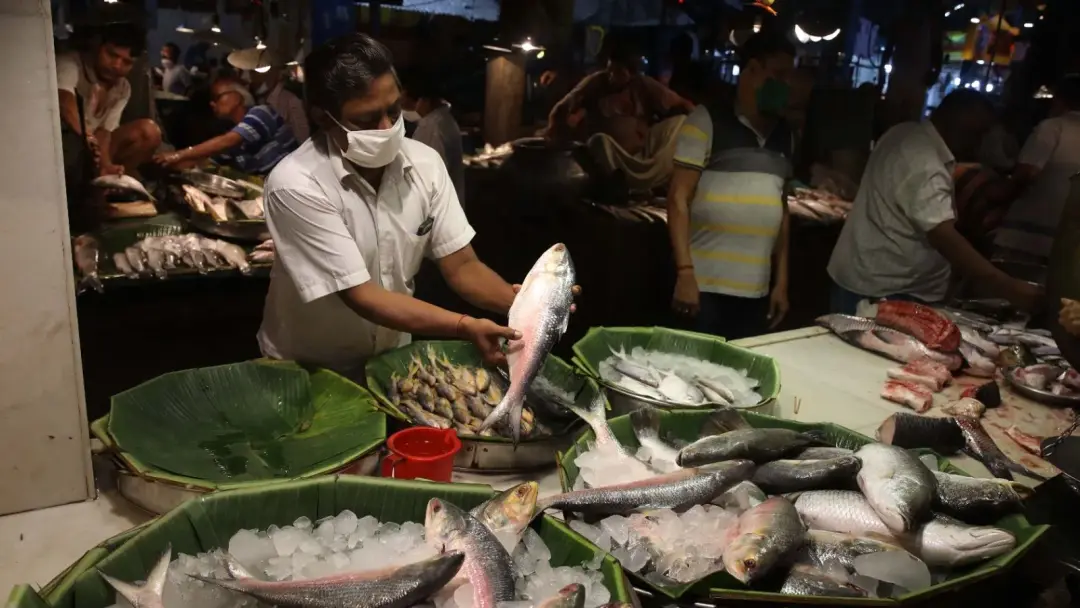
India exports Hilsa to Bangladesh, reversing traditional trade flow
India is exporting Hilsa, known as Ilish in Bengali, to Bangladesh, reversing the usual flow of the fish into Bengal. Around 500 tonnes have been sent in the past two months through the Petrapole land port in West Bengal, and traders expect another 150-200 tonnes in the coming weeks. Syed Anwar Maqsood, secretary of the Fish Importers Association in Bengal, said this is the first such export and most of the catch is from Gujarat. Bangladesh has currently paused Hilsa exports to India.
Source
Indian Express — Cities · read the original report ↗
Desk check · compared with the source
What the desk checked (5)
- About 500 tonnes of Hilsa have been exported to Bangladesh in the past two months via Petrapole land port. — Figure appears in source, attributed to fish traders; no official government data cited.
- This is the first time Indian Hilsa is being exported to Bangladesh, with most of the catch from Gujarat. — Direct quote attributed to Syed Anwar Maqsood, secretary of the Fish Importers Association in Bengal.
- In September 2024, 2,420 tonnes were permitted but only 577 tonnes imported; in September 2025, 1,200 tonnes permitted but only 150 tonnes imported. — Figures quoted by Maqsood; source article notes they are as reported by fish trade sources.
- Hilsa imports from Bangladesh were restricted since July 2012, with a one-month Durga Puja window allowed from 2019. — Attributed to Maqsood; internally consistent within the source.
- Traders expect an additional 150-200 tonnes to be exported in coming weeks. — Forward-looking trade estimate, unverifiable projection.
Analysts’ view opinion
ఇది భావోద్వేగపు కథ కంటే ముందు ఒక మార్కెట్ సంకేతం: సరఫరా, ధరల మధ్య అంతరం ఉన్నప్పుడు వాణిజ్యం దిశ మార్చుకుంటుంది. బంగ్లాదేశ్ ఎగుమతులను నిలిపివేసిన నేపథ్యంలో, గుజరాత్ (ముఖ్యంగా భరూచ్) నుంచి పట్టిన ఇలిష్కు చట్టోగ్రామ్, సిల్హెట్ వంటి ప్రాంతాల్లో డిమాండ్ ఏర్పడి, రెండు నెలల్లో సుమారు 500 టన్నులు పెట్రాపోల్ ద్వారా వెళ్లింది. పరిమాణాల్లో ఇది చిన్నదే అయినా, భారత మత్స్యకారులకు, హౌరా మార్కెట్ ఆధారిత వ్యాపార గొలుసుకు కొత్త ఆదాయ మార్గం తెరుస్తోంది — ధరలు, విలువ జోడింపు ఎక్కడ దక్కుతాయో అనేది కీలకం.
- లాభపడేది ఎవరు: గుజరాత్ తీర మత్స్యకారులు, హౌరా-పెట్రాపోల్ మధ్యవర్తులు, క్లియరింగ్ ఏజెంట్లు, రవాణా-కోల్డ్ చైన్ సేవలు; నష్టపోయేది బంగ్లా ఇలిష్ దిగుమతిపై ఆధారపడిన బెంగాల్ దిగుమతిదారులు.
- కథనంలోని లెక్కల ప్రకారం అనుమతించిన కోటాకు, వాస్తవ దిగుమతికి మధ్య భారీ అంతరం (2024లో 2,420 టన్నులకు 577; 2025లో 1,200 టన్నులకు 150) — ఇరుకైన ఒక నెల విండో వాణిజ్యాన్ని ఆర్థికంగా లాభసాటి కాకుండా చేస్తోందని సూచన.
- విలువ జోడింపు ఎక్కువ భాగం సరిహద్దు ఆవలే జరుగుతోంది: గుడ్లు (రో) తీసి ప్యాక్ చేసి తిరిగి ఎగుమతి, మిగిలిన చేపను ఉప్పు వేసి ఎండబెట్టడం — అంటే భారత్ ప్రధానంగా ముడి సరుకు సరఫరాదారు స్థానంలో ఉంది.
- పండుగ సీజన్లో బెంగాల్ మార్కెట్లో పద్మా ఇలిష్ కొరత కొనసాగితే స్థానికంగా ప్రీమియం చేపల ధరలపై ఒత్తిడి ఉండవచ్చు; అదే సమయంలో ఎగుమతి డిమాండ్ దేశీయ ధరలను పైకి లాగే అవకాశమూ ఉంది.
- దీర్ఘకాలిక లాభం సాధించాలంటే స్టాక్ నిర్వహణ, శీతల గొలుసు, ప్రాసెసింగ్, బ్రాండింగ్పై పెట్టుబడి అవసరం — కథనంలో నిపుణుల సూచన కూడా ఇదే దిశలో ఉంది.
What to watch — బంగ్లాదేశ్ ఎగుమతి నిలిపివేతను కొనసాగిస్తుందా, లేదా విండో పెంచుతుందా — అలాగే వ్యాపారులు ఆశిస్తున్న అదనపు 150-200 టన్నులు నిజంగా తరలివెళ్తాయా, ఇది ఒక సీజన్ ప్రత్యేకతా లేక స్థిరమైన వాణిజ్య మార్గమా అన్నది తేలుస్తుంది.
ఈ కథనం ఎగుమతి విలువ, కిలో ధరలు, మత్స్యకారులకు దక్కిన వాటా, లేదా రెండు దేశాల్లో ఇలిష్ నిల్వల్లో వచ్చిన మార్పులను స్థాపించలేదు; పరిమాణాలు వ్యాపార వర్గాలు చెప్పినవే, స్వతంత్ర అధికారిక గణాంకాలు లేవు.
Deep dive
Research brief · 8 facts · 6 dates · exam-readyThe brief
Context
Hilsa (Ilish in Bengali) is the most prized fish on Bengali dining tables and has traditionally flowed from Bangladesh's rivers, notably the Padma, into West Bengal. Bangladesh restricted Hilsa exports to India from July 2012, and since 2019 has allowed a narrow one-month import window around Durga Puja. In a reversal of this pattern, Indian Hilsa — largely caught off Gujarat's Bharuch region — is now being exported to Bangladesh through the Petrapole land port, at a time when Bangladesh has paused its own Hilsa exports to India.
Key facts
- Around 500 tonnes of Hilsa have been exported from India to Bangladesh in the past two months through the Petrapole land port in West Bengal.
- Traders expect an additional 150 to 200 tonnes of Hilsa to be exported to Bangladesh in the coming weeks.
- Syed Anwar Maqsood, secretary of the Fish Importers Association in Bengal and the Howrah wholesale fish market, said this is the first time Indian Hilsa is being exported to Bangladesh.
- Most of the exported catch is from Gujarat, particularly the Bharuch region, with some supplies routed through the Howrah fish market.
- Hilsa imports from Bangladesh have been restricted since July 2012; from 2019 Bangladesh permitted imports only during Durga Puja, with a one-month window.
- In September 2024, Bangladesh permitted 2,420 metric tonnes but actual imports were only 577 metric tonnes.
- In September 2025, 1,200 tonnes were permitted but only 150 metric tonnes were actually imported.
- High-roe Hilsa is in demand in Chattogram, Sylhet and other Bangladesh districts; roe is extracted, packaged and re-exported while the fish is salted, dried and sold locally.
Timeline
- July 2012Hilsa imports from Bangladesh into India were restricted.
- 2019Bangladesh began permitting Hilsa exports to India only during Durga Puja festivities, with a window of one month.
- September 2024Bangladesh permitted 2,420 metric tonnes of Hilsa exports to India; only 577 metric tonnes were actually imported.
- August (as reported)A Fish Importers Association team visited Dhaka and met Bangladesh Commerce Secretary Ataur Rehman Khan, urging him to lift the Hilsa export ban.
- September 2025Bangladesh permitted 1,200 tonnes; only 150 metric tonnes were imported.
- Past two months (as reported)About 500 tonnes of Indian Hilsa exported to Bangladesh via Petrapole; Bangladesh has currently paused Hilsa exports to India.
Who has a stake
- Fish Importers Association in Bengal / Howrah wholesale fish market — Its secretary Syed Anwar Maqsood has pressed Bangladesh to lift the export ban; the body now handles the reverse export trade.
- West Bengal fish trade and Kolkata-Howrah marketing network — Opportunity to strengthen aggregation, cold-chain logistics, processing, branding and export-oriented fisheries enterprises.
- Gujarat fishermen, especially in the Bharuch region — Source of most of the exported catch, gaining a new high-value market across the border.
- Government of Bangladesh (Commerce Ministry, Commerce Secretary Ataur Rehman Khan) — Controls the Hilsa export window to India; has currently paused exports while importing Indian Hilsa.
- Central Inland Fisheries Research Institute (CIFRI), director Pradip Dey — Sees a case for science-based stock enhancement, responsible fisheries management and a value-added Hilsa economy.
- Petrapole land port operators and clearing agents — Kartik Chakraborty of the Petrapole Clearing Agents Staff Welfare Association notes trade volumes now moving outward instead of inward.
- Consumers in Bangladesh (Chattogram, Sylhet) and Bengal — Bangladeshi demand for high-roe Hilsa versus Bengal's shortfall of Padma Hilsa.
Why it matters
Hilsa is both a cultural icon and a high-value fishery resource, and a reversal in its trade direction signals shifting patterns of production, availability and consumer demand between India and Bangladesh. It shows that Indian coastal catch, largely from Gujarat, can serve a premium regional market even as Bangladesh's narrow export windows keep supplies to Bengal well below permitted quantities. For West Bengal, it opens possibilities in processing, cold-chain logistics, value addition and export-oriented fisheries.
UPSC angle
Prelims pointers
- Hilsa is called Ilish in Bengali; it has traditionally been imported into West Bengal from Bangladesh's Padma river.
- Petrapole in West Bengal is the land port through which about 500 tonnes of Indian Hilsa went to Bangladesh in two months.
- Bangladesh restricted Hilsa exports to India from July 2012; a one-month Durga Puja window was allowed from 2019.
- Permitted vs actual imports: Sept 2024 — 2,420 tonnes permitted, 577 tonnes imported; Sept 2025 — 1,200 tonnes permitted, 150 tonnes imported.
- Most Indian Hilsa exported to Bangladesh comes from Gujarat's Bharuch region, routed via the Howrah fish market.
- Central Inland Fisheries Research Institute (CIFRI) director Pradip Dey called for science-based stock enhancement and a value-added Hilsa economy.
Mains framing
The first-ever export of Indian Hilsa to Bangladesh — about 500 tonnes in two months through Petrapole, with 150-200 tonnes more expected — inverts a long-standing trade pattern and illuminates several structural issues. On the supply side, Bangladesh's restrictions since July 2012 and the one-month Durga Puja window allowed from 2019 have made inflows unreliable: only 577 of 2,420 permitted tonnes moved in September 2024 and 150 of 1,200 tonnes in September 2025, showing that quota liberalisation without adequate time windows fails in practice. On the demand side, high-roe Hilsa from Gujarat's Bharuch region is finding buyers in Chattogram and Sylhet, where roe is extracted for re-export and the fish is salted and dried — evidence of value-addition capacity across the border that India could capture domestically. The implications are for fishermen's livelihoods, food security and regional trade, as CIFRI's director notes. The way forward suggested in the source lies in science-based stock enhancement, responsible fisheries management, post-harvest value addition, cold-chain logistics, branding and integrated market linkages, alongside continued diplomatic engagement with Dhaka for a wider export window.
Key terms
- Hilsa / Ilish
- A prized migratory fish central to Bengali cuisine, traditionally sourced from Bangladesh's Padma river.
- Roe
- The fully ripe egg mass in female Hilsa, used in delicacies; extracted, packaged and re-exported from Bangladesh.
- Petrapole land port
- Land port on the India-Bangladesh international border in West Bengal through which the Hilsa consignments moved.
- Fish Importers Association in Bengal
- Trade body, with secretary Syed Anwar Maqsood, that has lobbied Dhaka to lift the Hilsa export ban.
- Central Inland Fisheries Research Institute (CIFRI)
- Research institute whose director Pradip Dey advocates a knowledge-driven, sustainable and value-added Hilsa economy.
- Durga Puja import window
- One-month period, allowed by Bangladesh since 2019, during which Hilsa exports to India are permitted.
Practice questions
- The reversal of Hilsa trade flows between India and Bangladesh reflects changing production and demand patterns rather than policy alone. Discuss with reference to the export and import figures reported.
- Examine how quota-based export windows, such as Bangladesh's one-month Durga Puja Hilsa window, can fail to translate permitted volumes into actual trade.
- What steps can West Bengal take to build a value-added, sustainable Hilsa economy? Discuss in the light of suggestions on stock enhancement, post-harvest processing and market linkages.
Grounded only in the source report — figures and dates are the source's, not inferred.