
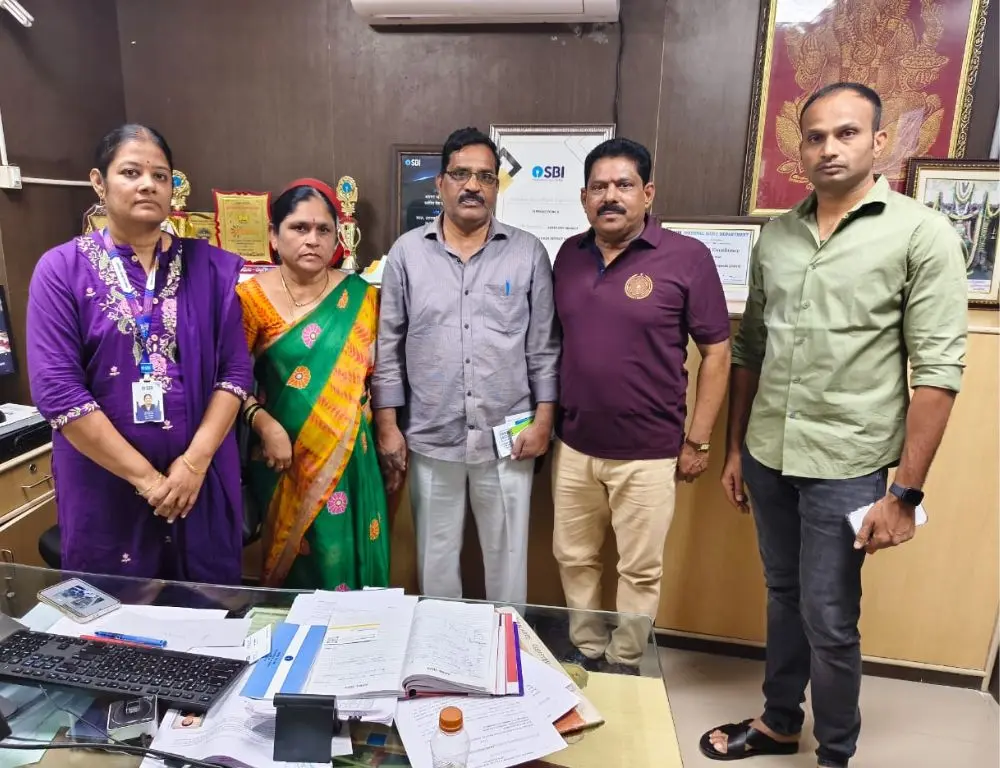
Cyber unit stops 'digital arrest' scam in Nalgonda, saves ₹18 lakh
The Telangana Cyber Security Bureau's D4C saved ₹18 lakh belonging to retired school teacher P. Devender Reddy in Nalgonda. Fraudsters posing as CBI officials pressured him for three days, claiming his Aadhaar number was linked to a case, and demanded money citing a digital arrest. On December 19, 2025, the SBI Prakasham Bazar branch manager noticed his anxiety and alerted the DSP, and the transaction was halted. A probe is under way.
Source
Nalgonda — crime · read the original report ↗
Desk check · compared with the source
What the desk checked (5)
- TGCSB's D4C prevented a digital arrest fraud and saved ₹18 lakh belonging to retired teacher P. Devender Reddy in Nalgonda. — Attributed to police; figure and name appear in source.
- Fraudsters posing as CBI officials pressured the victim for three days, claiming his Aadhaar was linked to a case on circulation of obscene content. — Attributed to police as an allegation; no independent corroboration in source.
- On December 19, 2025, around 12.00 IST, the victim and his wife went to SBI's Prakasham Bazar branch, and the manager alerted the DSP, D4C. — Date, time and branch appear in source; internally consistent.
- The TGCSB Director appreciated D4C officers T. Laxminarayana, Vishnu and Riyazuddin and the SBI branch manager. — Attributed to TGCSB; names appear in source.
- Citizens can report cyber fraud by dialling 1930 or via the national cybercrime portal. — Advisory attributed to Cyber Crime Police; helpline number appears in source.
Analysts’ view opinion
"Digital arrest" is a fiction with no basis in Indian law — arrest under criminal procedure requires physical custody, specific disclosure rights, intimation to family and production before a magistrate within the prescribed period. No investigating agency can arrest someone over a phone or video call, nor demand money to "close" a case, which is why the conduct described here potentially attracts multiple offences at once: impersonating a public servant, criminal intimidation, cheating by inducement and misuse of identity data. Legally, the most valuable feature of this case is that the money was stopped before it moved, rather than chased after the fact.
- There is no statutory procedure called "digital arrest"; the safeguards attached to a lawful arrest are tied to non-negotiable constitutional protections.
- Posing as CBI officers is graver than plain fraud, as impersonation of a public servant, intimidation and criminal inducement can apply simultaneously.
- The claim that the victim's Aadhaar was linked to a case was a pressure device; misuse of identity data in this way falls within the scope of information-technology law.
- Because the transaction was halted before transfer, investigators avoid the far harder task of tracing and recovering funds through layered or cross-border accounts.
- Bank staff spotting a suspicious transaction proved decisive, underlining the practical weight of financial institutions' vigilance duties.
What to watch — Watch whether technical analysis of digital footprints, call records and linked accounts carries the probe from identification of suspects to a registered case and eventual charge sheet.
The story does not establish whether an FIR has been registered, under which provisions, or whether any suspect has been identified or arrested.
Deep dive
Research brief · 8 facts · 5 dates · exam-readyThe brief
Context
"Digital arrest" is a cyber fraud method in which criminals impersonate central agencies such as the CBI, claim the victim is implicated in a criminal case, and coerce urgent money transfers under threat of arrest. In Nalgonda district of Telangana, the District Cyber Crime Coordination Centre (D4C) of the Telangana Cyber Security Bureau (TGCSB) stopped one such fraud targeting a retired school teacher, P. Devender Reddy. The intervention was triggered by an alert bank branch manager who noticed the customer's anxiety while attempting a ₹18 lakh transfer. Police saved the entire amount, which was the victim's retirement corpus, and have begun tracing the fraudsters.
Key facts
- D4C of the Telangana Cyber Security Bureau (TGCSB) prevented a digital arrest fraud and saved ₹18 lakh in Nalgonda district.
- Victim P. Devender Reddy, a retired school teacher who retired a year ago, had deposited his retirement benefits in his bank account.
- Fraudsters posing as CBI officials pressured him for three days, claiming his Aadhaar number was linked to a case on circulation of obscene content on social media.
- They threatened a so-called 'digital arrest' and coerced him to urgently transfer ₹18 lakh to close the alleged case.
- On December 19, 2025, around 12.00 IST, the victim and his wife visited SBI's Prakasham Bazar branch, Nalgonda, to transfer the amount.
- The branch manager alerted the Deputy Superintendent of Police, D4C, Nalgonda, who reached the bank and temporarily halted the transaction.
- Cyber Crime Police have begun technical analysis of digital footprints, call records and linked accounts to trace the fraudsters.
- The TGCSB Director appreciated D4C officers T. Laxminarayana, Vishnu and Riyazuddin and the SBI branch manager; citizens can report on 1930 or the national cybercrime portal.
Timeline
- About one year before the incidentP. Devender Reddy retires as a school teacher and deposits his retirement benefits in his bank account.
- Three days before December 19, 2025Fraudsters posing as CBI officials begin pressuring him, claiming his Aadhaar number is linked to an obscene content case.
- December 19, 2025, around 12.00 ISTThe victim and his wife go to SBI Prakasham Bazar branch, Nalgonda, to transfer ₹18 lakh; the branch manager alerts the DSP, D4C.
- December 19, 2025 (after the alert)DSP and D4C staff reach the bank, halt the transaction, identify it as a digital arrest scam and counsel the family.
- After the interventionCyber Crime Police launch technical analysis of digital footprints, call records and linked accounts; probe under way.
Who has a stake
- P. Devender Reddy, retired school teacher, and his wife — His entire retirement benefits of ₹18 lakh were at risk of being transferred to fraudsters.
- D4C, Nalgonda (TGCSB) — Front-line district unit that halted the transaction, identified the scam and counselled the family.
- SBI Prakasham Bazar branch manager — Noticed the customer's anxiety and alerted police, making the rescue possible; role appreciated by TGCSB Director.
- Telangana Cyber Security Bureau (TGCSB) — State agency coordinating cybercrime prevention, investigation and public awareness.
- Cyber Crime Police / investigators — Must trace fraudsters through digital footprints, call records and linked bank accounts.
- Senior citizens and pensioners at large — Primary targets of digital arrest scams involving lump-sum retirement savings.
Why it matters
Digital arrest scams exploit fear of central agencies and misuse identifiers like Aadhaar to extract lump-sum savings, and retirees holding their entire retirement corpus in one account are especially vulnerable. This case shows that bank-counter vigilance combined with a district-level cyber unit can stop a loss before money leaves the system, which is far more effective than post-facto recovery. It also reinforces the core public message that no police or government agency conducts digital arrests or demands money over phone calls.
UPSC angle
Prelims pointers
- D4C stands for District Cyber Crime Coordination Centre, functioning under the Telangana Cyber Security Bureau (TGCSB).
- National cybercrime reporting helpline: 1930; complaints can also be filed on the national cybercrime portal.
- Amount saved in the Nalgonda case: ₹18 lakh, the victim's retirement benefits; date of intervention December 19, 2025.
- Fraudsters impersonated Central Bureau of Investigation (CBI) officials and cited the victim's Aadhaar number.
- No police or government agency conducts 'digital arrests' or seeks money over phone calls.
- Bank involved: State Bank of India, Prakasham Bazar branch, Nalgonda.
Mains framing
The Nalgonda case illustrates how 'digital arrest' frauds work: impersonation of a central investigating agency such as the CBI, a fabricated criminal allegation linked to a widely used identifier like Aadhaar, sustained psychological pressure over days, and a demand for an urgent lump-sum transfer to 'close' the case. The causes lie in low digital literacy among newly retired citizens holding concentrated savings, the credibility that agency names command, and the speed at which funds move once transferred. The implications are both financial and social, since a single successful call can wipe out a lifetime's retirement corpus and erode trust in digital banking. What worked here was prevention at the last mile: a branch manager reading behavioural cues of anxiety and urgency, an immediate alert to the DSP, D4C, and a temporary hold on the transaction, followed by counselling of the family. The way forward suggested by the source is a combination of bank-staff alertness at the counter, district-level cyber units able to respond within minutes, technical investigation of digital footprints, call records and linked accounts, and sustained public messaging that no law enforcement agency demands money online or over calls, with reporting through 1930 or the national cybercrime portal.
Key terms
- Digital arrest
- A scam in which fraudsters impersonating officials claim a person is under arrest via video or phone and extort money; no agency actually does this.
- D4C (District Cyber Crime Coordination Centre)
- District-level cybercrime unit that coordinates prevention, rapid response and investigation of cyber frauds.
- TGCSB (Telangana Cyber Security Bureau)
- Telangana's specialised state agency for cybercrime policing, under whose umbrella D4C units function.
- Helpline 1930
- National number for reporting cyber financial fraud, alongside the national cybercrime reporting portal.
- CBI (Central Bureau of Investigation)
- India's central investigating agency, whose identity the fraudsters falsely assumed to intimidate the victim.
Practice questions
- What is a 'digital arrest' scam, and why are recently retired citizens particularly vulnerable to it? Illustrate with the Nalgonda case.
- Examine the role of banks and district-level cyber units in preventing cyber financial fraud at the point of transaction rather than after the loss.
- Discuss how impersonation of central agencies and misuse of identity numbers such as Aadhaar shape cyber fraud in India, and suggest measures to counter it.
Grounded only in the source report — figures and dates are the source's, not inferred.