
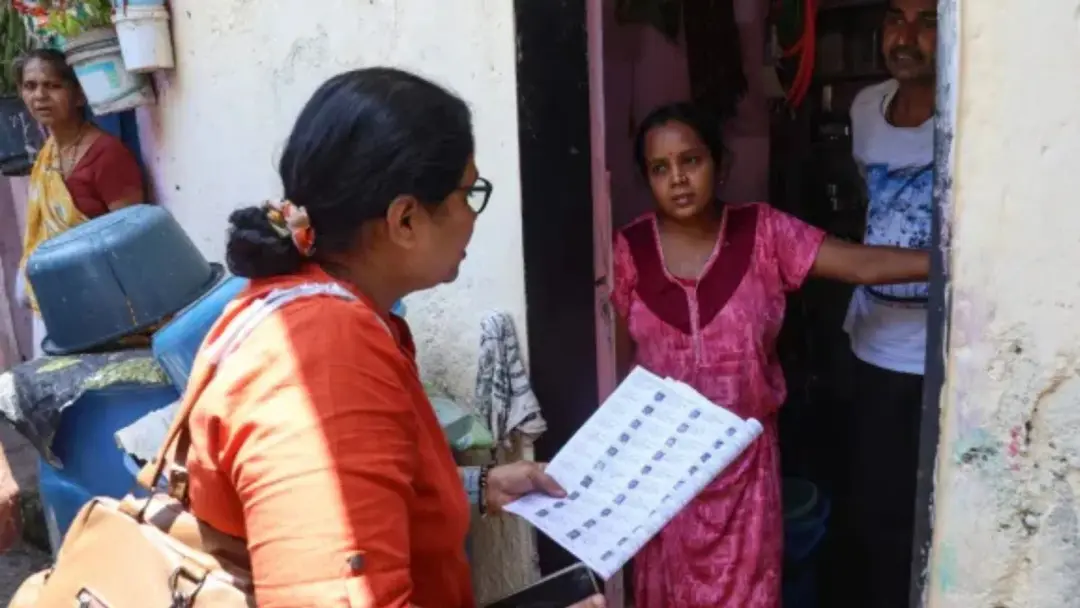
Karnataka Congress flags 'serious discrepancies' in electoral roll revision
The Karnataka Pradesh Congress Committee has written to the state chief electoral officer citing 'serious discrepancies' in the ongoing Special Intensive Revision of electoral rolls. In the September 17 letter, Congress leader Ramesh Babu said that in Part No 512 of Bengaluru's Yeshvanthapura constituency, only 389 of 1,016 voters were listed as valid after revision, excluding nearly 62 per cent. He said 339 were marked permanently shifted, 19 deceased and 265 'unmapped'. The party demanded a statewide review.
Source
Indian Express — Cities · read the original report ↗
Desk check · compared with the source
What the desk checked (4)
- Of 1,016 voters in Part No 512 of Yeshvanthapura constituency, only 389 were listed as valid after revision, nearly 62% excluded. — Attributed to Congress leader Ramesh Babu and the KPCC letter; figures appear in source, no official confirmation cited.
- 339 voters were marked permanently shifted, 19 deceased and 265 'unmapped' in the last SIR in that booth. — Figures appear in source as per Congress; note these do not reconcile arithmetically with the 1,016 total, which the party itself says needs official reconciliation.
- KPCC wrote to the state chief electoral officer on September 17 citing 'serious discrepancies' in the SIR. — Dated letter cited directly in source with quoted text; sourcing is specific.
- Similar complaints, including forms not collected or uploaded and poor response from booth-level officers, are reported statewide. — Attributed to Ramesh Babu; no independent data or official source given.
Analysts’ view opinion
Karnataka Congress is doing what parties do with roll revisions — turning an administrative process into a political battleground by leading with one striking number, a 62 per cent exclusion in a single Bengaluru booth, and scaling it into statewide doubt. As the ruling party in the state, this serves Congress twice over: it puts pressure on the electoral machinery while building a 'we protect your vote' message among urban voters. That said, this remains one party's complaint so far — without the electoral officers' explanation, wrongful or deliberate exclusion cannot be concluded.
- Extrapolating from a single booth to a statewide demand is a familiar political technique: frame a local anomaly as a systemic threat.
- The choice of an urban Bengaluru constituency is notable — booths with high rental and migrant populations naturally throw up more 'shifted' and 'unmapped' entries, but those same categories are the easiest to politically contest.
- Congress's asks — part-wise statistical reports, transparency, accountability — are process demands that are politically awkward for any election authority to refuse outright.
- A ruling party publicly questioning the revision exercise ties this to the wider national argument over the independence and rigour of electoral roll processes.
- The standard counter-argument — that a party is pre-building an excuse for a poor result — is available to rivals, but no BJP or JD(S) response is recorded in this story.
What to watch — Watch whether the chief electoral officer issues an official reconciliation for Yeshvanthapura Part 512 and concedes a statewide review, and whether other parties join or contest the demand.
The story reports only the contents of Congress's complaint; it does not establish that the exclusions were in fact wrongful, nor whether any lapse was administrative or deliberate, and it carries no response from election officials.
Deep dive
Research brief · 8 facts · 3 dates · exam-readyThe brief
Context
The Election Commission's Special Intensive Revision (SIR) of electoral rolls is underway in Karnataka, involving door-to-door enumeration and reclassification of existing voters. The Karnataka Pradesh Congress Committee (KPCC) has written to the state chief electoral officer alleging "serious discrepancies" in the exercise, saying eligible voters are being wrongly struck off. The party's central illustration is a single polling part in Bengaluru's Yeshvanthapura constituency where the bulk of listed voters were excluded after revision. Congress wants a statewide review and stronger grievance redressal before the roll is finalised.
Key facts
- KPCC wrote to Karnataka's chief electoral officer in a letter dated September 17 citing "serious discrepancies" in the ongoing SIR of electoral rolls.
- In Part No 512 of Bengaluru's Yeshvanthapura constituency, only 389 of 1,016 voters were listed as valid after revision — nearly 62 per cent excluded.
- In that booth, 339 voters were marked permanently shifted, 19 as deceased and 265 as "unmapped" in the last SIR.
- Congress leader Ramesh Babu said the figure of 389 valid voters "requires an official explanation and reconciliation".
- Complaints reported statewide include enumeration forms not collected or uploaded and eligible voters wrongly classified as shifted.
- Other grievances cited: deceased entries left unchecked and poor response from booth-level officers and electoral registration officers.
- KPCC demands include a statewide review, polling-part-wise statistical reports, and special verification of unmapped voters.
- The party also sought confirmation of shifted and deceased classifications, transparency, adequate time for corrections and accountability for administrative lapses.
Timeline
- Last SIR (date not stated in the source)In Part No 512 of Yeshvanthapura, 339 voters were marked permanently shifted, 19 deceased and 265 "unmapped".
- OngoingSIR of electoral rolls in Karnataka draws complaints of enumeration forms not collected or uploaded and voters wrongly classified as shifted.
- September 17KPCC letter to the state chief electoral officer urges immediate intervention against wrongful exclusion of eligible voters.
Who has a stake
- Karnataka Pradesh Congress Committee (KPCC) — Alleges wrongful exclusion of eligible voters; seeking statewide review, part-wise data and accountability.
- Karnataka Chief Electoral Officer — Addressee of the complaint; must explain and reconcile the disputed figures and fix grievance redressal.
- Booth-level officers and electoral registration officers — Accused of poor response and lapses in collecting/uploading enumeration forms; face demands for accountability.
- Voters of Part No 512, Yeshvanthapura constituency — 627 of 1,016 names excluded after revision; risk of losing the right to vote unless corrections are allowed.
- Ramesh Babu, Congress leader — Author of the specific allegations; demanding official explanation and reconciliation of the 389 valid-voter figure.
Why it matters
The electoral roll is the gateway to the vote, and mass reclassification of voters as shifted, deceased or "unmapped" can silently disenfranchise citizens before an election. A 62 per cent exclusion rate in one Bengaluru polling part, if replicated statewide, raises questions about the accuracy of the SIR process and the responsiveness of field-level electoral machinery. How such complaints are verified and redressed will shape public trust in the roll's integrity.
UPSC angle
Prelims pointers
- SIR stands for Special Intensive Revision of electoral rolls.
- KPCC = Karnataka Pradesh Congress Committee; it wrote to the state chief electoral officer on September 17.
- Disputed booth: Part No 512, Yeshvanthapura Assembly constituency, Bengaluru.
- Figures cited: 1,016 voters, 389 valid after revision, 339 shifted, 19 deceased, 265 unmapped.
- Field officials named in the complaint: booth-level officers (BLOs) and electoral registration officers (EROs).
- Congress demands include polling-part-wise statistical reports and special verification of unmapped voters.
Mains framing
The Karnataka SIR row illustrates the tension at the heart of electoral roll management: rolls must be purified of duplicate, shifted and deceased entries, yet purification carried out through weak field verification can wrongfully exclude eligible citizens. The KPCC complaint points to specific procedural failures — enumeration forms not collected or uploaded, voters classified as permanently shifted without verification, deceased entries left unchecked, large numbers of "unmapped" voters, and unresponsive booth-level and electoral registration officers — culminating in a single Bengaluru polling part where only 389 of 1,016 voters survived revision. The implication is that error in the roll is not a neutral statistic; it determines who can vote. The remedies sought are essentially transparency and due process: polling-part-wise statistical disclosure, special verification of unmapped voters, confirmation of shifted and deceased classifications, adequate time for corrections, an effective grievance redressal channel, and accountability for administrative lapses. As the letter frames it, roll integrity requires both accurate registration and protection against wrongful exclusion, with every eligible citizen given a fair opportunity to establish eligibility, submit documents and seek correction.
Key terms
- Special Intensive Revision (SIR)
- The ongoing intensive exercise to revise electoral rolls, which in Karnataka has triggered complaints of wrongful exclusion.
- Chief Electoral Officer (CEO)
- The state-level electoral authority to whom the KPCC addressed its September 17 complaint.
- Booth-level officer (BLO)
- Field official responsible for enumeration and verification at a polling booth; accused in the complaint of poor response.
- Electoral Registration Officer (ERO)
- Officer responsible for preparing and correcting the electoral roll of a constituency; also cited for poor response.
- Polling part
- The smallest unit of an electoral roll tied to a booth — here Part No 512 of Yeshvanthapura, with 1,016 voters.
- Unmapped voters
- Category used in the last SIR for voters not linked to a verified address/entry; 265 such voters were flagged in Part No 512.
Practice questions
- Special Intensive Revision of electoral rolls seeks to purify voter lists but risks wrongful exclusion. Examine, with reference to the Karnataka Congress complaint, the safeguards needed in roll revision.
- What institutional mechanisms exist for a citizen wrongly classified as 'shifted' or 'deceased' in an electoral roll to seek correction? Discuss the adequacy of grievance redressal at the booth level.
- "The integrity of the electoral roll requires both accurate registration and protection against wrongful exclusion." Analyse this dual obligation in the context of transparency demands such as polling-part-wise statistical reporting.
Grounded only in the source report — figures and dates are the source's, not inferred.