
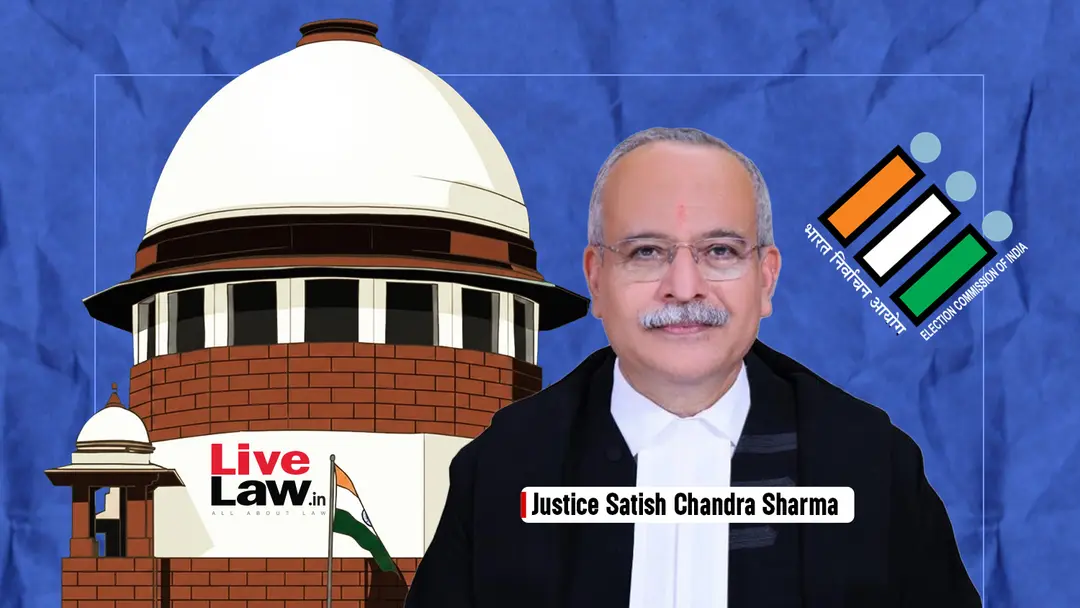
Curative plea in Supreme Court seeks recall of CEC law verdict
A curative petition has been filed in the Supreme Court seeking recall of the September 23 split verdict on the validity of the Chief Election Commissioner and Other Election Commissioners Act, 2023. Petitioner Dr Jaya Thakur says Siddharth Sharma, son of Justice Satish Chandra Sharma who was on the bench, has been the Election Commission's standing counsel in the Madhya Pradesh High Court since July 10, 2024. The plea, citing apprehension of bias and propriety, is certified by Senior Advocate Vijay Hansaria.
Source
Live Law (courts) · read the original report ↗
Desk check · some claims need care
What the desk checked (5)
- A curative petition seeks recall of the September 23 split verdict on the CEC and Other Election Commissioners Act, 2023. — Attributed in source to a petition filed by Dr Jaya Thakur through AoR Varun Thakur; contents of petition quoted.
- Justice Satish Chandra Sharma's son Siddharth Sharma is the Election Commission's standing counsel before the Madhya Pradesh High Court, empanelled since July 10, 2024. — Presented as the petitioner's claim, said to be verified from the MP High Court website and sourced to a LiveLaw article; not independently verified here.
- The petition invokes 'reasonable apprehension of bias and propriety' and seeks exemption from first filing a review. — Figure/ground appears in source as the petition's own submission.
- A bench of Justice Dipankar Datta and Justice SC Sharma referred the challenge to the 2023 law for a Constitution Bench via the CJI. — Stated in source as a recap of the court's order; consistent internally.
- The petition was certified by Senior Advocate Vijay Hansaria. — Attributed in source; no supporting document cited.
Analysts’ view opinion
This reads as a legal filing, but its real weight is political. The underlying fight is over who controls the appointment of election commissioners — an executive-dominated process or a more insulated one — and that fight has now acquired a procedural-propriety twist. By seeking recall of the split verdict, the petitioner is not merely reopening a case but politically questioning an outcome that, on the reference point, went the Union's way.
- Attacking the composition of the bench rather than the substance of the ruling lets the challengers try to neutralise the delay advantage the Union gained from the larger-bench reference.
- Justice Datta's stated concerns about executive interference in appointments already hand opponents of the 2023 law usable political talking points.
- In an already charged debate over the Election Commission's credibility, the petition supplies fresh ammunition to the 'justice must be seen to be done' argument.
- Asking to skip the review stage is tactically deliberate — the petitioner says openly that the same bench would serve no useful purpose.
- The other side can argue that both judges jointly directed the matter to a Constitution Bench, which weakens the claim that the outcome was wholly vitiated.
What to watch — Watch whether the Supreme Court entertains the curative plea at all, and whether constitution of the larger bench proceeds in parallel — the sequencing will shape the political narrative.
The story establishes an allegation, not proven bias; the court's response and any explanation from the judge concerned are not yet on record.
Deep dive
Research brief · 8 facts · 4 dates · exam-readyThe brief
Context
The Chief Election Commissioner and Other Election Commissioners (Appointment, Conditions of Service and Term of Office) Act, 2023 governs how the CEC and Election Commissioners are appointed, and its validity has been challenged in the Supreme Court. On September 23, a two-judge bench of Justice Dipankar Datta and Justice Satish Chandra Sharma delivered a split verdict on whether the challenge needed a larger bench, and ultimately sent the matter to the Chief Justice of India for a Constitution Bench. A LiveLaw report later revealed that Justice SC Sharma's son, Siddharth Sharma, is the Election Commission of India's standing counsel in the Madhya Pradesh High Court, prompting one of the petitioners, Dr Jaya Thakur, to file a curative petition seeking recall of that verdict on grounds of apprehension of bias and judicial propriety.
Key facts
- A curative petition seeks recall of the Supreme Court's September 23 split verdict on the validity of the Chief Election Commissioner and Other Election Commissioners Act, 2023.
- The petition was filed by Dr Jaya Thakur, one of the petitioners challenging the 2023 law, through Advocate-on-Record Varun Thakur.
- It states that Siddharth Sharma, son of Justice Satish Chandra Sharma, has been empanelled as the Election Commission of India's standing counsel in the Madhya Pradesh High Court since July 10, 2024.
- The petitioner says she learnt of the connection after the verdict from a LiveLaw article titled 'Propriety Questions Emerge As Son Of Justice SC Sharma, Who Heard ECI & Medha Roopam Cases, Is Election Commission's Lawyer', and verified it on the MP High Court website.
- The plea invokes 'reasonable apprehension of bias and propriety', and the 'reasonable likelihood of bias' and 'real danger test' laid down by the Supreme Court.
- It is filed under the Court's inherent jurisdiction under Article 32 read with Article 142 and Order 48 Rule 1 of the Supreme Court Rules, 2013, per guidelines in Rupa Ashok Hurra v. Ashok Hurra.
- The petitioner seeks exemption from first filing a review petition, saying it would go before the same bench and 'no useful purpose would be served'.
- The petition has been certified by Senior Advocate Vijay Hansaria.
Timeline
- 2023The Chief Election Commissioner and Other Election Commissioners (Appointment, Conditions of Service and Term of Office) Act is enacted; petitions challenge its validity.
- July 10, 2024Siddharth Sharma, son of Justice SC Sharma, is empanelled as Election Commission of India standing counsel in the Madhya Pradesh High Court, as per the MP High Court website.
- September 23Split verdict by the bench of Justice Dipankar Datta and Justice SC Sharma; matter ordered to be placed before the CJI for constitution of a Constitution Bench.
- After the verdictA LiveLaw article reveals the son's role as ECI counsel; Dr Jaya Thakur files a curative petition seeking recall of the September 23 verdict.
Who has a stake
- Supreme Court of India — Must decide the curative plea and address questions of judicial propriety, disclosure and recusal touching one of its own benches.
- Justice Satish Chandra Sharma — The plea says propriety demanded he disclose his son's role as ECI standing counsel before the proceedings began.
- Justice Dipankar Datta — Was on the split bench; opined the Union's demand for a larger bench reference was unwarranted and flagged executive interference in judges' appointments.
- Election Commission of India — A party to the litigation on how the CEC and ECs are appointed; its standing counsel's familial link is at the heart of the conflict-of-interest claim.
- Dr Jaya Thakur (petitioner) — Seeks recall of the September 23 verdict and exemption from first filing a review petition.
- Union Government — Had sought a larger bench reference and defends the 2023 appointment law whose validity is under challenge.
Why it matters
The case goes to the heart of how India's election watchdog is appointed and whether the process is insulated from executive dominance, a question now headed to a Constitution Bench. Simultaneously, the curative plea tests the judiciary's own standards of disclosure and recusal, invoking the principle that justice must not only be done but be seen to be done. The outcome will shape both the credibility of the 2023 appointments law litigation and norms on conflict of interest on the bench.
UPSC angle
Prelims pointers
- Curative petition: last judicial remedy after dismissal of review, governed by guidelines in Rupa Ashok Hurra v. Ashok Hurra; here filed under Article 32 read with Article 142 and Order 48 Rule 1, Supreme Court Rules, 2013.
- The law under challenge: Chief Election Commissioner and Other Election Commissioners (Appointment, Conditions of Service and Term of Office) Act, 2023.
- September 23 split verdict was delivered by Justice Dipankar Datta and Justice Satish Chandra Sharma; matter referred to the CJI for a Constitution Bench.
- Bias tests cited: 'reasonable likelihood of bias' and the 'real danger test' laid down by the Supreme Court.
- Siddharth Sharma empanelled as ECI standing counsel in the Madhya Pradesh High Court since July 10, 2024.
- Curative petition certified by Senior Advocate Vijay Hansaria; filed through AoR Varun Thakur.
Mains framing
The curative petition against the September 23 split verdict raises two intertwined issues: the constitutional validity of the 2023 law on appointment of the CEC and Election Commissioners, and the integrity of the adjudicatory process itself. The petitioner argues that because Justice SC Sharma's son has been the Election Commission's standing counsel in the Madhya Pradesh High Court since July 10, 2024, there was a direct conflict of interest, attracting the 'reasonable likelihood of bias' and 'real danger test', and that non-disclosure before the proceedings vitiated the decision — resting on the maxim that justice must manifestly be seen to be done. The petitioner also seeks to bypass a review, contending it would be listed before the same bench. The underlying dispute is equally consequential: Justice Datta questioned executive interference in appointments and rejected the Union's analogy that an executive-dominated body may pick ECs as judges appoint judges, while Justice Sharma favoured a larger bench, and both agreed to place the matter before the CJI to avoid delay. The way forward, on the source's own terms, lies in the Supreme Court's decision on the curative plea and in the Constitution Bench's authoritative ruling on the appointment framework, alongside clearer institutional practice on disclosure and recusal.
Key terms
- Curative petition
- An extraordinary remedy allowing the Supreme Court to reconsider its own final judgment, as per guidelines in Rupa Ashok Hurra v. Ashok Hurra.
- CEC and Other Election Commissioners Act, 2023
- Law on appointment, conditions of service and term of office of the Chief Election Commissioner and Election Commissioners, whose validity is under challenge.
- Real danger test
- A judicially laid down standard for assessing bias, cited alongside the 'reasonable likelihood of bias' test in the petition.
- Standing counsel
- A lawyer empanelled to regularly represent an institution in a court — here, the ECI before the Madhya Pradesh High Court.
- Article 142
- Constitutional provision enabling the Supreme Court to pass orders necessary for doing complete justice, invoked with Article 32 in this plea.
- Constitution Bench
- A bench of larger strength constituted by the CJI; the split verdict directed the matter be placed before the CJI for such a bench.
Practice questions
- Discuss the scope and limits of the curative petition as a remedy in Indian constitutional adjudication, with reference to the guidelines in Rupa Ashok Hurra v. Ashok Hurra.
- "Justice should not only be done but manifestly and undoubtedly be seen to be done." Examine this principle in the context of judicial disclosure and recusal where a judge's family member appears for a litigating party.
- Critically evaluate the debate over executive involvement in the appointment of the Chief Election Commissioner and Election Commissioners under the 2023 Act, and its implications for the independence of the Election Commission of India.
Grounded only in the source report — figures and dates are the source's, not inferred.