
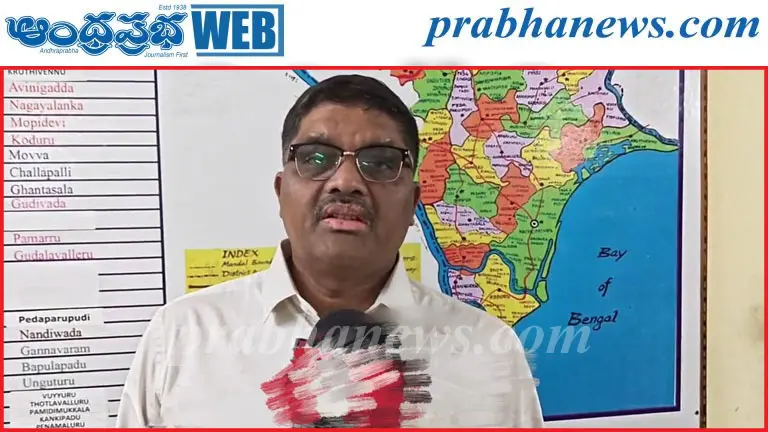
Track and trace system for liquor sales in Krishna district
The Excise Department has placed liquor sales in Krishna district under special surveillance, District Excise Superintendent S. Srinivasa Rao said in Machilipatnam. A track and trace system introduced under the new policy will monitor every stage from manufacture to the consumer. Belt shops are under focus and cases are being booked; violations attract fines of Rs 5 lakh to Rs 10 lakh. Of 135 shops, 100 renewals are complete; applications for 35 close October 1, scrutiny October 3, lottery allotment October 5.
Source
Krishna — వార్తలు · read the original report ↗
Desk check · compared with the source
What the desk checked (5)
- A track and trace system has been introduced under the new liquor policy to monitor every stage from manufacture to consumer. — Attributed to District Excise Superintendent S. Srinivasa Rao; appears in source.
- Violators face fines of Rs 5 lakh to Rs 10 lakh. — Figure appears in source, attributed to the excise superintendent; no order or notification cited.
- Krishna district has 135 liquor shops; renewal completed for 100, with 35 open for applications until October 1. — Numbers stated in source and attributed to the official; internally consistent (100+35=135).
- Scrutiny on October 3 and lottery-based allotment of shops on October 5. — Dates attributed to the official in source; year not specified.
- Cases are being booked against persons supplying liquor from shops to belt shops. — Attributed claim; no case numbers or totals given in source.
Analysts’ view opinion
Liquor policy is perennially sensitive in Andhra Pradesh politics, so rolling out track-and-trace in Krishna district reads as administrative on the surface but carries a clear political message: the government wants to own the narrative of control and transparency. The focus on belt shops and penalties of Rs 5-10 lakh will squeeze informal local supply chains, and because such networks are widely perceived to enjoy local patronage, the real political question is who enforcement actually touches. With 100 of 135 shops renewed and a lottery due for the remaining 35, allocation fairness becomes the second front of scrutiny.
- Allotment by lottery is politically protective armour against favouritism charges, but opposition parties will still scrutinise how the process is run.
- If belt-shop enforcement bites, the government banks credit for governance grip; if it stalls, it invites the familiar charge of announcements without delivery.
- Technology-led fixes like track-and-trace are politically safe — they showcase reform without the emotive burden of prohibition-style promises.
- Watch whether the penalty burden falls mainly on small village-level sellers, which could breed grassroots resentment even as the policy is called a success.
- This is a district officer's statement, not a political launch — how far the state leadership claims the initiative as its own achievement remains to be seen.
What to watch — Watch the October 1 applications, October 3 scrutiny and October 5 lottery for complaints or opposition objections, and note whose names surface in belt-shop cases.
The story establishes no party reactions, no allegations and no enforcement outcomes — it is a single district official's announcement, and its political impact is untested.
Deep dive
Research brief · 8 facts · 3 dates · exam-readyThe brief
Context
The Andhra Pradesh Excise Department has brought liquor sales in Krishna district under special surveillance as part of a new excise policy. District Excise Superintendent S. Srinivasa Rao announced in Machilipatnam that a "track and trace" system will now monitor liquor at every stage from manufacture to the final consumer. The move is aimed largely at curbing "belt shops" — unlicensed outlets that resell liquor diverted from licensed shops. The announcement came alongside the ongoing renewal and fresh allotment process for liquor shop licences in the district.
Key facts
- District Excise Superintendent S. Srinivasa Rao said liquor sales in Krishna district have been placed under special Excise Department surveillance.
- A track and trace system has been introduced as part of the new excise policy to monitor every stage from liquor manufacture to the consumer.
- Continuous inspections are being conducted against illegal liquor sales, with special focus on belt shops.
- Officials are identifying which licensed shop supplied liquor to belt shops and booking cases against those involved.
- Violations of rules attract fines ranging from Rs 5 lakh to Rs 10 lakh.
- Krishna district has a total of 135 liquor shops; renewal has been completed for 100 of them.
- Applications for the remaining 35 shops can be submitted until October 1.
- Scrutiny of applications is on October 3 and allotment of shops by lottery is on October 5.
Timeline
- October 1Last date to apply for the remaining 35 liquor shops in Krishna district
- October 3Scrutiny (parisheelana) of the applications received
- October 5Allotment of liquor shops through the lottery system
Who has a stake
- Excise Department, Krishna district — Enforcing the new policy, running track and trace surveillance, inspections and booking cases
- District Excise Superintendent S. Srinivasa Rao — Official announcing and implementing the surveillance and licence allotment schedule
- Licensed liquor shop holders (135 shops) — Face fines of Rs 5 lakh to Rs 10 lakh and cases if their stock is traced to belt shops
- Belt shop operators — Primary target of inspections and case registration for illegal liquor sales
- Applicants for the 35 unrenewed shops — Must apply by October 1 and depend on the October 5 lottery for allotment
- Consumers in Krishna district — Affected by availability of liquor and by curbs on illegal and untraceable sales
Why it matters
Belt shops sell liquor outside licensed hours and locations, often at inflated prices and without any quality check, and they thrive on stock diverted from authorised outlets. A track and trace system that follows each bottle from manufacture to consumer makes such diversion traceable and shifts accountability onto the licensed shop, backed by fines of Rs 5 lakh to Rs 10 lakh. The lottery-based allotment of the remaining 35 shops also decides who controls legal retail in the district.
UPSC angle
Prelims pointers
- Track and trace system for liquor introduced in Krishna district as part of the new excise policy.
- District Excise Superintendent of Krishna district: S. Srinivasa Rao; announcement made at Machilipatnam.
- Krishna district liquor shops: 135 total; 100 renewals completed; 35 to be allotted afresh.
- Penalty range for excise rule violations as stated: Rs 5 lakh to Rs 10 lakh.
- Key dates: applications close October 1, scrutiny October 3, lottery allotment October 5.
- Belt shops are unlicensed outlets and the main focus of Excise Department inspections.
Mains framing
Liquor regulation in India sits at the intersection of state revenue, public health and enforcement capacity, and the weakest link is usually the informal retail chain. In Krishna district, the Excise Department's answer is a technology-led track and trace system under a new policy that follows liquor through every stage from manufacture to the consumer, so that stock diverted to unlicensed belt shops can be traced back to the licensed outlet that supplied it. This converts a hard-to-police street-level offence into a documentary trail, and is backed by deterrent fines of Rs 5 lakh to Rs 10 lakh plus registration of cases. The parallel administrative exercise — renewal of 100 of 135 shops and lottery allotment of the remaining 35 after scrutiny — matters because transparent, rule-bound licensing reduces the incentive to recover licence costs through illegal channels. The way forward lies in sustaining continuous inspections rather than campaign-mode drives, ensuring the traceability data is actually used for prosecutions, and holding both the belt shop operator and the source licensee accountable; the source does not detail the technology used or the wider state-level policy, which remains a gap for assessment.
Key terms
- Track and trace system
- Mechanism introduced under the new policy to monitor liquor at every stage from manufacture until it reaches the consumer
- Belt shop
- Unlicensed liquor outlet that sells stock diverted from authorised shops; the main focus of Excise inspections here
- Excise Department
- State department that licenses and regulates liquor manufacture and sale and enforces excise rules
- District Excise Superintendent
- District-level head of excise enforcement; in Krishna district, S. Srinivasa Rao
- Lottery allotment
- Method of allotting liquor shop licences by draw, scheduled for October 5 for the 35 unrenewed shops
- Renewal process
- Extension of existing liquor shop licences; completed for 100 of Krishna district's 135 shops
Practice questions
- How can a track and trace system strengthen excise enforcement against unlicensed 'belt shops'? Discuss with reference to the Krishna district model.
- State excise revenue and public health objectives often conflict in liquor policy. Examine how licensing, traceability and penalties can be balanced to serve both.
- Evaluate the lottery system of allotting liquor shop licences as a tool of transparency in district-level administration.
Grounded only in the source report — figures and dates are the source's, not inferred.