
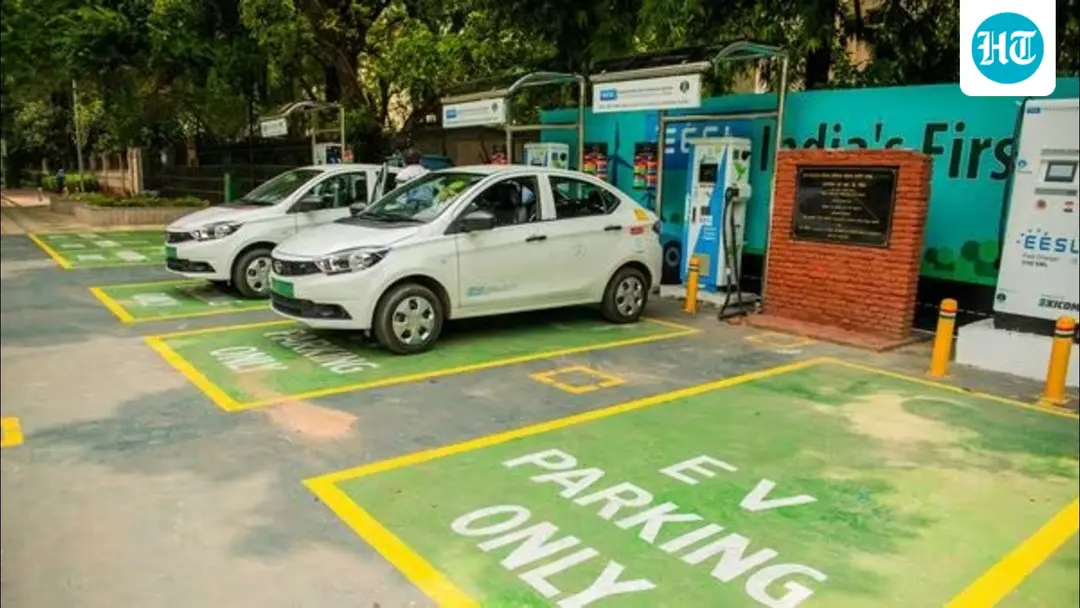
Delhi tops NITI Aayog's India Electric Mobility Index 2025
Delhi topped the India Electric Mobility Index (IEMI) 2025 with a score of 84, according to the index released by NITI Aayog on Wednesday. Maharashtra was second with 78, followed by Karnataka (73), Chandigarh (71) and Goa (65). Manipur led among hilly and northeastern states with 46. The index said 29 of 36 states and UTs have notified EV policies. Madhya Pradesh improved 16 places, from 23rd to seventh. Delhi operates 4,286 electric buses, India's largest e-bus fleet.
Source
NITI Aayog · read the original report ↗
Desk check · compared with the source
What the desk checked (5)
- Delhi topped the India Electric Mobility Index 2025 with 84, ahead of Maharashtra (78), Karnataka (73), Chandigarh (71) and Goa (65). — Attributed to the index released by NITI Aayog; figures appear in source.
- 29 of India's 36 states and UTs have notified EV policies; highest score rose from 77 to 84 and median from 36 to 40. — Attributed to the IEMI report; internally consistent.
- India depends on imports for nearly 89% of crude oil; auto sector is about 7.1% of GDP and supports nearly 19 million jobs. — Attributed to NITI Aayog member Rajiv Gauba in a direct address.
- Delhi operated 4,286 electric buses as of February 2026, India's largest e-bus fleet. — Attributed to the report; date is stated in source as given.
- Delhi has asked the Supreme Court to allow use of unused ECC funds; EV Policy 2.0 earmarks ₹4,000 crore over four years. — Attributed to Delhi transport secretary Niharika Rai; supported by earlier HT reporting cited in source.
Analysts’ view opinion
Delhi's top rank in the NITI Aayog index is a result both the Centre and the Delhi government can politically monetise — with the BJP now in office in the capital, the current administration is well placed to claim credit for an EV and electric-bus expansion that was built up over years. The Aam Aadmi Party, equally, can argue the foundation is its own, since a 4,286-strong bus fleet and an early EV policy are not assembled overnight. With Maharashtra, Karnataka and Madhya Pradesh all rising under different party dispensations, EV policy still looks more like a governance race than a partisan divide.
- With 29 of 36 states and UTs having notified EV policies, electric mobility has moved beyond any single party's agenda into an inter-state competition for rankings and investment.
- Madhya Pradesh's 16-place jump from 23rd to seventh is exactly the kind of number a chief minister showcases, and Bihar, Jammu & Kashmir and Assam's gains offer similar talking points to their governments.
- Manipur leading hilly and northeastern states with 46 is politically notable, but the gap with national leaders could sharpen demands for region-specific support.
- Delhi's mandate for 100% electrification of autorickshaws and light commercial vehicles from 2027 and two-wheelers from 2028 boosts its score, but risks friction with organised constituencies such as auto drivers and dealers.
- Seeking Supreme Court clearance to tap unused ECC funds for a ₹4,000 crore, four-year subsidy plan underlines how much capital-city governance depends on the interplay of Centre, state and courts.
What to watch — Watch the Supreme Court's response to Delhi's ECC funds request and how driver and dealer bodies react to the 2027 autorickshaw deadline — together they will decide whether Delhi holds its rank.
The story reports index outcomes only; it does not establish which party or tenure deserves credit for the gains, nor does it record any political party's formal reaction.
Deep dive
Research brief · 8 facts · 6 dates · exam-readyThe brief
Context
The India Electric Mobility Index (IEMI) 2025, the second edition of a ranking prepared by WRI India with NITI Aayog, measures how far states and Union territories have moved towards an electric mobility transition, using data from January to December 2025. It was released at a NITI Aayog workshop on state EV policies in Delhi, where officials linked EV adoption to India's crude oil import dependence and the Viksit Bharat 2047 vision. Delhi topped the index with 84 points and is also pushing its EV Policy 2.0, for which it has asked the Supreme Court to release unused environmental compensation charge (ECC) funds.
Key facts
- Delhi topped IEMI 2025 with a score of 84; Maharashtra 78, Karnataka 73, Chandigarh 71 and Goa 65 followed.
- Manipur scored highest (46) among hilly and northeastern states.
- 29 of India's 36 states and UTs have notified EV policies, as per the index.
- The top score rose from 77 in the first IEMI to 84, and the median score from 36 to 40.
- Madhya Pradesh gained 16 places, from 23rd (score 31) to seventh (score 59); Goa rose 10 to fifth, Puducherry 10 to 17th, Bihar 8 to 18th, J&K 7 to 27th, Assam 3 to 24th.
- As of February 2026 Delhi operated 4,286 electric buses, India's largest e-bus fleet; it was also the first state to subsidise electric cycles.
- Delhi's EV Policy 2.0 mandates 100% electrification of autorickshaws and light commercial vehicles from January 2027 and two-wheelers from January 2028 - a first in India.
- Delhi's EV Policy 2.0 earmarks Rs 4,000 crore in subsidies and incentives over four years; the transport department needs over Rs 1,000 crore a year.
Timeline
- January to December 2025Data period on which IEMI 2025 assessment is based.
- September 16 (HT report)Reported that 60%, or more than Rs 1,153 crore, of environmental compensation charge collected in Delhi was lying unutilised.
- February 2026Delhi operating 4,286 electric buses, the largest e-bus fleet in India, as per the report.
- Wednesday (release day)NITI Aayog releases IEMI 2025 at a workshop on state EV policies in Delhi; Delhi says it has written to the Supreme Court for ECC funds.
- January 2027Delhi's mandate for 100% electrification of autorickshaws and light commercial vehicles takes effect.
- January 2028Delhi's mandate for 100% electrification of two-wheelers takes effect.
Who has a stake
- NITI Aayog — Released the index and drives state-level EV policy coordination; member Rajiv Gauba framed EVs as an economic, environmental and strategic imperative.
- WRI India — Prepared the index in collaboration with NITI Aayog, setting the indicators on policy, charging infrastructure and ecosystem.
- States and UTs — Ranked and compared; 29 of 36 have notified EV policies, with gainers like Madhya Pradesh, Goa, Bihar and Assam.
- Government of Delhi (transport department) — Top-ranked; needs over Rs 1,000 crore a year for EV Policy 2.0 and has sought Supreme Court permission to use unused ECC funds.
- Ministry of Heavy Industries — Additional secretary Hanif Qureshi said state policies must complement central incentives for EV adoption.
- Automotive sector and workers — Contributes around 7.1% of GDP and supports nearly 19 million jobs; must align with the global EV transition.
- Supreme Court — Will decide whether Delhi can divert unused environmental compensation charge funds to electric mobility measures.
Why it matters
India imports nearly 89% of its crude oil, a dependence likely to grow with rising car ownership unless EV adoption expands, making the transition a strategic as well as environmental question. Because transport policy is largely implemented by states, an index that ranks and compares them creates competitive pressure and shows where charging infrastructure and policy gaps remain. The Delhi funding request also highlights how EV targets depend on money actually reaching the ground.
UPSC angle
Prelims pointers
- IEMI 2025 is the second edition of the India Electric Mobility Index, prepared by WRI India with NITI Aayog.
- Top five in IEMI 2025: Delhi (84), Maharashtra (78), Karnataka (73), Chandigarh (71), Goa (65); Manipur (46) leads hilly/NE states.
- 29 of 36 states and UTs have notified EV policies; median IEMI score rose from 36 to 40, top score from 77 to 84.
- Delhi is the first state/UT to mandate 100% electrification of autos and LCVs (January 2027) and two-wheelers (January 2028).
- India imports nearly 89% of its crude oil; the automotive sector is about 7.1% of GDP and nearly 19 million jobs.
- EV two-wheelers: 14 lakh of 2.1 crore two-wheelers sold last year (about 7.65%); India is No. 1 in three-wheelers and third largest EV car market.
Mains framing
India's electric mobility transition is being driven simultaneously by energy security (nearly 89% crude oil import dependence, expected to rise with car ownership), industrial competitiveness (automotive sector at about 7.1% of GDP and nearly 19 million jobs) and the Viksit Bharat 2047 goal, but delivery rests largely with states. IEMI 2025 shows both progress and unevenness: the top score rose from 77 to 84 and the median from 36 to 40, 29 of 36 states and UTs have notified EV policies, and laggards like Madhya Pradesh (up 16 places to seventh), Goa, Puducherry, Bihar, J&K and Assam have gained, yet hilly and northeastern states remain far behind, with Manipur leading that group at only 46. Delhi's example illustrates what leadership looks like - 4,286 electric buses, subsidies for electric cycles and the country's first segment-wise 100% electrification mandates for autos, LCVs and two-wheelers - and also the binding constraint: it needs over Rs 1,000 crore a year against a Rs 4,000 crore four-year outlay and has approached the Supreme Court to unlock more than Rs 1,153 crore of unused environmental compensation charge funds. The way forward, as the heavy industries ministry official argued, lies in state policies complementing central incentives, coupled with charging infrastructure and ecosystem development and credible, ring-fenced financing.
Key terms
- India Electric Mobility Index (IEMI)
- Index by WRI India with NITI Aayog ranking states and UTs on progress towards electric mobility; 2025 is its second edition.
- NITI Aayog
- Central government's policy think tank, which released IEMI 2025 and hosted the workshop on state EV policies.
- Delhi EV Policy 2.0
- Delhi's new electric vehicle policy with Rs 4,000 crore of subsidies over four years and phased 100% electrification mandates from 2027.
- Environmental Compensation Charge (ECC)
- A levy collected in Delhi; over Rs 1,153 crore (60%) lay unused, and the state wants Supreme Court nod to use it for EV measures.
- Viksit Bharat 2047
- The government's vision of a developed India by 2047, cited as a reason to treat the EV shift as an economic and strategic imperative.
- WRI India
- Research organisation that prepared the IEMI in collaboration with NITI Aayog.
Practice questions
- The India Electric Mobility Index 2025 shows rising average performance but wide inter-state disparity. Examine the reasons for this unevenness and suggest measures to help lagging hilly and northeastern states.
- "India's EV transition is as much about energy security as about emissions." Discuss with reference to crude oil import dependence and the automotive sector's role in the economy.
- Delhi has become the first state/UT to mandate 100% electrification of certain vehicle segments. Assess the feasibility and financing challenges of such mandates.
Grounded only in the source report — figures and dates are the source's, not inferred.