
Over 200 Indian scientists warn of intensifying El Niño impacts
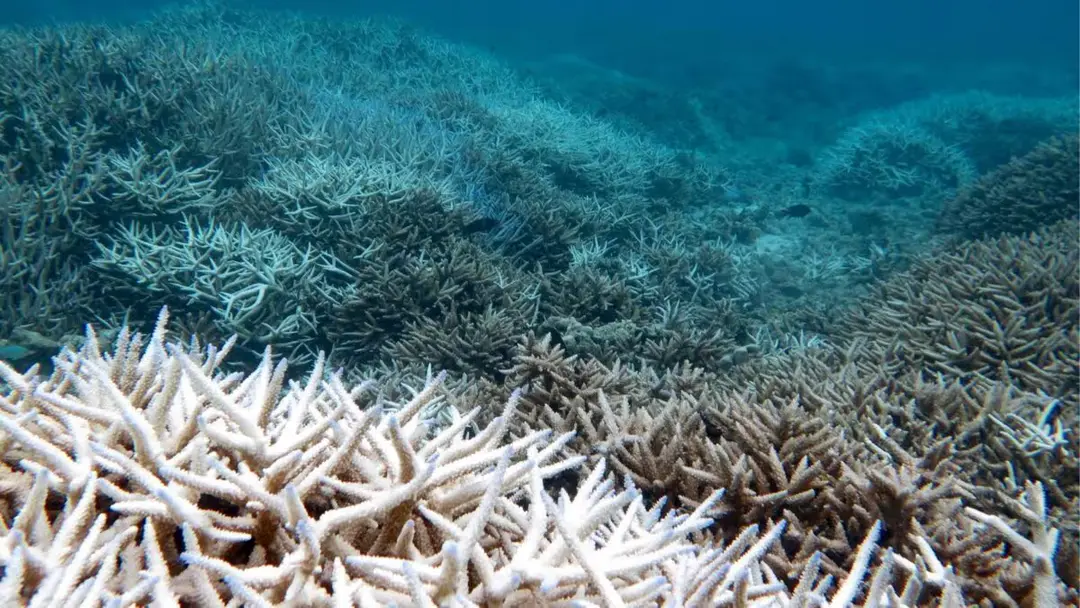
More than 200 scientists and ecologists across India have issued a 'Call to Action' urging policymakers to prepare for the intensifying El Niño. Signatories from IISc Bengaluru, WII, NCBS and NCF warned of disrupted soil moisture and water storage, stress on crops and livelihoods, marine heatwaves and coral bleaching. Eighteen of 36 meteorological subdivisions are recording deficient rainfall. NOAA sees a 75% chance of an event stronger than any since 1950.
Source
News18 — India · read the original report ↗
Desk check · some claims need care
What the desk checked (5)
- Over 200 Indian scientists and ecologists issued a 'Call to Action' on El Niño impacts — Attributed in source to signatories from IISc Bengaluru, WII, NCBS and NCF; source alternates between 'over 200' and 'nearly 200'.
- 18 of 36 meteorological subdivisions are recording deficient rainfall as of Saturday — Figure appears in source; no agency named for the rainfall data.
- NOAA puts a 75% chance of a historic El Niño exceeding events since 1950 — Attributed to the US National Oceanic and Atmospheric Administration.
- Pacific temperature anomaly reached +2.6°C in August 2026, with projections up to +4°C — Attributed to the scientists citing coral core reconstructions; figures appear in source and cannot be independently checked.
- The last major El Niño was in 2024, barely two years before the current event — Quoted from marine biologist Rohan Arthur; timeline sits oddly with the source's own dates and warrants editorial review.
Analysts’ view opinion
On the surface this is a scientific warning; politically, it is a document that pre-loads accountability onto governments. With over 200 signatories from institutions as reputed as IISc, WII, NCBS and NCF, the "we didn't know" defence will not be available to policymakers if crop losses or water shortages follow. Deficient rainfall in 18 of 36 meteorological subdivisions means this is not a single state's problem — it sets up a wide political field for Centre-state blame-trading and demands for relief and mitigation packages.
- The letter's political weight comes from its numbers and institutional pedigree — a lone expert is easy to dismiss, a collective scientific warning is expensive to ignore.
- With 18 subdivisions rain-deficient, the impact spans multiple states, making irrigation, drinking water allocation, crop insurance and compensation likely flashpoints between Centre and states.
- Farmer bodies and opposition parties could use this documented early warning to frame any later distress as a failure of preparedness rather than an act of nature.
- There is also an opening for incumbents: announcing water storage, fodder and rural employment planning early converts the warning into a crisis-management credential later.
- Marine heatwaves and coral bleaching carry little electoral weight, so the political response will likely tilt towards water and crops rather than ecosystems.
What to watch — Watch whether the Centre and state governments order drought-preparedness reviews and issue water and crop advisories in the coming weeks, or wait until El Niño strengthens further in winter.
The story records only the scientists' appeal — it does not establish any government response, policy decision, or that any party has yet taken up the issue politically.
Deep dive
Research brief · 8 facts · 7 dates · exam-readyThe brief
Context
El Niño, a periodic warming of the equatorial Pacific occurring every 2-7 years, dampens India's southwest monsoon and brings hot, dry conditions. An El Niño formed in late June-July 2026 and has already turned strong, with forecasts of further intensification in the coming winter. Against this backdrop, more than 200 Indian scientists and ecologists issued an urgent 'Call to Action' on September 20, 2026, warning policymakers, researchers and field practitioners of cascading effects on water, crops, livelihoods and ecosystems. India's four-month monsoon season is already set to end with below-normal rainfall this September.
Key facts
- Over 200 scientists and ecologists from across India signed an urgent 'Call to Action' warning of intensifying El Niño impacts.
- Signatory institutions include IISc Bengaluru, Wildlife Institute of India (WII), National Centre for Biological Sciences (NCBS) and Nature Conservation Foundation (NCF).
- As of Saturday, 18 of India's 36 meteorological subdivisions were reeling under deficient rainfall.
- NOAA puts a 75% chance on a historic El Niño exceeding the strength of all events dating back to 1950.
- The El Niño formed in late June-July 2026 and is likely to intensify further in the coming winter season.
- Pacific Ocean temperatures have risen above the 0.5°C threshold, reaching +2.6°C in August 2026; projections suggest anomalies up to +4°C.
- A +4°C anomaly would be higher than at any time in the past 1,000 years, based on reconstructions from coral cores.
- Coral reefs need at least a decade after a major die-back to show significant recovery; the last major El Niño was in 2024.
Timeline
- 1950 onwardsBaseline period against which NOAA measures the strength of El Niño events; current event has a 75% chance of exceeding all of them.
- 2024Last major El Niño event, which caused coral die-back; reefs need at least a decade to recover.
- Late June-July 2026The current El Niño formed and rapidly became strong.
- August 2026Equatorial Pacific temperature anomaly reached +2.6°C, above the 0.5°C El Niño threshold.
- September 2026Southwest monsoon set to end with below-normal rainfall; 18 of 36 meteorological subdivisions deficient.
- September 20, 2026Story published on the 200+ scientists' 'Call to Action' to policymakers.
- Coming winter seasonEl Niño forecast to intensify further, with effects creeping into later seasons.
Who has a stake
- Farmers and India's agrarian economy — The four-month southwest monsoon, crucial for agriculture, is ending below normal; soil moisture, water storage and crops face stress.
- Policymakers — Addressed directly by the 'Call to Action' to prepare for potentially destructive effects within a short window.
- Coral reefs and coastal/marine ecosystems — Marine heatwaves and coral bleaching threatened barely two years after the 2024 die-back, against a decade-long recovery need.
- Researchers and field practitioners — Urged to conduct long-term studies, collaborate with experts and document ecosystem impacts as they unfold.
- IITM Pune (Roxy Mathew Koll) — Climate scientist warning that El Niño effects will creep into seasons ahead, disrupting soil moisture and water storage.
- NCF (Rohan Arthur) — Marine biologist flagging that the projected heatwave scale headed for India's reefs is 'truly scary'.
- NCBS (Jayashree Ratnam) — Warns tropical forests and large trees, already near their heat tolerance limits, are especially susceptible to extended droughts.
- Fisheries and marine species — Past ENSO events have seen mass mortalities of fish species such as moray eels.
Why it matters
An El Niño stronger than any since 1950 would hit India's monsoon-dependent agriculture, water storage and coastal ecosystems at a time when 18 of 36 met subdivisions are already rainfall-deficient. Coral reefs facing another bleaching event barely two years after the 2024 die-back may not recover, and tropical forests are already near their heat tolerance limits. The scientists argue the short window before the winter peak is the only chance to document changes and safeguard surviving ecosystems.
UPSC angle
Prelims pointers
- El Niño: periodic warming and changed ocean circulation in the equatorial Pacific, recurring every 2-7 years; dampens India's southwest monsoon.
- India is divided into 36 meteorological subdivisions; 18 were under deficient rainfall as per the story.
- NOAA (US National Oceanic and Atmospheric Administration) projects a 75% chance of an El Niño stronger than any since 1950.
- El Niño threshold: Pacific anomaly above 0.5°C; August 2026 reading was +2.6°C, with projections up to +4°C.
- Institutions in the 'Call to Action': IISc Bengaluru, WII, NCBS, NCF; IITM Pune scientist Roxy Mathew Koll quoted.
- Coral cores are used to reconstruct past climate; they indicate +4°C would be unmatched in 1,000 years.
Mains framing
The 'Call to Action' by over 200 Indian scientists frames the 2026 El Ni\u00f1o not merely as a monsoon deficit but as a multi-season, multi-ecosystem shock. Causally, warming and altered circulation in the equatorial Pacific suppress the southwest monsoon, and with 18 of 36 met subdivisions already deficient and the season ending below normal, the immediate consequences are reduced soil moisture, depleted water storage and crop and livelihood stress in an agrarian economy. Implications extend further: marine heatwaves and coral bleaching striking reefs barely two years after the 2024 die-back, when recovery needs at least a decade; tropical forests and large trees already near their heat tolerance limits facing extended drought; and subtler ecological signals such as delayed fruit production, altered animal behaviour and past mass fish mortalities. The magnitude claim is stark: NOAA's 75% chance of an event exceeding all since 1950, with Pacific anomalies at +2.6\u00b0C in August 2026 and projections up to +4\u00b0C, higher than anything in 1,000 years of coral-core reconstruction. The scientists' proposed way forward is documentation and protection within a short window: long-term studies, collaboration across expert groups, systematic measurement of ecosystem impacts, and safeguarding surviving ecosystems so that lessons from this El Ni\u00f1o build preparedness for a warmer, more volatile future.
Key terms
- El Niño
- Periodic global weather phenomenon driven by changing ocean circulation and warming in the equatorial Pacific every 2-7 years; weakens India's monsoon.
- ENSO
- The wider El Niño-Southern Oscillation cycle; past ENSO events saw mass mortalities of fish species such as moray eels.
- Meteorological subdivision
- One of the 36 rainfall-monitoring regions India is divided into; 18 were recording deficient rain as of the report.
- Marine heatwave
- Prolonged abnormally high ocean temperatures; a key El Niño impact that triggers coral bleaching.
- Coral bleaching
- Heat-stress-driven loss of colour and health in corals; reefs need at least a decade to recover from major die-back.
- NOAA
- US National Oceanic and Atmospheric Administration, which forecast a 75% chance of a record-breaking El Niño.
Practice questions
- Examine how El Niño influences the Indian southwest monsoon and discuss the cascading impacts on agriculture, water storage and coastal ecosystems.
- 'Coral reefs need a decade to recover but major bleaching events are recurring within years.' Critically analyse India's preparedness for marine heatwaves.
- Discuss the role of long-term ecological monitoring and scientific collaboration in building climate resilience, with reference to the scientists' 'Call to Action' on El Niño.
Grounded only in the source report — figures and dates are the source's, not inferred.