
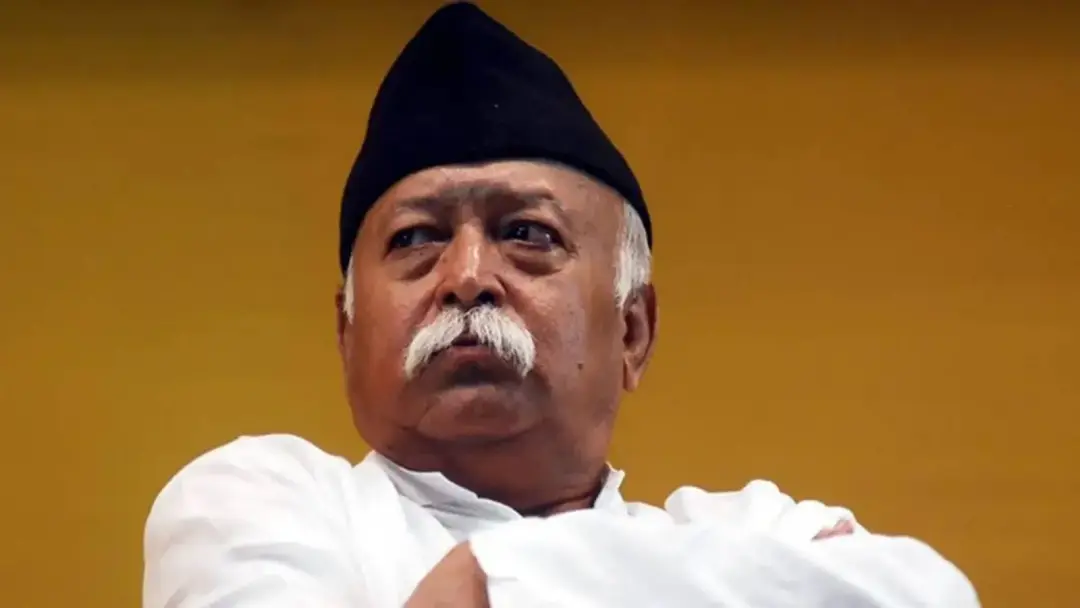
RSS centenary to conclude with Bhagwat's Delhi meeting on Nov 29
The RSS will conclude its yearlong centenary activities with a public meeting of Sarsanghchalak Mohan Bhagwat in Delhi on November 29. The venue is not yet finalised, and the Sangh plans to have one lakh Swayamsevaks in Gana Vesh attend along with 50,000 invited citizens, sources said. The event marks the end of the ekatrikaran congregations held through the year in different cities. Bhagwat is expected to speak on the Sangh's journey and national issues.
Source
Indian Express — India · read the original report ↗
Desk check · some claims need care
What the desk checked (5)
- RSS will conclude its centenary events with a public meeting of Mohan Bhagwat in Delhi on November 29. — Attributed to RSS sources in the source text; venue stated as not finalised.
- One lakh uniformed Swayamsevaks and 50,000 invited citizens are planned to attend. — Figures appear in the source as Sangh plans, attributed to unnamed sources.
- Bhagwat held a three-day lecture series at Vigyan Bhawan from August 26 to 28, 2025, and addressed Gen Z students in Mumbai on August 6. — Dates appear in the source; no independent documentation cited.
- RSS has 58,964 Mandals, 44,055 Bastis, 11,360 blocks/towns and 924 districts per its structure. — Directly quoted from RSS publicity chief Sunil Ambekar on July 7, 2025.
- Bhagwat addressed Indian expats at Madison Square Garden, New York, and travelled to London and Toronto. — Stated in source without date or attribution.
Analysts’ view opinion
A Delhi gathering of one lakh uniformed Swayamsevaks plus 50,000 invitees is not merely the closing ceremony of a centenary year — it is a demonstration of organisational depth staged in the heart of the national capital. By funnelling a year of district-level conferences, door-to-door contact, social harmony meets and overseas outreach into a single stage, the RSS is positioning itself as the central node of the Hindu social conversation. The real political interest lies in what Bhagwat says about "issues facing the nation" — caste, social harmony, Swadeshi — rather than in the spectacle itself.
- Holding the show of strength in Delhi rather than Nagpur reads as a message aimed at both the centres of power and the opposition.
- Bhagwat is the first RSS chief to use periodic public lectures, beginning in 2018, to clarify the Sangh's stand on contested issues, and this meeting continues that method.
- The emphasis on Samajik Sadbhav Baithaks and Hindu Sammelans at a time of intense caste debate points to a strategy of broad Hindu consolidation.
- Prabuddha Nagrik Sammelans and Griha Sampark suggest ideological expansion targeted at professionals and the urban middle class.
- The wider the Sangh's reach, the sharper the debate over its relationship with the political sphere — which gives the opposition an obvious line of criticism.
What to watch — Watch the choice of venue, the seniority of any political figures present, and above all which "national issues" Bhagwat picks up, since those themes can shape campaign discourse in the coming electoral season.
The story establishes only the date and the scale being planned; it does not confirm the venue, the content of Bhagwat's speech, who from politics will attend, or any link to electoral strategy.
Deep dive
Research brief · 8 facts · 6 dates · exam-readyThe brief
Context
The Rashtriya Swayamsevak Sangh (RSS), founded 100 years ago, has been running a yearlong set of centenary programmes across India — congregations of volunteers, citizen outreach conferences, door-to-door contact drives and a global lecture tour by Sarsanghchalak Mohan Bhagwat. These events were structured around a "100 years to 101st year" plan aimed at both mobilising Swayamsevaks and reaching out to professionals and various social sections. The centenary calendar is now set to close with a large public meeting of Bhagwat in Delhi on November 29, described by Sangh sources as the final event of the ekatrikaran (congregation) component.
Key facts
- The RSS will conclude its centenary-year activities with a public meeting of Sarsanghchalak Mohan Bhagwat in Delhi on November 29; the venue is not yet finalised.
- The Sangh plans one lakh Swayamsevaks in Gana Vesh (RSS uniform) at the Delhi event, along with 50,000 invitees from among citizens.
- Bhagwat is the first RSS chief to hold periodic public lectures, the first of which took place in 2018, to clarify the Sangh's position on controversial issues.
- Bhagwat held a three-day lecture series at Vigyan Bhawan, Delhi, from August 26 to 28, 2025, on 100 years of the RSS.
- As part of a global centenary outreach tour, Bhagwat addressed Indian expats at Madison Square Garden in New York and travelled to London and Toronto.
- Bhagwat addressed Gen Z students in Mumbai on August 6, days after youth protests at Jantar Mantar in Delhi ended; Sangh sources say the event was planned months in advance.
- On July 7, 2025, RSS Akhil Bharatiya Prachar Pramukh Sunil Ambekar said there are 58,964 Mandals and 44,055 Bastis, with Samajik Sadbhav Baithaks planned in 11,360 blocks/towns.
- Ambekar said there are 924 districts as per Sangh structure, where Pramukh Nagrik Seminars will be held on themes like Ideas of Bharat and Bharat's Sewa.
Timeline
- 2018Bhagwat holds his first periodic public lecture, a first for an RSS chief, to clarify the Sangh's positions.
- July 7, 2025RSS publicity chief Sunil Ambekar details centenary preparations — Mandal/Basti numbers, Samajik Sadbhav Baithaks and Pramukh Nagrik Seminars.
- August 6, 2025Bhagwat addresses Gen Z students in Mumbai, days after the Jantar Mantar youth protests in Delhi ended.
- August 26-28, 2025Three-day Bhagwat lecture series at Vigyan Bhawan, Delhi, on 100 years of the RSS.
- Recent (date not stated in the source)Bhagwat addresses Indian expats at Madison Square Garden, New York, and travels to London and Toronto on the global centenary outreach tour.
- November 29Public meeting of Bhagwat in Delhi to conclude the RSS centenary-year events.
Who has a stake
- RSS (Rashtriya Swayamsevak Sangh) — Completing its centenary year with a show of organisational strength and closing the ekatrikaran plan of Swayamsevak congregations.
- Mohan Bhagwat, Sarsanghchalak — Expected to speak on the Sangh's journey and current national issues; has led the lecture and global outreach components.
- Swayamsevaks — One lakh volunteers in Gana Vesh are planned to attend the Delhi meeting; they also carried out Griha Sampark and congregations through the year.
- Sunil Ambekar, Akhil Bharatiya Prachar Pramukh — Public face of centenary planning; announced the scale of Mandals, Bastis, blocks and districts covered.
- Professionals and 'enlightened citizens' — Target group of Prabuddha Nagrik Sammelans and Pramukh Nagrik Seminars aimed at expanding the Sangh's ideological reach.
- Hindu community across rural and urban areas — Addressed through Hindu Sammelans and Samajik Sadbhav Baithaks intended to foster unity and bridge caste divides.
Why it matters
The RSS is the ideological parent of a wide family of organisations, so the scale and themes of its centenary closing — one lakh uniformed volunteers plus 50,000 invited citizens in the national capital — signal both its organisational reach and its agenda for the coming years. The centenary programmes, from Panch Parivartan to caste-harmony meets and professional outreach, indicate how the Sangh is seeking to widen its social base beyond its traditional constituency.
UPSC angle
Prelims pointers
- Sarsanghchalak is the title of the RSS chief; Mohan Bhagwat currently holds the post.
- RSS centenary concluding public meeting: Delhi, November 29; venue not finalised as per the source.
- Panch Parivartan (Five Transformations): social harmony, Kutumb Prabodhan, civic duties, environmental protection and Swadeshi.
- As per Sangh structure (July 7, 2025): 58,964 Mandals, 44,055 Bastis, 11,360 blocks/towns, 924 districts.
- Bhagwat's three-day centenary lecture series was held at Vigyan Bhawan, Delhi, August 26-28, 2025.
- Sunil Ambekar is the RSS Akhil Bharatiya Prachar Pramukh (All India Publicity Chief).
Mains framing
The RSS centenary programme illustrates how a cadre-based socio-cultural organisation converts an anniversary into a structured expansion exercise: ekatrikaran congregations to mobilise Swayamsevaks, Griha Sampark door-to-door contact and literature distribution to build familiarity, Prabuddha Nagrik Sammelans and Pramukh Nagrik Seminars to draw in doctors, engineers and professors, Hindu Sammelans for community consolidation, and Samajik Sadbhav Baithaks to address caste divides at a time when caste is a live source of debate and polarisation. The Panch Parivartan agenda — social harmony, family consciousness, civic duties, environmental protection and Swadeshi — frames these efforts as social reform rather than politics, while Bhagwat's public lectures since 2018 and his global outreach in New York, London and Toronto reflect an attempt at greater communicative openness and diaspora engagement. The Delhi meeting of November 29, with a planned one lakh uniformed volunteers and 50,000 invited citizens, is thus both a closing ritual and a demonstration of scale. Analytically, the questions worth examining are how such organisational outreach interacts with democratic pluralism, whether stated goals of caste harmony translate into measurable social change, and how non-state ideological organisations shape public discourse in a constitutional democracy.
Key terms
- Sarsanghchalak
- The chief of the RSS; the post is currently held by Mohan Bhagwat.
- Ekatrikaran
- Congregation of Swayamsevaks; the yearlong centenary component held in different cities, ending with the Delhi meeting.
- Gana Vesh
- The official RSS uniform worn by Swayamsevaks at organisational events.
- Panch Parivartan
- RSS's five-point centenary agenda: social harmony, Kutumb Prabodhan (family consciousness), civic duties, environmental protection and Swadeshi.
- Griha Sampark
- Door-to-door campaign in which RSS volunteers meet residents and distribute Sangh literature.
- Prabuddha Nagrik Sammelan
- Conferences of 'enlightened citizens' held across districts to reach professionals such as doctors, engineers and professors.
Practice questions
- Examine how socio-cultural organisations outside the formal political system shape public discourse in India, with reference to the RSS centenary outreach programmes.
- Discuss the components of the RSS centenary plan (ekatrikaran, Griha Sampark, Prabuddha Nagrik Sammelan, Samajik Sadbhav Baithak) and what they reveal about strategies of social mobilisation.
- 'Caste is becoming a source of much debate and polarisation.' Critically assess the role of non-state social harmony initiatives in addressing caste divides in contemporary India.
Grounded only in the source report — figures and dates are the source's, not inferred.