
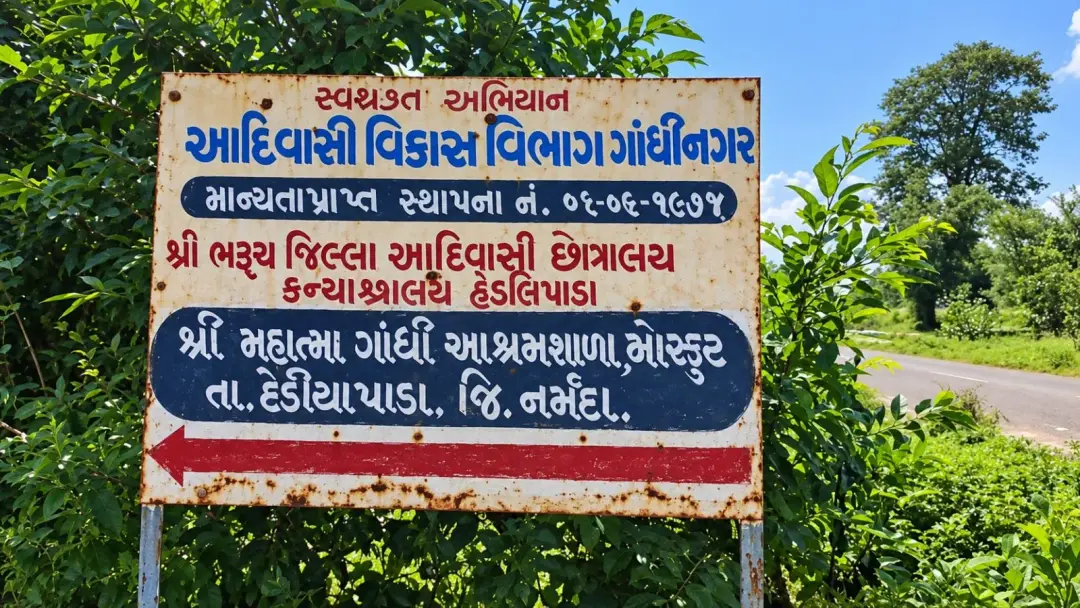
Narmada Ashramshala: 11 children healthy, says district health officer
Eleven tribal children at the Moskut Ashramshala in Dediapada, Narmada district of Gujarat, began shaking and behaving unusually one after another during morning prayers on September 9. They were taken by ambulance to a local health facility and then to Rajpipla Civil Hospital, about 50 km away. District Health Officer Janak Madhak said medical and psychological assessments found all of them healthy, with no evidence of food poisoning. He suggested the children may have been imitating behaviour they had seen, and dismissed speculation about supernatural causes.
Source
Indian Express — Cities · read the original report ↗
Desk check · compared with the source
What the desk checked (5)
- Eleven children at the Moskut Ashramshala in Dediapada began shaking and displaying unusual behaviour on September 9 during morning prayers — Described in source as an alleged incident, based on accounts of school staff
- Medical examination and psychological assessment found the children healthy, with no evidence of food poisoning — Attributed to District Health Officer Janak Madhak and district health authorities
- The behaviour may have been imitation spreading in a group setting, with no indication of mental illness — Attributed as an explanation offered by DHO Janak Madhak
- Children were taken by ambulance to a local health facility and then to Rajpipla Civil Hospital about 50 km away — Attributed to assistant teacher Kalpana Vasava; distance figure appears in source
- Rumours of 'possession' by 'Hanuman Dada' and of food poisoning circulated, along with videos on social media — Reported as rumour in source; no evidence given, and officials dismissed supernatural causes
Analysts’ view opinion
This is less a medical emergency story than a story about institutional preparedness in residential schools. Official examinations found the children healthy with no evidence of food poisoning; ambulances arrived, a psychiatric assessment was done and reports went up to Gandhinagar — the emergency chain broadly worked. The deeper policy question is not response speed but the absence of routine, on-site mental health and supervision capacity in ashramshalas that house tribal children away from their parents.
- Ashramshalas recognised by the state Tribal Development Department serve some of the most vulnerable children, which is precisely why standards enforcement and accountability here should be tighter than in ordinary schools.
- The fact that children had to be moved from the local government facility to a civil hospital 50 km away points to the geographic gap in specialist care in tribal districts.
- That the principal was away and the medical officer reached only at 2 am raises questions about how norms on responsible overnight staffing in hostels are actually implemented.
- Villagers and the sarpanch turning up to help shows real local social capital, while the spread of unverified videos shows that government communication and rumour management remain the weak link.
- The district officer's explanation of imitation and behaviour spreading in a group setting is a scientific counter to supernatural speculation, but it does not substitute for trained counsellors at the school level.
What to watch — Watch whether the reports sent to Gandhinagar translate into any policy direction on routine mental health assessments, overnight staffing norms and emergency protocols across ashramshalas.
The story does not establish a confirmed cause for the children's behaviour — the imitation explanation is an official assessment, not a finding — nor does it establish any rule violation by the school or any impending policy change.
Deep dive
Research brief · 8 facts · 5 dates · exam-readyThe brief
Context
On September 9, during morning prayers at the Moskut Ashramshala — a residential school for tribal children in Dediapada, Narmada district, Gujarat — 11 children began shaking and displaying unusual behaviour one after another. The school, recognised by the state's Tribal Development Department, houses around 50 tribal children. Videos circulated on social media and rumours spread in nearby villages, ranging from "possession" by "Hanuman Dada" to food poisoning. District health authorities say medical and psychological assessments found all the children healthy, with no evidence of food poisoning or physical illness.
Key facts
- Eleven children at the Moskut Ashramshala in Dediapada, Narmada district, Gujarat, began shaking and behaving unusually during morning prayers on September 9.
- The children were taken by ambulance first to the local government health facility, then to the Civil Hospital in Rajpipla, about 50 km away, in three vehicles.
- District Health Officer Janak Madhak said medical assessments indicated no food poisoning or any other physical illness, and psychological assessment found the children fine.
- None of the children reported vomiting, diarrhoea or abdominal pain, according to school staff, weakening the food-poisoning theory.
- Madhak said there was no indication of mental illness, and that in a group setting such behaviour can spread from one child to another.
- Around 50 tribal children stay at the Ashramshala; roughly the same number of villagers camped on the premises to help manage the other students.
- Assistant teacher Kalpana Vasava said the first affected child was a girl who started sweating and shaking after returning from drinking water; a Class 8 boy was affected next.
- The medical officer reached the school at 2 am; statements of all the children were recorded, and reports were sent to officials in Gandhinagar and Ashramshala authorities.
Timeline
- September 9, morningDuring the daily prayer assembly, a girl returning from drinking water began sweating and shaking; a Class 8 boy and then several more children showed similar behaviour.
- September 9, dayTeachers called ambulances; children taken to the local government health facility and then to Rajpipla Civil Hospital; parents informed; villagers, including the sarpanch, gathered to help.
- September 9, nightThe school principal, who was away, arrived; the medical officer reached at 2 am and statements of all children were recorded.
- September 10 (following morning)Large crowds came to the Ashramshala; all children, including those who had stayed back, were examined; doctors said reports were normal with no food poisoning.
- More than a week after the incidentRumours of the supernatural and food poisoning persist; District Health Officer publicly dismisses speculation about supernatural causes; children back in school studying normally.
Who has a stake
- The 11 affected children and their families — Health, schooling and stigma; parents were called to the school and children have since resumed studies normally.
- Moskut Ashramshala, Dediapada — Institutional credibility and student safety; it has appealed to parents and villagers not to circulate unverified claims.
- Narmada district health administration / DHO Janak Madhak — Establishing a medical explanation, ruling out poisoning and countering supernatural rumours.
- Rajpipla Civil Hospital doctors and psychiatrist — Clinical examination and counselling of the children; reported satisfactory responses and normal reports.
- Tribal Development Department, Gujarat (Gandhinagar officials) — The Ashramshala is recognised by the department; reports on the incident have been sent to Gandhinagar.
- Villagers and the sarpanch of the area — Community trust and rumour management; around 50 villagers helped manage students at the school.
Why it matters
Residential tribal schools house children far from families, so any unexplained health scare instantly triggers panic among parents and villages. Here, the official finding of no poisoning or illness shifts attention to how group behaviour and rumours spread, including through social media videos. It also shows why administrations must communicate clearly and quickly to prevent supernatural explanations from taking hold in vulnerable communities.
UPSC angle
Prelims pointers
- Ashramshala: a residential school where children from tribal communities live and study; Moskut Ashramshala is recognised by Gujarat's Tribal Development Department.
- Incident date: September 9, at Moskut Ashramshala, Dediapada taluka, Narmada district, Gujarat.
- Rajpipla, the district town with the Civil Hospital, is about 50 km from the school.
- District Health Officer Janak Madhak said there was no food poisoning, no physical illness and no indication of mental illness.
- Around 50 tribal children reside at the Moskut Ashramshala.
- Reports on the incident were sent to officials in Gandhinagar, Gujarat's capital, and to Ashramshala authorities.
Mains framing
The Narmada Ashramshala episode illustrates how a health scare in a tribal residential school can be amplified by information gaps, community belief systems and unverified social media content. Medically, the district administration found no food poisoning, no physical illness and no mental illness among the 11 children; the DHO attributed the behaviour to imitation of something the children had seen and to how such behaviour can spread within a group setting. Socially, the vacuum of immediate explanation allowed rumours of "possession" by "Hanuman Dada" to circulate, while videos of children in apparent distress spread online, raising questions of child privacy and dignity. Institutionally, the response — ambulances, examination at the local facility and Rajpipla Civil Hospital, counselling by a psychiatrist, recording of children's statements, and reports to Gandhinagar — shows a functioning escalation chain, but the week-long persistence of rumours shows communication lagged behind clinical certainty. The way forward, as suggested by the school's own appeal, lies in verified, timely public messaging, accessible counselling and psychosocial support in Ashramshalas, sensitisation of staff, parents and villagers, and restraint in circulating identifiable images of minors.
Key terms
- Ashramshala
- A residential school where children from tribal communities live and study; the Moskut one is recognised by Gujarat's Tribal Development Department.
- Tribal Development Department (Gujarat)
- The state department that recognises the Moskut Ashramshala in Dediapada.
- District Health Officer (DHO)
- District-level health administrator; here Janak Madhak, who declared the children healthy and dismissed supernatural explanations.
- Rajpipla Civil Hospital
- District-level hospital about 50 km from the school where the children were examined and counselled, including by a psychiatrist.
- "Hanuman Dada" possession
- A local belief in religious or shamanic trance, invoked in village rumours to explain the children's behaviour.
- Sarpanch
- Elected head of the village panchayat; the local sarpanch helped the school manage students during the commotion.
Practice questions
- Unexplained mass health scares in residential tribal schools often get explained through supernatural belief. Examine the administrative and public-communication measures needed to counter such rumours.
- Discuss the adequacy of health and psychosocial support systems in tribal residential schools (Ashramshalas), using the September 9 Narmada incident as a case study.
- How should authorities balance public information with the privacy and dignity of minors when videos of children in distress circulate on social media?
Grounded only in the source report — figures and dates are the source's, not inferred.