
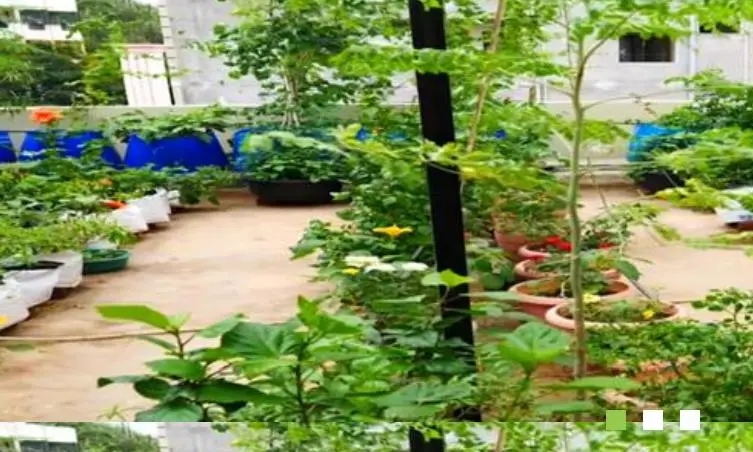
Kurnool to expand horticulture by 60,000 hectares: Collector
Horticulture cultivation in Kurnool district, now spread over about 86,000 hectares, will be expanded by another 60,000 hectares, collector Dr. A. Siri said. Water-use efficiency will be improved through drip and micro-irrigation, fertigation and farm ponds. The district earns around Rs 6,768 crore from horticulture. Mango, sweet orange, onion, chilli, papaya, vegetables and flowers will be promoted. Drip irrigation covers 8,200 hectares, with a 10,000-hectare target this year. Chief Minister N. Chandrababu Naidu will launch 'Global Horticulture Hub – Rayalaseema Rising' in Annamayya district on October 2.
Source
Kurnool — news · read the original report ↗
Desk check · compared with the source
What the desk checked (4)
- Horticulture in Kurnool district covers about 86,000 hectares and will be expanded by 60,000 hectares. — Figures appear in the source, attributed to the district administration and collector Dr. A. Siri.
- Horticulture generates about Rs 6,768 crore in the district. — Figure appears in the source; no supporting document or agency cited.
- Drip irrigation covers around 8,200 hectares, with a 10,000-hectare target this year. — Figures stated in the source and attributed to the district administration.
- 'Global Horticulture Hub – Rayalaseema Rising' will be launched by CM N. Chandrababu Naidu in Annamayya district on October 2. — Attributed directly to collector Siri; date and venue as given in source.
Analysts’ view opinion
On paper this is a 70% expansion of Kurnool's horticulture footprint — from about 86,000 hectares to roughly 146,000 — layered on a sector that already generates around Rs 6,768 crore in value. The economics are attractive because horticulture is higher-value and more labour-intensive per hectare than staple grains, so the gains would show up in farm incomes and rural wage work rather than just acreage numbers. But the binding constraints are water and markets, not land: drip covers only about 8,200 hectares today, and the year's target of 10,000 hectares is modest against the scale of the expansion being promised.
- Horticulture typically yields more income and more on-farm and packhouse jobs per hectare than cereals, so a shift of this size could lift rural incomes across Kurnool if realised.
- The post-harvest plan — collection centres, pack houses, grading, cold chain, ripening chambers — is the part that determines whether farmers actually capture better prices rather than selling into gluts.
- Water-use efficiency is the make-or-break variable in a drought-prone district; expanding area faster than drip and micro-irrigation coverage would raise, not lower, climate risk.
- Supply-side risk is real: sharply more mango, sweet orange, onion, chilli and papaya volume can soften farmgate prices unless processing and market linkages scale in step, though consumers and processors would gain from cheaper, steadier supply.
- The story does not set out who funds the planting material, drip subsidies or cold-chain assets, which is the key question of who bears the upfront cost and who reaps the margin.
What to watch — Watch whether drip and cold-chain capacity expand roughly in line with acreage, and what funding and private-investment commitments emerge around the October 2 "Global Horticulture Hub – Rayalaseema Rising" launch.
This is a stated administrative plan with no timeline, budget, financing source or phasing disclosed in the story, so the announced area and income gains remain intentions rather than established outcomes.
Deep dive
Research brief · 8 facts · 4 dates · exam-readyThe brief
Context
Kurnool district in Andhra Pradesh's Rayalaseema region currently has about 86,000 hectares under horticulture, generating around Rs 6,768 crore. District collector Dr. A. Siri has announced a plan to add another 60,000 hectares, alongside water-saving irrigation, better planting material and post-harvest infrastructure. The push is tied to a state-level initiative, "Global Horticulture Hub – Rayalaseema Rising", to be launched by Chief Minister N. Chandrababu Naidu in Annamayya district on October 2.
Key facts
- Horticulture in Kurnool district currently covers around 86,000 hectares.
- The district administration plans to expand horticulture by an additional 60,000 hectares.
- Kurnool district currently generates around Rs 6,768 crore from horticulture; the aim is to raise this Gross Value Added.
- About 8,200 hectares in the district are under drip irrigation, with a target of 10,000 hectares for the current year.
- Crops to be promoted: mango, sweet orange, onion, chilli, papaya, vegetables and flowers.
- Water-use efficiency measures named: drip irrigation, micro-irrigation, fertigation and farm ponds.
- Climate-resilient and drought-tolerant varieties will be encouraged, given changing weather and possible continuation of El Nino conditions.
- 'Global Horticulture Hub – Rayalaseema Rising' will be launched by Chief Minister N. Chandrababu Naidu in Annamayya district on October 2.
Timeline
- Current positionKurnool has around 86,000 hectares under horticulture and 8,200 hectares under drip irrigation, earning about Rs 6,768 crore.
- Current yearTarget of 10,000 hectares under drip irrigation in the district.
- October 2Chief Minister N. Chandrababu Naidu to launch 'Global Horticulture Hub – Rayalaseema Rising' in Annamayya district.
- Not dated in the sourceExpansion of horticulture by 60,000 hectares, pruning and rejuvenation of old orchards, and development of post-harvest facilities.
Who has a stake
- Horticulture farmers of Kurnool district — Access to quality planting material, modern cultivation practices, drip/micro-irrigation and better prices through new market infrastructure.
- Kurnool district collector Dr. A. Siri — Leads the expansion plan, water-use efficiency drive and post-harvest infrastructure rollout in the district.
- Andhra Pradesh government / CM N. Chandrababu Naidu — Launching 'Global Horticulture Hub – Rayalaseema Rising' for integrated development across Rayalaseema.
- Rayalaseema region (including Annamayya district) — Integrated development of irrigation, horticulture, processing, marketing, roads and infrastructure.
- Post-harvest value chain actors (pack houses, cold chains, ripening chambers) — New collection centres, sorting and grading units, storage centres and cold-chain facilities to be developed.
Why it matters
Rayalaseema is a drought-prone region where horticulture with micro-irrigation can deliver higher incomes per drop of water than water-intensive field crops. Nearly doubling Kurnool's horticulture area while building cold chains and pack houses targets both productivity and the post-harvest losses that erode farmer prices. The plan also links district-level action to a wider state effort to make Rayalaseema a horticulture and processing hub.
UPSC angle
Prelims pointers
- Kurnool district horticulture area: about 86,000 hectares; proposed expansion: 60,000 hectares.
- Horticulture income of Kurnool district: around Rs 6,768 crore (measured as Gross Value Added).
- Drip irrigation coverage in Kurnool: 8,200 hectares now; target 10,000 hectares this year.
- 'Global Horticulture Hub – Rayalaseema Rising' to be launched in Annamayya district on October 2 by CM N. Chandrababu Naidu.
- Fertigation means delivering fertilisers along with irrigation water, typically through drip systems.
- Crops targeted for promotion in Kurnool: mango, sweet orange, onion, chilli, papaya, vegetables and flowers.
Mains framing
Kurnool's plan to add 60,000 hectares to its existing 86,000 hectares of horticulture illustrates how drought-prone districts are shifting toward high-value, water-efficient cropping. The drivers are visible in the announcement itself: limited and uncertain water availability (hence drip, micro-irrigation, fertigation and farm ponds), ageing orchards needing pruning and rejuvenation, weak post-harvest handling, and climate variability including the possibility of El Nino conditions continuing. The implications are twofold — a higher Gross Value Added from the current Rs 6,768 crore and better farm incomes if productivity, quality and value addition improve; but also the risk that area expansion outpaces water availability, quality planting material supply and market absorption for perishables like mango, papaya, onion and flowers. The stated way forward is integrated: demand-based crop choice, climate-resilient and drought-tolerant varieties, farmer training in modern practices, raising drip coverage from 8,200 to 10,000 hectares this year, and building collection centres, pack houses, sorting and grading units, cold chains, storage and ripening chambers — nested within the state's 'Global Horticulture Hub – Rayalaseema Rising' linking irrigation, processing, marketing and roads.
Key terms
- Fertigation
- Application of fertilisers through the irrigation system, usually drip, so nutrients reach the root zone with water.
- Micro-irrigation
- Water-saving delivery systems such as drip and sprinkler that supply measured water directly to plants.
- Gross Value Added (GVA)
- Value of output minus intermediate inputs; used here to measure the district's horticulture earnings, about Rs 6,768 crore.
- Global Horticulture Hub – Rayalaseema Rising
- State programme to be launched on October 2 in Annamayya district for integrated irrigation, horticulture, processing, marketing, roads and infrastructure in Rayalaseema.
- Orchard rejuvenation
- Pruning and reviving old fruit trees to restore and raise their productivity.
- El Nino
- Climate phenomenon whose continuation is cited as a reason to push drought-tolerant and climate-resilient crop varieties.
Practice questions
- How can micro-irrigation and post-harvest infrastructure together raise farm incomes in drought-prone districts? Discuss with reference to Kurnool's horticulture expansion plan.
- Examine the risks of expanding horticulture area in a water-scarce region without matching investment in water-use efficiency, planting material and cold chains.
- Discuss the role of regional programmes like 'Global Horticulture Hub – Rayalaseema Rising' in integrating irrigation, processing and marketing for high-value agriculture.
Grounded only in the source report — figures and dates are the source's, not inferred.