
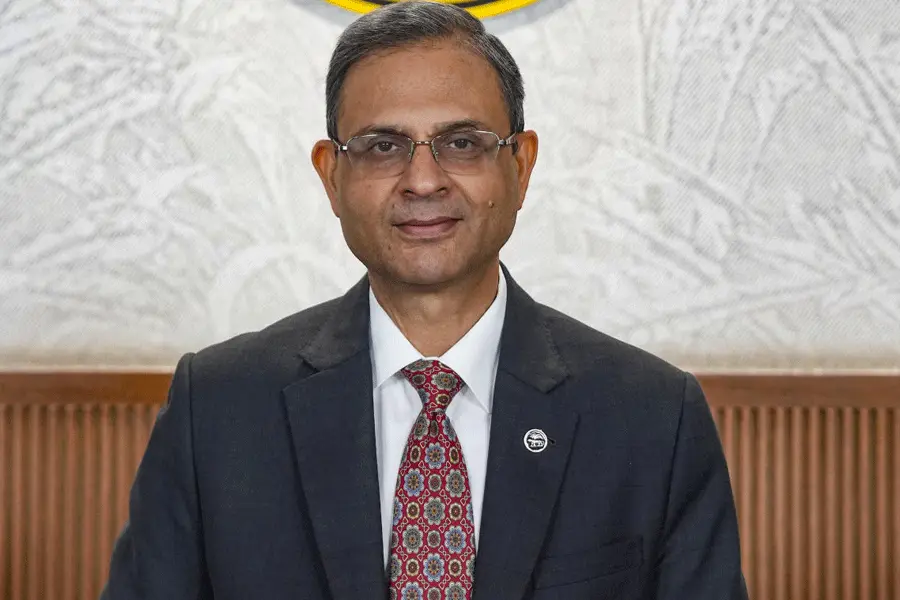
Small UPI MDR fee won't dent transaction volumes: RBI Governor
RBI Governor Sanjay Malhotra said on Wednesday that a small fee in the form of merchant discount rate (MDR) will not have a major impact on UPI transaction volumes, adding that no drop in volumes has been seen so far. The government last month allowed a 0.4 per cent fee on transactions above Rs 2,000. He said the rupee may be undervalued and the RBI will support its stability and correct value. Banks raised nearly USD 133 billion under FCNR(B).
Source
RBI · read the original report ↗
Desk check · compared with the source
What the desk checked (5)
- A small MDR fee will not have a major impact on UPI transaction volumes. — Attributed directly to RBI Governor Sanjay Malhotra, quoted in the source.
- Government last month allowed MDR under which transactions above Rs 2,000 attract a 0.4 per cent fee. — Stated in the source as background without attribution to a specific order or official.
- Banks raised nearly USD 133 billion under the FCNR(B) concessional swap facility. — Figure appears in the source, cited in the Governor's remarks; no underlying data source given.
- The rupee neared its all-time low of 96.96 against the dollar in intraday trade on Wednesday. — Figure appears in the source as context to a question put to the Governor; no market data source cited.
- The rupee may be undervalued as per many estimates including REER. — Direct quote attributed to Malhotra; echoed by Deputy Governor Poonam Gupta's September 24 remarks per the source.
Analysts’ view opinion
The Governor's argument on MDR is straightforward — a 0.4 per cent fee on transactions above Rs 2,000 is too small to change payment habits, and he points to the absence of any volume drop so far as evidence. But the real economic question is who absorbs the cost: until now the expense of running UPI has sat largely with the government and banks, and it now shifts towards merchants, who can respond through pricing or by nudging customers to cash. On the currency side, the claim that the rupee may be "undervalued" and the roughly USD 133 billion mobilised under FCNR(B) are signalling tools — they do not remove the pressure from imported oil costs.
- Volumes may well hold up, but the clear shift is that the cost of the payments rail moves from the public/bank balance sheet onto merchants.
- The Rs 2,000 threshold keeps small everyday purchases outside the fee, which is why transaction counts may be barely affected even if high-value flows behave differently.
- Small retailers run on thin margins, so even 0.4 per cent could show up as price adjustments or a quiet preference for cash — the story offers no evidence either way.
- The counter-argument is genuinely strong: fee revenue makes payment infrastructure commercially sustainable, supporting investment and reliability over the long run.
- Ruling out a rate cut, projecting strong credit growth and highlighting the USD 133 billion FCNR(B) pool together point to a policy stance currently prioritising currency stability.
What to watch — Watch the value of above-Rs 2,000 UPI transactions over the coming months, how much of the fee merchants pass into prices, and whether the current account pressure proves as temporary as claimed.
MDR has been in force only a short while, so "no drop in volumes" is not long-run proof, and the story does not establish how the fee burden will finally be split between merchants and consumers.
Deep dive
Research brief · 8 facts · 0 dates · exam-readyThe brief
Context
RBI Governor Sanjay Malhotra, speaking to reporters at the central bank headquarters on Wednesday, addressed the newly permitted merchant discount rate (MDR) on large UPI payments, the rupee's slide towards its all-time low, and the record diaspora deposit mobilisation under the FCNR(B) swap window. His remarks came hours after the RBI announced a rate hike and ruled out a rate cut. The rupee has been under pressure for much of the year, especially since the West Asia conflict began in late February and pushed up crude oil prices, a direct challenge for oil-importing India.
Key facts
- Government last month allowed MDR under which UPI transactions above Rs 2,000 attract a fee of 0.4 per cent.
- Malhotra: "As of now, we do not see any drop in volumes" and a small fee will not have a major impact on volumes.
- Banks raised nearly USD 133 billion in diaspora deposits under the FCNR(B) concessional swap facility.
- The rupee inched towards its all-time low of 96.96 against the dollar during intraday trading on Wednesday.
- Malhotra spoke hours after the RBI announced a rate hike and made clear a rate cut is off the table.
- Governor said that by several estimates, including REER, the rupee is not overvalued and may be undervalued.
- RBI said it is conscious of adverse asset-quality impact at non-bank lenders amid flush liquidity but does not expect it to play out.
- Malhotra declined to comment on the RBI rejecting Tata Sons' request to surrender its NBFC licence.
Who has a stake
- Reserve Bank of India / Governor Sanjay Malhotra — Must manage rupee stability and orderly movement without excessive volatility, while overseeing liquidity, credit growth and NBFC regulation.
- UPI users and merchants — Face a 0.4 per cent MDR on transactions above Rs 2,000; question is whether charges deter digital payment usage.
- Banks — Raised nearly USD 133 billion under FCNR(B) via a concessional swap facility and are expected to deploy these funds prudently; credit growth seen staying strong.
- Non-bank lenders (NBFCs) — RBI is conscious of possible asset quality deterioration amid surplus liquidity, though it does not expect such an outcome.
- Non-resident Indian diaspora — Source of the FCNR(B) deposits mobilised under the concessional swap facility to support the currency.
- Tata Sons — RBI rejected its request to surrender its NBFC licence and asked it to list under upper-layer NBFC norms; Malhotra declined to comment.
Why it matters
UPI is India's dominant retail payment rail, so any pricing on it tests whether digital payments adoption is durable or subsidy-dependent. At the same time, a rupee near record lows, a stressed current account and a rate hike signal that external shocks, led by crude prices, are shaping monetary and currency policy choices.
UPSC angle
Prelims pointers
- MDR (merchant discount rate) allowed by the government last month: 0.4 per cent on UPI transactions above Rs 2,000.
- Rupee's all-time low cited: 96.96 against the US dollar, approached in intraday trade.
- FCNR(B) deposits mobilised by banks under the concessional swap facility: nearly USD 133 billion.
- REER (Real Effective Exchange Rate) cited by the Governor as an estimate showing the rupee may be undervalued.
- RBI Deputy Governor Poonam Gupta said on September 24 there is a case for the rupee to stabilise and appreciate.
- RBI rejected Tata Sons' plea to surrender its NBFC licence, asking it to list under upper-layer NBFC norms.
Mains framing
The Governor's remarks tie together three strands of India's current macro-financial challenge. First, the introduction of a 0.4 per cent MDR on UPI transactions above Rs 2,000 marks a shift from zero-charge digital payments towards a revenue-sharing model; the RBI's position is that a small fee will not dent volumes, a claim that will be tested by behavioural response among merchants and users. Second, external headwinds, driven by the West Asia conflict and higher crude prices for an oil-importing economy, have dented capital flows and pressured the current account and the rupee, which touched close to its all-time low of 96.96 to the dollar. The RBI's response has been instrument-based rather than rhetorical: a concessional swap facility for diaspora deposits and bond issuances, under which banks raised nearly USD 133 billion through FCNR(B), easing currency pressure temporarily. Third, the resulting liquidity surplus raises prudential questions about asset quality at non-bank lenders, which the RBI says it is watching but does not expect to materialise. The way forward, as framed in the source, rests on the current account pressure proving temporary, the Balance of Payments returning to surplus, prudent deployment of mobilised funds by banks, and RBI support for an orderly, non-volatile move of the rupee towards its "correct value".
Key terms
- MDR (Merchant Discount Rate)
- A fee charged on a digital transaction; the government has allowed 0.4 per cent on UPI payments above Rs 2,000.
- FCNR(B)
- Foreign currency deposit scheme for the diaspora; banks raised nearly USD 133 billion under a concessional swap facility.
- REER (Real Effective Exchange Rate)
- An inflation-adjusted, trade-weighted measure of a currency's value; by this estimate the rupee may be undervalued.
- Balance of Payments
- Record of a country's external transactions; Malhotra expects it to return to surplus soon.
- Upper-layer NBFC norms
- RBI's stricter rules for the largest non-bank lenders, including a listing requirement, cited in the Tata Sons case.
- System liquidity
- Surplus funds in the banking system; the Governor said it will not stay in very high surplus for long.
Practice questions
- Does charging an MDR on high-value UPI transactions threaten India's digital payments adoption, or is it necessary for the sustainability of the payments ecosystem? Discuss.
- Examine how external shocks such as a West Asia conflict and rising crude prices transmit to India's current account and exchange rate, and evaluate the RBI's use of concessional swap facilities for diaspora deposits.
- A surge in system liquidity can create risks for non-bank lenders' asset quality. Critically assess the regulatory challenges this poses for the RBI.
Grounded only in the source report — figures and dates are the source's, not inferred.