
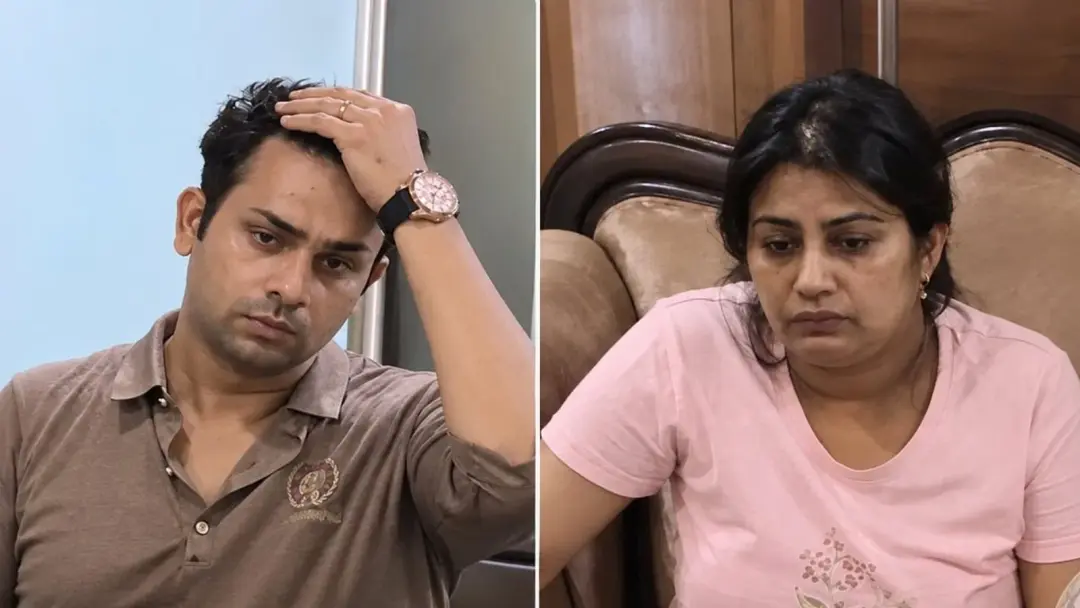
Husband arrested in Kanpur murder of pharmaceutical businessman
Police on Thursday arrested Subrat for allegedly plotting the murder of his father, pharmaceutical businessman Vineet Minocha, 63, who was found stabbed 26 times in his flat at Ratan Orbit Apartments in Kanpur on September 6. Police allege Subrat paid two men to kill Vineet and told them to blame his wife Shalu if caught. Shalu, in jail since September 7, will have her role re-verified before police seek her exoneration in court.
Source
Indian Express — Cities · read the original report ↗
Desk check · some claims need care
What the desk checked (5)
- Vineet Minocha, 63, a pharmaceutical businessman, was found dead with 26 stab wounds in his flat at Ratan Orbit Apartments, Kanpur, on September 6. — Specific details appear in the source as reported facts of the case; no investigating officer named.
- Subrat was arrested on Thursday for allegedly plotting his father's murder and admitted his role during questioning. — Attributed to police in the source; admission reported by police, not independently confirmed.
- Vishal Gautam told police Shalu had hired him for Rs 6 lakh; she denied it. — Attributed to a co-accused's statement to police; denial also recorded in source.
- Police will re-verify Shalu's role before moving court to have her exonerated; she has been in Kanpur jail since September 7. — Attributed to police in the source; outcome pending.
- Family statements that Subrat avoided them, citing shock, and did not visit Shalu in jail. — Attributed to her brother Dheeraj Arora; one claim explicitly flagged as his assertion.
Analysts’ view opinion
This is more than a twist in an investigation — it is a case study in how quickly an allegation can become a custodial reality under Indian criminal procedure. Shalu was arrested largely on a co-accused's statement and has spent nearly three weeks in jail; police now say they will re-verify her role and move court to have her exonerated. Legally, police cannot themselves declare anyone innocent — that is the court's domain; what they can do is drop her from the final report or support a discharge.
- A co-accused's statement carries limited evidentiary weight under Indian evidence principles and needs independent corroboration — it is a thin basis for arrest on its own.
- Police say Subrat admitted his role, but a confession made to police is not by itself admissible at trial; the case will turn on hard material such as the duplicate key, money trail, phone records and CCTV.
- Shalu's release is not automatic — it requires a changed final report, a discharge plea or bail, and every day of delay engages her liberty interest under Article 21.
- If a wrongful arrest is established, questions of compensation, investigative accountability and supervisory review could follow, though those are separate proceedings.
- The five-year-old is now with his maternal uncle; where both parents are in custody, courts decide such arrangements on the 'best interests of the child' standard.
What to watch — Watch the form and speed of the police move in court — whether Shalu's name is dropped from the final report or a discharge is backed — and how quickly that translates into her actual release.
Everything here rests on police allegations: neither Subrat's guilt nor Shalu's innocence has been tested by a court, and the accused persons' own defence is not reflected in this account.
Deep dive
Research brief · 8 facts · 5 dates · exam-readyThe brief
Context
Vineet Minocha, 63, one of Kanpur's leading pharmaceutical businessmen, was found stabbed 26 times in his first-floor flat at Ratan Orbit Apartments on September 6. Police initially arrested his daughter-in-law Shalu along with two alleged killers, after one of them said she had hired him for Rs 6 lakh. Nearly three weeks later, during police custody remand questioning, investigators say his son Subrat admitted he had paid the two men and told them to blame his wife if caught. Subrat was arrested on Thursday, and police have decided to re-verify Shalu's role before seeking her exoneration in court.
Key facts
- Vineet Minocha, 63, a pharmaceutical businessman with retail and wholesale medicine trade, was found dead in his first-floor flat at Ratan Orbit Apartments, Kanpur, on September 6.
- The post-mortem-level detail cited by police: he had been stabbed 26 times.
- The two alleged killers, Vishal Gautam and Raj Kishore, entered the flat using a duplicate key.
- At the time of the murder Subrat, Shalu and their five-year-old son were at a 'kitty party'.
- Shalu and the two men were arrested the day after the murder; Shalu has been in Kanpur jail since September 7.
- Vishal, a former employee at Vineet's pharmacy on Birhana Road, told police Shalu had hired him for Rs 6 lakh; Shalu denied the allegation.
- Police now allege Subrat paid the two men and instructed them to pin the blame on Shalu if caught.
- Shalu, 30, holds a B.Ed degree, is the youngest of three siblings from a Lucknow bakery-business family, and married Subrat in an arranged marriage in 2020.
Timeline
- 2020Shalu and Subrat marry in an arranged marriage; she moves into her in-laws' flat in Kanpur.
- September 6Vineet Minocha, 63, found stabbed 26 times in his flat at Ratan Orbit Apartments while the family was at a 'kitty party'.
- September 7Police arrest Shalu and the two alleged killers, Vishal Gautam and Raj Kishore; Shalu is lodged in Kanpur jail.
- During police custody remandInvestigators confront Subrat with the other accused; after rounds of questioning and cross-examination police say he admitted his role.
- Thursday (nearly three weeks after the murder)Subrat arrested for allegedly plotting the murder; police decide to re-verify Shalu's role before moving court for her exoneration.
Who has a stake
- Shalu, 30 — Jailed since September 7 on an allegation police now attribute to her husband's framing; awaits re-verification and possible exoneration in court.
- Subrat — Arrested for allegedly plotting his father's murder and framing his wife; faces prosecution.
- Kanpur police — Credibility of the investigation — an early arrest based on a co-accused's statement is being reversed after custodial questioning.
- Dheeraj Arora, Shalu's elder brother — Publicly demanded a fair investigation; now caring for the couple's five-year-old son.
- The couple's five-year-old son — Grandfather murdered, mother in jail, father arrested; now living with his maternal uncle in Lucknow.
- Vishal Gautam and Raj Kishore — Alleged killers, arrested; Vishal's statement naming Shalu was the basis of her arrest.
Why it matters
The case shows how quickly an investigation built on a co-accused's confession can implicate an innocent person — Shalu spent nearly three weeks in jail on an allegation police now say was planted by her husband. It underlines the need for corroboration before arrest in murder cases, and the human cost borne by families, including a five-year-old left without either parent.
UPSC angle
Prelims pointers
- Victim: Vineet Minocha, 63, Kanpur pharmaceutical businessman, killed September 6 at Ratan Orbit Apartments; stabbed 26 times.
- Accused: son Subrat (arrested Thursday), Vishal Gautam and Raj Kishore (alleged killers), and daughter-in-law Shalu (arrested September 7).
- Vishal Gautam was a former employee at Vineet's pharmacy on Birhana Road; the alleged contract sum named was Rs 6 lakh.
- The killers allegedly used a duplicate key to enter the flat while the family attended a 'kitty party'.
- Police custody remand questioning is where investigators say Subrat's role emerged.
- Exoneration route: police must re-verify Shalu's role and then move court to have her cleared.
Mains framing
The Kanpur murder of pharmaceutical businessman Vineet Minocha illustrates a recurring weakness in criminal investigation: reliance on the statement of one co-accused as sufficient basis for arrest. Shalu was arrested on September 7 solely after Vishal Gautam, a former employee of the victim's pharmacy, alleged she had hired him for Rs 6 lakh; she denied it, yet spent nearly three weeks in Kanpur jail until custodial cross-examination of the accused led police to allege that her husband Subrat had paid the killers and deliberately instructed them to name her. The implications are threefold — the reputational and liberty cost to a wrongly named accused, the collateral damage to dependants (the couple's five-year-old son now lives with his maternal uncle), and the delay in reaching the real motive because investigators followed a planted lead. The way forward, on the evidence in this case, lies in corroborating confessional statements with independent material such as the duplicate key, call records and financial trails before making arrests, in prompt re-verification and court-sanctioned exoneration where an accusation collapses, and in sustained scrutiny of family-level financial and property disputes as motive rather than the first name offered by a hired killer.
Key terms
- Police custody remand
- Court-permitted period in which accused persons are held by police for questioning; here it produced the confrontation between Subrat and the other accused.
- Exoneration (moving court)
- Police approaching the court to clear an arrested person of charges once investigation shows she was not involved — the step planned for Shalu.
- Kitty party
- A social gathering, here the family's stated whereabouts at the time of the murder, cited by police as part of the alleged plan.
- Ratan Orbit Apartments
- The Kanpur residential building where Vineet Minocha was found stabbed to death in his first-floor flat on September 6.
- Duplicate key
- The means of entry allegedly used by Vishal Gautam and Raj Kishore to get into the victim's flat, suggesting insider facilitation.
Practice questions
- Reliance on a co-accused's statement as the basis for arrest can cause grave injustice. Examine this in the light of the Kanpur Minocha murder case and suggest safeguards in investigation.
- Discuss how circumstantial evidence — entry by duplicate key, the family's absence at a social gathering, and financial trails — shapes the investigation of intra-family murders.
- What institutional remedies exist for a person wrongly arrested and jailed before investigation clears her? Evaluate their adequacy with reference to this case.
Grounded only in the source report — figures and dates are the source's, not inferred.