
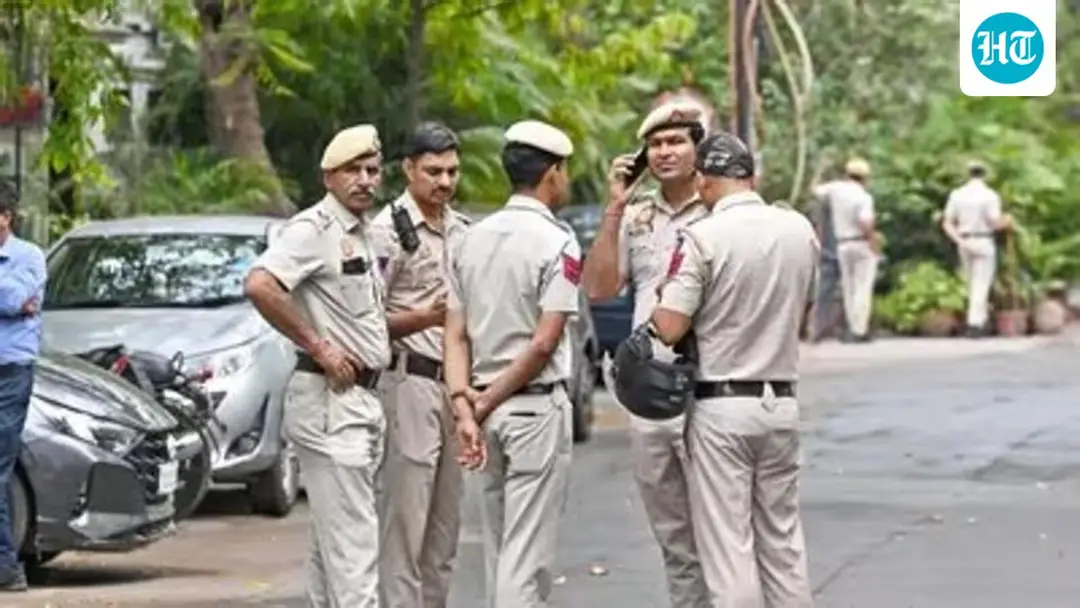
Sagar spurious liquor case: prime suspect held after encounter
Sagar police in Madhya Pradesh on Wednesday arrested liquor contractor Manish Lodhi, the prime suspect in the spurious liquor case carrying a ₹30,000 reward, in the Malthon area. SP Anurag Sujaniya said Lodhi and associate Ashish Sahu opened fire on a police team and Lodhi was shot in the leg in retaliatory action. Two country-made pistols and five cartridges were recovered. The case, registered at Banda and Vinayaka stations, has claimed 20 lives; 52 people booked and 39 arrested.
Source
Hindustan Times — India · read the original report ↗
Desk check · compared with the source
What the desk checked (5)
- Manish Lodhi alias Yashwant Thakur, carrying a ₹30,000 reward, was arrested with associate Ashish Sahu in Malthon after firing at police. — Attributed to Sagar Police and SP Anurag Sujaniya; encounter account is the police version only, not independently corroborated in the source.
- Lodhi was shot in the leg and Sahu injured while fleeing; both admitted to Bundelkhand Medical College, Sagar. — Quoted directly to SP Anurag Sujaniya; figure and details appear in source.
- The spurious liquor case registered at Banda and Vinayaka police stations has claimed 20 lives. — Stated twice in source and attributed to police; consistent internally.
- MP government told the high court that seven more deaths were suspected to be linked to the tragedy. — Attributed to the state government's submission in the high court on Tuesday; described as suspected, not confirmed.
- 52 people booked in three cases, 39 arrested including Delhi-based chemical supplier Anup Giri; fake liquor made at Tatarwara under brand 'Sagar Gold'. — Attributed to police investigation; figures appear in source with no external verification possible.
Analysts’ view opinion
Two distinct legal tracks now run in parallel: a mass-casualty prosecution over spurious liquor that has claimed 20 lives, and the separate question of whether Wednesday's police shooting was lawful use of force. On the first, the alleged use of industrial spirit and thinner to make and sell counterfeit liquor through licensed outlets points to charges far graver than excise violations — courts in India have treated such conduct as culpable homicide territory where knowledge of lethal risk can be shown. On the second, the police account of retaliatory fire in self-defence is, in law, a claim that must be independently verified, not a finding; Supreme Court-laid guidelines require a registered case and independent probe into every death or injury in an alleged police encounter.
- The prosecution's core task will be proving knowledge and intent — that the accused knew the mixture was likely to kill — since that is what separates culpable homicide from lesser adulteration and excise offences.
- Evidence of a planned supply chain, branding and distribution through licensed shops, as described by police, is the kind of material prosecutors typically use to argue conspiracy and shared liability across all 52 booked persons.
- The involvement of licensed contractors and licensed shops raises a parallel regulatory and accountability question — how supervision failed — which is distinct from individual criminal liability.
- The accused's injuries and hospitalisation trigger standard custodial safeguards: medical examination, magistrate-supervised remand, and the right to counsel, all of which apply regardless of the gravity of the allegations.
- With 39 of 52 arrested and others including a Delhi-based supplier in custody, the case's inter-state spread will shape jurisdiction, charge-sheeting timelines and the risk of delay that often weakens such trials.
What to watch — Watch for the charges actually framed in the charge-sheet, whether any independent inquiry is opened into the encounter injuries, and what the high court does with the state's disclosure that seven further deaths are suspected to be linked.
The story establishes arrests and police accounts, not guilt — no charges have been tested in court, the encounter version rests solely on the police narrative, and the link between the seven additional deaths and the tragedy remains officially only a suspicion.
Deep dive
Research brief · 8 facts · 3 dates · exam-readyThe brief
Context
In Madhya Pradesh's Sagar district, a spurious (fake) liquor tragedy has killed 20 people, with cases registered at Banda and Vinayaka police stations. Police investigation found that licensed liquor contractor Manish Lodhi alias Yashwant Thakur and associates manufactured counterfeit liquor under the brand "Sagar Gold" at Tatarwara village using industrial spirit and thinner sourced from Delhi, with dies and empty bottles from Gwalior, and sold it cheaply through licensed shops and village commission agents. Lodhi, who carried a ₹30,000 reward and had been absconding for nearly three weeks, was arrested on Wednesday after an encounter in the Malthon area in which he was shot in the leg.
Key facts
- Prime suspect Manish Lodhi alias Yashwant Thakur, a licensed liquor contractor carrying a ₹30,000 reward, was arrested in Malthon area along with associate Ashish Sahu.
- Lodhi was arrested nearly three weeks after he went absconding, despite raids by Sagar police in Sagar, Morena, Gwalior and Delhi.
- A Motinagar police team acted on a tip-off around 3am and intercepted the duo at the Noniya-Sesai Road valley in Malthon.
- Lodhi was shot in the leg in retaliatory action; Sahu was injured while trying to flee; both were admitted to Bundelkhand Medical College, Sagar.
- Police recovered two country-made pistols, five live cartridges and a baseball bat from the spot.
- The spurious liquor case registered at Banda and Vinayaka police stations has claimed 20 lives.
- The Madhya Pradesh government told the high court on Tuesday that seven more deaths were suspected to be linked to the tragedy.
- Police have booked 52 people in three cases and arrested 39, including Delhi-based chemical supplier Anup Giri.
Timeline
- About three weeks before the arrestManish Lodhi goes absconding after the spurious liquor case is registered at Banda and Vinayaka police stations.
- Tuesday (day before arrest)Madhya Pradesh government tells the high court that 20 have died and seven more deaths are suspected to be linked to the tragedy.
- Wednesday, around 3amMotinagar police team, acting on a tip-off, intercepts Lodhi and Sahu at Noniya-Sesai Road valley, Malthon; firing exchanged and both arrested.
Who has a stake
- Families of the 20 deceased — Loss of life; compensation and justice, with seven more deaths suspected to be linked to the tragedy.
- Sagar Police / SP Anurag Sujaniya — Accountability for tracing the key conspirator, completing investigation in three cases and justifying the encounter action.
- Madhya Pradesh government — Answerable to the high court on deaths, compensation and regulation of licensed liquor shops.
- Manish Lodhi alias Yashwant Thakur and associates Ashish Sahu, Ravi Lakhera, Chandu Raja — Named as conspirators in manufacturing fake liquor; face criminal prosecution.
- Licensed liquor shops and village commission agents in Banda, Nauraj, Gugra, Chhapri — Alleged channels through which cheap fake liquor was sold; face legal scrutiny.
- Delhi-based chemical supplier Anup Giri — Arrested as part of the supply chain of industrial spirit and thinner.
Why it matters
The case shows how a licensed liquor contractor allegedly used the legal retail network to push counterfeit liquor made from industrial spirit, turning a regulatory failure into 20 deaths. With an inter-state supply chain running from Delhi and Gwalior to a village distillery, it raises questions about excise enforcement, quality checks at licensed shops and police vigilance. The high court's involvement and the scale of arrests — 52 booked, 39 arrested — make it a test of state accountability.
UPSC angle
Prelims pointers
- Sagar spurious liquor case: 20 deaths; cases registered at Banda and Vinayaka police stations in Madhya Pradesh.
- Prime accused: licensed liquor contractor Manish Lodhi alias Yashwant Thakur, reward ₹30,000; arrested in Malthon area.
- Fake liquor brand named in investigation: 'Sagar Gold', manufactured at Tatarwara village.
- Industrial spirit and thinner were sourced from Delhi; dies and empty bottles from Gwalior.
- Sagar SP: Anurag Sujaniya; injured accused treated at Bundelkhand Medical College, Sagar.
- Status of probe: 52 people booked in three cases, 39 arrested, including Delhi chemical supplier Anup Giri.
Mains framing
The Sagar spurious liquor tragedy illustrates how illicit liquor networks thrive not outside but inside the licensed excise system: police say a licensed contractor conspired with associates to manufacture fake liquor branded 'Sagar Gold' at a village unit using industrial spirit and thinner from Delhi and bottles and dies from Gwalior, and then retailed it cheaply through licensed shops and village commission agents in Banda, Nauraj, Gugra and Chhapri. The causes visible in the source are weak verification of stock at licensed outlets, an inter-state supply chain for industrial chemicals, and demand for cheap liquor in rural markets; the consequence is 20 confirmed deaths, with the state telling the high court that seven further deaths are suspected to be linked. Enforcement has been reactive — 52 persons booked in three cases, 39 arrested including a Delhi chemical supplier, and the prime suspect traced only after weeks of raids across Sagar, Morena, Gwalior and Delhi, ending in an encounter in which he was shot in the leg. The way forward suggested by the facts lies in tighter excise audit of licensed contractors and shops, traceability of industrial spirit and thinner sales, inter-state coordination on chemical supply chains, and time-bound judicially monitored investigation with compensation to victims' families, while ensuring encounter actions themselves remain legally scrutinised.
Key terms
- Spurious liquor
- Counterfeit liquor made illegally — here from industrial spirit and thinner — and sold under a fake brand, often causing deaths.
- Industrial spirit / thinner
- Non-potable chemicals, brought from Delhi in this case, used to make the fake liquor that caused the Sagar deaths.
- Sagar Gold
- The brand under which the accused allegedly manufactured and sold fake liquor from Tatarwara village.
- Encounter
- Police term for an armed exchange; here police said they fired in self-defence after the accused opened fire during interception.
- Reward/bounty of ₹30,000
- Cash announced by police for information leading to the arrest of absconding accused Manish Lodhi.
- Village commission agents
- Local intermediaries who, along with licensed shops, allegedly sold the fake liquor cheaply in Banda, Nauraj, Gugra and Chhapri.
Practice questions
- Spurious liquor tragedies recur despite a licensed excise system. Examine the regulatory and enforcement failures revealed by the Sagar case and suggest measures to prevent recurrence.
- Discuss the challenges of policing inter-state illicit supply chains of industrial chemicals used in fake liquor manufacture, with reference to the Sagar investigation.
- Police encounters in which absconding accused are injured raise questions of due process. Critically discuss the balance between effective policing and legal accountability.
Grounded only in the source report — figures and dates are the source's, not inferred.