
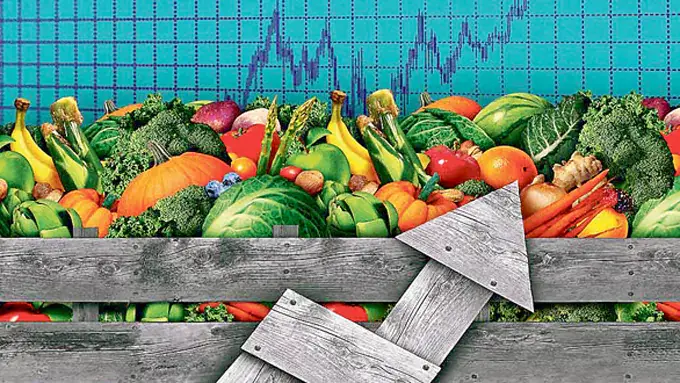
HSBC sees RBI raising repo rate by 0.50% in 2026-27
Amid rising inflation pressures, the RBI may raise rates twice by 0.25% each in 2026-27, taking the repo rate to 5.75%, an HSBC Global Investment Research report estimates. The RBI expects inflation to average above 5% over the next three quarters. El Nino conditions could push food inflation and crude oil prices higher. GDP growth was 7.8% in the June quarter; the report projects 7.2% in 2026-27.
Source
Eenadu (ఈనాడు) · read the original report ↗
Desk check · compared with the source
What the desk checked (5)
- RBI may raise the repo rate twice by 0.25% each in 2026-27, taking it to 5.75% — Attributed to HSBC Global Investment Research report; figures appear in source.
- RBI expects GDP growth above 7% in the July-September quarter and inflation averaging above 5% over the next three quarters — Attributed to RBI estimates as cited in the source.
- FCNR(B) deposits added Rs 5-6 lakh crore of surplus liquidity, which RBI may absorb via OMO sales — Figure and mechanism attributed to the HSBC report; range stated as an estimate.
- June quarter GDP growth reached 7.8%; government capital spending rose 40% — Figures appear in the source as cited in the report; no separate official source given.
- 2026-27 growth may be 7.2%, CAD 1.3% of GDP versus 0.6% in 2025-26, fiscal slippage of 0.5% of GDP — All figures attributed to the HSBC report as projections.
Analysts’ view opinion
This is not a rate hike born of panic — HSBC's core argument is that growth is strong enough to give the RBI room to tighten. With 7.8% growth in the June quarter and 7.2% projected for 2026-27, the focus is shifting to containing inflation without choking the economy. The trigger is the RBI's own view that inflation could average above 5% over the next three quarters, with El Niño-driven food prices and firmer crude adding to the pressure.
- A 50 basis-point move taking the repo rate to 5.75% would push up EMIs on home, auto and MSME loans — borrowers pay, while depositors and bank margins could gain modestly.
- The Rs 5-6 lakh crore of surplus liquidity that entered the system via FCNR(B) deposits may be drained through OMO sales, effectively tightening real financial conditions even before any rate move.
- When price pressure is largely supply-side — food and oil — rate hikes have limited traction, and food inflation hits poorer and middle-income household budgets hardest.
- The growth moderation looks cyclical rather than structural: a high base, slowing government capex, a fading GST-cut impulse and weaker crop yields.
- A current account deficit widening from 0.6% to 1.3% of GDP, plus a fiscal deficit running above budget estimates, signals building pressure on the rupee and bond yields.
What to watch — Watch the severity of El Niño in the December quarter, the path of Brent crude, and how much of higher input costs companies actually pass on to consumers — that will decide the timing and size of any hike.
This is one private brokerage's projection; the story does not establish that the RBI has signalled a hike, nor does it fix any timing or a change in the MPC's stance.
Deep dive
Research brief · 8 facts · 6 dates · exam-readyThe brief
Context
India's Reserve Bank has been holding policy rates while inflation stayed subdued and growth surprised on the upside, with June-quarter GDP growth at 7.8%. An HSBC Global Investment Research report now argues that the next move in the rate cycle will be upward, not downward: it expects two hikes of 0.25% each in 2026-27, taking the repo rate to 5.75%. The trigger, it says, is a build-up of inflation pressure from El Nino-driven food prices, a possible rebound in Brent crude and firms passing on higher input costs. The report also flags surplus liquidity of Rs 5-6 lakh crore from FCNR(B) deposits that the RBI may drain through open market operation sales.
Key facts
- HSBC Global Investment Research expects the RBI to raise the repo rate twice in 2026-27, by 0.25% each, taking it to 5.75%.
- The RBI's own estimate, cited in the report, is that inflation will average above 5% over the next three quarters.
- The report says inflation could reach 5% by the end of 2026-27 if companies pass higher raw material costs on to consumers.
- FCNR(B) deposits have brought Rs 5-6 lakh crore of surplus liquidity into the system, which the RBI may absorb via open market operation (OMO) sales.
- GDP growth in the June quarter was 7.8%, aided by strong consumer demand and manufacturing activity.
- Government capital expenditure rose 40%, alongside GST and excise duty cuts and higher subsidies, supporting June-quarter growth.
- HSBC projects GDP growth of 7.2% in 2026-27, moderating on a high base and slowing government capital spending.
- The current account deficit is projected to widen to 1.3% of GDP in 2026-27 from 0.6% in 2025-26; the fiscal deficit may overshoot budget estimates by 0.5% of GDP.
Timeline
- JuneBrent crude oil prices eased somewhat, but the report expects them to pick up again.
- June quarter (current fiscal year Q1)India's GDP growth touched 7.8% on strong consumption and manufacturing.
- July-September (Q2 of current fiscal)RBI estimates GDP growth will be recorded above 7%.
- December quarterEl Nino conditions may intensify, pushing food inflation higher, the report says.
- Next three quartersRBI expects inflation to average above 5%.
- 2026-27HSBC expects two 0.25% repo rate hikes to 5.75%, GDP growth of 7.2% and CAD at 1.3% of GDP.
Who has a stake
- Reserve Bank of India — Must balance above-5% inflation against strong growth while deciding on rate hikes and draining surplus liquidity through OMO sales.
- Borrowers and banks — A 0.50% cumulative repo hike to 5.75% would raise lending and deposit rates, affecting loan EMIs and credit demand.
- Consumers — Face higher food inflation from El Nino and possible pass-through of higher raw material costs by companies.
- Companies — Decide whether to absorb or pass on higher input costs, which the report links to inflation touching 5% by end-2026-27.
- Union government — GST and excise cuts, higher subsidies and 40% higher capex supported growth, but the fiscal deficit may exceed budget estimates by 0.5% of GDP.
- Farmers and rural economy — Deficient rainfall could cut crop yields, hurting farm incomes and adding to food price pressure.
- NRI depositors / external sector — FCNR(B) inflows of Rs 5-6 lakh crore add liquidity; the CAD widening to 1.3% of GDP signals larger external financing needs.
Why it matters
A shift from rate cuts to rate hikes would change borrowing costs for households, firms and the government, and signals that the inflation-growth trade-off is tightening. With El Nino threatening food prices, crude possibly rebounding and the current account deficit set to more than double to 1.3% of GDP, India's macro comfort of low inflation and easy liquidity may be ending even as growth stays near 7%.
UPSC angle
Prelims pointers
- Repo rate: rate at which the RBI lends to banks; HSBC sees it at 5.75% after two 0.25% hikes in 2026-27.
- FCNR(B): Foreign Currency Non-Resident (Bank) deposits; inflows added Rs 5-6 lakh crore of liquidity.
- Open Market Operations (OMO) sales are used by the RBI to absorb surplus liquidity from the system.
- June-quarter GDP growth: 7.8%; RBI expects above 7% in July-September; HSBC projects 7.2% for 2026-27.
- Current account deficit projected at 1.3% of GDP in 2026-27 against 0.6% in 2025-26.
- El Nino conditions, expected to intensify in the December quarter, are linked to higher food inflation.
Mains framing
The HSBC projection captures a classic emerging-market policy dilemma: growth is strong (7.8% in the June quarter, above 7% expected in July-September) but inflation is drifting above the comfort zone, with the RBI itself expecting an average above 5% over the next three quarters. The drivers are partly supply-side and external - El Nino intensifying in the December quarter and lifting food inflation, a possible rebound in Brent crude after its June softening, deficient rainfall cutting crop yields - and partly demand-side, as firms pass higher raw material costs to consumers, which the report links to 5% inflation by end-2026-27. Fiscal and liquidity conditions add to the pressure: GST and excise cuts, higher subsidies and a 40% jump in government capex boosted demand, while Rs 5-6 lakh crore of FCNR(B)-driven surplus liquidity may need to be absorbed through OMO sales. The likely costs are a fiscal deficit 0.5% of GDP above budget estimates and a current account deficit widening to 1.3% of GDP from 0.6%. The way forward implied by the report is calibrated tightening - two 0.25% repo hikes to 5.75% - paired with liquidity management, while growth moderates to 7.2% on a high base and slower public capital spending.
Key terms
- Repo rate
- The RBI's benchmark policy rate for lending to banks; projected to rise to 5.75% in 2026-27.
- FCNR(B) deposits
- Foreign Currency Non-Resident (Bank) deposits by NRIs, which brought Rs 5-6 lakh crore extra liquidity into the system.
- Open Market Operation (OMO) sales
- RBI sale of government securities to mop up excess liquidity from the banking system.
- El Nino
- A climate pattern, expected to intensify in the December quarter, that can disrupt rainfall and push food inflation up.
- Current account deficit (CAD)
- Shortfall in external current transactions; seen widening to 1.3% of GDP in 2026-27 from 0.6% in 2025-26.
- Fiscal deficit
- Gap between government spending and receipts; projected to exceed budget estimates by 0.5% of GDP.
Practice questions
- Examine how supply-side shocks such as El Nino and crude oil price swings complicate inflation targeting by the RBI, with reference to the projected inflation path for 2026-27.
- Surplus liquidity from FCNR(B) inflows and a widening current account deficit pull monetary policy in opposite directions. Discuss the instruments available to the RBI to manage this.
- India's June-quarter GDP growth of 7.8% was driven by tax cuts, subsidies and a 40% rise in government capex. How sustainable is such growth, and what does the projected moderation to 7.2% imply for fiscal policy?
Grounded only in the source report — figures and dates are the source's, not inferred.