
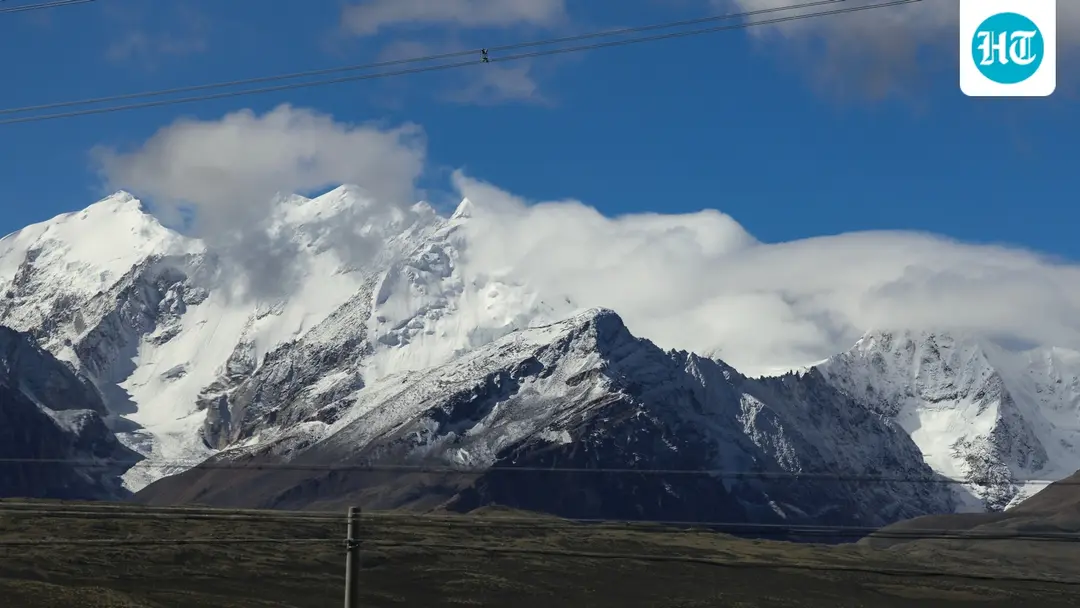
Himalayan glaciers melting 65% faster, black carbon blamed: Study
Himalayan glaciers are losing mass 65% faster than a decade ago, with one-third of the melt primarily driven by black carbon, largely from brick kilns in the plains, a new study says. Conducted by consultancy Systemiq with the Integrated Mountain Initiative, ICIMOD and the GB Pant institute, it projects the Hindu Kush Himalayas could lose up to 80% of present glacier volume by 2100. Only 21 of the region's nearly 40,000 glaciers are monitored.
Source
Hindustan Times — India · read the original report ↗
Desk check · compared with the source
What the desk checked (5)
- Himalayan glaciers are losing mass 65% faster than a decade ago — Attributed in the source to the new study; no underlying dataset cited.
- About one-third of Himalayan glacier melt is driven by black carbon, largely from brick kilns in the plains — Quoted directly from the report text in the source.
- Hindu Kush Himalayas could lose up to 80% of present glacier volume by 2100 — Figure appears in the source, attributed to the study's projections.
- Only about 21 of nearly 40,000 glaciers in the region are monitored, including 16-17 in India — Appears in source as report finding; source also expresses this as roughly 0.1%.
- A glacial collapse caused flash floods in Nepal killing at least 1,350 people with hundreds missing — Stated in the source without an attributed authority for the toll.
Deep dive
Research brief · 8 facts · 4 dates · exam-readyThe brief
Context
A new study by global consultancy Systemiq, done with the Integrated Mountain Initiative and with inputs from ICIMOD and the GB Pant National Institute of Himalayan Environment, finds Himalayan glaciers are losing mass 65% faster than a decade ago. It attributes about one-third of the melt to black carbon (soot), largely from brick kilns in the plains, and warns the Hindu Kush Himalayas could lose up to 80% of present glacier volume by 2100. The report also exposes a monitoring gap: only about 21 of the region's estimated 40,000 glaciers are tracked. It comes weeks after a glacial collapse triggered deadly flash floods in Nepal that killed at least 1,350 people.
Key facts
- Himalayan glaciers are losing mass 65% faster than they were a decade ago, the study found.
- Roughly one-third of Himalayan glacier melt is driven by black carbon, largely from brick kilns in the plains.
- On current trajectories the Hindu Kush Himalayas could lose up to 80% of present glacier volume by 2100.
- Only around 21 of the nearly 40,000 estimated glaciers in the Hindu Kush Himalayan region are monitored — about 0.1%; around 16-17 of these are in India.
- 18% of Indian land is Himalayan, but the region accounts for about 35% of disasters and contributes over 20% of India's GDP.
- Most Himalayan river basins are expected to hit 'peak water' — maximum glacier meltwater before decline — around mid-century.
- A glacial collapse weeks before the report caused flash floods in Nepal, killing at least 1,350 people with several hundred still missing.
- Recommendations include cutting soot across glacier-linked airsheds, year-round stewardship of about 3 million hectares of fire-prone forest, restoring nearly half of 3 million drying Himalayan springs, and managing tourist carrying capacity.
Timeline
- Weeks before the reportA glacial collapse triggered deadly flash floods in Nepal, killing at least 1,350 people, with several hundred still missing.
- On report releaseSystemiq, with the Integrated Mountain Initiative, ICIMOD and GB Pant National Institute of Himalayan Environment, publishes findings on 65% faster glacier mass loss and black carbon's role.
- Around mid-centuryMost Himalayan river basins projected to reach 'peak water'.
- By 2100Up to 80% of current Hindu Kush Himalayan glacier volume projected to be at risk.
Who has a stake
- Downstream communities and infrastructure in the Hindu Kush Himalayan region — Face growing risks from complex and cascading hazards as glaciers retreat and high-mountain slopes and permafrost become unstable.
- India — 18% of its land is Himalayan; the region sees about 35% of disasters yet contributes over 20% of GDP, and black carbon is a lever India can act on directly.
- ICIMOD (Pema Gyamtsho, Director General) — Argues for coordinated cross-border monitoring, shared risk information, early-warning systems and joint investment in resilience.
- Brick kiln industry in the plains — Identified as the largest source of black carbon accelerating glacier melt; faces pressure from soot-cutting measures in glacier-linked airsheds.
- Nepal — Suffered flash floods from a glacial collapse with at least 1,350 deaths and hundreds missing weeks before the report.
- Systemiq, Integrated Mountain Initiative, GB Pant National Institute of Himalayan Environment — Authors and contributors whose findings frame the policy agenda on Himalayan risk and monitoring.
- Himalayan tourism sector — Report recommends managing carrying capacity of tourists visiting the Himalayas.
Why it matters
The Himalayas are the water tower for hundreds of millions downstream, and once basins pass 'peak water' around mid-century, meltwater supply begins a long decline even as disaster risk rises. Unlike global warming, black carbon from sources like brick kilns is a pollutant the region and India can cut directly and quickly, making it a rare near-term lever. With only about 0.1% of glaciers monitored, the region is exposed to shocks it cannot yet anticipate.
UPSC angle
Prelims pointers
- Study by consultancy Systemiq with the Integrated Mountain Initiative; contributions from ICIMOD and GB Pant National Institute of Himalayan Environment.
- Himalayan glaciers losing mass 65% faster than a decade ago; about one-third of melt driven by black carbon.
- Hindu Kush Himalayas could lose up to 80% of present glacier volume by 2100.
- Only ~21 of nearly 40,000 Hindu Kush Himalayan glaciers monitored (~0.1%); 16-17 of them in India.
- 'Peak water' expected across most Himalayan river basins by mid-century.
- 18% of India's land is Himalayan; ~35% of disasters; over 20% of India's GDP.
Mains framing
The study reframes Himalayan glacier loss as a three-level problem: globally generated warming destabilising a cryosphere the region did not endanger, regionally emitted black carbon from plains-based sources such as brick kilns settling on ice and accelerating melt, and a development model that pushes infrastructure and tourism into hazard-prone terrain. The consequences are asymmetric — the Himalayan belt is 18% of India's land but sees about 35% of its disasters while generating over 20% of GDP — and are compounded by an intelligence deficit, with only about 0.1% of some 40,000 glaciers monitored and permafrost even less understood. The Nepal flash floods, in which at least 1,350 died, illustrate how cascading hazards outrun preparedness. The report's way forward is both mitigation and anticipation: cut soot across glacier-linked airsheds since this is a lever the region can pull immediately; bring roughly 3 million hectares of fire-prone forest under year-round stewardship; restore nearly half of 3 million drying springs; manage tourist carrying capacity; place hazard science before development approvals; and move from observation to active risk management through cross-border monitoring, early warning, risk mapping and private-sector-backed resilience investment.
Key terms
- Black carbon
- Soot particles, here largely from brick kilns in the plains, that settle on glaciers and accelerate melting; blamed for about a third of Himalayan glacier melt.
- Peak water
- The point at which glacier meltwater in a river basin reaches its maximum before declining as the ice reserve shrinks; expected by mid-century in most Himalayan basins.
- ICIMOD
- International Centre for Integrated Mountain Development, a regional body on Hindu Kush Himalayan issues; its Director General is Pema Gyamtsho.
- Cryosphere
- The frozen components of the earth system — glaciers, snow and permafrost — described as being destabilised by warming created elsewhere.
- Permafrost
- Permanently frozen ground on high slopes; flagged as another critical source of instability that is even less understood than glaciers.
- Glacier-linked airsheds
- Air pollution zones whose emissions reach and deposit on glaciers; the report urges cutting soot across them.
Practice questions
- Discuss how black carbon emissions from the Indo-Gangetic plains accelerate Himalayan glacier melt, and examine why it is described as a lever the region can act on directly.
- 'Shocks are now unavoidable, but the region still lacks the intelligence needed to anticipate them.' Evaluate the state of glacier and permafrost monitoring in the Hindu Kush Himalayas and suggest measures to close the gap.
- Examine the implications of Himalayan river basins reaching 'peak water' by mid-century for water security, agriculture and disaster management in South Asia.
Grounded only in the source report — figures and dates are the source's, not inferred.