
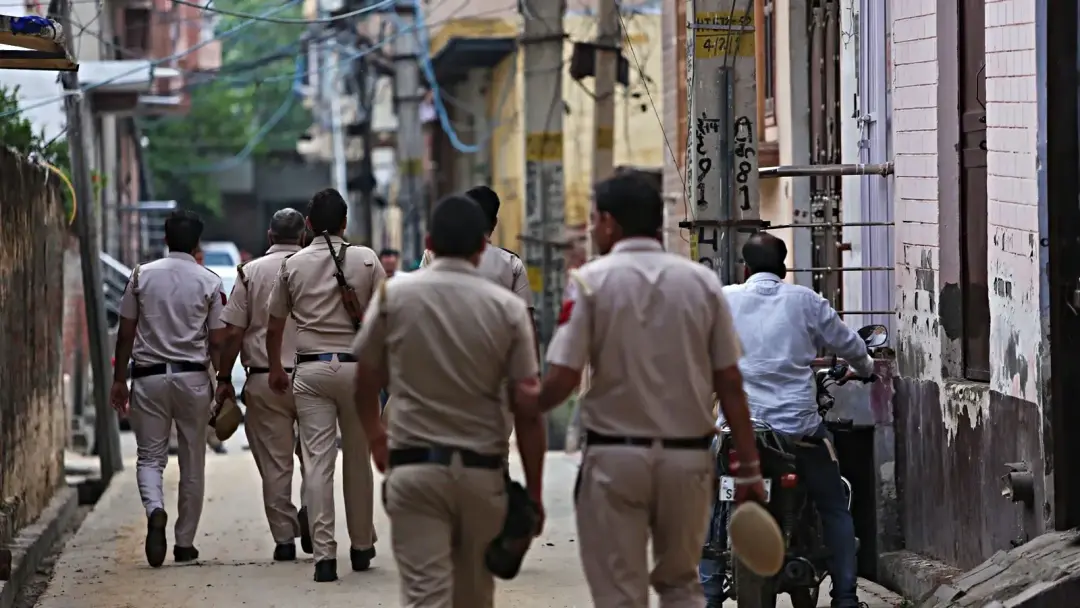
Rs 1.12-crore 'digital arrest' scam: six arrested in Mumbai
Mumbai Cyber police have arrested six people for allegedly cheating a 68-year-old Dahisar resident of Rs 1.12 crore in a 'digital arrest' scam. Those held include IIT Delhi graduate and web developer Gaurav Goyal (40) and private bank operations manager Shikhar Tyagi (28). DCP (Cyber) Bajrang Bansode said the accused posed as Telecom Department and police officials, showed a fake Supreme Court notice and threatened arrest in a fake Rs 238-crore money-laundering case. The fraud occurred between July 30 and August 12.
Source
Indian Express — Cities · read the original report ↗
Desk check · compared with the source
What the desk checked (5)
- Six people were arrested by Mumbai Cyber police for cheating a 68-year-old Dahisar resident of Rs 1.12 crore. — Attributed to Mumbai Cyber police in source; arrest figure and amount appear in source.
- Accused impersonated Telecom Department, police and other agency officials and used a fake Supreme Court notice and a fake Rs 238-crore money-laundering case. — Attributed to DCP (Cyber) Bajrang Bansode; allegation not independently verifiable.
- Names, ages and occupations of all six accused, including an IIT Delhi graduate web developer and a private bank operations manager. — Listed in source as police identification; internally consistent.
- Fraud occurred between July 30 and August 12; 20 mobile phones, two laptops, 25 bank accounts, ATM cards, passbooks and Aadhaar cards seized. — Figures appear in source, attributed to investigators; year of the dates not specified.
- Goyal is also an accused in a 2021 Bandra police case. — Attributed to police; no case number or further detail given.
Analysts’ view opinion
Legally, there is no such thing as a 'digital arrest' in Indian law — no investigating agency has the power to detain someone over a video call, since arrest requires a defined procedure, physical process and a verifiable record. That is why a case like this turns on cheating, forgery, impersonation of public servants and identity-related offences under the IT framework rather than on any real custody. The alleged use of a fake Supreme Court notice is an aggravating element, because fabricating court process strikes at the authority of the judiciary itself.
- No provision in Indian criminal procedure permits detention by video call; genuine arrest carries documented safeguards a citizen can verify.
- Impersonating officials and fabricating a court document are treated as distinct, additional offences over and above the alleged cheating.
- If a network supplying bank accounts and SIM cards is established, the money trail could also open a money-laundering angle alongside the fraud charges.
- The presence of a private bank operations manager among the accused is likely to push scrutiny toward KYC and account-opening controls.
- Seized phones and laptops are electronic evidence, so compliance with digital-evidence certification and integrity rules will be central at trial.
What to watch — Watch which specific sections the chargesheet invokes, and how much of the Rs 1.12 crore investigators are able to freeze or restore to the victim.
These are police allegations at the investigation stage; the story does not establish each accused's individual role, the exact charges to be framed, or how much money has been recovered, and nothing has been proved in court.
Deep dive
Research brief · 8 facts · 5 dates · exam-readyThe brief
Context
"Digital arrest" scams involve fraudsters posing as officials of agencies such as the Telecom Department, police or courts, keeping victims on video calls and threatening arrest unless money is transferred. In this case, Mumbai Cyber police arrested six people for allegedly cheating a 68-year-old resident of Dahisar of Rs 1.12 crore between July 30 and August 12. The accused allegedly showed the victim a fake Supreme Court notice and threatened him with arrest in a fabricated Rs 238-crore money-laundering case. Those arrested include an IIT Delhi graduate web developer and a private bank operations manager, pointing to an organised network that arranged bank accounts and SIM cards to route the proceeds.
Key facts
- Six people were arrested by Mumbai Cyber police for allegedly cheating a 68-year-old Dahisar resident of Rs 1.12 crore.
- The fraud took place between July 30 and August 12, according to police.
- The accused allegedly threatened the victim with arrest in a fake Rs 238-crore money-laundering case.
- The victim was allegedly kept under 'digital arrest' through WhatsApp video calls and shown a fake Supreme Court notice.
- Accused named: Gaurav Mahesh Goyal (40), IIT Delhi graduate and web developer; Shikhar Mukesh Tyagi (28), private bank operations manager.
- Other accused: Rajesh Kumar Mohanlal Jain (54), Mohammad Tariq Anwar Momin (49), Ajay Kumar Kaliprasad Sharma (35), Chintankumar Sureshbhai Desai (46).
- Investigators seized 20 mobile phones, two laptops, 25 bank accounts, ATM cards, passbooks and Aadhaar cards.
- Police said Goyal is also an accused in a 2021 Bandra police case; DCP (Cyber) Bajrang Bansode detailed the case.
Timeline
- 2021Gaurav Goyal is booked as an accused in a case registered by Bandra police, as per police.
- July 30 to August 12The alleged 'digital arrest' fraud on the 68-year-old Dahisar resident takes place, with Rs 1.12 crore transferred.
- After the complaint (date not stated in the source)Police trace the first account that received the money and allegedly uncover a network arranging bank accounts and SIM cards.
- Not stated in the sourceAccused Chintankumar Desai travels to Delhi and Bijnor (Uttar Pradesh) with associates to collect the money.
- Not stated in the sourceSix accused arrested; 20 mobile phones, two laptops, 25 bank accounts, ATM cards, passbooks and Aadhaar cards seized.
Who has a stake
- The 68-year-old Dahisar victim — Lost Rs 1.12 crore; recovery of the money and prosecution of the accused depend on the investigation.
- Mumbai Cyber police / DCP (Cyber) Bajrang Bansode — Leading the probe, tracing money trails and dismantling the network of accounts and SIM cards.
- The six arrested accused — Face criminal prosecution; one is also an accused in a 2021 Bandra police case.
- Banks and telecom providers — Their accounts and SIM cards were allegedly used to receive and transfer fraud proceeds; 25 bank accounts seized.
- Supreme Court and Telecom Department — Their names and documents were allegedly misused — a fake SC notice and impersonation of Telecom Department officials.
- Elderly citizens — Primary targets of 'digital arrest' intimidation tactics using video calls and fake legal notices.
Why it matters
The case shows 'digital arrest' frauds are not lone-wolf operations but organised networks with educated professionals — including an IIT graduate and a bank operations manager — arranging accounts and SIM cards to launder proceeds. It underlines how the authority of institutions like the Supreme Court, police and Telecom Department is impersonated to intimidate elderly victims into transferring large sums, here Rs 1.12 crore in under two weeks.
UPSC angle
Prelims pointers
- 'Digital arrest' scam: fraudsters posing as officials keep victims on video calls and extort money under threat of arrest.
- Case: Rs 1.12 crore allegedly cheated from a 68-year-old Dahisar (Mumbai) resident between July 30 and August 12.
- Fake Rs 238-crore money-laundering case and a fake Supreme Court notice were allegedly used to threaten the victim.
- Six arrested by Mumbai Cyber police; DCP (Cyber) Bajrang Bansode is the officer quoted.
- Seizures: 20 mobile phones, two laptops, 25 bank accounts, ATM cards, passbooks and Aadhaar cards.
- Money collection trail extended to Delhi and Bijnor in Uttar Pradesh.
Mains framing
The Mumbai 'digital arrest' case illustrates the industrialisation of cyber fraud in India: impersonation of the Telecom Department, police and the judiciary (through a fake Supreme Court notice), sustained psychological coercion over WhatsApp video calls, and a back-end network that supplies mule bank accounts and SIM cards to move proceeds — 25 bank accounts and 20 phones were seized here. The involvement of an IIT Delhi graduate web developer and a private bank operations manager suggests technical and insider knowledge of banking and telecom systems, while the collection trail to Delhi and Bijnor shows the offence is inter-state even when the victim is local. The vulnerability of elderly citizens, who may be unaware that no agency conducts arrests or interrogations over video calls, is central to the crime's success. The way forward, on the evidence of this case, lies in faster tracing of the first receiving account (as police did here), stricter verification before opening accounts and issuing SIM cards, coordination between cyber cells across states, and targeted public awareness that legal notices and arrests are never executed through video calls or instant transfers.
Key terms
- Digital arrest
- A scam in which fraudsters posing as officials keep a victim on continuous video call, claim he is under arrest and extort money.
- Mumbai Cyber police
- The city police unit investigating cyber and online financial crimes; it made the six arrests in this case.
- DCP (Cyber)
- Deputy Commissioner of Police heading the cyber wing; Bajrang Bansode holds the post in this case.
- Mule bank accounts
- Accounts arranged by intermediaries to receive and onward-transfer fraud proceeds; 25 such accounts were seized.
- Money-laundering case (fake)
- The fabricated Rs 238-crore case the accused allegedly cited to threaten the victim with arrest.
Practice questions
- What are 'digital arrest' scams, and what institutional and regulatory gaps in banking and telecom allow such networks to operate? Discuss with reference to recent cases.
- Elderly citizens are disproportionately targeted by online impersonation frauds. Suggest measures for awareness, grievance redress and swift recovery of defrauded money.
- Cyber frauds are increasingly inter-state in nature. Examine the challenges in investigation and coordination, and how they can be addressed.
Grounded only in the source report — figures and dates are the source's, not inferred.