
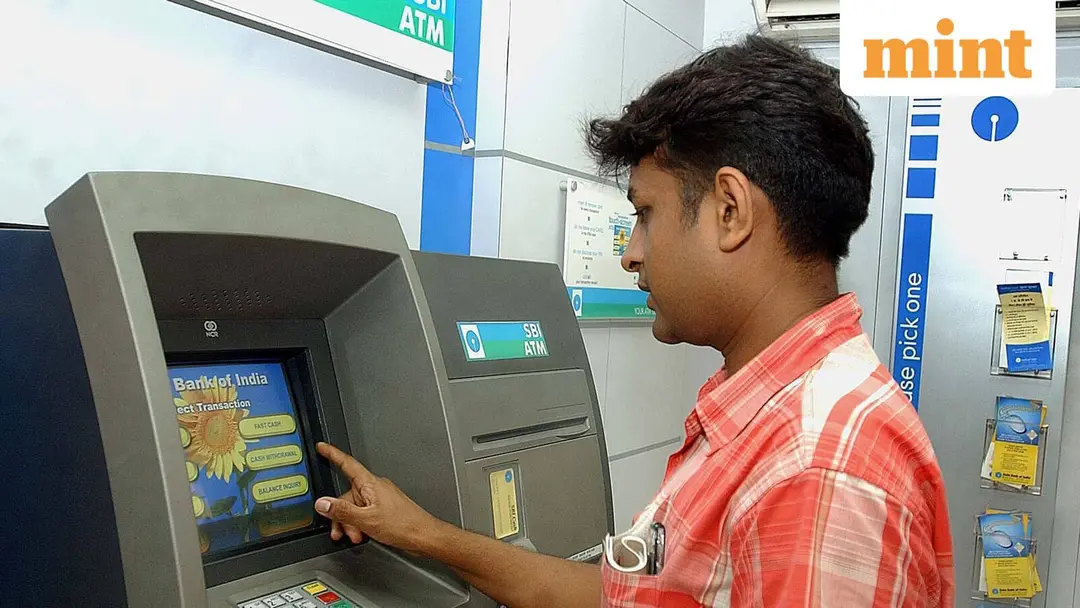
Banks told to stock ATM cash before new UPI charges
The RBI and the finance ministry have asked banks to ensure adequate cash at ATMs from 15 October, when new charges on select UPI transactions take effect, two people aware of the matter said. A 0.4% merchant discount rate will apply to specified person-to-merchant UPI payments above ₹2,000, capped at ₹300 for transactions of ₹75,000 and above. Person-to-person payments stay free. ATMs fell to 251,057 by March 2025 from 253,417. The RBI, ministry and 12 state banks did not respond.
Source
RBI · read the original report ↗
Desk check · some claims need care
What the desk checked (5)
- RBI and the finance ministry have asked banks to ensure adequate ATM cash from 15 October. — Attributed only to 'two people aware of the matter'; RBI and finance ministry queries went unanswered, so unconfirmed officially.
- A 0.4% MDR will apply to specified P2M UPI transactions above Rs 2,000, capped at Rs 300 for transactions of Rs 75,000 and above; P2P and P2M up to Rs 2,000 stay free. — Figures appear in the source, described as the government's framework; no document cited.
- Total ATMs fell to 251,057 at end-March 2025 from 253,417 a year earlier. — Attributed to RBI data in the source; internally consistent with the segment-wise breakdown given.
- Currency in circulation stood at Rs 42.86 trillion at end-August 2026, up 12.5% year-on-year. — Figure appears in source without explicit citation; dates referring to 2026 are inconsistent with the 15 October implementation framing and need editor review.
- UPI transactions reached 2,451 crore in August, valued at about Rs 29.82 trillion. — Attributed to NPCI data in the source; year not specified.
Analysts’ view opinion
The instruction to stock ATMs is the real signal here: regulators appear to be hedging against a behavioural shift in a payments market that is famously price-sensitive. A 0.4% MDR on merchant transactions above ₹2,000 lands first on merchants, who can absorb it, pass it into prices, or nudge larger bills towards cash. With 96% of merchant transaction volume below ₹2,000, the systemic hit looks contained — but the charge falls precisely on the higher-value end where margins and habits matter most.
- The cost incidence starts with merchants; banks and payment service providers are on the gaining side, and whatever merchants cannot absorb tends to migrate into prices or into cash.
- Free person-to-person payments and free merchant payments up to ₹2,000 limit the direct burden on small traders and everyday consumers.
- A shift to cash is not free either — the story flags merchant concerns about cash handling, deposit and accounting costs rising.
- With ATMs down to 251,057 from 253,417, even a temporary bump in cash demand could strain a network that has been shrinking.
- Because digital habits are already entrenched, a transition-phase adjustment looks more likely than a durable reversal towards cash.
What to watch — Watch daily UPI volumes and values after 15 October — especially the share of above-₹2,000 transactions — alongside ATM withdrawal trends.
The story does not establish that cash use will actually rise; this is precautionary preparation, and the RBI, finance ministry and 12 public sector banks did not respond.
Deep dive
Research brief · 8 facts · 8 dates · exam-readyThe brief
Context
From 15 October, a Merchant Discount Rate (MDR) will apply to specified person-to-merchant (P2M) UPI transactions above ₹2,000, ending the fully free regime for larger merchant payments. Anticipating that consumers and merchants may temporarily fall back on cash while adjusting, the RBI and the finance ministry have asked banks to keep ATMs adequately stocked, according to two people aware of the matter. The caution comes even as India's ATM network has been shrinking — total ATMs fell to 251,057 at end-March 2025 from 253,417 a year earlier — while digital payments and currency in circulation both keep growing.
Key facts
- RBI and the finance ministry have asked banks to ensure adequate cash at ATMs from 15 October as a cautionary measure, according to two people aware of the matter.
- A 0.4% MDR will apply to specified P2M UPI transactions above ₹2,000, capped at a maximum charge of ₹300 for transactions of ₹75,000 and above.
- Person-to-person UPI transactions remain free, as do P2M transactions up to ₹2,000; about 96% of P2M UPI volume is below ₹2,000, per the government's framework.
- Total ATMs, including white-label operators' machines, fell to 251,057 at end-March 2025 from 253,417 a year earlier.
- Public sector banks' ATMs fell to 133,544 from 134,694; private banks' to 77,117 from 79,884; white-label operators rose to 36,216 from 34,602.
- Off-site ATMs declined to 119,734 from 127,301, while on-site ATMs rose to 131,323 from 126,116 (end-March 2025 vs a year earlier).
- Debit-card ATM withdrawals fell from about 68,975 lakh transactions in FY23 to about 53,394 lakh in FY26; value fell from roughly ₹32.8 lakh crore to around ₹28.5 trillion.
- Currency in circulation stood at ₹42.86 trillion at end-August 2026, up 12.5% year-on-year; UPI recorded 2,451 crore transactions worth about ₹29.82 trillion in August (NPCI data).
Timeline
- FY23Debit-card ATM cash withdrawals at about 68,975 lakh transactions, valued at roughly ₹32.8 lakh crore.
- End-March 2024 (a year earlier)Total ATMs at 253,417; off-site ATMs at 127,301; on-site at 126,116.
- End-March 2025Total ATMs down to 251,057; off-site ATMs at 119,734; on-site at 131,323.
- End-March 2026Currency in circulation about ₹41.66 trillion; banknotes in circulation about ₹41.24 trillion.
- FY26ATM withdrawals down to about 53,394 lakh transactions, valued around ₹28.5 trillion.
- August (NPCI data)UPI transactions at 2,451 crore, worth about ₹29.82 trillion.
- End-August 2026Currency in circulation at ₹42.86 trillion, up 12.5% year-on-year.
- 15 OctoberNew MDR charges on select UPI transactions take effect; banks asked to ensure adequate ATM cash.
Who has a stake
- Reserve Bank of India — Has asked banks to stock ATMs; must maintain confidence in the currency and payments system during the MDR transition.
- Finance ministry — Co-issued the cash-availability advisory and, as Mint reported earlier, will monitor daily UPI transactions.
- Banks (12 public sector banks queried; private banks) — Must ensure ATM cash supply even as their own ATM networks shrink; queries to them went unanswered.
- Merchants accepting UPI — Face 0.4% MDR on specified P2M transactions above ₹2,000; may shift to cash, raising cash-handling and accounting costs.
- Consumers — P2P and sub-₹2,000 P2M payments stay free, but larger merchant payments may be repriced, possibly pushing them back to ATMs.
- White-label ATM operators — The only segment expanding its network (36,216 from 34,602), positioning them for any cash-demand surge.
Why it matters
India's payments policy has rested on zero-cost UPI to drive digitisation; introducing MDR on larger merchant payments tests how price-sensitive that adoption really is. Because the ATM network has contracted and off-site machines have been closed, even a temporary return to cash could strain withdrawal infrastructure. The episode also underlines that rising currency in circulation and booming UPI volumes can coexist, complicating the assumption that digital payments simply displace banknotes.
UPSC angle
Prelims pointers
- From 15 October, 0.4% MDR on specified P2M UPI transactions above ₹2,000, capped at ₹300 for transactions of ₹75,000 and above.
- UPI P2P transactions and P2M transactions up to ₹2,000 remain free; about 96% of P2M volume is below ₹2,000.
- Total ATMs (including white-label) fell to 251,057 at end-March 2025 from 253,417 a year earlier.
- Currency in circulation: ₹42.86 trillion at end-August 2026, up 12.5% y-o-y; about ₹41.66 trillion at end-March 2026.
- UPI in August: 2,451 crore transactions worth about ₹29.82 trillion (NPCI data).
- Aruna Sharma was a member of the RBI's High-level Committee on Deepening the Digital Payments in India.
Mains framing
The introduction of a 0.4% MDR on specified P2M UPI transactions above ₹2,000 from 15 October marks a shift from India's zero-cost digital payments model, and the RBI-finance ministry advisory to stock ATMs reflects official anticipation of a short-term behavioural swing back to cash in a price-sensitive market. Critics such as Aruna Sharma, formerly of the RBI's High-level Committee on Deepening the Digital Payments in India, argue the charge disincentivises digital payments and could revive a cash economy through merchant cash deposits and higher accounting costs; others, including a former senior RBI official, expect only a temporary surge given entrenched digital habits. The structural complication is that cash-withdrawal infrastructure has thinned — total ATMs down to 251,057, off-site machines down to 119,734 — even as currency in circulation rose 12.5% to ₹42.86 trillion, showing cash and digital growth are not strictly substitutes. The way forward, as suggested in the story, lies in scenario preparedness: assured ATM cash, possible reconfiguration of machines for higher demand, daily monitoring of UPI volumes, and clear communication so that confidence in both currency and digital rails is preserved through the transition.
Key terms
- MDR (Merchant Discount Rate)
- The fee a merchant pays on a digital transaction; here 0.4% on specified P2M UPI payments above ₹2,000, capped at ₹300.
- P2M / P2P transactions
- Person-to-merchant payments (now partly chargeable above ₹2,000) versus person-to-person transfers, which remain free.
- White-label ATM operators
- Non-bank entities that deploy and run ATMs; their network grew to 36,216 by end-March 2025 from 34,602.
- Off-site vs on-site ATMs
- ATMs away from bank branches versus those at branches; off-site machines drove the overall network decline.
- Currency in circulation
- Total cash with the public and banks; stood at ₹42.86 trillion at end-August 2026, up 12.5% year-on-year.
- NPCI
- The body whose data showed 2,451 crore UPI transactions worth about ₹29.82 trillion in August.
Practice questions
- Will pricing large-value P2M UPI payments slow India's digital payments adoption, or merely cause a temporary shift to cash? Discuss with reference to the 15 October MDR regime.
- India's ATM network has contracted while currency in circulation has risen sharply. Examine what this tells us about the relationship between cash and digital payments.
- Evaluate the adequacy of regulatory preparedness — ATM cash stocking and daily UPI monitoring — for managing transitions in payment-system pricing.
Grounded only in the source report — figures and dates are the source's, not inferred.