
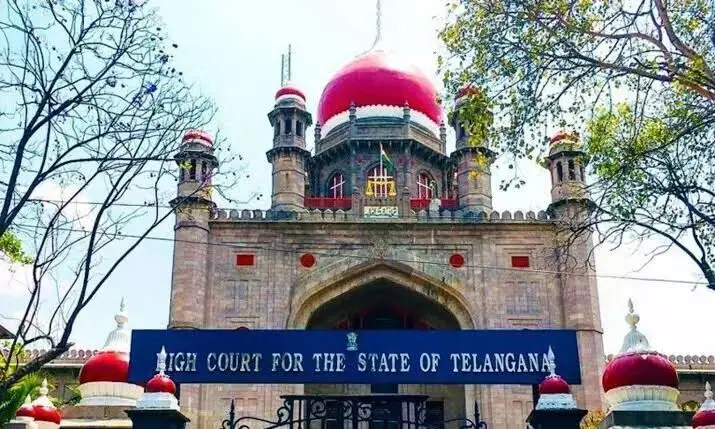
High Court orders release of Rs 6 lakh ex-gratia in lightning death case
The Telangana High Court has directed authorities to release Rs 6 lakh ex-gratia to a father whose 20-year-old son died in a lightning strike. Justice Surepalli Nanda issued the direction on Wednesday on a writ petition by Thotapally Yallaiah, a coolie from Peruru village in Wazeedu mandal of Mulugu district. His son, Venu Babu, died on July 23, 2025, while travelling on a two-wheeler near Pedda Gollagudem. The petitioner said the amount sanctioned under GO 8 was never released.
Source
Mulugu — news · read the original report ↗
Desk check · compared with the source
What the desk checked (4)
- Telangana High Court directed authorities to release Rs 6 lakh ex-gratia to Thotapally Yallaiah. — Attributed in source to an order by Justice Surepalli Nanda, passed Wednesday.
- Venu Babu, 20, died on July 23, 2025, after being struck by lightning while on a two-wheeler near Pedda Gollagudem village. — Attributed to the petitioner; source says an FIR at Wazeedu Police Station and other records supported the cause of death.
- Rs 6 lakh was sanctioned under the State Disaster Response Fund via GO 8, Revenue (DM-I) Department, dated March 5. — Attributed to the petitioner's counsel; source does not state the year of the GO.
- The amount was not released despite a legal notice issued on August 21. — Submission by petitioner's counsel; no response from authorities recorded in source.
Analysts’ view opinion
This looks like a small case, but it raises a politically awkward question about administrative delivery: a daily-wage father had to go to the High Court to get money the state itself had already sanctioned through a GO. The order is a reminder that governance is judged not at the announcement stage but at the point where money actually reaches a family. The political cost here lies not in the size of the ex-gratia but in the storyline of "sanctioned yet not released".
- Needing a court direction to release an amount the government had itself sanctioned invites criticism of implementation and last-mile delivery rather than of policy intent.
- That the petitioner is a coolie from a remote agency-area village sharpens a politically potent question: must the poorest go through courts to receive relief they are entitled to?
- The submission that the High Court had passed similar orders in earlier lightning-death cases gives opposition voices an argument that this is a recurring pattern, not a one-off file delay.
- The government side has a fair counter-argument too: the sanction and finance concurrence were in place, so the bottleneck appears procedural at the implementation level rather than a denial of relief.
- If the payment now follows a court order, the political credit shifts from the executive to the judiciary, diluting any benefit from publicising the relief scheme.
What to watch — Watch whether the state responds with a time-bound or simplified release process for disaster and lightning-death ex-gratia, or whether such families keep ending up in court.
The story does not establish why the payment was held up, at which level the file stalled, how many other families are similarly affected, or what the government's own explanation is.
Deep dive
Research brief · 8 facts · 5 dates · exam-readyThe brief
Context
Lightning strikes are a recurring cause of accidental deaths in Telangana's forested and tribal districts, and the State pays ex-gratia compensation to the families of victims from the State Disaster Response Fund (SDRF). Thotapally Yallaiah, a coolie from Peruru village in Wazeedu mandal of Mulugu district, lost his 20-year-old son Venu Babu to a lightning strike on July 23, 2025. Although the government had sanctioned Rs 6 lakh as ex-gratia through GO 8 of the Revenue (DM-I) Department dated March 5, the money was never paid, prompting a writ petition. The Telangana High Court has now directed the authorities to release the sanctioned amount.
Key facts
- The Telangana High Court directed authorities to release Rs 6 lakh ex-gratia to the father of a 20-year-old lightning strike victim.
- Justice Surepalli Nanda passed the direction on Wednesday while hearing the writ petition; the report is published 7 Oct 2026.
- Petitioner Thotapally Yallaiah is a coolie from Peruru village, Wazeedu mandal, Mulugu district.
- His son Thotapally Venu Babu died on July 23, 2025, struck by lightning while travelling on a two-wheeler near Pedda Gollagudem village.
- An FIR was registered at Wazeedu Police Station and other records supported the cause of death.
- The Rs 6 lakh ex-gratia was sanctioned under the State Disaster Response Fund via GO 8, Revenue (DM-I) Department, dated March 5, with Finance Department concurrence.
- Despite the sanction and a legal notice issued on August 21, the amount had not been released.
- The Court disposed of the petition directing release of the amount in light of G.Ms No.2 dated July 19, 2018, and GO 8 dated March 5.
Timeline
- July 19, 2018G.Ms No.2 issued, among the government orders the Court relied on for payment of ex-gratia.
- July 23, 2025Thotapally Venu Babu, 20, dies after being struck by lightning near Pedda Gollagudem village while on a two-wheeler; FIR registered at Wazeedu Police Station.
- March 5GO 8, Revenue (DM-I) Department, sanctions Rs 6 lakh ex-gratia under the State Disaster Response Fund with Finance Department concurrence.
- August 21Legal notice issued by the petitioner after the sanctioned amount remained unreleased.
- Wednesday (reported 7 Oct 2026)Justice Surepalli Nanda directs the respondent authorities to consider the claim and release the Rs 6 lakh.
Who has a stake
- Thotapally Yallaiah (petitioner) — A coolie who lost his 20-year-old son; entitled to Rs 6 lakh ex-gratia that was sanctioned but not paid.
- Telangana High Court / Justice Surepalli Nanda — Enforcing a legally sanctioned entitlement; held the petitioner cannot be denied a benefit he is legally entitled to.
- Revenue (DM-I) Department, Telangana — Issued GO 8 sanctioning the ex-gratia; responsible, with the Finance Department's concurrence, for disbursal.
- District authorities in Mulugu / respondent authorities — Directed to process the claim and release the sanctioned amount.
- Families of other lightning victims — The order follows earlier High Court orders granting similar relief, strengthening claims in comparable cases.
Why it matters
The case shows that a sanction on paper does not automatically translate into relief reaching a poor family, forcing a daily-wage earner to litigate for money the State had already approved. With lightning a frequent killer in Telangana's tribal belts, the judgment reinforces that ex-gratia under the State Disaster Response Fund is an enforceable entitlement, not a discretionary favour.
UPSC angle
Prelims pointers
- Telangana ex-gratia for lightning death: Rs 6 lakh, sanctioned under the State Disaster Response Fund (SDRF).
- Sanction order: GO 8, Revenue (DM-I) Department, dated March 5, with Finance Department concurrence.
- Earlier relevant order cited by the Court: G.Ms No.2 dated July 19, 2018.
- Judge who passed the direction: Justice Surepalli Nanda, Telangana High Court.
- Incident location: near Pedda Gollagudem, Wazeedu mandal, Mulugu district, Telangana; death on July 23, 2025.
- Remedy used: writ petition before the High Court after a legal notice dated August 21 went unanswered.
Mains framing
The order highlights a governance gap between sanction and disbursal in disaster relief administration. Telangana had already sanctioned Rs 6 lakh as ex-gratia under the State Disaster Response Fund through GO 8 of the Revenue (DM-I) Department, with Finance Department concurrence, and the death was corroborated by an FIR at Wazeedu Police Station and other records; yet a coolie from a tribal-belt village had to issue a legal notice and then move the High Court to obtain money that was never in dispute. Justice Surepalli Nanda's finding that the petitioner "could not be denied the benefit to which he was legally entitled" treats such ex-gratia as a legal entitlement flowing from government orders rather than administrative largesse, and the source notes earlier High Court orders granting similar relief in lightning-death cases, suggesting a pattern of delay rather than an isolated lapse. The implications are twofold: judicial time is consumed by routine disbursal failures, and the poorest claimants bear the transaction costs of litigation. The way forward suggested by the facts is strict, time-bound processing of sanctioned relief at the district level and proactive payment where cause of death is already documented, so that families are not compelled to litigate for sanctioned compensation.
Key terms
- Ex-gratia
- A payment made by the State to a victim's family as relief; here Rs 6 lakh for a lightning death, sanctioned by government order.
- State Disaster Response Fund (SDRF)
- The fund from which the Telangana government sanctioned the Rs 6 lakh ex-gratia in this case.
- Government Order (GO) 8, Revenue (DM-I) Department
- Order dated March 5 sanctioning the Rs 6 lakh ex-gratia, issued with the concurrence of the Finance Department.
- G.Ms No.2 dated July 19, 2018
- An earlier government memo/order whose provisions the High Court directed authorities to take into account while releasing the amount.
- Writ petition
- A petition to a High Court seeking enforcement of a legal right; the route Yallaiah used when the sanctioned amount was not paid.
- Mandal
- An administrative sub-district unit in Telangana; Wazeedu mandal in Mulugu district is where the petitioner's village lies.
Practice questions
- Sanctioned relief that never reaches beneficiaries turns courts into disbursal agencies. Examine this in the light of the Telangana High Court's order on ex-gratia for a lightning death.
- Discuss the role of the State Disaster Response Fund in compensating victims of localised disasters such as lightning strikes, and the administrative reforms needed for timely payment.
- To what extent can ex-gratia sanctioned through a government order be claimed as an enforceable legal entitlement? Comment with reference to recent High Court directions.
Grounded only in the source report — figures and dates are the source's, not inferred.