
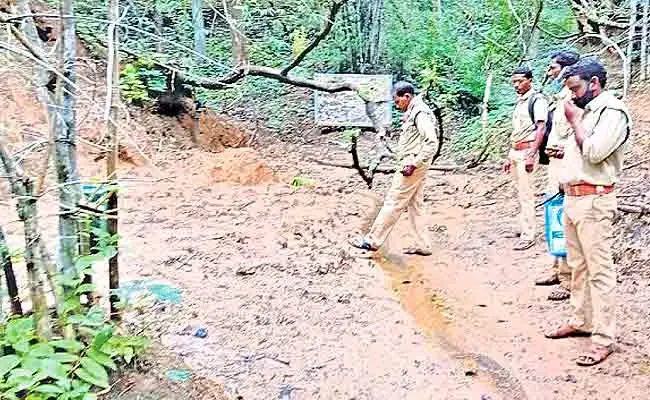
Five base camps guard Papikondalu sanctuary with 25 staff
Five base camps have been set up in the Papikondalu sanctuary with 25 personnel deployed for forest and wildlife protection. Spread over 1,012.86 sq km across the two Godavari districts and erstwhile Khammam district, the 1,01,200-hectare forest was declared a national park by the Centre in 2008. Officials said smuggling has fallen due to day-and-night patrolling with sticks and knives. Staff, hired through outsourcing agencies, get Rs 10,000 a month including food costs.
Source
West Godavari — నేరాలు · read the original report ↗
Desk check · compared with the source
What the desk checked (5)
- Papikondalu sanctuary spans 1,012.86 sq km across the Godavari districts and erstwhile Khammam district. — Figure appears in source; no separate document or authority cited for the measurement.
- The Centre declared the 1,01,200-hectare forest area a national park in 2008. — Stated in source without direct attribution to a specific notification or official.
- Five base camps have been set up with 25 staff deployed. — Appears in source and is corroborated by the quoted wildlife management officer S.S.R. Varaprasad.
- Smuggling has declined since the base camps were set up. — Attributed to forest department officials and to officer Varaprasad; no data given.
- Staff are paid about Rs 10,000 a month including food expenses and are hired via outsourcing agencies after a 25-km walking test and fitness test. — Pay figure attributed to base camp worker Kondla Sudheer; recruitment process stated in source without named attribution.
Analysts’ view opinion
On the surface this is a conservation story; politically it is a story about doing a very large job with very little money — guarding a 1,012 sq km national park through outsourced staff paid Rs 10,000 a month, armed with a stick and a knife. Officials' claim that 25 base-camp staff have reduced smuggling is a genuine administrative success narrative, but the same sentence shows how thinly the state machinery is stretched. The workers' request for better pay is still an individual appeal, yet demands of this kind from outsourced staff have a habit of turning political quickly.
- The Centre declared the national park in 2008, but the on-ground patrolling burden sits with the state apparatus — a natural opening for a funding-and-staffing debate between levels of government.
- Outsourced recruitment at Rs 10,000 a month, including food costs, maps easily onto the wider state-level demand for regularisation of contract workers.
- The sanctuary spanning both Godavari districts and undivided Khammam makes it a cross-jurisdiction coordination issue, with no clear political ownership established in the story.
- That graduates from forest-fringe and tribal villages take up this work signals a local employment gap that candidates could raise at election time.
- The "smuggling has fallen" assertion comes from officials and is not backed by figures in the story, so it remains a success claim rather than a measured outcome.
What to watch — Watch whether the pay demand becomes an organised or elected-representative-backed demand, and whether budget allocations follow to expand base-camp numbers and facilities.
The story offers no numerical evidence for the fall in smuggling, and does not establish who decides these wages or at which level of government such a decision would be taken.
Deep dive
Research brief · 8 facts · 3 dates · exam-readyThe brief
Context
Papikondalu sanctuary, spread across the two Godavari districts of Andhra Pradesh and the erstwhile Khammam district, covers 1,012.86 sq km and was declared a national park by the Centre in 2008 over 1,01,200 hectares of forest. To protect the forest and its wildlife from poachers and timber smugglers, the forest department has set up five base camps inside and on the fringes of the sanctuary. Twenty-five outsourced base camp personnel, drawn largely from forest-fringe villages, patrol day and night with only a stick and a knife in hand. This report from Buttayagudem in West Godavari district details their working conditions and demands.
Key facts
- Papikondalu sanctuary extends over 1,012.86 sq km across the two Godavari districts and the erstwhile Khammam district.
- The Centre declared the 1,01,200-hectare forest area a national park in 2008.
- Five base camps have been set up: one near Gubbala Mangammagudi in Buttayagudem mandal, others in Tekuru area and near Gaddapalli in Polavaram mandal, and two more on the sanctuary's fringes.
- A total of 25 base camp personnel are currently on duty for forest and wildlife protection, working day and night.
- Recruitment is through outsourcing agencies, after a 25-km walking test and a health fitness test.
- Personnel are paid about Rs 10,000 a month including salary and food expenses; they say food eats up most of it and want a hike.
- Staff patrol armed only with a stick and a knife, used to clear thorny bushes and not to harm animals; they make noise with the stick while moving.
- Staff rise at 6 a.m., cook at the camp, and roam the forest from morning till evening, sometimes staying out till night.
Timeline
- 2008The Union government declares the 1,01,200-hectare Papikondalu forest area a national park.
- Subsequently (date not stated in the source)Five base camps are established and 25 personnel appointed for forest and wildlife protection.
- PresentOfficials report smuggling has declined due to round-the-clock patrolling by base camp staff.
Who has a stake
- Base camp personnel (25, hired via outsourcing agencies) — Live away from families inside the forest on Rs 10,000 a month including food; seek wages matching their risk and workload.
- Papikondalu Wildlife Management Office (Officer S.S.R. Varaprasad) — Responsible for sanctuary protection; credits base camps with curbing smuggling.
- Forest-fringe tribal villages such as Koruturu, Sarugudu and Polavaram — Source of the base camp workforce, including graduates who joined for want of alternatives near their villages.
- Wildlife in the sanctuary (leopards, bears, deer, wild buffalo) — Protection from poaching depends on patrolling; staff hide till animals pass to avoid conflict.
- Timber smugglers and poachers — Illegal transport of forest wealth curbed after base camps were set up; information is passed to senior officials.
Why it matters
Protection of a 1,012.86 sq km national park rests on just 25 outsourced workers patrolling on foot with sticks and knives for Rs 10,000 a month including food. The arrangement shows both the effectiveness of ground-level base camps in curbing smuggling and the precariousness of the frontline conservation workforce that makes it possible.
UPSC angle
Prelims pointers
- Papikondalu: declared a national park by the Centre in 2008; spread over 1,012.86 sq km / 1,01,200 hectares.
- Located across the two Godavari districts of Andhra Pradesh and the erstwhile Khammam district.
- Five base camps with 25 personnel handle forest and wildlife protection in the sanctuary.
- Base camp recruitment involves a 25-km walking test and a health fitness test, through outsourcing agencies.
- Base camp wage: about Rs 10,000 per month, inclusive of food expenses.
- Wildlife mentioned in the sanctuary: leopards, bears, deer and wild buffalo.
Mains framing
Papikondalu illustrates the gap between India's legal conservation architecture and its field capacity: a forest of 1,01,200 hectares notified as a national park in 2008 is guarded by five base camps and 25 personnel who walk the forest day and night armed only with a stick and a knife. The base camp model has demonstrable value — officials say illegal transport of forest produce, once carried out stealthily, has declined because of continuous patrolling and quick reporting of felling to senior officers — and it draws on local knowledge, since recruits come from forest-fringe villages and include graduates. But the model rests on outsourced, low-paid labour: Rs 10,000 a month including food for workers who live in machans or camp houses, cook on site, see their families only occasionally, and face leopards and bears without protective equipment. Selection through a 25-km walking test and fitness test signals the physical demand without matching compensation or security of tenure. A credible way forward, on the evidence in the report, lies in revising wages and food allowances to match the hardship, equipping and training patrol staff for wildlife encounters, and strengthening the numbers and reporting chain so that the burden of protecting a national park does not rest on so thin a frontline.
Key terms
- Base camp
- A forest-interior post, in a machan or purpose-built house, where patrol staff live, cook and operate from for forest and wildlife protection.
- Papikondalu sanctuary / national park
- Protected forest of 1,012.86 sq km across the two Godavari districts and erstwhile Khammam, notified a national park in 2008.
- Outsourcing agency recruitment
- Hiring of base camp staff through private agencies rather than as regular forest department employees.
- Machan
- A raised forest platform or shelter used by patrol staff as a base for watching and resting inside the forest.
- Walking test (25 km)
- Physical screening for base camp recruits, along with a health fitness test, given the long daily foot patrols.
Practice questions
- Frontline forest staff are central to protected area management but remain outside regular employment. Discuss with reference to the base camp system in Papikondalu national park.
- Examine how community-based recruitment from forest-fringe villages can strengthen wildlife protection, and what safeguards such workers require.
- 'Legal protection of a national park means little without field capacity.' Critically analyse in the light of the staffing pattern at Papikondalu.
Grounded only in the source report — figures and dates are the source's, not inferred.