
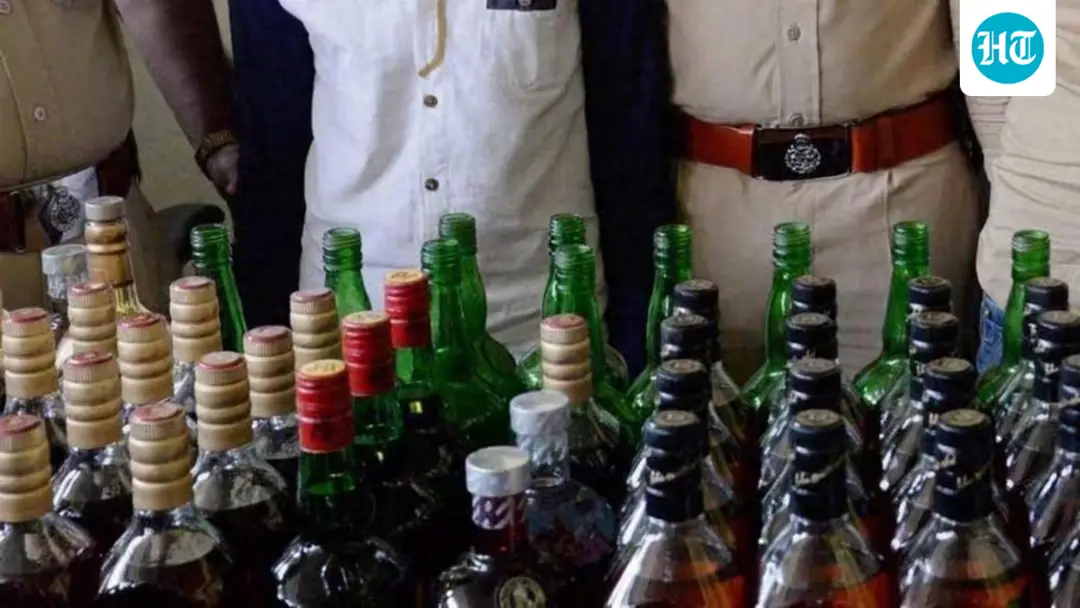
Sagar hooch tragedy: 20 died, kin compensated, MP government tells HC
Twenty people died after consuming spurious liquor in Sagar district and the cause of death of seven others was unclear, the Madhya Pradesh government said in a status report to the high court. Kin of the 20 received ₹4 lakh each and others ₹2 lakh. Free treatment was given to 102 hospitalised in Banda and Sagar; 1,969 were examined at 70 camps from September 11 to 19. Of 52 accused, 32 were arrested and seven liquor shops sealed. A commission headed by Justice (retd) VPS Chauhan is probing the case.
Source
Hindustan Times — India · read the original report ↗
Desk check · compared with the source
What the desk checked (5)
- Twenty people died after consuming spurious liquor in Sagar district; cause of death of seven others unclear — Attributed to the state government's status report in the high court; figures appear in source.
- ₹4 lakh compensation paid to kin of the 20 dead and ₹2 lakh to others — Stated in the government status report as cited in the source; no independent verification possible.
- 102 people were hospitalised in Banda and Sagar with free treatment; 70 health camps held and 1,969 examined from September 11 to 19 — Figures attributed to the government submission; internally consistent.
- 32 of 52 accused arrested, seven liquor shops sealed; judicial commission led by Justice (retd) VPS Chauhan constituted — Attributed to the state government; appears in source with named commission head.
- Bench of Chief Justice Alpesh Yeshwant Kogje and Justice Vivek Jain disposed of the PIL, granting liberty to approach the commission — Named judges and court action stated in source; consistent.
Analysts’ view opinion
The court's role here has not ended so much as changed form. By disposing of the PIL seeking an impartial inquiry while expressly giving the petitioner liberty to appear before the judicial commission, the bench appears to have followed the familiar principle that parallel judicial supervision is unnecessary once a dedicated inquiry mechanism is in place. Compensation payments and arrests do not settle accountability — they are first-stage relief; the criminal case and the question of regulatory failure both remain open.
- Disposal of the PIL is not a rejection of its allegations; it is a procedural finding that the judicial commission is the appropriate forum.
- The government's own admission that the cause of death of seven people is unclear points to an evidentiary gap that post-mortem and forensic sample reports will have to close.
- Compensation of this kind is typically ex gratia in character and does not by itself amount to an admission of liability or extinguish other remedies available to families — the story does not clarify its legal basis.
- That only 32 of 52 named accused have been arrested makes the status of the remainder, the chargesheet timelines and forensic results decisive for the strength of the prosecution.
- The sealing of seven liquor shops squarely raises the excise-regulation question, and what the commission says about official oversight will be the real test of the inquiry's credibility.
What to watch — Watch the terms of reference, timeline and publication of the Justice (retd) VPS Chauhan commission's report, and whether the seven unexplained deaths are forensically resolved.
This account rests on the government's own status report to the court and does not establish the source of the spurious liquor, the cause of the seven deaths, whether any official was negligent, or the guilt of those accused.
Deep dive
Research brief · 8 facts · 3 dates · exam-readyThe brief
Context
Twenty people died after consuming spurious (illicit) liquor in Madhya Pradesh's Sagar district, with the cause of death of seven more remaining unclear. The Madhya Pradesh government filed a status report in the Madhya Pradesh High Court detailing compensation, medical relief and action against the accused. A bench of Chief Justice Alpesh Yeshwant Kogje and Justice Vivek Jain disposed of a PIL seeking an impartial inquiry and strict action, giving the petitioner liberty to approach the judicial commission already probing the case. The incident is the latest in a series of hooch tragedies across India.
Key facts
- Twenty people died after drinking spurious liquor in Sagar district; the cause of death of another seven was unclear, per the state government's status report.
- Kin of the 20 deceased were paid full compensation of ₹4 lakh each; ₹2 lakh was paid to others.
- 102 people needing hospitalisation were taken to hospitals in Banda and Sagar and given free medicines and treatment.
- 70 health camps were organised for discharged patients; 1,969 people were medically examined from September 11 to 19.
- Of 52 accused, 32 have been arrested; seven liquor shops were sealed and samples collected.
- A judicial commission headed by Justice (retired) VPS Chauhan was constituted by the state to inquire into the tragedy.
- Post-mortems were conducted for all 20 deceased and arrangements made to transport bodies to their homes.
- In August, four people died after drinking suspected spurious alcohol in Bihar's Patna district.
Timeline
- AugustFour people died after drinking suspected spurious alcohol in Bihar's Patna district.
- September 11 to 191,969 people medically examined across 70 health camps organised for discharged patients.
- Monday (date not stated in the source)State government filed its status report; High Court bench disposed of the PIL seeking impartial inquiry and strict action.
Who has a stake
- Families of the 20 deceased — Received ₹4 lakh each as full compensation; await findings of the judicial commission on accountability.
- Kin of the seven whose cause of death is unclear — Paid ₹2 lakh; classification of deaths determines their full entitlement.
- Madhya Pradesh government — Accountable to the High Court for relief, medical care, prosecution and the judicial inquiry.
- Madhya Pradesh High Court bench (CJ Alpesh Yeshwant Kogje and Justice Vivek Jain) — Disposed of the PIL, directing the petitioner to the judicial commission.
- Justice (retd) VPS Chauhan judicial commission — Tasked with inquiring into the causes and responsibility for the tragedy.
- 52 accused and liquor traders — 32 arrested so far; seven liquor shops sealed and samples collected for testing.
- 102 hospitalised survivors and 1,969 examined persons — Free treatment and follow-up health checks after consuming suspect liquor.
Why it matters
Hooch tragedies expose gaps in excise enforcement, liquor supply chain monitoring and public health response, and they repeatedly claim the lives of the poorest consumers. The Sagar case shows the standard state response pattern: ex-gratia compensation, free treatment, arrests, shop sealing and a retired judge's commission. How the judicial commission fixes responsibility will decide whether the response goes beyond relief to prevention.
UPSC angle
Prelims pointers
- Sagar hooch tragedy: 20 confirmed deaths; cause of death of 7 others unclear (MP government status report).
- Compensation: ₹4 lakh to kin of each of the 20 deceased; ₹2 lakh to others.
- Judicial commission headed by Justice (retired) VPS Chauhan is probing the Sagar tragedy.
- MP High Court bench of Chief Justice Alpesh Yeshwant Kogje and Justice Vivek Jain disposed of the PIL.
- 1,969 people examined at 70 health camps between September 11 and 19; 102 hospitalised in Banda and Sagar.
- 32 of 52 accused arrested; seven liquor shops sealed; in August, four died in a similar case in Patna district, Bihar.
Mains framing
The Sagar hooch tragedy, in which 20 people died and seven more deaths remain unexplained, illustrates how spurious liquor networks persist despite licensing and excise regulation. The immediate causes lie in adulterated liquor reaching consumers through outlets that were later sealed, pointing to enforcement and sampling failures upstream; 52 persons have been named as accused, of whom 32 are arrested. The state's response combined relief and legal action: \u20b94 lakh compensation for kin of the deceased and \u20b92 lakh for others, free treatment for 102 hospitalised patients in Banda and Sagar, 70 follow-up health camps screening 1,969 people from September 11 to 19, post-mortems and transport of bodies, and a judicial commission under Justice (retd) VPS Chauhan. The High Court, disposing of a PIL that sought an impartial inquiry and strict action, channelled the petitioner to that commission, showing judicial deference to an ongoing statutory-style inquiry while preserving citizen voice. The recurrence of such deaths, including four in Patna district in August, suggests the way forward lies in tighter supply chain surveillance, routine sample testing, prompt medical protocols for methanol poisoning and time-bound completion of inquiry findings so that accountability is fixed, not just compensation paid.
Key terms
- Hooch / spurious liquor
- Illicitly made or adulterated alcohol that can cause mass poisoning, blindness and death when consumed.
- Public Interest Litigation (PIL)
- A petition filed in a constitutional court in the public interest; here it sought an impartial inquiry and strict action against the accused.
- Status report
- A formal account filed by the government in court setting out the action taken so far on a matter under judicial scrutiny.
- Judicial commission
- Inquiry body headed by a judge, here Justice (retd) VPS Chauhan, constituted by the state to investigate the Sagar tragedy.
- Ex-gratia compensation
- Payment made by the state to victims' families without admitting legal liability; here ₹4 lakh and ₹2 lakh slabs.
Practice questions
- Recurrent hooch tragedies in India reflect regulatory failure rather than isolated crime. Discuss with reference to the Sagar case and the state's response.
- Examine the role of judicial commissions of inquiry in fixing accountability for mass-casualty incidents. Does disposal of a PIL in favour of such a commission adequately protect public interest?
- What administrative and public health measures can states adopt to prevent deaths from spurious liquor? Suggest measures for supply chain surveillance and emergency medical response.
Grounded only in the source report — figures and dates are the source's, not inferred.