
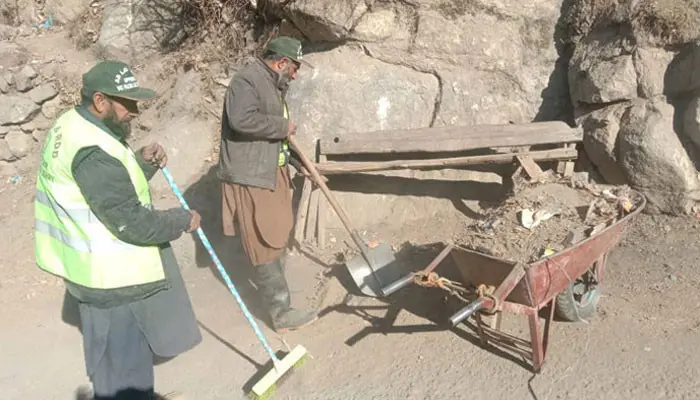
Local governments' share of Pakistan spending below 5%, says World Bank
As Pakistan debates creating new provinces, an analysis argues the tier that delivers services, local government, has been starved of funds. The World Bank reported in July that local governments' share of public spending fell from about 10 percent in 2005 to under 5 percent in 2024. Punjab last year spent Rs13,240 per citizen on development in Lahore and Rs460 in Layyah. Of Rs11.75 trillion the centre retains, Rs8.05 trillion goes on interest. Elected councils come to Punjab in December.
Source
The News International (Pakistan) · read the original report ↗
Desk check · some claims need care
What the desk checked (5)
- World Bank reported in July that local governments' share of public spending fell from about 10% in 2005 to under 5% in 2024. — Attributed to a World Bank report in the source; report title not named.
- Punjab spent Rs13,240 per citizen on development in Lahore and Rs460 in Layyah last year. — Attributed in the source to a former finance minister, who is not named.
- The federation keeps Rs11.75 trillion after transfers to provinces and spends Rs8.05 trillion on interest. — Figures appear in source as budget data; no document citation given.
- Punjab has handed 1,418 basic health units and 57 hospitals to contractors; federal government stopped buying wheat, saving Rs570 billion a year. — Stated as fact in the source without attribution to an official notification.
- Sindh's contracted primary-care operator handled 45 million patient visits last year; a mangrove partnership sold over $40 million of carbon credits and employs 20,000. — Figures appear in source; the author is identified as an impact advisory professional, a potential interest to note.
Analysts’ view opinion
The debate over new provinces looks like constitutional reform, but politically it is a fight over who holds power. The interior minister calling the system collapsed and offering new provinces as the answer, alongside the military spokesman's insistence that any reset be constitutional, suggests the map argument is crowding out the real issue: local government has been left without money or authority. The World Bank's figure — local government's share of public spending falling from about 10 per cent in 2005 to under 5 per cent in 2024 — and the gap between Rs13,240 per citizen in Lahore and Rs460 in Layyah are not just fiscal numbers; they are a map of political priorities.
- Redrawing boundaries is a low-cost political stage: parties can champion reform without surrendering control over how money is allocated.
- The per-citizen development spending gap between Lahore and Layyah gives regional inequality real electoral potency, particularly in south Punjab politics.
- With Rs8.05 trillion of the Rs11.75 trillion the centre retains going to interest, almost no government has the fiscal room to fund new promises.
- Provinces cutting development spending by 29 per cent while protecting salaries is a familiar political choice — the employee constituency is close at hand, the service-quality cost shows up later.
- If elected councils take office in Punjab in December, local representatives handed responsibility without funds could become a new pressure point on the provincial government.
What to watch — Watch whether Punjab's provincial government actually transfers money and powers to the councils due in December, or keeps the reform story anchored in the new-provinces debate.
This is a political reading of a single analytical piece; the story does not establish how far the new-provinces proposal will go, or whether the squeeze on local government is a deliberate choice or a by-product of fiscal stress.
Deep dive
Research brief · 8 facts · 10 dates · exam-readyThe brief
Context
Pakistan has been consumed by a political debate over redrawing provincial boundaries, after the interior minister said the system had collapsed and new provinces were the answer, while the military's spokesman insisted any reset must be constitutional. An evidence-based commentary by a former World Bank staff member shifts the argument: whatever happens to maps, the tier that actually delivers health, food, forests and education — local government — has been financially starved. The piece draws on a World Bank finding from July that local governments' share of public spending has halved since 2005, alongside deep intra-provincial inequities and a federal budget consumed by interest payments. It argues the state is already stepping back sector by sector without building the private and community delivery capacity to replace it.
Key facts
- World Bank reported in July that local governments' share of Pakistan's public spending fell from about 10 per cent in 2005 to under 5.0 per cent in 2024.
- Last year Punjab spent Rs13,240 per citizen on development in Lahore against Rs460 per citizen in Layyah.
- This year's budget keeps Rs11.75 trillion for the federation after transfers to provinces, of which Rs8.05 trillion goes on interest; interest plus defence and pensions exceed all the centre retains.
- The federal development programme has stayed at about Rs1 trillion for eight years against Rs4 trillion requested; last year's was cut and only half spent.
- Tax collection fell Rs975 billion short of an already lowered target; the deficit, lowest in 22 years, came from State Bank profit and the petroleum levy. The IMF programme holds this position until late 2027.
- Provinces returned Rs1.45 trillion in surpluses to the centre last year and will pay Rs1.04 trillion this year; they cut development by 29 per cent. Punjab's health development budget fell from Rs181 billion to Rs76 billion.
- Punjab has handed 1,418 basic health units and 57 hospitals to contractors and suspended health insurance in public hospitals; the federal government stopped buying wheat, booking Rs570 billion a year in savings.
- Pakistan's climate submission to the UN prices needs at $566 billion by 2035 while it receives $1-2 billion a year; last year's floods cost Rs822 billion, paid from own resources. Global aid fell 23 per cent last year and four-fifths of Pakistan's aid is now loans.
Timeline
- 2005Local governments' share of Pakistan's public spending stood at about 10 per cent.
- 2010Provinces take ownership of health, farming and the environment.
- 2017Jordan puts $98 million of public money into a professionally run fund.
- 2024Local governments' share of public spending falls to under 5.0 per cent; Zakat collection is Rs619 billion.
- April (this year)State exits the wheat market; only ten of 35 approved private buyers show up and prices fall below the benchmark.
- JulyWorld Bank reports the fall in local government's share of public spending.
- September 9The evidence paper behind the article is presented at 'Investing in the Nexus' in Islamabad.
- 2025Jordan recovers its $98 million with a return and the World Bank's highest rating.
- DecemberElected councils are to come to Punjab.
- Late 2027IMF programme holds the current fiscal position until this point.
Who has a stake
- Local governments in Pakistan — Deliver frontline services but their share of public spending has fallen from about 10 per cent (2005) to under 5 per cent (2024).
- Punjab government — Faces stark intra-provincial gaps (Rs13,240 vs Rs460 per citizen), a health development cut from Rs181bn to Rs76bn, and elected councils arriving in December.
- Federal government / Ministry of Finance — Retains Rs11.75 trillion but spends Rs8.05 trillion on interest; making 'budgets in the negative' and stepping back from wheat purchase and health provision.
- Provinces — Own health, farming and environment since 2010 yet returned Rs1.45 trillion in surpluses last year and will pay Rs1.04 trillion this year, cutting development by 29 per cent.
- Small farmers — Sold wheat at a loss after the state exited the market in April, while big growers with storage waited out low prices.
- IMF — Its programme locks in the current fiscal stance until late 2027, constraining development spending.
- SECP — Its draft venture-capital law, out for comment, could give a legal home to the missing impact/growth capital fund.
- Private and contracted service providers — Sindh's contracted primary-care operator handled 45 million patient visits at roughly three times district-run load for the same public cost.
Why it matters
The debate over new provinces distracts from the fiscal reality that the tier closest to citizens commands under 5 per cent of public spending, while the centre's retained revenue is swallowed by interest, defence and pensions. As the state withdraws from wheat procurement and public health delivery without first building buyers, silos, clinics or financing, citizens — especially in districts like Layyah — bear the gap. For India's readers and aspirants, it is a live case study in how fiscal decentralisation, not redrawing maps, determines whether devolution delivers.
UPSC angle
Prelims pointers
- World Bank (July): local governments' share of Pakistan's public spending fell from ~10% in 2005 to under 5% in 2024.
- Pakistan's provinces have owned health, farming and the environment since 2010 (post-devolution).
- Federal budget this year: Rs11.75 trillion retained after provincial transfers; Rs8.05 trillion on interest.
- Sehat Sahulat — Pakistan's scheme paying private hospitals for admissions; called financially unsustainable by the state's own economists.
- Benazir Income Support Programme (BISP) paid out less than the Rs619 billion of Zakat collected in 2024.
- NFC (National Finance Commission) — the finance minister says the Rs1.04 trillion provincial surplus arrangement is unrelated to it.
Mains framing
Pakistan's reform debate has fixated on provincial boundaries while the binding constraint is fiscal: the local tier that delivers health, education, food and environmental services now commands under 5 per cent of public spending, down from about 10 per cent in 2005, and even within a province the gap is extreme — Rs13,240 per citizen of development spending in Lahore versus Rs460 in Layyah. The causes are structural: Rs8.05 trillion of the Rs11.75 trillion the centre retains goes on interest, with defence and pensions consuming the rest; a federal development programme frozen near Rs1 trillion for eight years; tax shortfalls of Rs975 billion; provinces surrendering Rs1.45 trillion in surpluses and slashing development 29 per cent while raising only Rs5.6 billion of agricultural income tax against Rs306 billion of declared income; and an aid environment where global flows fell 23 per cent and four-fifths of Pakistan's aid is loans against $566 billion of self-declared climate needs. The implication, the article argues, is that the state is withdrawing by default — 1,418 basic health units and 57 hospitals contracted out, wheat procurement abandoned for a Rs570 billion 'saving' booked before silos, buyers and bank lines existed, with only ten of 35 private buyers appearing in April. The way forward it proposes is not a substitute for reform but a missing supply side: demonstrated delivery models (Sindh's contracted primary care at 45 million visits, mangrove carbon credits earning over $40 million and employing 20,000, 50 GW of rooftop solar without public money), plus the absent vehicle of $1-5 million growth capital between charity and big lenders, enabled by blended finance, results-based instruments like the skills impact bond, and SECP's draft venture-capital law — so that Punjab's elected councils arriving in December have counterparties accountable to communities.
Key terms
- Local government (third tier)
- The elected tier closest to citizens that delivers services; its share of Pakistan's public spending is now under 5 per cent.
- NFC (National Finance Commission)
- Pakistan's federal-provincial revenue sharing mechanism; the finance minister says the provincial surplus arrangement is unrelated to it.
- Sehat Sahulat
- State-funded health scheme paying private hospitals for tens of millions of admissions yearly; criticised as unsustainable as it buys services without investing in clinics, labs and staff.
- Blended finance
- Using concessional public money to attract private capital; Pakistan's framework prefers guarantees to grants, and each concessional rupee brings in two or three.
- Impact bond (skills impact bond)
- Instrument under which a ministry pays for verified results rather than running parallel programmes.
- Circular debt
- Unpaid dues accumulating in the power sector; Pakistan's grid carries Rs1.8 trillion of it.
Practice questions
- Redrawing provincial boundaries cannot substitute for fiscal decentralisation. Critically examine with reference to the decline of local government's share in Pakistan's public spending from about 10 per cent to under 5 per cent.
- When a state withdraws from direct service delivery without first building a supply side, savings become costs. Discuss with examples from wheat procurement and health contracting.
- Evaluate the potential and the limits of blended finance and impact investment in bridging the gap between declared development needs and available fiscal space in debt-stressed economies.
Grounded only in the source report — figures and dates are the source's, not inferred.