
Dissent among Election Commissioners shows vibrant democracy: BJP
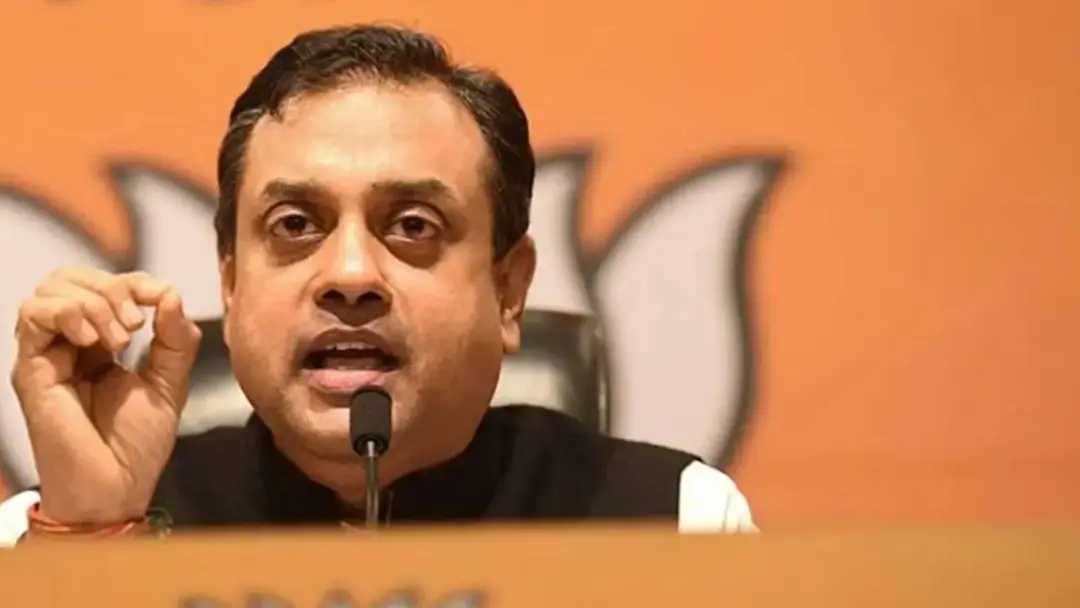
Dissent among Election Commissioners only underlines that no constitutional body is under dictatorship, the BJP said on Wednesday, adding that the Special Intensive Revision (SIR) was finally an exercise in unanimity. National spokesperson Sambit Patra, speaking at the party headquarters in Delhi, was responding to an Indian Express report of September 23, 2026, which said Commissioners had objected at least 14 times over 10 months to SIR decisions. The report renewed Opposition 'vote chori' charges and demands for CEC Gyanesh Kumar's resignation.
Source
Indian Express — India · read the original report ↗
Desk check · some claims need care
What the desk checked (5)
- Election Commissioners officially objected at least 14 times over the past 10 months to decisions and administrative instructions under the SIR process. — Attributed in the source to an Indian Express investigation published September 23, 2026; figure appears in source.
- The SIR was ultimately carried out with consensus and all three Commissioners were in agreement. — Asserted by Sambit Patra, who says he is quoting an Election Commission of India press note; the press note text itself is not reproduced.
- Of the 20 West Bengal Assembly seats with the highest voter deletions, TMC won 13, Congress one and BJP six. — Attributed by Patra to another Indian Express article; totals cited add to 20 and are internally consistent.
- The Supreme Court on May 27, 2026 upheld the legal validity of the SIR. — Stated by Patra; no court order details or independent citation given in the source.
- Gyanesh Kumar took office as Chief Election Commissioner on February 19, 2025. — Date appears in the source as part of Patra's remarks; no separate documentary attribution.
Analysts’ view opinion
Rather than playing defence, the BJP has chosen to convert a damaging report into a talking point — recasting the 14 recorded objections among Election Commissioners as proof that no constitutional body is under "dictatorship". By leaning on the Election Commission's own press note that the SIR was finally "carried out with consensus", the party runs a two-track argument: concede that deliberation happened, minimise what the disagreement means. Layering on a long list of Congress-era commissioner appointments is a deliberate attempt to shift the debate from present-day allegations to the longer history of institutional credibility.
- The "there was dissent, but consensus prevailed" formulation lets the BJP claim transparency and finality in the same breath — politically efficient framing.
- For the Opposition, the report gives the 'vote chori' campaign something it previously lacked: an institutional paper trail, potentially its most unifying plank after the Bengal result.
- Notably, the party did not engage the demand for CEC Gyanesh Kumar's resignation head-on, instead arguing the BJP was already winning big margins before February 19, 2025.
- Citing that the TMC won 13 of the 20 Bengal seats with the highest deletions is an attempt to rebut the "deletions helped the BJP" charge on numbers rather than intent.
- Invoking the Supreme Court's May 27, 2026 endorsement of the SIR's legal validity lets the BJP claim judicial cover and hand the remaining argument to "the people".
What to watch — Watch whether the Election Commission offers a fuller account of the 14 objections, and whether the Opposition takes this into Parliament or back to the courts.
The story does not establish that anything improper occurred in the SIR, or that deletions affected any outcome — it primarily records the BJP's political response.
Deep dive
Research brief · 8 facts · 10 dates · exam-readyThe brief
Context
The Election Commission of India's Special Intensive Revision (SIR) of electoral rolls has become a political flashpoint. An Indian Express investigation published on September 23, 2026 reported that over the preceding 10 months, Election Commissioners had officially objected at least 14 times to certain decisions and administrative instructions issued under the SIR process. The report revived Opposition 'vote chori' (voter theft) allegations against the BJP and prompted demands for the resignation of Chief Election Commissioner Gyanesh Kumar. Responding at the party headquarters in Delhi, BJP National Spokesperson Sambit Patra argued that internal deliberation among Commissioners is proof of a "vibrant democracy" and that the SIR was ultimately carried out with consensus.
Key facts
- An Indian Express investigation published on September 23, 2026 said Election Commissioners had officially objected at least 14 times over the past 10 months to decisions and administrative instructions under the SIR process.
- BJP National Spokesperson Sambit Patra, at a press conference at the party headquarters in Delhi, called the 14 correspondences a sign of a "healthy democracy" and the SIR "an exercise in unanimity".
- Patra quoted the Election Commission of India's press note responding to the Indian Express article, which said the SIR was "ultimately carried out with consensus".
- Gyanesh Kumar took over as Chief Election Commissioner on February 19, 2025; the Opposition alleges his appointment was advantageous to the BJP.
- Patra cited an Indian Express analysis of the 20 West Bengal Assembly constituencies with the highest voter deletions: TMC won 13 seats, Congress one and the BJP six.
- Patra said the Supreme Court on May 27, 2026 upheld the legal validity of the SIR.
- Patra listed past Election Commissioners with Congress-era links: K V K Sundaram (1958-1967), Nagendra Singh (1972-1973), R K Trivedi (1982-1985), T N Seshan (1990-1996), M S Gill (1996-2001), J M Lyngdoh (2001-2004).
- Patra said Navin Chawla was appointed Election Commissioner in 2005 and that in 2009 then CEC N Gopalaswami wrote to then President Pratibha Patil seeking his removal, but Chawla was elevated as CEC.
Timeline
- 1958-1967K V K Sundaram serves as Election Commissioner; later made Chairman of the Law Commission and awarded the Padma Vibhushan (per Patra).
- 1972-1973Nagendra Singh serves as Election Commissioner; awarded the Padma Vibhushan (per Patra).
- 1982-1985R K Trivedi serves as Election Commissioner; awarded Padma Vibhushan and appointed Governor (per Patra).
- 1990-1996T N Seshan serves as Election Commissioner and CEC; Patra alleges he contested an election for the Congress in 1996.
- 1996-2001M S Gill serves as Election Commissioner and CEC; later a Congress Rajya Sabha member and Minister (per Patra).
- 2001-2004J M Lyngdoh serves as CEC; later joined the Congress (per Patra).
- 2005Navin Chawla appointed Election Commissioner, allegedly by Sonia Gandhi (per Patra).
- 2009Then CEC N Gopalaswami writes to then President Pratibha Patil seeking Chawla's removal; Chawla is nonetheless elevated as CEC (per Patra).
- 2014Modi government comes to power; Patra says Opposition parties have been collapsing since.
- February 19, 2025Gyanesh Kumar takes office as Chief Election Commissioner.
Who has a stake
- Election Commission of India — Its institutional credibility and the perception of internal cohesion; it issued a press note saying SIR was carried out with consensus.
- Chief Election Commissioner Gyanesh Kumar — Faces Opposition demands for his resignation and allegations that his appointment benefited the BJP.
- Election Commissioners (other than the CEC) — Their recorded objections — at least 14 over 10 months — are now at the centre of a political dispute over SIR decisions.
- BJP — Defending itself against 'vote chori' allegations and arguing that deliberation within the EC proves democratic functioning.
- Congress and Opposition parties — Using the report to press 'vote chori' charges, allege institutional capture and demand the CEC's resignation.
- TMC and West Bengal voters — Opposition claims voter deletions during SIR affected Bengal results; Patra cites TMC winning 13 of the 20 highest-deletion seats.
- Supreme Court — Its May 27, 2026 ruling upholding SIR's legal validity is invoked by the BJP as settling the legality question.
Why it matters
Electoral roll revision determines who can vote, so any recorded disagreement inside the Election Commission over SIR instructions goes to the heart of trust in the electoral process. The dispute has turned a procedural exercise into a contest over the neutrality of a constitutional body, with the ruling party framing internal dissent as healthy deliberation and the Opposition reading it as evidence of irregularity. How this is resolved shapes public confidence in election outcomes, including in West Bengal.
UPSC angle
Prelims pointers
- Special Intensive Revision (SIR) is an electoral roll revision exercise of the Election Commission of India; the Supreme Court upheld its legal validity on May 27, 2026.
- Gyanesh Kumar assumed office as Chief Election Commissioner on February 19, 2025.
- The Indian Express report of September 23, 2026 cited at least 14 official objections by Election Commissioners over 10 months on SIR decisions.
- Form 6 is the form referenced in reported objections by Election Commissioners, who called a change to it 'illegal, unauthorised'.
- Past CECs named in the story: T N Seshan (1990-1996), M S Gill (1996-2001), J M Lyngdoh (2001-2004), N Gopalaswami (in office 2009), Navin Chawla (EC from 2005, later CEC).
- Patra cited an analysis of 20 West Bengal Assembly seats with highest voter deletions: TMC 13, BJP 6, Congress 1.
Mains framing
The controversy over recorded dissent within the Election Commission during the Special Intensive Revision raises the classic question of how a multi-member constitutional body should balance internal deliberation with institutional credibility. The BJP's defence is procedural: that at least 14 recorded objections over 10 months, followed by a consensus decision, demonstrate deliberative functioning rather than dictatorship, and that the Supreme Court's May 27, 2026 order settled the legality of SIR. The Opposition's charge is substantive: that objections to specific SIR instructions, including the reported Form 6 change described as 'illegal, unauthorised', point to irregularities that affected electoral rolls and outcomes, justifying demands for CEC Gyanesh Kumar's resignation. The BJP counters with data — in the 20 West Bengal constituencies with the highest deletions, the TMC won 13 seats against the BJP's six — and with historical precedents of Election Commissioners who later held Congress-linked positions, to argue that politicisation of the EC is not new. The way forward suggested within the source is trust in institutional processes: transparent recording of dissent, publication of the EC's reasoning, judicial review, and ultimately the verdict of voters. A grounded answer would weigh whether internal disagreement, once disclosed, strengthens or erodes faith in electoral administration.
Key terms
- Special Intensive Revision (SIR)
- The Election Commission's intensive revision of electoral rolls, upheld as legally valid by the Supreme Court on May 27, 2026 per the source.
- 'Vote chori'
- Literally 'voter theft'; the Opposition's allegation that the BJP benefited from manipulation or deletion of voters' names from electoral rolls.
- Chief Election Commissioner (CEC)
- Head of the Election Commission of India; Gyanesh Kumar took the post on February 19, 2025.
- Form 6
- The electoral form referred to in the story, a change to which Election Commissioners reportedly objected as 'illegal, unauthorised'.
- EC press note
- The Election Commission's official statement responding to the Indian Express article, stating SIR was ultimately carried out with consensus.
- Padma Vibhushan
- A national civilian honour; Patra cited its award to former Election Commissioners Sundaram, Nagendra Singh and Trivedi as evidence of Congress-era patronage.
Practice questions
- Does the public disclosure of recorded dissent within a multi-member Election Commission strengthen or weaken its institutional credibility? Discuss with reference to the SIR controversy.
- Examine the arguments advanced by the BJP and the Opposition on the Special Intensive Revision of electoral rolls, and assess what safeguards could insulate the Election Commission from charges of partisanship.
- 'Electoral roll revision is an administrative exercise with deeply political consequences.' Critically analyse in light of the 2026 SIR dispute and the West Bengal deletion data cited in the debate.
Grounded only in the source report — figures and dates are the source's, not inferred.