
Modi-Xi meeting, Houthi strikes on Saudi Arabia among week's events
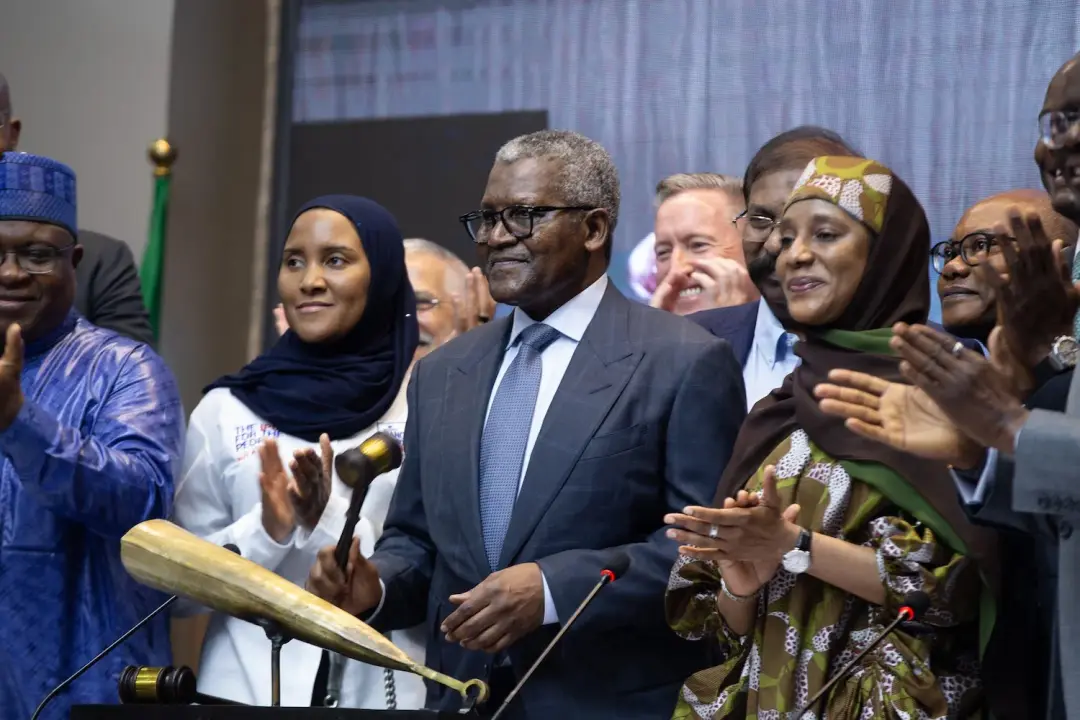
Foreign Policy's weekly news quiz rounded up international developments from the week of Sept. 12. India's Foreign Ministry said on Saturday that Prime Minister Narendra Modi and Chinese President Xi Jinping pledged to strengthen ties, after Xi's visit to the BRICS summit in New Delhi. Yemen's Houthi rebels struck the Saudi city of Khamis Mushait with missiles and drones. European leaders met in Finland. Aliko Dangote launched Africa's biggest IPO, floating 4.1 billion shares. Swedish Prime Minister Ulf Kristersson resigned.
Source
Foreign Policy · read the original report ↗
Desk check · some claims need care
What the desk checked (5)
- India's Foreign Ministry said on Saturday that PM Narendra Modi and Chinese President Xi Jinping pledged to strengthen ties; Xi attended the BRICS summit in New Delhi. — Attributed in source to the Indian Foreign Ministry and to FP's Michael Kugelman in South Asia Brief.
- Yemen's Houthi rebels fired dozens of missiles and drones at the Saudi city of Khamis Mushait on Monday. — Appears in the source as a quiz item; no direct source or official statement cited.
- Aliko Dangote launched Africa's biggest-ever IPO on Monday, floating 4.1 billion shares. — Figure appears in source; Dangote Industries cited on plans to double capacity and build a refinery in Kenya.
- Swedish Prime Minister Ulf Kristersson resigned on Thursday. — Stated in the quiz question; the reason is withheld by the quiz format and not given in the text.
- A Paris court awarded Kim Kardashian 1 euro on Tuesday over the 2016 armed robbery. — Attributed to The Associated Press in the source.
Analysts’ view opinion
This week's round-up is best read not as separate items but as one strategic picture: a modest thaw between India and China in Asia, Houthi strikes squeezing energy-corridor security in the Gulf, and Russia-driven anxiety pushing Europe's gaze toward the Arctic. India's Foreign Ministry says Modi and Xi pledged to strengthen ties around the BRICS summit in New Delhi, but nothing in the story suggests the underlying border realities have changed — so this looks more like tension management than a strategic realignment. The most consequential item may be Washington confirming for the first time that it has fielded "on-orbit space control weapons" without detailing them, a step toward space as an openly militarised domain.
- The Modi-Xi meeting rests on an Indian Foreign Ministry statement; it signals a thaw but is not evidence that border disputes are resolved.
- Dozens of missiles and drones aimed at Khamis Mushait test Saudi air defences and Red Sea corridor security, matters of direct interest to energy importers including India.
- European leaders gathering in Finland amid worries about a Russian threat from the Arctic shows Europe's security focus widening from the eastern flank to the high north.
- The US confirmation of orbital weapons, with details withheld, could invite comparable programmes from rivals and a fresh debate on protecting satellite assets.
- The Swedish prime minister's resignation is a reminder that domestic political churn in Europe can indirectly slow defence spending decisions and collective resolve.
What to watch — Watch which concrete sectors the Modi-Xi understanding translates into, how Saudi Arabia and its partners respond to the Houthi strikes, and whether other powers react to the US space-weapons disclosure.
This is analysis built on a weekly news round-up; the story does not establish the substance of any India-China agreements, the damage from the Houthi attack, or the nature of the orbital weapons.
Deep dive
Research brief · 8 facts · 10 dates · exam-readyThe brief
Context
Foreign Policy's weekly international news quiz, published Sept. 18, 2026, rounded up developments from the week of Sept. 12, 2026. The items span South Asian diplomacy, West Asian conflict, European security, African capital markets and Southeast Asian border talks. For Indian readers, the headline item is the Indian Foreign Ministry's statement that Prime Minister Narendra Modi and Chinese President Xi Jinping pledged to strengthen ties after Xi's brief visit to a BRICS summit in New Delhi, described by FP as the culmination of a thaw in China-India relations.
Key facts
- India's Foreign Ministry said on Saturday that PM Narendra Modi and Chinese President Xi Jinping pledged to strengthen ties; the specific areas are framed as a quiz question in the source.
- Xi Jinping's trip to the BRICS summit in New Delhi was brief but signalled the culmination of a thaw in China-India relations, per FP's Michael Kugelman in South Asia Brief.
- Yemen's Houthi rebels struck the Saudi city of Khamis Mushait with dozens of missiles and drones on Monday; the target is posed as a quiz question.
- FP's Keith Johnson wrote that the Iranian-backed Houthis' Red Sea attacks, not Ukraine, were the real cause of the latest oil price spike, contrary to Trump administration claims.
- European leaders met in Finland on Monday to urge greater EU engagement in a region unnamed in the quiz text; the EU fears Russia may attack from the Arctic in coming years.
- Aliko Dangote, Africa's richest person, launched the continent's biggest-ever IPO on Monday, floating 4.1 billion shares; he hit the gong at the Nigerian Exchange Group in Lagos on Sept. 14.
- Dangote Industries said IPO proceeds would double production capacity and build another refinery in Kenya (FP's Africa Brief, Nosmot Gbadamosi).
- Swedish Prime Minister Ulf Kristersson resigned on Thursday; progressive leaders called it a blow to the far right. U.S. Air Force Secretary Troy Meink confirmed Washington had fielded 'on-orbit space control weapons'.
Timeline
- 2016Kim Kardashian is the victim of an armed robbery in Paris.
- March 18, 1949 (archival reference in source)Negotiators from the U.S., Canada and five European countries finish the draft of the North Atlantic Treaty in Washington.
- May 2025Border clashes between Thailand and Cambodia reignite, fuelling nationalist sentiment in both countries.
- Last yearRobbers in the Kardashian case are found guilty; with pretrial detention served, none returned to prison.
- Monday (week of Sept. 12, 2026)Houthis strike Khamis Mushait; European leaders meet in Finland; Dangote launches Africa's biggest IPO; U.S. confirms weapons deployment for the first time.
- Sept. 14, 2026Aliko Dangote hits the gong at the Nigerian Exchange Group in Lagos during his company's IPO.
- TuesdayThai and Cambodian foreign ministers deliver opening statements at border-dispute talks; a Paris court awards Kim Kardashian 1 euro in compensation.
- WednesdayEuropean Commission President Ursula von der Leyen suggests the EU could make a country an 'associate member'.
- ThursdayBrazilian President Lula signs a decree ahead of next month's election; Swedish PM Ulf Kristersson resigns.
- SaturdayIndia's Foreign Ministry states that Modi and Xi pledged to strengthen ties.
Who has a stake
- India (PM Narendra Modi, Ministry of External Affairs) — Managing a thaw with China while hosting BRICS; the Foreign Ministry announced the pledge to strengthen ties.
- China (President Xi Jinping) — Used a brief New Delhi BRICS visit to consolidate improving relations with India.
- Saudi Arabia — Khamis Mushait hit by dozens of Houthi missiles and drones, exposing continued vulnerability to Yemen-based attacks.
- Yemen's Houthi rebels (Iranian-backed) — Projecting force against Saudi Arabia and in the Red Sea, with effects on global oil prices.
- European Union / European leaders and Ursula von der Leyen — Seeking deeper engagement amid Russian security threats, including a possible Arctic attack; floated 'associate member' status for a country.
- Dangote Group / Nigerian Exchange Group investors — A 4.1-billion-share IPO to fund doubled production capacity and a new refinery in Kenya.
- Sweden — PM Ulf Kristersson's resignation, hailed by progressives as a setback for the far right.
- Thailand and Cambodia — Foreign ministers negotiating a border dispute after clashes reignited in May 2025 amid nationalist pressure.
Why it matters
The week's items show how India's neighbourhood diplomacy, energy security and global markets are interlinked: a Modi-Xi thaw at a BRICS summit in New Delhi unfolds even as Houthi strikes on Saudi Arabia and the Red Sea push oil prices up, a direct concern for an import-dependent India. Europe's Arctic and Russia anxieties, and Africa's largest-ever IPO, signal shifting security and capital geographies that India must navigate.
UPSC angle
Prelims pointers
- BRICS summit referenced in the source was held in New Delhi, attended by Chinese President Xi Jinping.
- Khamis Mushait is the Saudi city targeted by Houthi missiles and drones on Monday of the week of Sept. 12, 2026.
- Aliko Dangote, Africa's richest person, floated 4.1 billion shares in Africa's biggest-ever IPO at the Nigerian Exchange Group, Lagos.
- Ursula von der Leyen is the President of the European Commission; Ulf Kristersson resigned as Sweden's Prime Minister.
- U.S. Air Force Secretary Troy Meink confirmed the U.S. had fielded 'on-orbit space control weapons'.
- Thailand-Cambodia border clashes reignited in May 2025; foreign ministers held settlement talks on Tuesday.
Mains framing
The week of Sept. 12, 2026 illustrates how multipolar diplomacy and non-state violence shape each other. India's hosting of a BRICS summit in New Delhi, and the Foreign Ministry's announcement that Modi and Xi pledged to strengthen ties, marks what Foreign Policy calls the culmination of a thaw in China-India relations, suggesting that plurilateral platforms can create space for bilateral stabilisation even between rivals. Simultaneously, Iranian-backed Houthi attacks on Khamis Mushait and in the Red Sea show that a small armed actor can move global oil prices, which FP notes the Trump administration misattributed to Ukraine, underlining how energy-import-dependent states face risks from chokepoint insecurity rather than from formal interstate war alone. Europe's response, leaders meeting in Finland to push greater EU engagement amid fears of a Russian Arctic attack, and von der Leyen's 'associate member' proposal, points to security-driven institutional innovation. Africa's biggest-ever IPO, Dangote's 4.1 billion shares to fund capacity expansion and a Kenyan refinery, and political churn in Sweden and Brazil, complete a picture of simultaneous economic and political realignment. The way forward for India lies in insulating its energy supply chains, deepening BRICS-based economic diplomacy while keeping border issues in view, and engaging African capital markets; the source does not state specific policy measures.
Key terms
- BRICS
- Grouping whose summit was held in New Delhi, attended briefly by Chinese President Xi Jinping.
- Houthi rebels
- Iranian-backed Yemeni armed group that struck Khamis Mushait and carried out Red Sea attacks affecting oil prices.
- Initial public offering (IPO)
- First sale of a company's shares to the public; Dangote floated 4.1 billion shares in Africa's largest-ever IPO.
- Associate member (EU)
- Status European Commission President Ursula von der Leyen suggested the EU could grant a country, per the source.
- On-orbit space control weapons
- Term used by U.S. Air Force Secretary Troy Meink for weapons the U.S. confirmed deploying, without further details.
- Nigerian Exchange Group
- Lagos-based exchange where Aliko Dangote hit the gong for his company's IPO on Sept. 14.
Practice questions
- Plurilateral platforms like BRICS can enable bilateral stabilisation between competing powers. Examine this with reference to the Modi-Xi meeting around the New Delhi BRICS summit.
- Attacks by non-state armed actors on maritime chokepoints can affect global energy prices more than interstate conflict. Discuss in the light of Houthi strikes on Saudi Arabia and the Red Sea.
- Assess the significance of Africa's largest-ever IPO, Dangote's 4.1 billion-share float, for South-South economic engagement.
Grounded only in the source report — figures and dates are the source's, not inferred.