
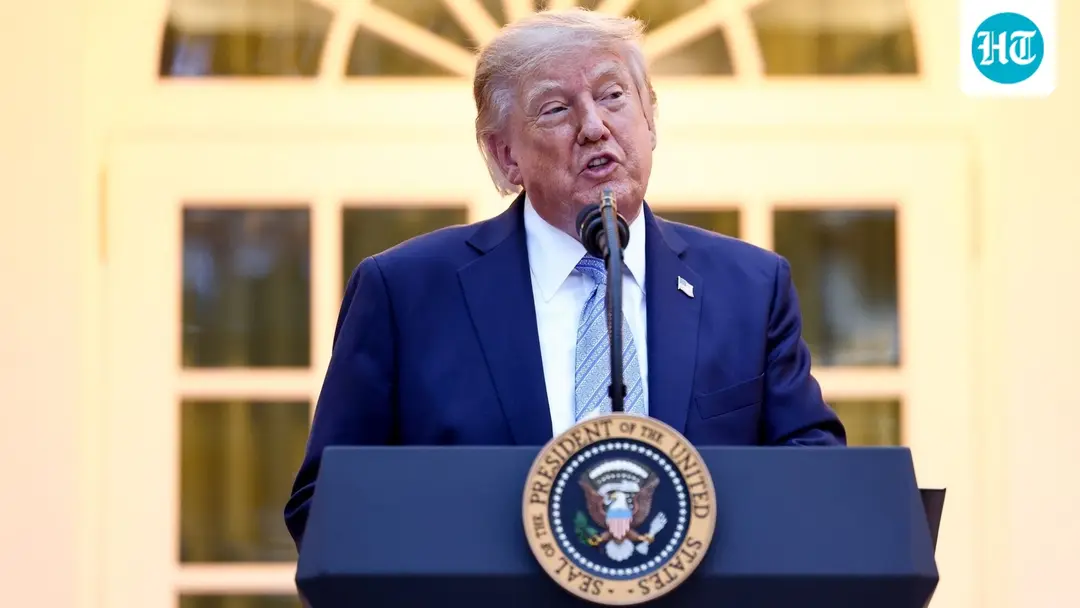
Trump expected to sign Russia sanctions bill, report says
US President Donald Trump is expected to sign the Lindsey O. Graham Sanctioning Russia and Iran Act of 2026 on Friday, ANI reported citing a White House official. The law would let the president impose tariffs of up to 100% on countries buying Russian oil and gas, including India. The Senate passed it 86-11 and the House 262-159. Tariffs are not automatic. India's external affairs ministry said it would take all necessary measures to protect its trade interests.
Source
Hindustan Times — India · read the original report ↗
Desk check · some claims need care
What the desk checked (5)
- Trump is expected to sign the Lindsey O. Graham Sanctioning Russia and Iran Act of 2026 on Friday. — Attributed to news agency ANI citing an unnamed White House official; anticipatory, not confirmed.
- The House passed the bill 262-159; the Senate passed it 86-11 on August 7. — Figures appear in the source; no vote record or official document cited.
- The law would allow tariffs of up to 100% on countries buying Russian oil and gas, including India, but does not impose them automatically. — Stated in source with explicit clarification that implementation is discretionary; internally consistent.
- India's external affairs ministry said it would take all necessary measures to protect trade and economic interests and is committed to energy security for 1.4 billion people. — Directly attributed to an official ministry statement quoted in the source.
- Countries importing less than 15% of Russia's natural gas exports could qualify for an exemption. — Figure appears in source; text of the bill not independently cited.
Analysts’ view opinion
This law is less an immediate punishment than a powerful bargaining instrument placed in Washington's hands. Because the bill itself makes clear the tariffs are not automatic, the real politics will now revolve around presidential discretion and who gets an exemption. For India it is a two-sided test: energy security and strategic autonomy on one side, the trade and defence partnership with the US on the other. The voting margins — 86-11 in the Senate, 262-159 in the House — suggest broad bipartisan appetite for a hard line on Russia, meaning this pressure may outlast any single administration.
- The statute empowers rather than compels — since imposing up to 100% tariffs is an executive choice, its primary strategic value is as leverage, not as an instant penalty.
- The exemption clause for countries importing less than 15% of Russia's natural gas exports that have taken significant steps to cut them is effectively a mechanism to pull states into bilateral negotiations one by one.
- Measures against 'shadow fleet' vessels shift pressure beyond buyers onto shipping, insurance and maritime logistics, giving the package a maritime-security dimension as well.
- The Indian foreign ministry's language is calibrated — 'national interest', 'energy security', 'diversified sourcing' rather than retaliatory rhetoric, keeping a negotiated off-ramp open.
- With both India and China named as major buyers, how evenly the pressure is applied matters greatly to New Delhi; selective enforcement could itself become a diplomatic irritant.
What to watch — Watch when and against whom the first enforcement decision comes after signature, and whether an exemption or waiver pathway for India opens up in talks.
This rests on a report citing a White House official that Trump is expected to sign on Friday; the story does not establish that signing has occurred, when or on whom tariffs would be imposed, or whether India would qualify for an exemption.
Deep dive
Research brief · 8 facts · 7 dates · exam-readyThe brief
Context
The US Congress has passed the Lindsey O. Graham Sanctioning Russia and Iran Act of 2026, which President Donald Trump is expected to sign on Friday, according to an ANI report citing a White House official. The law would give the US president authority to impose tariffs of up to 100% on countries that keep buying Russian oil and gas — a group that includes India and China, both major buyers of Russian crude. It also targets vessels linked to Russia's "shadow fleet", which the US says has helped Moscow keep exporting energy despite Western sanctions, and extends existing sanctions on Iran by five years. India's external affairs ministry has warned the legislation could affect both the India-US relationship and global energy markets.
Key facts
- Trump is expected to sign the Lindsey O. Graham Sanctioning Russia and Iran Act of 2026 on Friday, ANI reported citing a White House official.
- The US Senate passed the legislation in an 86-11 vote on August 7.
- The House of Representatives cleared the bill by 262-159, after the Senate's approval last month.
- The law would allow the US president to impose tariffs of up to 100% on countries that continue purchasing Russian oil and gas, including India.
- The tariffs are not automatic: the bill grants the executive branch power to impose such duties under specific legal conditions, if Trump chooses to implement them.
- Countries importing less than 15% of Russia's natural gas exports could qualify for an exemption if they have taken significant steps to reduce those imports.
- The bill includes measures against vessels associated with Russia's "shadow fleet", which the US says helped Russia continue energy exports despite Western sanctions.
- The package extends existing sanctions on Iran by five years — a Trump proposal that played a significant role in securing his support.
Timeline
- JulyTrump backed adding Iran to the Russia sanctions bill, posting on Truth Social: "Republicans should add Iran to the Russian Sanctions Bill... Important!!!"
- August 7The US Senate passed the legislation in an 86-11 vote.
- Last monthSenate approval preceded House action; the House passage was delayed by disagreements over tariff provisions and their impact on American trade policy.
- Recent monthsIndia discussed the legislation "at high levels" with various US interlocutors, articulating consequences for the bilateral relationship and the energy market.
- ThursdayIndia's external affairs ministry warned the law could affect India-US ties and global energy markets, and reaffirmed commitment to energy security for 1.4 billion people.
- Later: the House voteThe bill cleared the House of Representatives 262-159.
- Friday (expected)Trump is expected to sign the bill into law.
Who has a stake
- US President Donald Trump — Expected to sign the bill; would gain discretionary authority to impose tariffs of up to 100% on buyers of Russian energy.
- US Congress (Senate and House) — Passed the bill 86-11 and 262-159; House passage was delayed by disputes over tariff provisions and US trade policy impact.
- India / Ministry of External Affairs — Faces possible tariffs of up to 100% on Indian goods if it keeps buying Russian energy; says purchases are based on national interest and energy security for 1.4 billion people.
- Senator Lindsey Graham — Lead sponsor whose name the Act carries; had sought inclusion of Iran in the sanctions bill.
- Russia — Target of the sanctions, including measures against its "shadow fleet" of vessels used to sustain energy exports.
- Iran — Existing US sanctions on it would be extended by five years under the package.
- China — Along with India, a major buyer of Russian crude, making its energy trade with Moscow central to the legislation's debate.
- Indian trade and industry bodies — Government said it would coordinate with them to address the possible impact of the legislation.
Why it matters
The law converts US pressure on Russian energy buyers from rhetoric into a standing legal instrument, with India's exports exposed to tariffs of up to 100% at the US president's discretion. For India, it puts two priorities in tension — affordable energy security for 1.4 billion people and a stable trade relationship with its largest market partner in this dispute. Because India and China are the biggest buyers of Russian crude, any use of the authority could also unsettle global energy markets.
UPSC angle
Prelims pointers
- Lindsey O. Graham Sanctioning Russia and Iran Act of 2026: allows US tariffs of up to 100% on buyers of Russian oil and gas.
- Senate vote: 86-11 on August 7; House vote: 262-159.
- Exemption clause: countries importing less than 15% of Russia's natural gas exports, if they have taken significant steps to cut imports.
- The Act targets Russia's "shadow fleet" vessels used to sustain energy exports despite Western sanctions.
- The package extends existing US sanctions on Iran by five years.
- Tariffs are discretionary, not automatic — the executive branch decides under specified legal conditions.
Mains framing
The Lindsey O. Graham Sanctioning Russia and Iran Act of 2026 illustrates how secondary economic coercion is becoming the preferred instrument of great-power pressure: rather than sanctioning Russia alone, it arms the US president with discretionary authority to levy tariffs of up to 100% on third countries that keep importing Russian oil and gas, plus measures against Russia's "shadow fleet" and a five-year extension of Iran sanctions. Its passage — 86-11 in the Senate on August 7 and 262-159 in the House after delays over tariff provisions — signals broad political consensus in Washington, even as the discretionary design leaves room for bargaining rather than automatic penalties. For India, the implications are twofold: a direct trade risk to exports and an energy-security dilemma, since New Delhi holds that purchases serve national interest and the needs of 1.4 billion people, sourced through diversification and evolving market dynamics. India's stated way forward, as articulated by the external affairs ministry, rests on sustained high-level engagement with US interlocutors, clear articulation of consequences for both the bilateral relationship and the international energy market, coordination with trade and industry bodies, and readiness to "take all necessary measures to protect its trade and economic interests" — while the 15% natural gas exemption threshold indicates that demonstrable reduction efforts may also matter.
Key terms
- Lindsey O. Graham Sanctioning Russia and Iran Act of 2026
- US legislation permitting tariffs of up to 100% on countries buying Russian oil and gas, with measures on Russian shipping and extended Iran sanctions.
- Shadow fleet
- Vessels associated with Russia that, according to the US, have helped it continue energy exports despite Western sanctions; targeted by the bill.
- Secondary tariffs (as used here)
- Duties imposed on third countries — not the sanctioned state — for continuing trade with it; here up to 100% on buyers of Russian energy.
- 15% exemption threshold
- Countries importing less than 15% of Russia's natural gas exports may qualify for exemption if they have taken significant steps to cut imports.
- Ministry of External Affairs (MEA)
- India's foreign ministry, which said India would protect its trade and economic interests and continue energy purchases based on national interest.
- Truth Social
- The platform where Trump in July urged Republicans to add Iran to the Russia sanctions bill.
Practice questions
- The Lindsey O. Graham Sanctioning Russia and Iran Act of 2026 creates discretionary rather than automatic tariff powers. Discuss how this design shapes India's negotiating options with the United States.
- "Energy security and strategic autonomy are increasingly difficult to reconcile with trade dependence on a single major market." Examine in the light of India's response to the US Russia sanctions legislation.
- What are secondary sanctions and secondary tariffs? Assess their effectiveness and their spillover risks for the international energy market, with reference to the provisions on Russia's shadow fleet.
Grounded only in the source report — figures and dates are the source's, not inferred.