
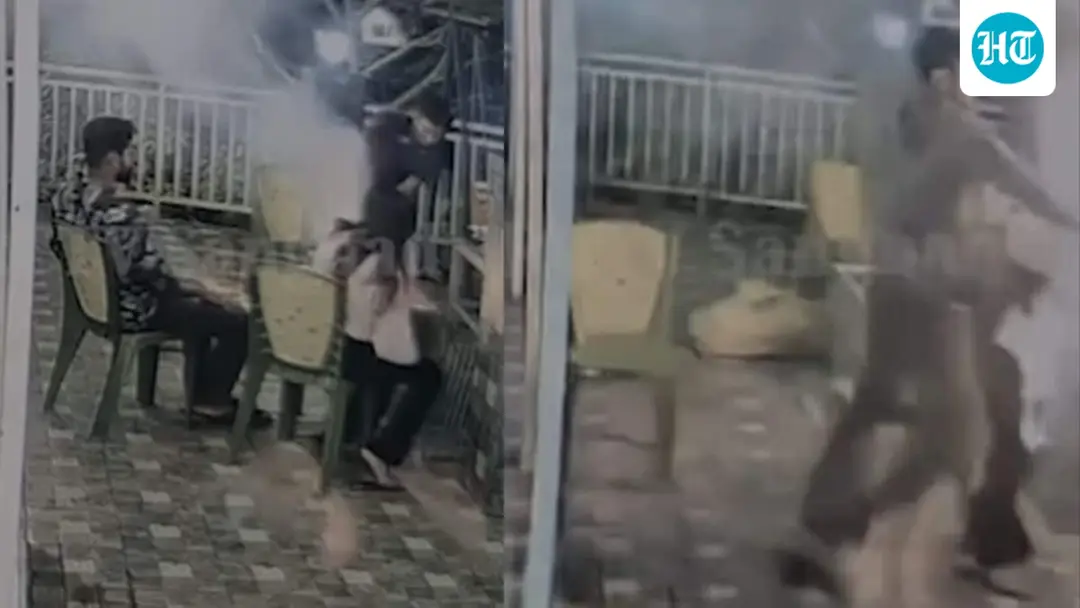
Newlywed suffers burns in barbecue fire at Darjeeling homestay
A newlywed woman, Nikita, suffered severe burn injuries in a barbecue fire at a homestay in Sittong, Darjeeling, on the night of September 13 during her honeymoon. Her husband Souvik Das, a resident of Chopra in Uttar Dinajpur district, said a staff member cooking corn threw a fluid onto the fire, and the flames engulfed her. He alleged she sustained 60 per cent burns and that they waited hours for a vehicle to reach Siliguri. Police have registered a complaint and are investigating.
Source
Hindustan Times — India · read the original report ↗
Desk check · some claims need care
What the desk checked (4)
- A newlywed woman, Nikita, suffered 60% burns in a barbecue fire at a homestay in Sittong, Darjeeling, on September 13. — Attributed in source to husband Souvik Das and reporting by Indian Express; the burn percentage is his quoted claim, not an official medical figure.
- A homestay employee cooking corn threw a fluid onto the fire, after which flames engulfed the woman. — Attributed to the husband and described as visible in a CCTV video cited by the source; the fluid is not identified.
- The couple waited hours for a vehicle to reach a hospital in Siliguri as the homestay had no primary treatment facility. — Allegation quoted directly from the husband; no independent confirmation in source.
- A police complaint has been lodged and a probe is underway. — Attributed to a senior police official quoted as saying 'We are looking into the matter'.
Analysts’ view opinion
At its core this is a negligence case rather than an intentional-harm case — the husband's own account describes an employee pouring a fluid onto a live fire, and the absence of intent does not remove criminal or civil liability. The story establishes only that a complaint has been lodged and a probe is underway; which sections have been invoked, and whether the employee alone or the homestay operators too are named, is not yet on the record. Two strands will drive the investigation: the negligence at the barbecue, and the separate allegation that there was no primary treatment or transport available.
- Indian criminal law treats causing grievous hurt by a negligent or rash act, and the reckless handling of substances likely to endanger life, as distinct offences where intent need not be proved.
- If the alleged 60 per cent burns are borne out medically, the injury would fall in the "grievous hurt" category rather than simple hurt, which changes the applicable sections and sentencing exposure — making the medico-legal report central evidence.
- The viral CCTV footage could be powerful proof, but to hold up in court it must be lawfully seized and properly certified as electronic evidence rather than circulated only on social media.
- Beyond the individual employee, the doctrine of employer liability opens a possible civil claim for compensation against the homestay establishment itself.
- The allegation of no first-aid facility, no fire safety and no emergency transport could invite regulatory scrutiny of tourist-accommodation registration and safety compliance, which is a track separate from the criminal case.
What to watch — Watch whether the complaint is converted into an FIR and under which sections, whether the employee is arrested, whether the homestay owners are added as accused, and what the medical report records.
The story does not establish the sections invoked, the homestay's or employee's version of events, or an officially confirmed burn percentage — what exists so far are the husband's allegations, with fault yet to be determined.
Deep dive
Research brief · 8 facts · 5 dates · exam-readyThe brief
Context
A newly married couple from Chopra in Uttar Dinajpur district, West Bengal, was on honeymoon at a homestay in Sittong, Darjeeling, when a barbecue arranged by the homestay staff turned into a fire on the night of September 13. According to the husband, Souvik Das, an employee cooking corn threw a fluid onto the fire, and the flames engulfed his wife Nikita, who he alleges suffered 60 per cent burns. CCTV footage of the incident has gone viral on social media, and police have registered the husband's complaint and begun a probe. The case has drawn attention to safety standards and emergency preparedness at hill-station homestays.
Key facts
- The incident took place on the night of September 13 at a homestay in Sittong, Darjeeling, West Bengal.
- The homestay staff arranged the barbecue for the couple at around 8.30 pm, on the couple's request.
- Husband Souvik Das said an employee cooking corn threw a fluid onto the fire, after which flames caught his wife Nikita.
- Souvik alleged his wife sustained 60 per cent burns; he also suffered burns to his hand.
- The couple had got married a month before the incident; Souvik is a resident of Chopra in Uttar Dinajpur district.
- Souvik said there was no facility for primary treatment at the homestay and no cars, forcing them to wait hours before taking Nikita to Siliguri.
- A CCTV video of the incident has gone viral on social media, showing the employee throwing fluid on the fire and later removing his T-shirt to douse the flames.
- A senior police official said, 'We are looking into the matter,' as reported by Indian Express.
Timeline
- About a month before the incidentNikita and Souvik Das get married.
- September 13, around 8.30 pmHomestay staff arrange a barbecue for the couple at the Sittong homestay.
- September 13, nightAn employee cooking corn throws a fluid onto the fire; flames engulf Nikita, who falls to the floor.
- After the fireThe couple wait hours for a vehicle before Nikita is taken to Siliguri for treatment.
- After the incidentSouvik lodges a police complaint; police say they are looking into the matter and a CCTV video goes viral.
Who has a stake
- Nikita (the injured woman) — Alleged 60 per cent burn injuries and delayed access to medical care during her honeymoon.
- Souvik Das (husband, complainant) — Suffered burns to his hand, has lodged a police complaint and is demanding justice.
- The homestay and its staff — Face allegations of unsafe barbecue handling, absence of first-aid facilities and no transport for emergencies.
- Darjeeling police — Have registered the complaint and are investigating; CCTV footage is available as evidence.
- Homestay tourism sector in Darjeeling hills — Reputation and traveller confidence tied to safety, first-aid and emergency evacuation standards.
Why it matters
Homestays have become a mainstay of hill tourism in Darjeeling, but this case shows how an ordinary guest activity like a barbecue can turn life-threatening when staff are untrained and no first aid or transport is on hand. The alleged hours-long wait for a vehicle to reach Siliguri points to a wider gap in emergency response for remote tourist locations. With CCTV footage viral and a police probe on, the case raises questions of criminal liability as well as regulation of unregistered or lightly regulated hospitality units.
UPSC angle
Prelims pointers
- Sittong is a homestay tourism destination in the Darjeeling district of West Bengal.
- Chopra, the husband's residence, is in Uttar Dinajpur district of West Bengal.
- Siliguri is the nearest city to which the burn victim was taken for hospital treatment.
- Incident date: September 13; a police complaint has been lodged and probe is underway.
- The husband alleged his wife suffered 60 per cent burns after a fluid was thrown on a barbecue fire.
- CCTV footage of the incident went viral on social media and forms part of the record.
Mains framing
The Sittong barbecue fire illustrates how India's fast-growing homestay economy can outpace safety regulation. The immediate cause, as alleged in the complaint, was an untrained staff member throwing a flammable fluid onto an open barbecue while guests sat beside it; the aggravating cause was systemic, no primary treatment facility at the property and no vehicle available, so the victim with alleged 60 per cent burns waited hours before reaching Siliguri. The implications run across three axes: criminal liability, where police are examining the complaint with CCTV footage as evidence; consumer and tourist safety, where guests in remote hill locations have little recourse if a property lacks first aid or evacuation arrangements; and the credibility of hill tourism, which depends on visitor confidence. A grounded way forward would involve mandatory basic fire-safety and first-aid training for homestay staff, a requirement that properties in remote areas have identified emergency transport and referral links to the nearest hospital, and clear registration and inspection norms so accountability is traceable. The source does not state what regulatory framework currently applies, so any prescription must stay at the level of these safety and accountability gaps the case exposes.
Key terms
- Homestay
- A private residence offering paid accommodation to tourists, widely used in Darjeeling hills as an alternative to hotels.
- Sittong
- A village and homestay tourism spot in Darjeeling district, West Bengal, where the incident occurred.
- 60 per cent burns
- Extent of body surface burnt, as alleged by the husband; a high percentage indicating severe, life-threatening injury.
- Police complaint
- Formal written information given to police by the husband, on the basis of which the investigation is proceeding.
- CCTV evidence
- Closed-circuit footage of the barbecue area, now viral, showing the fluid being thrown and the flames catching the woman.
Practice questions
- Discuss the regulatory and safety gaps in India's homestay tourism sector, using the Sittong barbecue fire as a case study.
- Emergency medical evacuation from remote hill and tourist destinations remains weak. Examine the problem and suggest measures.
- How can CCTV footage and complainant testimony together shape criminal liability in cases of negligence by service providers?
Grounded only in the source report — figures and dates are the source's, not inferred.