
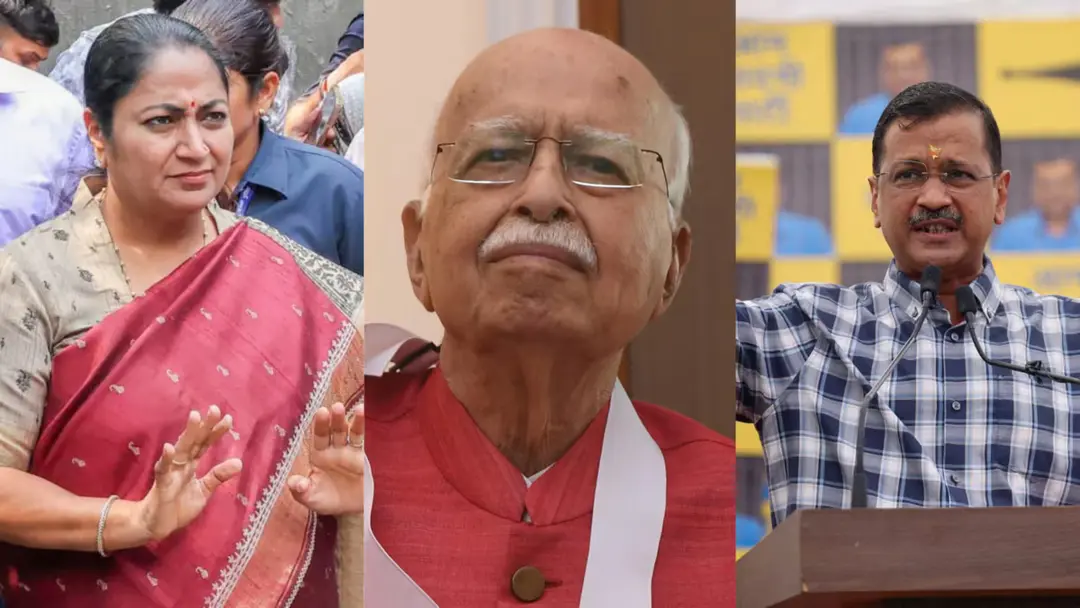
EC says SIR notices do not mean deletion from voter rolls
The Election Commission said on Sunday that notices issued to some voters during the ongoing Special Intensive Revision (SIR) of electoral rolls do not mean their names will be deleted. Notices over discrepancies went to BJP leader Lal Krishna Advani, Delhi Chief Minister Rekha Gupta, Arvind Kejriwal, Manish Sisodia, Kailash Gahlot, S Jaishankar, Jagdeep Dhankhar and Election Commissioner SS Sandhu. The CEO office said no name can be deleted without a hearing, and there was no 'existential crisis'.
Source
News18 — India · read the original report ↗
Desk check · compared with the source
What the desk checked (5)
- ECI said notices issued during the Special Intensive Revision do not mean names will be deleted from electoral rolls. — Attributed to the Election Commission and the Delhi CEO office, with direct quotes in source.
- Notices were issued to LK Advani, Rekha Gupta, Arvind Kejriwal, Manish Sisodia, Kailash Gahlot, S Jaishankar, Jagdeep Dhankhar and SS Sandhu over discrepancies. — Names appear in source; attribution is to the report, not to a named official.
- The Chief Minister's name was validated after verification of details. — Attributed to the Chief Electoral Officer's office.
- The draft electoral roll was published on August 31 on the CEO Delhi website. — Date appears in source; no document cited.
- The 2026 SIR involves house-to-house enumeration to remove duplicate, deceased or shifted voters. — Described in source as an Election Commission exercise; no source given for operational details.
Analysts’ view opinion
The SIR notice list runs from Advani, Jaishankar and Dhankhar to Kejriwal and Sisodia — cutting across ruling and opposition camps. That is politically awkward for the Election Commission, but also a shield: a list this broad does not fit the charge that one party alone was targeted. Hence the hurried Sunday clarification that there is "no existential crisis" and no name will go without a hearing — classic reputational damage control.
- The presence of BJP figures, AAP leaders, holders of constitutional office and even an Election Commissioner on one list blunts any allegation of selective targeting.
- If high-profile records threw up discrepancies, the obvious opposition line is to ask what happens to ordinary voters with less recourse.
- The CEO office noting that the Delhi Chief Minister's name was validated after verification is an attempt to show the process self-corrects.
- Issuing the clarification on a Sunday signals urgency to contain the story before it hardens into a narrative.
- Since SIR is a nationwide exercise, the trust deficit visible in Delhi could become a template for political attacks in other states.
What to watch — Watch whether the notified names survive in the final roll and how large the deletions among ordinary voters turn out to be — both will shape the next round of political attack and the Commission's credibility.
The story does not establish why or how many notices were issued, whether any names were actually deleted, or how the parties involved have responded.
Deep dive
Research brief · 8 facts · 3 dates · exam-readyThe brief
Context
The Election Commission of India is running a nationwide Special Intensive Revision (SIR) of electoral rolls, a house-to-house enumeration and verification drive intended to remove duplicate, deceased or shifted voters while including all eligible citizens. In Delhi, the draft roll was prepared from Enumeration Forms collected by Booth Level Officers and published on August 31 on the CEO Delhi website. Notices went out to electors whose records could not be matched with the roll from the last intensive revision or showed "logical discrepancies" in the linking exercise. When several prominent names received such notices, the Delhi CEO's office clarified that a notice is not a deletion.
Key facts
- The Election Commission said on Sunday that SIR notices do not imply that voters' names will be deleted from the electoral rolls.
- Notices over discrepancies in forms went to BJP veteran Lal Krishna Advani, Delhi CM Rekha Gupta and her predecessor Arvind Kejriwal.
- Others issued notices included former Delhi Deputy CM Manish Sisodia, BJP MLA Kailash Gahlot, EAM S Jaishankar, former Vice President Jagdeep Dhankhar and Election Commissioner SS Sandhu.
- The CEO office said Chief Minister Rekha Gupta's name was validated after verification of details.
- The CEO office said: "No name can be deleted without giving an opportunity of being heard and a proper speaking and appealable order."
- The CEO office said there was no "existential crisis" arising from the notices.
- The Delhi draft electoral roll was published on August 31 on the CEO Delhi website, prepared from Enumeration Forms submitted to Booth Level Officers.
- The draft list is also available at ERO and AERO offices and at designated polling stations.
Timeline
- August 31Draft electoral roll, prepared from Enumeration Forms submitted to Booth Level Officers, published on the CEO Delhi website.
- During the ongoing SIR (2026 revision)Notices issued to electors whose records could not be matched with the last intensive revision roll or showed logical discrepancies.
- Sunday (report published September 21, 2026)ECI/CEO office clarifies that notices do not mean deletion; says CM Rekha Gupta's name was validated after verification.
Who has a stake
- Election Commission of India — Credibility of the nationwide SIR exercise and of its assurance that no deletion happens without a hearing.
- Chief Electoral Officer, Delhi — Issuing and disposing of notices, publishing the draft roll and defusing alarm among electors.
- Electors who received notices — Right to remain on the roll; entitled to an opportunity of being heard and a speaking, appealable order.
- Prominent notice recipients (Advani, Rekha Gupta, Kejriwal, Sisodia, Gahlot, Jaishankar, Dhankhar, SS Sandhu) — Their roll entries flagged for discrepancies; Gupta's name validated after verification.
- Booth Level Officers, EROs and AEROs — Field-level collection of Enumeration Forms, verification of records and disposal of discrepancy cases.
- Political parties (BJP, AAP and others) — Accuracy of the electoral roll in Delhi and the political fallout of deletions or errors.
Why it matters
The electoral roll is the gateway to the vote, so any large-scale revision raises fears of wrongful exclusion. The fact that notices reached figures as prominent as a former Deputy Prime Minister-rank leader, a sitting Chief Minister, a Union minister, a former Vice President and even a serving Election Commissioner shows how widely discrepancy flags can fall, and makes the ECI's due-process assurance — a hearing plus a speaking, appealable order — central to public trust in the SIR.
UPSC angle
Prelims pointers
- Special Intensive Revision (SIR): nationwide ECI voter roll verification with house-to-house enumeration to remove duplicate, deceased or shifted voters.
- Delhi draft electoral roll published on August 31 on the CEO Delhi website; also at ERO/AERO offices and designated polling stations.
- Enumeration Forms are collected by Booth Level Officers (BLOs) and form the basis of the draft roll.
- ECI clarification: a notice does not mean deletion; no name can be deleted without a hearing and a speaking, appealable order.
- Notices issued to electors unmatched with the last intensive revision roll or showing "logical discrepancies" in the linking exercise.
- Notice recipients named: L K Advani, Rekha Gupta, Arvind Kejriwal, Manish Sisodia, Kailash Gahlot, S Jaishankar, Jagdeep Dhankhar, EC SS Sandhu.
Mains framing
The Delhi SIR notices illustrate the tension between purifying electoral rolls and protecting the franchise. The cause of the controversy is technical: entries that could not be matched with the roll of the last intensive revision, or that threw up "logical discrepancies" during the linking of old and new records, automatically attracted notices — a process blind enough to flag a former Vice President, a Union minister, a sitting Chief Minister and a serving Election Commissioner. The implication is twofold: such error-prone matching can trigger mass anxiety and allegations of targeted exclusion, and it places a heavy administrative burden on EROs, AEROs and BLOs to verify each case. The ECI's answer is procedural safeguard — publication of the draft roll for public scrutiny from August 31, an opportunity of being heard, and a speaking, appealable order before any deletion, as in the case of CM Rekha Gupta whose name was validated after verification. The way forward, on the source's own terms, lies in transparent communication that a notice is not a deletion, accessible display of draft rolls at ERO/AERO offices and polling stations, and scrupulous adherence to hearing-and-appeal requirements so that clean-up does not become disenfranchisement.
Key terms
- Special Intensive Revision (SIR)
- Nationwide ECI exercise of house-to-house enumeration and verification to clean up and update electoral rolls.
- Enumeration Form
- Form in which voters submit their details to Booth Level Officers; used to prepare the draft electoral roll.
- Booth Level Officer (BLO)
- Field official who collects Enumeration Forms and verifies voter details at the polling-booth level.
- ERO / AERO
- Electoral Registration Officer and Assistant Electoral Registration Officer, who handle roll entries; draft rolls are displayed at their offices.
- Speaking and appealable order
- A reasoned written order, open to appeal, which the ECI says is mandatory before any name is deleted from the roll.
- Logical discrepancy
- Inconsistency thrown up while linking a voter's current entry with the roll of the last intensive revision, triggering a notice.
Practice questions
- Examine the safeguards available to voters during the Special Intensive Revision of electoral rolls. Do notices issued for discrepancies amount to a threat to the franchise?
- Discuss the administrative challenges of a nationwide house-to-house electoral roll revision, with reference to the Delhi SIR notices of 2026.
- "Purity of the electoral roll and universality of the franchise must be balanced." Critically analyse in the light of the Election Commission's clarification that a notice does not mean deletion.
Grounded only in the source report — figures and dates are the source's, not inferred.