
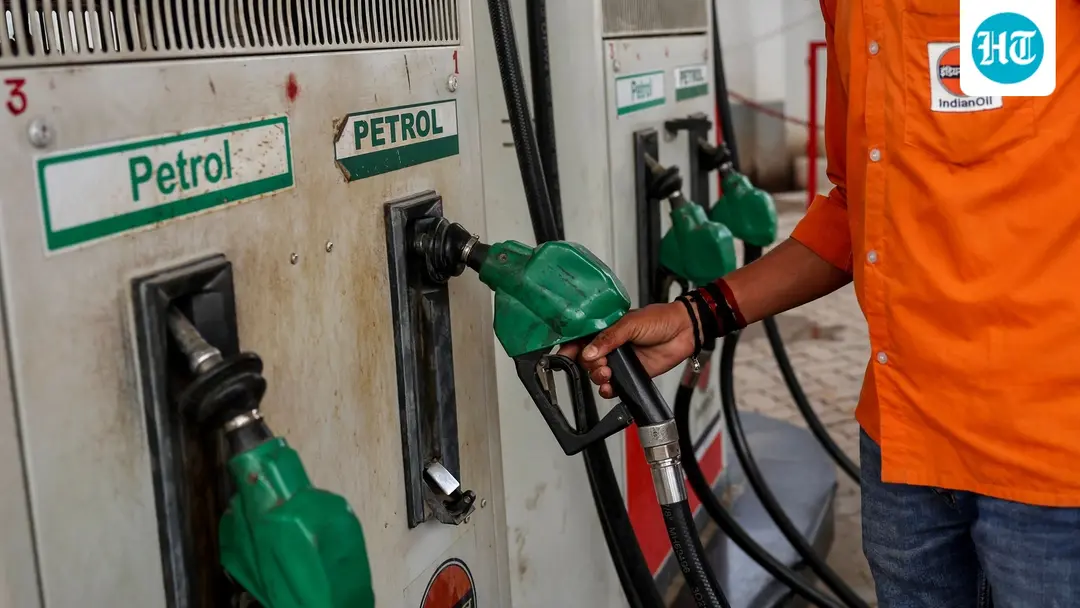
Crude nears $100 a barrel; city petrol, diesel rates vary widely
India's average crude oil import price has neared $100 a barrel, its highest in three months, amid volatility in global oil markets. As of Monday morning, the GoodReturns website showed petrol at ₹102.12 a litre and diesel at ₹95.20 in Delhi; ₹111.21 and ₹97.83 in Mumbai; ₹110.82 and ₹98.77 in Bengaluru; ₹108.97 and ₹100.68 in Bhubaneswar; and ₹101.54 and ₹89.47 in Chandigarh. State VAT and freight charges explain the gaps. OPEC held October output quotas.
Source
Petrol & diesel price · read the original report ↗
Desk check · some claims need care
What the desk checked (5)
- Petrol in New Delhi is ₹102.12/litre and diesel ₹95.20; Mumbai ₹111.21 and ₹97.83; Bengaluru ₹110.82 and ₹98.77; Chandigarh ₹101.54 and ₹89.47 — Figures appear in source, attributed to the GoodReturns website as of Monday morning; internally consistent
- India's average crude import price has reached nearly $100 a barrel, a three-month high — Stated twice in source without a named agency or official source; no source given
- Crude rise is driven by West Asia geopolitical tensions and military clashes between the United States and Iran — Unattributed and potentially sensitive claim; editor should verify independently
- India imports over 88% of its crude and August petrol consumption rose 7.9% to 3,824 thousand metric tonnes — Attributed in source to an earlier Hindustan Times report
- OPEC members decided to hold production quotas for October — Appears in source with no source given
Analysts’ view opinion
The key economic signal here is not the $100 crude print — it is that retail petrol and diesel prices have barely moved. That means the cost shock is being absorbed away from the consumer and onto the balance sheets of state-run oil marketing companies, which run over 90% of India's pumps. For a country importing more than 88% of its crude, that is a deferral rather than a saving — someone eventually pays.
- With pump prices frozen while import costs climb, margin pressure shifts to public-sector retailers, potentially squeezing their profits and investment capacity.
- The spread from ₹102.12 in Delhi to ₹111.21 in Mumbai is driven mainly by state VAT and freight, showing how much of the pump price is a tax decision rather than a market one.
- Diesel is the variable that matters most for inflation: at ₹100.68 a litre in Bhubaneswar it feeds directly into freight costs and, through them, into goods and food prices.
- Petrol consumption rising 7.9% in August suggests demand is holding firm, which means volumes are not self-correcting the way they might if prices were passed through fully.
- OPEC keeping October output quotas unchanged keeps supply tight, a reminder that the price driver sits outside India's control.
What to watch — If crude stays near $100, watch whether state-run retailers begin phased price increases, whether the Centre or states move on duties, or whether companies simply keep absorbing the gap.
The story does not establish how large the under-recovery for state-run retailers actually is, how long they can hold prices, or whether any tax relief is under consideration.
Deep dive
Research brief · 8 facts · 4 dates · exam-readyThe brief
Context
India's crude oil import basket price has climbed to nearly $100 a barrel, its highest in three months, driven by volatility in world oil markets, geopolitical tension in West Asia and military clashes between the United States and Iran. India imports more than 88% of its crude, so global price swings feed directly into domestic fuel economics. Yet retail pump prices have stayed largely unchanged because state-run oil marketing companies, which run over 90% of petrol pumps, have not revised them in line with international benchmarks. Retail rates still differ sharply between cities because of state-level value-added tax and local freight charges.
Key facts
- India's average crude oil import price has reached nearly $100 per barrel, the highest in three months.
- Delhi rates as of Monday morning: petrol ₹102.12 a litre, diesel ₹95.20 (GoodReturns website).
- Mumbai is the costliest among cities listed: petrol ₹111.21 a litre, diesel ₹97.83.
- Bangalore: petrol ₹110.82, diesel ₹98.77; Bhubaneswar: petrol ₹108.97, diesel ₹100.68.
- Chandigarh is the cheapest listed: petrol ₹101.54, diesel ₹89.47; Gurgaon: petrol ₹102.97, diesel ₹95.64.
- India imports more than 88% of its crude oil, as per an earlier HT report.
- Domestic petrol consumption grew 7.9% in August to 3,824 thousand metric tonnes.
- OPEC members decided to maintain production quotas for October, keeping global supply tight.
Timeline
- AugustIndia's domestic petrol consumption grows 7.9% to 3,824 thousand metric tonnes.
- Recent weeksBrent crude futures rise amid West Asia geopolitical tensions and US-Iran military clashes; India's crude import basket nears $100 a barrel, a three-month high.
- For OctoberOPEC decides to maintain existing production quotas, keeping global supply tight.
- Monday morning (as reported)GoodReturns shows wide city-wise variation in petrol and diesel rates across Delhi, Mumbai, Gurgaon, Bangalore, Bhubaneswar and Chandigarh.
Who has a stake
- Households and vehicle owners — Face a severe burden at fuel stations; daily commuting and transport costs remain a major financial worry.
- State-run oil marketing companies — Control over 90% of petrol pumps; unable to raise prices in line with international benchmarks despite rising crude costs.
- State governments — Their value-added tax rates are a main reason retail prices differ widely from city to city.
- OPEC — Its decision to hold October output quotas keeps global supply tight and prices firm.
- United States and Iran — Military clashes between them and West Asian tensions have pushed up Brent crude futures.
- Union government / consumers of insulated prices — Retail prices have largely been insulated even as import costs rise, shifting the strain elsewhere in the chain.
Why it matters
With over 88% of its crude imported, India's fuel bill is hostage to West Asian geopolitics and OPEC supply decisions, and near-$100 crude raises the cost of everything that moves. Because pump prices have been held largely unchanged while import costs rise, the pressure shifts onto state-run retailers rather than consumers, an arrangement that cannot last indefinitely. The wide city-to-city gap in rates also shows how much of what consumers pay is decided by state taxes rather than global markets.
UPSC angle
Prelims pointers
- India's crude oil import basket price has neared $100 a barrel, a three-month high.
- India imports more than 88% of its crude oil requirement.
- Differences in retail petrol/diesel prices across cities arise from state-level VAT and local freight charges.
- OPEC held its production quotas unchanged for October, keeping global supply tight.
- India's petrol consumption rose 7.9% in August to 3,824 thousand metric tonnes.
- State-run oil marketing companies operate over 90% of India's petrol pumps.
Mains framing
The near-$100 crude import basket illustrates the structural vulnerability of an economy that imports more than 88% of its oil: geopolitical tension in West Asia, US-Iran military clashes and OPEC's decision to hold October output quotas have simultaneously lifted Brent futures and tightened supply, just as domestic demand climbs (petrol consumption up 7.9% in August to 3,824 thousand metric tonnes). The transmission to consumers, however, is muted because state-run retailers controlling over 90% of pumps have kept prices largely unchanged, insulating households but, as industry experts note, leaving public-sector companies unable to price in line with international benchmarks. Layered on this is the federal tax question: state VAT and local freight charges produce a spread from ₹89.47 diesel in Chandigarh to ₹100.68 in Bhubaneswar and ₹111.21 petrol in Mumbai against ₹101.54 in Chandigarh, meaning identical fuel costs very different amounts depending on the state. A credible way forward involves greater transparency and predictability in retail pricing, rationalising the tax layers that create these inter-state gaps, and reducing import dependence over time; the source does not detail any specific policy decision on these.
Key terms
- Crude oil import basket
- The average price India pays for the mix of crude grades it imports; a benchmark for domestic fuel economics.
- Brent crude futures
- The global benchmark contract for crude oil whose price has risen amid West Asian tensions.
- OPEC
- Grouping of major oil-producing countries; it kept production quotas unchanged for October.
- VAT (value-added tax)
- State-level tax on fuel; a main reason petrol and diesel rates differ from city to city.
- Oil marketing companies (OMCs)
- Fuel retailers; state-run OMCs control over 90% of India's petrol pumps and set daily pump rates.
- GoodReturns
- The price-tracking website cited for the city-wise petrol and diesel rates as of Monday morning.
Practice questions
- India imports over 88% of its crude oil. Examine how global price volatility and OPEC supply decisions transmit into India's domestic fuel prices, and how far state-run retailers can absorb such shocks.
- Retail petrol and diesel prices vary from ₹101.54 in Chandigarh to ₹111.21 in Mumbai. Discuss the role of state-level taxation in fuel pricing and the case for rationalising it.
- Holding pump prices steady while import costs rise shields consumers but strains public-sector oil companies. Critically evaluate this trade-off.
Grounded only in the source report — figures and dates are the source's, not inferred.