
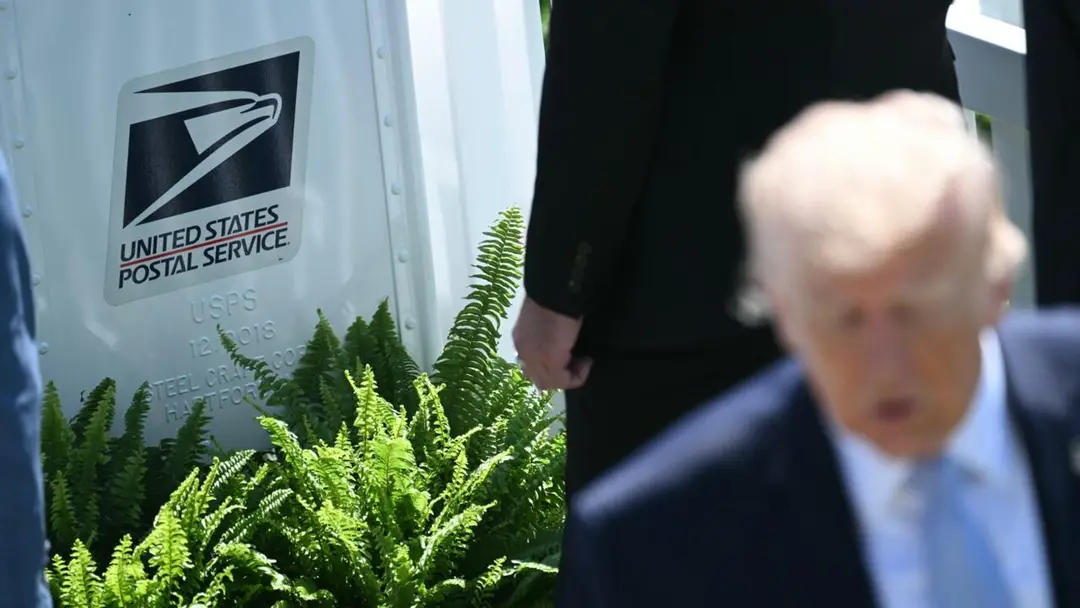
US Supreme Court rejects Trump bid to restrict mail ballots
The US Supreme Court on Monday rejected President Donald Trump's bid to restrict mail ballots for the midterm elections, with voting already underway. The ruling lets states keep sending mail ballots under processes used for years, accounting for nearly a third of votes cast. The majority gave no reasoning; Justices Samuel Alito and Clarence Thomas dissented. The Trump plan would have required a uniform envelope style and submission of eligible voter lists to an online portal.
Source
France 24 · read the original report ↗
Desk check · compared with the source
What the desk checked (5)
- The US Supreme Court on Monday rejected Trump's bid to restrict mail ballots for the midterm elections. — Attributed to the court's order as reported by France 24 with AP; majority gave no reasoning, typical of emergency docket.
- Justices Samuel Alito and Clarence Thomas publicly dissented; Kavanaugh agreed restrictions should not apply to the midterms. — Named in the source with a direct quote from Alito's dissent.
- Mail ballots have accounted for nearly a third of votes cast. — Figure appears in source; no originating dataset cited.
- A whistleblower report said postal requirements could stop millions of mail ballots being sent due to portal and bar code faults. — Attributed to an unnamed whistleblower report; specifics unverifiable by the desk.
- Trump falsely blamed mail voting for his 2020 loss though he has used it himself, including this year. — Source states this as established context; no separate citation given.
Deep dive
Research brief · 8 facts · 7 dates · exam-readyThe brief
Context
Ahead of the November US midterm elections that decide control of Congress, the Trump administration sought to impose new federal requirements on how states handle mail ballots, using the US Postal Service's authority over mail as the legal basis. States would have had to adopt a uniform envelope style and upload lists of eligible voters to an online portal, with the Postal Service allowed to refuse delivery of ballots from non-compliant states. Democratic state officials and voting rights groups sued, lower courts blocked the plan, and the administration appealed to the Supreme Court on its emergency docket. On Monday the Supreme Court rejected the bid, leaving existing state mail-ballot processes intact while voting was already under way.
Key facts
- The US Supreme Court on Monday rejected Trump's bid to restrict mail ballots for the midterm elections, with voting already under way.
- Mail ballots have accounted for nearly a third of votes cast in US elections.
- The majority gave no reasoning, as is typical for the court's emergency docket; Justices Samuel Alito and Clarence Thomas publicly dissented.
- Alito wrote that the Postal Service "has broad authority to regulate the mail" and likely does have power to enforce Trump's restrictions.
- Justice Brett Kavanaugh agreed the restrictions should not apply to the midterms but hinted he might back the administration if the issue returns later.
- Alabama, North Carolina and Wisconsin began sending mail ballots to voters over the past week while the new system was not active.
- The plan required a uniform envelope style and submission of eligible voter lists to an online portal; the Postal Service could refuse delivery to non-compliant states.
- A whistleblower report said millions of mail ballots might never be sent because the portal was not properly built and one bar code error could void an entire batch.
Timeline
- 2020Trump loses the presidential election to Democrat Joe Biden and falsely blames mail voting for the defeat.
- This year (before the midterms)Trump himself casts a ballot by mail, the method he has long opposed.
- Before the rulingDemocratic state officials and voting rights groups challenge the restrictions; lower courts block the plan, including a preliminary injunction by a judge Trump nominated.
- Before the rulingThe federal government wins an early procedural decision at the Supreme Court, but the justices do not decide the plan's legality.
- Past weekAlabama, North Carolina and Wisconsin begin sending mail ballots to voters.
- MondayThe Supreme Court rejects the administration's bid; Alito and Thomas dissent, Kavanaugh concurs only as to timing.
- NovemberMidterm contests for control of Congress are due.
Who has a stake
- President Donald Trump / his administration — Suffered a stark defeat on an issue he has framed as vital to election integrity, despite virtually no evidence of mail-ballot fraud.
- US Supreme Court — Placed once again at the centre of a political controversy; declined to rule on the plan's legality, leaving the question open.
- US Postal Service — Its claimed authority to regulate mail was the legal basis for the restrictions and for refusing delivery to non-compliant states.
- States voting largely by mail (Washington, Oregon, Colorado) — Faced the most disruption; officials say existing election processes are now protected.
- Alabama, North Carolina, Wisconsin — Had already begun mailing ballots while the new federal system was inactive.
- Voters using mail ballots — Nearly a third of votes are cast by mail; millions of ballots might not have been sent under the plan, per a whistleblower report.
- Democratic state officials and voting rights groups — Argued the president has no constitutional authority to set election rules; won in lower courts and at the Supreme Court.
Why it matters
Mail voting accounts for nearly a third of all US votes, so a last-minute federal overhaul could have disrupted ballots already in transit and, per a whistleblower, left millions unsent. The ruling reaffirms that states run their own election processes and that courts, including judges appointed by Trump, will check executive attempts to rewrite voting rules on the eve of an election. But the court did not decide the plan's legality, and Kavanaugh's signal leaves the door open for a future challenge.
UPSC angle
Prelims pointers
- US Supreme Court on Monday rejected Trump's bid to restrict mail ballots for the November midterms.
- Dissenting justices: Samuel Alito and Clarence Thomas; Brett Kavanaugh agreed only that restrictions should not apply to these midterms.
- Mail ballots account for nearly a third of votes cast in US elections.
- Trump plan: uniform envelope style plus upload of eligible voter lists to an online portal; Postal Service could refuse delivery to non-compliant states.
- States that had already begun mailing ballots: Alabama, North Carolina, Wisconsin; near-all-mail states include Washington, Oregon and Colorado.
- The Supreme Court's emergency docket orders typically give no detailed reasoning; the court did not rule on the plan's legality.
Mains framing
The dispute pits federal executive power over the Postal Service against the states' constitutional role in administering elections. The Trump administration argued that federal control of the Postal Service allows it to set rules for handling mail ballots, and that compliance with a uniform envelope and an online voter-list portal was feasible; challengers, including Democratic state officials and voting rights groups, said the president has no constitutional authority to set election rules that would \"virtually eliminate mail voting on the eve of a major election.\" The practical objections were decisive: election officials said a complete overhaul weeks before voting was impossible, three states had already mailed ballots, and a whistleblower warned that a badly built portal and single bar code errors could void entire batches, potentially leaving millions of ballots unsent. Lower courts, including a judge nominated by Trump, blocked the plan, and the Supreme Court declined to lift those blocks without giving reasons. The implication is that timing and administrative feasibility can defeat sweeping election-rule changes even when the underlying legal question remains undecided, as Alito's dissent on Postal Service authority and Kavanaugh's caveat show. The way forward lies in resolving the substantive question of who may set mail-ballot rules well before an election cycle, rather than through emergency litigation with ballots already in circulation.
Key terms
- Mail ballot (mail voting)
- A ballot sent to and returned by voters through the postal system; accounts for nearly a third of votes cast in the US.
- Emergency docket
- The Supreme Court's fast-track route for urgent applications, where orders are typically brief and give no detailed reasoning.
- Preliminary injunction
- A court order temporarily blocking a policy while litigation continues; one was issued here by a judge Trump had nominated.
- US midterm elections
- Elections held between presidential votes; the November contests decide control of the US Congress.
- Secretary of State (US states)
- State official who typically oversees election administration, such as Washington's Steve Hobbs and Colorado's Jena Griswold.
- Whistleblower report
- Internal disclosure of wrongdoing or risk; here it flagged that the postal portal was not properly built, risking mass ballot rejection.
Practice questions
- Discuss the tension between federal executive authority and state control over election administration, using the US Supreme Court's rejection of the mail-ballot restrictions as an illustration.
- "Judicial review of last-minute changes to electoral rules is essential to democratic legitimacy." Examine in the light of the 2025 US mail-ballot litigation.
- What administrative and technological risks arise when election processes are overhauled close to polling? Explain with reference to the whistleblower concerns about the postal ballot portal.
Grounded only in the source report — figures and dates are the source's, not inferred.