
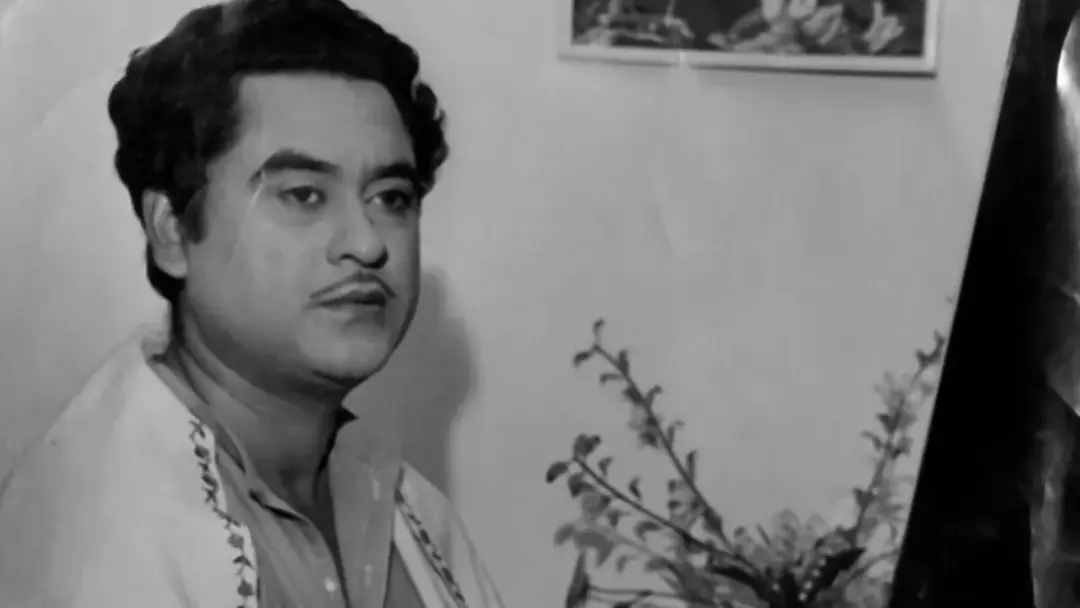
Kishore Kumar biography's National Film Award challenged in Patna High Court
The National Film Award for Best Book on Cinema at the 70th edition, given to "Kishore Kumar: The Ultimate Biography", has been challenged in the Patna High Court. Hindi writer and critic Anant Prasad Sinha alleges eligibility criteria were not followed. Justice Ajit Kumar issued notices to the Information and Broadcasting Ministry, NFDC, jury members and the co-authors. The book, by Anirudha Bhattacharjee and Parthiv Dhar, was published by HarperCollins. The award was announced on August 16, 2024 and presented at Vigyan Bhawan, New Delhi, on October 8. Next hearing is on October 8.
Source
News18 — India · read the original report ↗
Desk check · compared with the source
What the desk checked (5)
- Patna High Court issued notices to the Information and Broadcasting Ministry, NFDC, jury members and the book's co-authors. — Attributed in source to court proceedings before Justice Ajit Kumar; no order copy cited.
- Petitioner Anant Prasad Sinha, a Hindi writer using the pen name 'Anant', seeks quashing of the 70th National Film Award for Best Book on Cinema. — Named petitioner and relief sought appear in the source.
- 'Kishore Kumar: The Ultimate Biography' by Anirudha Bhattacharjee and Parthiv Dhar, published by HarperCollins, won the award. — Authors and publisher named in source; figure/detail appears as reported.
- Award was announced on August 16, 2024 and presented at Vigyan Bhawan, New Delhi on October 8, 2024; next hearing on October 8. — Dates appear in source; hearing date given without year.
- Petitioner's quote comparing an Ambedkar biography to a book on the Constitution. — Source attributes the quote to remarks made to Indian Express.
Analysts’ view opinion
This is not a box-office story, but for India's film-writing world it is a significant one. The Best Book on Cinema category has long been the most prestigious marker for film historians and biographers — and now the basic question of what counts as a "book on cinema" is before a court. Because the challenge comes two years after the award was announced and handed over, it is likely to reopen a wider conversation about transparency in jury selection.
- Film-star biographies are one of the strongest-selling segments in Indian publishing, so the outcome could shape whether such titles remain eligible for this award at all.
- The petitioner's case rests on a definitional argument: whether a singer-actor's life story qualifies as a book specifically on Indian cinema.
- The natural counter-argument is that the biography of an artiste who shaped an era of film is, in effect, a history of that cinema — how far a court will second-guess jury discretion is the key legal question.
- Since the petitioner also argues his own book deserved consideration, the plea will inevitably be read partly through the lens of personal interest.
- Notices to the ministry, NFDC and jury members mean the selection reasoning may now have to be defended on record for the first time.
What to watch — Watch the Centre's counter-affidavit at the October 8 hearing for how it justifies the jury's reading of the criteria — that could push towards clearer guidelines for future National Awards.
The story does not establish that anything improper actually happened; these remain the petitioner's allegations, the court has ruled on nothing, and no response from the authors or publisher is on record here.
Deep dive
Research brief · 8 facts · 5 dates · exam-readyThe brief
Context
The National Film Awards, administered by the Ministry of Information and Broadcasting through the National Film Development Corporation (NFDC), include a category for Best Book on Cinema. At the 70th edition, the award went to "Kishore Kumar: The Ultimate Biography" by Anirudha Bhattacharjee and Parthiv Dhar, published by HarperCollins. Two years later, Patna-based Hindi writer and literary critic Anant Prasad Sinha (pen name "Anant") moved the Patna High Court seeking quashing of the award, alleging the jury did not follow the prescribed eligibility criteria. Justice Ajit Kumar has issued notices to the MIB, NFDC, jury members and the co-authors.
Key facts
- The petition seeks quashing of the 70th National Film Award for Best Book on Cinema given to "Kishore Kumar: The Ultimate Biography".
- The book was authored by Anirudha Bhattacharjee and Parthiv Dhar and published by HarperCollins.
- The award was announced on August 16, 2024 and presented at Vigyan Bhawan, New Delhi, on October 8, 2024.
- Petitioner is Patna-based Hindi writer and literary critic Anant Prasad Sinha, who writes under the pen name "Anant".
- Justice Ajit Kumar issued notices to the Ministry of Information and Broadcasting, NFDC, award jury members and the book's co-authors.
- The petition says guidelines specify the honour is for the best book on Indian cinema published in any language in India.
- Sinha argues his own book, "Do Gulfamo Ki Teesri Kasam", met the prescribed criteria and should have been considered.
- Senior Panel Counsel for the Union government sought three weeks to file a specific counter-affidavit; next hearing on October 8.
Timeline
- August 16, 2024The 70th National Film Awards, including Best Book on Cinema for the Kishore Kumar biography, were announced.
- October 8, 2024The award was presented at Vigyan Bhawan, New Delhi.
- Before moving court (date not stated in the source)Sinha raised his objection with the Information and Broadcasting Ministry, unsuccessfully.
- Reported September 19, 2026Patna High Court, hearing Sinha's petition, issued notices to MIB, NFDC, jury members and co-authors; Centre sought three weeks.
- October 8 (next hearing)The matter is listed for further hearing.
Who has a stake
- Anant Prasad Sinha (petitioner) — Seeks quashing of the award; claims his book "Do Gulfamo Ki Teesri Kasam" met the criteria and should have been considered.
- Ministry of Information and Broadcasting — Administers the awards; must defend the selection through a counter-affidavit after rejecting Sinha's representation.
- National Film Development Corporation (NFDC) — Named as a respondent and issued notice to explain how the biography was selected.
- Award jury members — Their application of the Best Book on Cinema eligibility criteria is under judicial scrutiny.
- Anirudha Bhattacharjee and Parthiv Dhar (co-authors) — Their National Film Award is at risk of being quashed; they have been issued notice.
- Patna High Court (Justice Ajit Kumar) — Must decide whether the selection violated the prescribed guidelines.
Why it matters
The case tests whether decisions of a national award jury can be judicially reviewed for non-compliance with published eligibility guidelines. It raises a definitional question with wider consequences for film writing in India: whether a biography of a film personality counts as a "book on Indian cinema". The outcome could affect how future National Film Award juries interpret and document their selection criteria.
UPSC angle
Prelims pointers
- National Film Awards are administered by the Ministry of Information and Broadcasting; NFDC is a respondent in this case.
- The 70th National Film Awards were announced on August 16, 2024 and presented at Vigyan Bhawan, New Delhi, on October 8, 2024.
- Best Book on Cinema winner challenged: "Kishore Kumar: The Ultimate Biography" by Anirudha Bhattacharjee and Parthiv Dhar (HarperCollins).
- Petitioner: Anant Prasad Sinha, Hindi writer and critic, pen name "Anant"; his book is "Do Gulfamo Ki Teesri Kasam".
- Case before Patna High Court; Justice Ajit Kumar issued notices; next hearing October 8.
- Guideline cited: award is for the best book on Indian cinema published in any language in India.
Mains framing
The petition before the Patna High Court against the 70th National Film Award for Best Book on Cinema raises a narrow but instructive question of administrative law: how far can courts examine an expert jury's application of published eligibility guidelines? The petitioner's core argument is definitional — that the guidelines confine the award to the best book on Indian cinema published in any Indian language, and that a biography of the singer-actor Kishore Kumar is a life-story rather than a work on cinema, an analogy he pressed by asking whether a biography of B.R. Ambedkar would count as a book on the Indian Constitution. Against this stand the settled principles that awards involve subjective expert evaluation and that courts are slow to substitute their judgment for that of a jury; notably, the source records only notices being issued and the Union seeking three weeks to file a counter-affidavit, not any finding of illegality. The petitioner also has an interest in the outcome, having entered his own book, which raises the question of whether the challenge is about process or about relative merit. A practical way forward, consistent with what the source supports, lies in juries recording reasons for eligibility determinations and the ministry providing a transparent, time-bound grievance mechanism, since the petitioner says he approached the ministry unsuccessfully before litigating two years after the award.
Key terms
- National Film Awards
- India's national film honours; the 70th edition's Best Book on Cinema award is the subject of this petition.
- Best Book on Cinema
- Award category for the best book on Indian cinema published in any language in India, per the guidelines cited in the petition.
- NFDC
- National Film Development Corporation, a respondent asked to explain how the biography was selected.
- Ministry of Information and Broadcasting (MIB)
- Union ministry that administers the awards; the petitioner says he raised his objection here before going to court.
- Counter-affidavit
- A respondent's written reply to a petition; the Union's Senior Panel Counsel sought three weeks to file one.
- Quashing
- Judicial setting aside of a decision or order — here, the relief sought against the award.
Practice questions
- Should courts review the decisions of expert juries for national awards? Discuss with reference to the challenge to the 70th National Film Award for Best Book on Cinema.
- "Clear eligibility criteria and recorded reasons are essential to the credibility of state-conferred awards." Examine in the light of the Patna High Court case.
- Can a biography of a film personality be treated as a book on Indian cinema? Critically evaluate the definitional issue raised by the petitioner.
Grounded only in the source report — figures and dates are the source's, not inferred.