
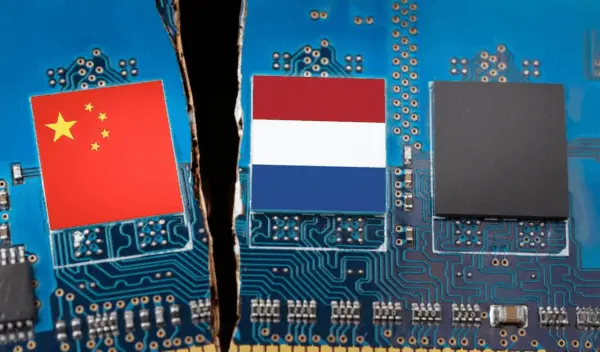
Analysis: Nexperia dispute holds lessons for Europe's economic security
A Diplomat analysis argues the Nexperia dispute that strained China-Netherlands ties in late 2025 was a comparatively successful economic security intervention. The Amsterdam Court of Appeals' Enterprise Chamber suspended Chinese owner Wingtech's powers after mismanagement accusations, a day after the Dutch minister invoked unused Cold War legislation. China retaliated with export restrictions on October 4, hitting carmakers. The company is splitting into European and Chinese units, but its interim chief told Handelsblatt European shortages should end by late 2026.
Source
The Diplomat (Asia) · read the original report ↗
Desk check · some claims need care
What the desk checked (5)
- Dutch Trade Minister Sjoerd Sjoerdsma met Chinese Commerce Minister Wang Wentao in July 2026 and China urged 'proper resolution of disputes involving relevant companies'. — Described in source as a cordial meeting with a quoted Chinese formulation; no official readout cited.
- On October 1, 2025 the Amsterdam Enterprise Chamber suspended the Chinese owners' powers, a day after the Dutch minister invoked Cold War-era legislation. — Court and ministerial actions described in detail in source; dates appear in the source text.
- China imposed export restrictions on October 4 affecting Nexperia's Chinese assembly sites, hitting the global car industry. — Figure and date appear in source; presented as author's account without document citation.
- Wingtech is in financial trouble and risks delisting from the Shanghai exchange; Nexperia is splitting into European and Chinese units. — Stated by the author without a named source; Wingtech's own claim of an independent Nexperia China is attributed to the company.
- Nexperia's interim chief told Handelsblatt the biggest shortages for European customers will end by late 2026. — Attributed to a named interview in Handelsblatt.
Analysts’ view opinion
The Nexperia affair exposes the real price tag of economic security: heavy short-term costs for partial long-term gains. China's October 4 export curbs hit Europe's automotive sector first — chip shortages, production disruption and costs that travel down the supply chain and ultimately toward buyers. Yet, as The Diplomat's analysis argues, the European business, its jobs and its R&D base were preserved, and that is the economic payoff.
- Who paid: not the Dutch treasury but European carmakers and their suppliers, squeezed by export curbs — idle lines and scarce chips show up as higher costs before they show up anywhere else.
- Who gained: Nexperia's European workforce and research base, given that court filings allege plans to shift R&D and production and cut a large share of European staff.
- This is a textbook trade-off between immediate, concentrated pain and diffuse, long-dated asset protection — politically the first is visible, the second is not.
- Splitting the firm into European and Chinese arms means a split supply chain: duplicated capacity, double overheads, less scale — structurally higher costs in a low-margin chip segment.
- The absence of FDI screening when the 2017-18 sales went through looks costly in hindsight: cheap scrutiny at entry was deferred, and the bill arrived later at crisis prices.
What to watch — Whether the interim CEO's expectation that the worst shortages ease by end-2026 holds, and what financial exposure Wingtech's arbitration claim against the Dutch state creates.
The story gives no figures for the automotive hit, job or price effects, and the court case and arbitration remain unresolved.
Deep dive
Research brief · 8 facts · 10 dates · exam-readyThe brief
Context
Nexperia is a Dutch-headquartered maker of basic automotive chips, carved out of NXP Semiconductors (itself spun out of Philips in 2006) and sold to Chinese state-backed funds JAC Capital and Wise Road in 2017, then to Wingtech in a closed-door Chinese-only auction the next year. In late 2025 a dispute erupted after Nexperia's European managers and workers' council accused Wingtech's founder Zhang Xuezheng of "wanbestuur" (mismanagement) and plans to shift R&D and production to China. The Dutch economic affairs minister invoked never-used Cold War legislation to put the firm under special supervision, and the Amsterdam Court of Appeals' Enterprise Chamber suspended the Chinese owner's powers; China retaliated with export restrictions that hit carmakers. A Diplomat analysis argues that despite Dutch ministerial missteps, the episode was a comparatively successful economic security intervention, since the European business survived.
Key facts
- Nexperia was created from NXP Semiconductors' low-margin Standard Products unit; NXP itself was carved out of Philips in 2006.
- In 2017 Nexperia was sold to Chinese state-backed funds JAC Capital and Wise Road; the next year they ran a closed-door auction open only to Chinese bidders, won by Wingtech.
- Wingtech founder Zhang Xuezheng was sentenced to prison in 2005 for unlawfully obtaining ZTE trade secrets and fined in 2024 for concealing shareholdings dating to 2017.
- Court filings accuse Zhang of placing an unnecessarily large $200 million order from his own WingSkySemi (WSS) fab in Shanghai, and of a plan drawn up using DeepSeek and ChatGPT to lay off almost half the European staff.
- Dutch minister Vincent Karremans issued an unprecedented instruction under never-used Cold War legislation; the next day, October 1, the Amsterdam Enterprise Chamber issued the first of several provisional rulings suspending the Chinese owners' powers.
- China escalated with export restrictions on October 4, creating immediate pain for the global car industry, and used Berlin, Brussels and German carmakers to pressure The Hague.
- U.S. export controls extending Wingtech's Entity List status to Nexperia were suspended for a year on November 10, 2025 as part of the Trump-Xi truce; Wingtech had been listed in December 2024.
- Wingtech is in financial trouble and risks delisting from the Shanghai exchange; Nexperia's Malaysian site is now expanding and Nexperia expects the worst European shortages to ease by year's end.
Timeline
- 2006NXP Semiconductors is carved out of Philips; Nexperia later formed from its Standard Products unit.
- 2005Zhang Xuezheng sentenced to prison in China for unlawfully obtaining ZTE trade secrets.
- 2017Nexperia sold to Chinese state-backed funds JAC Capital and Wise Road.
- 2018The two funds hold a closed-door, Chinese-bidders-only auction; Wingtech, with no serious sector experience, wins.
- 2019Dutch civilian intelligence agency AIVD asks questions about Zhang, but nothing comes of it.
- November 2022UK government forces Nexperia to reverse its acquisition of a fab in Newport.
- 2023Nexperia misses out on German chip funds and begins talks with the Dutch Economic Affairs Ministry on governance reforms.
- 2024Dutch ministry backs Ampleon's CEO in a secret Enterprise Chamber case over a Chinese owner's plan to move research to Shanghai.
- December 2024U.S. government places Wingtech on the Entity List; engagement with the Dutch ministry intensifies.
- October 2024 (as stated in source)Nexperia's chief legal officer, joined by the workers' council, turns to the Enterprise Chamber accusing Zhang of mismanagement.
Who has a stake
- Nexperia (European business) — Survival of its R&D, production and supply position; it is now separating from its Chinese arm and expects worst European shortages to ease by year's end.
- Wingtech and Zhang Xuezheng — Loss of control over Nexperia's European operations, financial trouble and risk of delisting from the Shanghai exchange; pursuing arbitration against the Dutch state claiming expropriation.
- Dutch Ministry of Economic Affairs / then-minister Vincent Karremans — Credibility of its stakeholder (polder) approach and of its unprecedented Cold War-era instruction, now suspended; accused of amateurism and poor communication.
- Amsterdam Court of Appeals' Enterprise Chamber — Its rulings on 'wanbestuur' are the only intervention still standing and shield The Hague from Chinese pressure to reverse course.
- Chinese party-state / Beijing — Deterring European economic security action, protecting industrial plans, and framing the case as Dutch robbery of Chinese semiconductor progress.
- European carmakers, especially German manufacturers — Chip supply disruption from China's October 4 export restrictions; they lobbied Berlin and Brussels to pressure the Netherlands.
- Nexperia workers and Dutch trade unions — Jobs threatened by an alleged plan to cut almost half the European staff; Wingtech failed to renew the collective bargaining agreement.
Why it matters
The case is a live test of whether European states can defend strategic industries against hollowing out by foreign owners while absorbing Chinese retaliation across supply chains. It shows that the decisive lever was not ministerial powers or U.S. export controls but Dutch corporate law and its concept of mismanagement, and that any win will be partial: the Chinese side of the company was lost from the start. For Europe, the lesson is that short-term coercion costs are survivable, but only if interventions are planned, communicated and timed better.
UPSC angle
Prelims pointers
- Nexperia: automotive chip maker from NXP's Standard Products unit; NXP carved out of Philips in 2006; sold to Chinese funds in 2017, to Wingtech via a Chinese-only auction in 2018.
- Enterprise Chamber of the Amsterdam Court of Appeals: Dutch court for corporate matters; suspended Wingtech's powers over Nexperia on October 1.
- 'Wanbestuur': Dutch legal concept of mismanagement, harming the interests of a legal entity for personal gain.
- Polder model: Dutch tripartism where government, employers and workers negotiate consensus; ministries back stakeholders who engage in good faith.
- U.S. Entity List: Wingtech added December 2024; extension to Nexperia suspended for a year on November 10, 2025 under the Trump-Xi truce.
- Other Philips Semiconductor offshoots that moved to Chinese ownership: chip designer Goodix and Ampleon; the UK forced reversal of Nexperia's Newport fab purchase in November 2022.
Mains framing
The Nexperia dispute illustrates the structural gap between European stakeholder-based governance and China's centrally incentivised, locally executed industrial policy. Europe's exposure was created by earlier permissiveness: Nexperia and sister firms Goodix and Ampleon changed hands before EU FDI screening existed, at a time when Chinese investment was welcomed, and warning signals (AIVD questions in 2019, the UK's Newport reversal in 2022, the U.S. Entity List listing in December 2024) produced talks rather than decisive action. When Wingtech allegedly breached Dutch company law to remove European directors and plans emerged to shift R&D and production to China, the only remaining choice was between intervention and total loss. Two features proved decisive: Dutch enterprise law's protection of the company against its own directors ("wanbestuur"), which gave the courts an insulated, non-reversible route, and the polder tradition, which Wingtech misread as voluntary. Conversely, the ministerial instruction under unused Cold War legislation, poorly sequenced with a U.S. rule announcement, allowed Beijing to conflate court and state action and escalate with October 4 export controls that hit carmakers and pulled Berlin and Brussels into pressuring The Hague. The way forward, on the source's logic, is to accept that gains will be partial and short-term costs disproportionate but survivable: legal rather than purely political instruments, better planning and communication, diversification of assembly capacity such as Malaysia, and realism that quiet Ampleon-style settlements are unlikely to be available again.
Key terms
- Enterprise Chamber (Ondernemingskamer)
- Chamber of the Amsterdam Court of Appeals handling corporate disputes; it issued provisional rulings suspending Wingtech's powers over Nexperia.
- Wanbestuur
- Dutch legal concept of mismanagement: directors harming the interests of the legal entity they are responsible for in pursuit of personal gain.
- Polder model
- Dutch consensus-based tripartism in which government, employers and workers negotiate give-and-take agreements.
- Entity List
- U.S. trade restriction list; Wingtech was added in December 2024, and an extension to subsidiary Nexperia was suspended for a year on November 10, 2025.
- WingSkySemi (WSS)
- Zhang Xuezheng's own Shanghai fab, under his Wentianxia holding, from which court filings say a $200 million order was placed.
- Economic security intervention
- State or legal action to stop strategic industrial capacity being hollowed out or transferred abroad, accepting retaliation costs.
Practice questions
- The Nexperia dispute shows that legal institutions, not ministerial powers, may be the most durable tool of economic security. Critically examine with reference to the Dutch case.
- Discuss how China's decentralised industrial policy and centrally directed economic coercion together shape risks for European strategic industries. Illustrate with the Nexperia case.
- What lessons does the Nexperia episode hold for India's approach to foreign ownership of strategic manufacturing and to FDI screening? Discuss.
Grounded only in the source report — figures and dates are the source's, not inferred.