
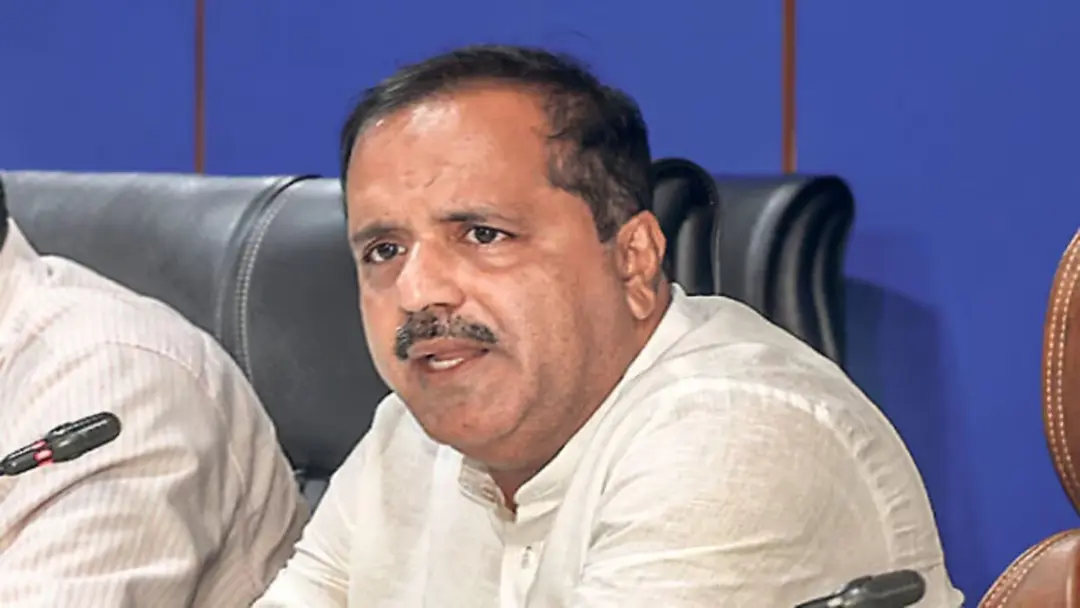
Karnataka minister seeks attempt-to-murder cases in fake drug racket
Karnataka health minister UT Khader has sought Union government intervention in the state's spurious drug racket, saying those manufacturing and selling fake medicines should be booked for attempt to murder under the IPC. Cancelling licences and imposing fines would let operators restart under other names, he told News18. An August 18 raid near Bidadi in Ramanagara district seized fake and expired medicines worth nearly Rs 5 crore. Main accused Prashant has been traced to Azerbaijan; over 90 Bengaluru hospitals are under scanner.
Source
News18 — India · read the original report ↗
Desk check · some claims need care
What the desk checked (5)
- Health minister UT Khader wants those making or selling spurious medicines booked for attempt to murder under the IPC. — Directly attributed to Khader in an exclusive interview with News18, with quotes.
- An SIT has traced the alleged kingpin Prashant to Azerbaijan and begun the process to bring him back. — Attributed to the SIT/officials in the source; not independently verifiable here.
- Prashant's visa expired on September 9 and his passport was seized by Azerbaijani immigration authorities. — Attributed only to unnamed 'sources'; source itself uses 'reportedly'.
- The August 18 raid at a farmhouse near Bidadi toll gate, Ramanagara district, seized fake and expired medicines worth nearly Rs 5 crore. — Figure and date appear in the source, attributed to the Karnataka health department/FSDA action.
- Counterfeit cancer drugs, ICU injections and life-saving medicines were allegedly supplied to more than 90 hospitals and clinics in Bengaluru at about 50 per cent discounts. — Presented in the source as an allegation under SIT investigation, not an established finding.
Analysts’ view opinion
The minister's demand carries political force, but legally it is not the easy route. An attempt-to-murder charge requires proof of intent or knowledge that the act was likely to cause death — and in spurious drug cases the accused will typically argue the motive was profit, not killing. That is why such cases usually rest on drug-regulatory, trademark and cheating provisions; for an attempt-to-murder charge to hold, investigators would need strong forensic and distribution evidence that the drugs actually reached patients and were capable of causing death.
- Which sections are invoked is a matter for the police and prosecution, and ultimately for the courts to test — a minister's demand is a policy request, not a legal determination.
- The minister's point that operators reopen firms under other names identifies a genuine regulatory gap, but the usual remedy lies in statutory amendment or disqualification rules in licensing, not in re-labelling the offence.
- Because drug regulation is shared between the Centre and states, seeking CDSCO's help is a practical step in an interstate supply-chain case.
- With the main accused abroad, any return must run through diplomatic and extradition-type legal channels; the reported visa expiry and passport seizure are attributed to sources, not established judicially.
- More than 90 hospitals being 'under scanner' is an investigative stage, not proof of wrongdoing — the accused and institutions retain the presumption of innocence and the right to be heard.
What to watch — Watch whether the Centre moves on tighter statutory provisions, which sections the SIT actually lists in its chargesheet, and how far the process to bring the main accused back progresses.
The story does not establish whether the suspected counterfeit medicines were administered to any patient, whether harm resulted, or what charges have formally been filed against whom.
Deep dive
Research brief · 8 facts · 6 dates · exam-readyThe brief
Context
Karnataka's health department uncovered a spurious drug racket on August 18 when the Enforcement Wing of the state Food Safety and Drug Administration, with police, raided an unlicensed farmhouse facility near the Bidadi toll gate in Ramanagara district. Cheaper bulk drugs allegedly sourced from Telangana and Himachal Pradesh were refilled into new vials and relabelled as premium imported products of multinational pharma companies, including ICU injections, cancer drugs and other life-saving medicines. A six-member SIT set up on August 19 has traced the alleged kingpin, Prashant, to Azerbaijan and is probing supply to more than 90 hospitals and clinics in Bengaluru. Health minister UT Khader now wants Union government intervention and criminal prosecution for attempt to murder rather than only licence cancellation and fines.
Key facts
- The August 18 raid at a farmhouse near Bidadi toll gate, Ramanagara district, seized suspected fake and expired medicines and related material worth nearly Rs 5 crore.
- Officials recovered counterfeit labels and injection-filling equipment; the facility had no valid licence to manufacture medicines.
- On August 19, Karnataka constituted a six-member SIT headed by senior IPS officer C Vamshi Krishna, with FSDA and Commercial Taxes Department officials.
- The SIT is probing supply of counterfeit cancer medicines, ICU injections and life-saving drugs to more than 90 hospitals and clinics in Bengaluru, allegedly at discounts of around 50 per cent.
- Main accused Prashant has been traced to Azerbaijan; his visa expired on September 9 and his passport was reportedly seized by Azerbaijani immigration authorities.
- Bulk drugs were allegedly procured from manufacturing hubs in Telangana and Himachal Pradesh, refilled and relabelled at the Bidadi facility.
- Pharmacy owner Veeresh Kumar Jain was arrested after a raid on Krupa Healthcare near Minerva Circle; the shop is suspected to have been a storage point.
- On August 19, Khader wrote to Union health minister JP Nadda seeking assistance of CDSCO and other central regulatory agencies to map the supply chain.
Timeline
- A few years backPrashant allegedly ran a similar small-scale operation in Bengaluru, was caught, then shifted to Chennai and started the same company in his wife's name.
- August 18FSDA Enforcement Wing and police raid a farmhouse near Bidadi toll gate, Ramanagara district; fake and expired medicines worth nearly Rs 5 crore seized.
- August 19Six-member SIT constituted after discussions with CM DK Shivakumar and home minister Priyank Kharge; Khader writes to Union health minister JP Nadda seeking CDSCO help.
- After the bustSIT and Drugs Control Department raid Krupa Healthcare near Minerva Circle; pharmacy owner Veeresh Kumar Jain arrested.
- September 9Prashant's visa in Azerbaijan expires; passport reportedly seized by immigration authorities there.
- September 16 (report)Khader tells News18 he wants Union intervention and attempt-to-murder charges; SIT begins process to bring Prashant back to India.
Who has a stake
- Patients in Bengaluru hospitals and clinics — May have been administered counterfeit cancer drugs, ICU injections and life-saving medicines; investigators are trying to establish if any were used on patients.
- Karnataka health minister UT Khader — Set up the SIT, seeks Centre's intervention and criminal prosecution under IPC for attempt to murder rather than only fines.
- SIT headed by IPS officer C Vamshi Krishna — Must map the interstate network, secure Prashant's return and trace purchase, sale and bank records.
- Karnataka FSDA / Drugs Control Department — Enforcement wing exposed the racket; regulatory credibility and licensing oversight are in question.
- Union health ministry and CDSCO — Asked to map the suspected national supply chain, prevent further distribution and frame stringent action.
- Over 90 Bengaluru hospitals, clinics, pharmacies and medical representatives — Under scanner for purchase and distribution of suspected counterfeit medicines bought at around 50 per cent discounts.
- Multinational pharmaceutical companies — Their brand names and labels were allegedly counterfeited on repackaged cheap and expired drugs.
Why it matters
Counterfeit ICU injections, cancer drugs and other life-saving medicines strike at the most vulnerable patients, where a fake dose can be fatal and detection is difficult. The case shows how a single unlicensed repackaging unit can plug into an interstate supply chain reaching more than 90 hospitals, exposing gaps in drug licensing, procurement checks and cross-state regulatory coordination. It also raises the question whether purely regulatory penalties deter offenders who can restart under new names.
UPSC angle
Prelims pointers
- Bidadi, where the fake drug facility was raided on August 18, lies in Ramanagara district, Karnataka.
- CDSCO (Central Drugs Standard Control Organisation) is the central drug regulatory agency whose help Karnataka sought.
- Karnataka's drug enforcement is done by the Food Safety and Drug Administration (FSDA) Enforcement Wing and Drugs Control Department.
- The six-member Karnataka SIT on spurious drugs was formed on August 19 and is headed by IPS officer C Vamshi Krishna.
- Bulk drugs in the case were allegedly sourced from pharma manufacturing hubs in Telangana and Himachal Pradesh.
- Khader wrote to Union health minister JP Nadda; Karnataka CM is DK Shivakumar and home minister is Priyank Kharge as per the source.
Mains framing
The Karnataka spurious drug case illustrates how counterfeit medicine networks exploit weak links across the pharmaceutical value chain: unlicensed premises, cheap bulk drugs moved across state borders, counterfeit labels and injection-filling equipment, and hospital procurement driven by steep discounts of around 50 per cent. The alleged kingpin's history — a small Bengaluru operation, being caught, then restarting in Chennai in his wife's name — supports the health minister's argument that licence cancellation and modest fines create a revolving door, and that manufacture and sale of fake life-saving drugs should attract charges such as attempt to murder under the IPC. The implications are threefold: patient safety, since investigators still do not know whether counterfeit cancer and ICU drugs were administered; institutional, since state regulators alone cannot trace an interstate and now transnational network, prompting Karnataka's request for CDSCO and central agency support; and legal, since deterrence depends on the severity and speed of criminal action. The way forward suggested by the source lies in completing the SIT probe of purchase, sale and bank records, securing the accused's return from Azerbaijan, sharing the list of suspected counterfeit medicines with the Centre and all states, directing hospitals not to use seized stock, and the Centre formulating stringent nationwide action with state support.
Key terms
- Spurious drugs
- Fake or misbranded medicines — here cheap or expired drugs refilled into new vials and relabelled as premium imported branded products.
- SIT (Special Investigation Team)
- Dedicated multi-agency probe team; Karnataka's six-member SIT includes police, FSDA and Commercial Taxes officials.
- CDSCO
- Central Drugs Standard Control Organisation, India's central drug regulator, whose help Karnataka sought to map the supply chain.
- FSDA Enforcement Wing
- The enforcement arm of Karnataka's Food Safety and Drug Administration that raided the Bidadi facility with police.
- Attempt to murder (IPC)
- The serious criminal charge Khader wants applied to makers and sellers of fake medicines instead of only licence cancellation and fines.
Practice questions
- Regulatory penalties alone have failed to deter counterfeit drug networks in India. Examine, with reference to the Karnataka spurious drug case, whether criminal prosecution for offences against life is a more effective deterrent.
- Discuss the institutional gaps in India's drug regulation revealed when a counterfeit supply chain spans multiple states and reaches over 90 hospitals. What coordination mechanisms between state drug administrations and CDSCO would you recommend?
- Hospital and pharmacy procurement at deep discounts can incentivise the entry of counterfeit life-saving drugs. Critically analyse the responsibility of healthcare providers in ensuring drug authenticity.
Grounded only in the source report — figures and dates are the source's, not inferred.