
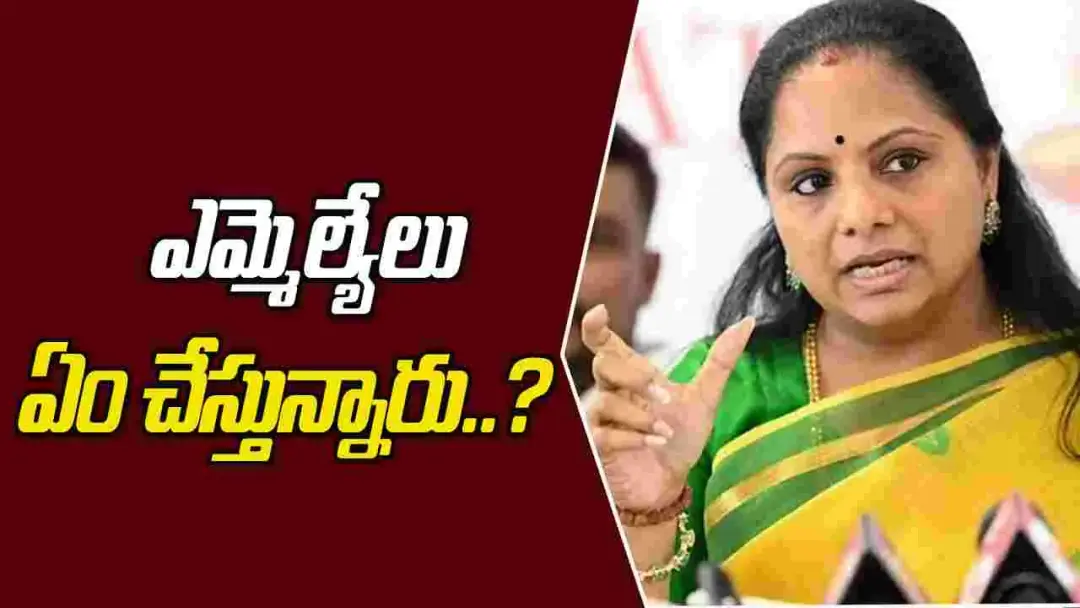
Kavitha seeks full support price for rain-hit cotton farmers
Telangana Jagruthi president Kavitha said the condition of cotton farmers is distressing, speaking to the media in Adilabad on Tuesday. She said Cyclone Montha damaged the crop and alleged traders were cheating farmers citing moisture content. She demanded the government buy cotton with more than 20% moisture at the full support price. Questioning what MLAs and MPs were doing while CCI rules troubled farmers, she said Chanaka-Korata barrage works stopped after Congress took office.
Source
Adilabad — MLA & నియోజకవర్గం · read the original report ↗
Desk check · compared with the source
What the desk checked (5)
- Cotton crops were damaged by Cyclone Montha, leaving farmers in distress — Attributed to Kavitha in her media interaction; source also repeats the flood-damage claim without independent data.
- Traders are cheating cotton farmers citing moisture content — Allegation attributed to Kavitha; no supporting evidence or trader response in source.
- Kavitha demanded government purchase of cotton with over 20% moisture at full support price — Demand figure appears in source as stated by Kavitha.
- Chanaka-Korata barrage works were halted after the Congress government took office, after BRS raised project estimates — Political claim attributed to Kavitha; no government response included.
- Telangana Ginning Millers and Traders Welfare Association said purchases would stop statewide from the 6th of this month unless CCI issues orders accepting 20% moisture — Attributed to the association in the source; month and year not specified in text.
Analysts’ view opinion
Strip away the politics and this is a classic post-disaster price-discovery problem. Cyclone Montha has raised the moisture content of a standing cotton crop, and because moisture norms determine whether CCI can buy at MSP, a large share of the harvest risks falling out of the assured-price channel and into private trade, where the farmer is the weakest price-setter. The demand to buy cotton with over 20% moisture at full MSP would shift that loss from farmers to the public exchequer — a real fiscal cost, but one that is also the standard rationale for a price-support system in a disaster year.
- Moisture is not a technicality but the pivot of the entire price: wetter lint means lower ginning outturn and storage risk, which is why buyers discount it and why CCI norms exist.
- When the MSP window narrows, farmers face a near-monopsony in local markets, and the complaint of being short-changed "in the name of moisture" is economically plausible even without a quantified figure.
- Relaxing the norm to 20% transfers the quality loss to the state — higher procurement, drying and holding costs — so the policy question is who absorbs a weather shock, not whether a loss exists.
- The gin-millers' and traders' threat to halt purchases from the 6th is the real near-term risk: a buying stoppage at peak arrival time can collapse mandi prices regardless of what MSP says on paper.
- The barrage dispute is a separate, longer-horizon economic argument — stalled irrigation capex defers productivity gains, though the story establishes only the political claim, not the project's current status or cost.
What to watch — Watch whether any relaxation of the moisture norm for CCI procurement is actually issued before the 6th, and whether gin-millers and traders follow through on suspending purchases — that combination will set farm-gate cotton prices this season.
The story establishes demands and allegations, not verified numbers: it does not quantify crop damage, arrivals, the prices actually paid versus MSP, or any official response on the moisture norm or the barrage.
Deep dive
Research brief · 8 facts · 3 dates · exam-readyThe brief
Context
Cotton farmers in Telangana's Adilabad region have been hit by crop damage from Cyclone Montha's rains and floods. When they take the damp cotton to market, buyers reject or discount it on grounds of high moisture content, and the Cotton Corporation of India (CCI) norms on permissible moisture have become a flashpoint. Telangana Jagruthi president Kavitha, speaking to the media in Adilabad on Tuesday, demanded that cotton with more than 20% moisture also be purchased at the full minimum support price, and questioned why the Chanaka-Korata barrage remains incomplete.
Key facts
- Telangana Jagruthi president Kavitha, speaking to the media in Adilabad on Tuesday, said the condition of cotton farmers is distressing.
- She said the cotton crop was damaged and farmers suffered losses because of Cyclone Montha.
- She alleged traders are cheating cotton farmers in the name of moisture content when they come to sell.
- Her demand: the government should purchase even crop with more than 20% moisture at the full support price.
- She asked what MLAs and MPs were doing while farmers suffer due to CCI in the state.
- She said project estimates for the Chanaka-Korata barrage were raised during the previous BRS regime, but works were stopped after the Congress government came in, leaving farmers without benefit.
- The source notes CCI bringing in a new rule every day is confusing farmers.
- The Telangana Ginning Millers and Traders Welfare Association has announced it will halt purchases across the state from the 6th of this month unless orders are issued for CCI to buy cotton even with 20% moisture.
Timeline
- Recently (date not stated in the source)Cyclone Montha's floods caused heavy damage to the cotton crop.
- Tuesday (current week)Kavitha speaks to the media in Adilabad, demanding full support price for cotton with over 20% moisture.
- 6th of this monthTelangana Ginning Millers and Traders Welfare Association says it will stop purchases statewide if orders allowing 20% moisture procurement are not issued.
Who has a stake
- Cotton farmers of Adilabad and Telangana — Crop damaged by Cyclone Montha; face price cuts or rejection over moisture content and confusion from changing CCI rules.
- Cotton Corporation of India (CCI) — Its procurement norms, including moisture limits, are blamed for farmers' difficulties; asked to issue orders accepting 20% moisture cotton.
- Kavitha, Telangana Jagruthi president — Leading the demand for full support price and completion of the Chanaka-Korata barrage; questioning elected representatives.
- Telangana Ginning Millers and Traders Welfare Association — Has threatened to suspend purchases statewide from the 6th unless moisture norms are relaxed.
- Telangana government (Congress) and MLAs/MPs — Accused of stopping Chanaka-Korata barrage works and of inaction on farmers' procurement distress.
- Traders at market yards — Accused of cheating farmers citing moisture content.
Why it matters
Cotton is a principal commercial crop of the Adilabad belt, and a moisture clause can decide whether a farmer gets the full support price or a steep discount after a cyclone has already damaged the crop. With traders and ginners threatening to halt purchases from the 6th, procurement could stall at the peak of the marketing season. The dispute also links crop distress to unfinished irrigation works like the Chanaka-Korata barrage.
UPSC angle
Prelims pointers
- Cotton Corporation of India (CCI) is the agency named in the story for cotton procurement in Telangana.
- Cyclone Montha's rains and floods are cited as the cause of heavy cotton crop damage.
- Demand in the story: purchase of cotton with over 20% moisture at full support price.
- Telangana Jagruthi is headed by Kavitha, who raised the demand in Adilabad.
- Chanaka-Korata barrage: estimates raised under the previous BRS government; works stopped after Congress took office, per Kavitha.
- Telangana Ginning Millers and Traders Welfare Association threatened statewide halt of purchases from the 6th of the month.
Mains framing
Post-cyclone cotton procurement in Telangana illustrates how a technical quality parameter can become a question of farm income security. Cyclone Montha's rains raised the moisture content of harvested cotton; since CCI norms cap permissible moisture, farmers are either rejected or forced into distress sales, and traders are accused of exploiting the moisture plea to underpay. The frequent change in CCI conditions adds uncertainty, while ginners and traders have threatened to suspend purchases from the 6th unless the 20% moisture relaxation is ordered — a stoppage that would leave farmers with nowhere to sell. Kavitha's demand that even cotton above 20% moisture be bought at the full support price, and her charge that the Chanaka-Korata barrage works were halted after the change of government, together frame the issue as both immediate (procurement norms, support price) and structural (incomplete irrigation infrastructure that could reduce vulnerability). A grounded way forward, as the source indicates the demand itself, is a clear, stable government order on moisture norms for calamity-hit produce, uninterrupted procurement, and completion of pending barrage works so farmers are not left without benefit.
Key terms
- CCI (Cotton Corporation of India)
- The agency that procures cotton; its moisture and other rules are at the centre of the farmers' grievance in the story.
- Minimum support price (full support price)
- The assured price sought for the crop; Kavitha wants it paid even for cotton with over 20% moisture.
- Moisture content
- Water present in harvested cotton; cited by traders and CCI norms to reject or discount rain-hit produce.
- Cyclone Montha
- The cyclone whose rains and floods are blamed for heavy damage to the cotton crop.
- Chanaka-Korata barrage
- Irrigation project whose works, Kavitha alleges, stopped after the Congress government came in, denying farmers benefits.
- Telangana Ginning Millers and Traders Welfare Association
- Body of ginners and traders that announced a statewide halt to cotton purchases from the 6th absent a 20% moisture relaxation.
Practice questions
- Why do moisture norms in cotton procurement become a crisis point after a cyclone, and how should calamity-hit produce be treated under support price operations?
- Examine the role of agencies like the Cotton Corporation of India in stabilising farm incomes, with reference to the Telangana cotton procurement dispute.
- Discuss how delays in irrigation projects such as the Chanaka-Korata barrage affect the vulnerability of cotton farmers to weather shocks.
Grounded only in the source report — figures and dates are the source's, not inferred.