
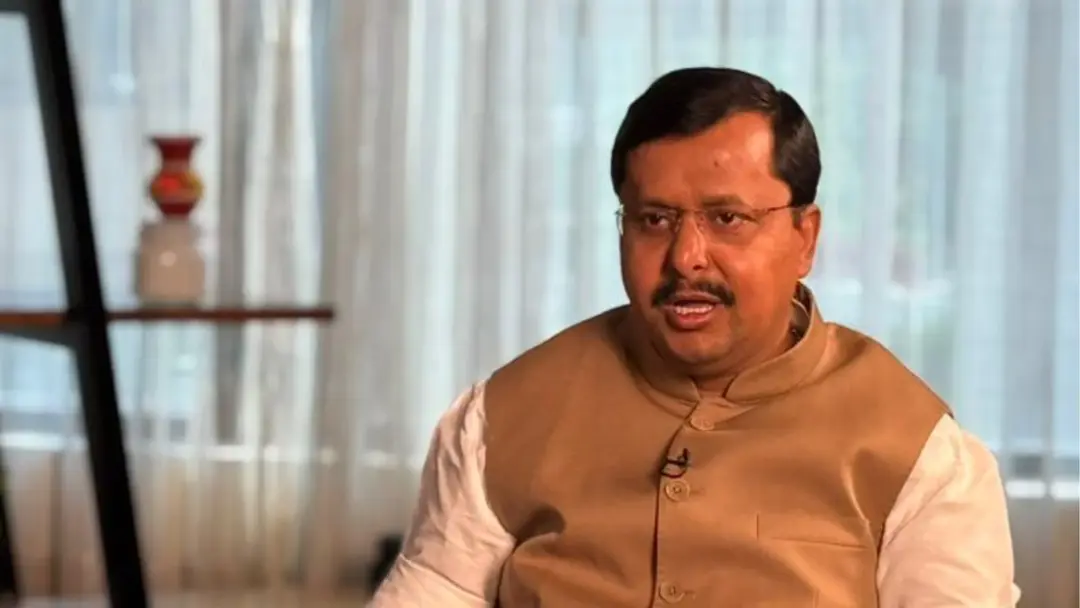
BJP eyes two-thirds majority in Uttarakhand, seeks faster response
BJP president Nitin Nabin has asked the Uttarakhand unit to speed up its media and social-media response after what party insiders saw as a communication lag during the Haldwani 'purification' controversy, sources said. He also wants party messaging and government work publicised down to the district level. The target being discussed is a two-thirds majority in the 70-member assembly, about 47 seats, against 36 needed for a simple majority.
Source
News18 — India · read the original report ↗
Desk check · some claims need care
What the desk checked (5)
- BJP president Nitin Nabin asked the Uttarakhand unit to speed up media and social-media response after the Haldwani controversy — Attributed to unnamed BJP sources speaking to News18; not officially confirmed
- The internal target is about two-thirds of Uttarakhand's 70 assembly seats, roughly 47, against 36 needed for a simple majority — Figures appear in the source and are arithmetically consistent; target described as 'being discussed within the party'
- Sudhanshu Trivedi and Guru Prakash Paswan held a joint press conference in Delhi to reject the purification allegations — Stated as fact in the source; no date given
- A month-long campaign around PM Narendra Modi's 76th birthday begins September 16 in Uttarakhand — Date and detail appear in the source; age figure unverified externally
- Mahendra Bhatt chaired a virtual meeting on Tuesday on media strategy for 31 days and 'Mission 2027' — Attributed to meeting participants who spoke to News18
Analysts’ view opinion
The internal reading that the state unit was slow to respond to the Haldwani 'purification' row has become a political lesson for the BJP: in an election year, whoever frames the story first usually controls it. That is why national president Nitin Nabin's focus is not merely on retaining Uttarakhand but on a two-thirds target of roughly 47 of 70 seats. It is a strategy that blends confidence with pressure — assuming victory in advance and then raising the bar for the cadre.
- Setting a 47-seat goal when 36 suffices for a simple majority shifts the performance metric from winning to the margin of winning, which raises the pressure on the state leadership.
- The demand for real-time digital response right down to the districts signals a tightening of central control over the communication machinery.
- That the national media department had to step in from Delhi over Haldwani reads as an implicit assessment of the state unit's capacity.
- The episode is encouraging for the Congress, which turned a local incident into a political narrative quickly; the Opposition can argue the BJP's response plan is essentially defensive.
- The month-long campaign around the Prime Minister's birthday is not only scheme publicity but also the first live test of the new communication drill.
What to watch — Watch whether the month-long campaign genuinely penetrates district level, and whether the state unit handles the next controversy on its own without Delhi stepping in.
The two-thirds target rests on internal discussion and sourced accounts rather than any official announcement, and the story offers no survey or polling basis for seat projections.
Deep dive
Research brief · 8 facts · 6 dates · exam-readyThe brief
Context
Ahead of Uttarakhand's assembly election due next year, BJP president Nitin Nabin has told the state unit to overhaul its communication machinery after what party insiders describe as a delayed response to the recent 'purification' controversy in Haldwani. That row, centred on an alleged purification ritual linked to the presence of Congress president Mallikarjun Kharge, was seen internally as having given the Congress an early narrative advantage. The BJP's national media department had to intervene, and the party is now setting an internal target of a two-thirds majority in the 70-member assembly.
Key facts
- BJP president Nitin Nabin has asked the Uttarakhand unit to significantly speed up its media and social-media response, sources told News18.
- The internal target being discussed is around two-thirds of the 70 assembly seats, roughly 47 seats, against 36 needed for a simple majority.
- The Haldwani row centred on an alleged purification ritual linked to the presence of Congress president Mallikarjun Kharge; the BJP says it had no role in it.
- After the row escalated, BJP national spokespersons Sudhanshu Trivedi and Guru Prakash Paswan held a joint press conference in Delhi to rubbish the charges.
- Nabin, during a recent two-day Uttarakhand visit, stressed the need for a 'real-time digital response' to state controversies.
- A month-long BJP campaign around Prime Minister Narendra Modi's 76th birthday begins in Uttarakhand on September 16, showcasing central and state schemes.
- On Tuesday, state BJP president and Rajya Sabha member Mahendra Bhatt chaired a virtual meeting on media strategy for the next 31 days and 'Mission 2027'.
- State media coordinator Manveer Singh Chauhan told the webinar that every district has been alerted to communicate in real time, in a continuous two-way process with the state unit.
Timeline
- Recent (date not stated in the source)'Purification' controversy erupts in Haldwani over an alleged ritual linked to Mallikarjun Kharge's presence; Congress gains early narrative advantage.
- After the row escalatedBJP's national media department steps in; Sudhanshu Trivedi and Guru Prakash Paswan hold a joint press conference in Delhi.
- Recent two-day visitNitin Nabin visits Uttarakhand and stresses 'real-time digital response' and district-level visibility for party and government work.
- TuesdayMahendra Bhatt chairs a virtual meeting with the media department on a 31-day media strategy and 'Mission 2027'; Haldwani not mentioned.
- September 16Month-long campaign around PM Modi's 76th birthday begins in Uttarakhand.
- Next yearUttarakhand assembly election due.
Who has a stake
- Nitin Nabin, BJP president — Wants a faster, real-time communication machinery in Uttarakhand and a performance beyond a simple win.
- Mahendra Bhatt, Uttarakhand BJP president and Rajya Sabha MP — Tasked with executing the media strategy; told party workers a third win alone would not be enough.
- Uttarakhand BJP state and district units — Must build real-time, two-way state-district communication and publicise government schemes locally.
- Congress (Mallikarjun Kharge, Rahul Gandhi, Priyanka Gandhi Vadra) — Gained early narrative advantage from the Haldwani episode and sought to exploit it politically.
- BJP national media department (Sudhanshu Trivedi, Guru Prakash Paswan) — Had to step in to contain damage the state unit failed to counter.
- Voters in Uttarakhand's 70 assembly constituencies — Will be the audience for competing narratives in the election due next year.
Why it matters
The episode shows how a single local incident can define political narrative in an election-bound state, and how parties are restructuring organisation around speed of response rather than only campaign machinery. For Uttarakhand, it signals that the 2027 contest is being framed not just as a fight to retain power but as a test of margin, with a two-thirds benchmark of about 47 of 70 seats. It also illustrates the growing centrality of district-level digital communication in Indian electoral politics.
UPSC angle
Prelims pointers
- Uttarakhand Legislative Assembly has 70 seats; simple majority is 36, two-thirds is roughly 47.
- Nitin Nabin is the BJP president; Mahendra Bhatt is Uttarakhand BJP president and a Rajya Sabha member.
- Mallikarjun Kharge is the Congress president; the Haldwani 'purification' row was linked to his presence.
- Sudhanshu Trivedi and Guru Prakash Paswan addressed the BJP's Delhi press conference on the Haldwani charges.
- BJP's month-long campaign for PM Modi's 76th birthday began in Uttarakhand on September 16.
- 'Mission 2027' is the BJP's label for its Uttarakhand assembly election preparation.
Mains framing
The Haldwani 'purification' controversy illustrates a structural feature of contemporary Indian electoral politics: narrative formation now occurs faster than party organisations can respond, and the side that speaks first often frames the issue. In this case, BJP insiders concede the Uttarakhand unit underestimated the gravity of an allegation the party says it was not involved in, forcing the national media department to intervene through a Delhi press conference by Sudhanshu Trivedi and Guru Prakash Paswan, while Congress leaders including Rahul Gandhi and Priyanka Gandhi Vadra pressed the political advantage. The organisational response prescribed by BJP president Nitin Nabin is instructive: real-time digital response, two-way and continuous state-district communication as articulated by state media coordinator Manveer Singh Chauhan, and sustained local publicity of central and state schemes rather than messaging confined to the state capital. This shifts the unit of political communication from the state capital to the district, with implications for cadre training and information flows. The stated ambition also raises the bar politically, from retaining power to winning around 47 of 70 seats. The way forward, on the source's own logic, lies in institutionalising rapid-response capacity while recognising that speed of rebuttal is no substitute for addressing the substance of local grievances.
Key terms
- Two-thirds majority
- Roughly 47 of Uttarakhand's 70 assembly seats, well above the 36 needed for a simple majority.
- Haldwani 'purification' controversy
- Row over an alleged purification ritual linked to Congress president Mallikarjun Kharge's presence in Haldwani.
- Mission 2027
- BJP's internal name for its Uttarakhand assembly election preparation, discussed in Mahendra Bhatt's media strategy meeting.
- Real-time digital response
- Nabin's instruction that the state unit counter controversies online immediately rather than waiting for a row to build.
- State media coordinator
- Party office-bearer, in Uttarakhand Manveer Singh Chauhan, who links state and district-level media communication.
Practice questions
- How has the speed of digital communication altered the relationship between local incidents and statewide political narratives in India? Discuss with reference to election-bound states.
- Examine the significance of district-level party communication structures in Indian electoral mobilisation. What are their democratic implications?
- The BJP's Uttarakhand target shifts from winning to winning big. Critically assess what such margin-focused targets mean for party organisation and governance messaging.
Grounded only in the source report — figures and dates are the source's, not inferred.