
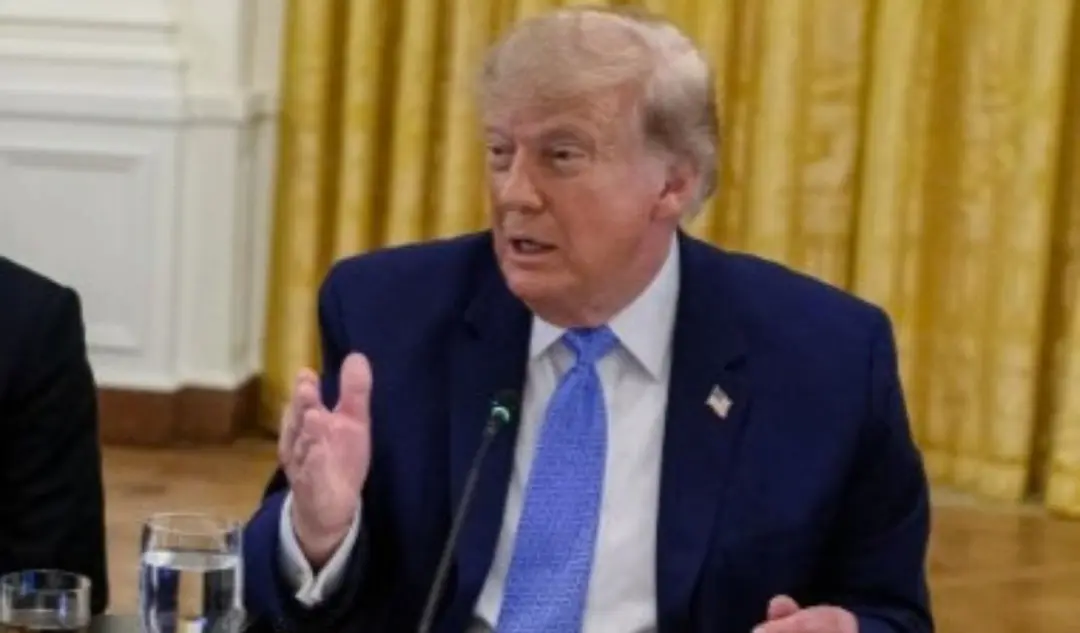
Trump says he will rename artificial intelligence 'superintelligence'
US President Donald Trump said he would officially rename artificial intelligence "superintelligence" and that a document announcing the change would be signed. Speaking at a meeting with technology leaders, he said the word "artificial" did not accurately describe the technology and that the administration would use the abbreviation SI. Trump backed industry self-regulation, pledged to maintain America's technological lead over China and opposed joint ventures that could expose US secrets.
Source
Telangana Today · read the original report ↗
Desk check · some claims need care
What the desk checked (5)
- Trump said he would officially rename artificial intelligence 'superintelligence' and that a document announcing the change would be signed. — Attributed to Trump with a direct quote in the source; no copy of the document or signing date given.
- The administration would use the abbreviation SI, announced at a separate America.gov launch event. — Attributed to Trump at the America.gov event as reported in the source; no official documentation cited.
- Trump backed industry self-regulation, citing the Department of Justice and the FBI as institutions that could address wrongdoing. — Direct quote in source; the source itself notes he set out no specific new regulatory requirements.
- Areas hosting data centres became wealthier and saw lower taxes. — Unsupported assertion by Trump; source explicitly states he gave no figures and named no communities.
- Trump said he discussed the technology with Chinese President Xi Jinping but limited the discussion to protect America's advantage. — Attributed to Trump; no independent confirmation or Chinese response in the source.
Analysts’ view opinion
A renaming looks like semantics, but strategically it is a signal: Washington is framing this technology as an instrument of national power rather than just another industry. The substance of Trump's remarks is not the "SI" label — it is the resistance to joint ventures with China and the preference for self-regulation, which together point to a "speed is security" doctrine. It also hardens the picture of a two-horse race, and the claim that no one else holds a meaningful third place may sit uncomfortably with allies.
- Swapping "artificial" for "superintelligence" is capability-inflating language that flatters the industry while also functioning as a show of strength toward rivals.
- The argument that joint ventures with China would leak secrets pulls the technology further into the export-control and tech-security frame.
- Leaning on self-regulation rather than new statutory rules shifts the burden of setting safety thresholds from government to companies, with the Justice Department and FBI cited as the backstop.
- Describing the contest as essentially US-versus-China, with no meaningful third player, is an awkward message for Europe, India and Gulf states with their own tech ambitions.
- Data-centre siting, power supply and community benefits are increasingly infrastructure-security and energy-strategy questions, not just local economics.
What to watch — Watch whether the document actually signed is limited to terminology or also carries harder measures on export controls, joint ventures and data-centre energy policy.
The story does not establish the legal basis for a renaming, the timing or form of the document, how self-regulation would work in practice, or how China and US allies will respond.
Deep dive
Research brief · 8 facts · 3 dates · exam-readyThe brief
Context
US President Donald Trump, speaking at a meeting and luncheon with technology company executives, said he would officially rename artificial intelligence as "superintelligence", arguing the word "artificial" does not describe the technology accurately. He said a document announcing the change would be signed and that his administration would use the abbreviation SI. The remarks came alongside the launch of America.gov, presented by the administration as a single gateway to federal information and services. Trump also backed industry self-regulation rather than new rules, and framed the technology race as a contest between the United States and China.
Key facts
- Trump said: "We're going to be renaming it superintelligence, officially renaming it," and that a document announcing the change would be signed.
- He said the administration would use the abbreviation SI, calling the technology "extreme intelligence" and "superior intelligence".
- Asked whether guardrails or regulation were needed, Trump said "there's a belief that there should be tremendous self-regulation".
- He cited the Department of Justice and the FBI as institutions that could address wrongdoing; he set out no specific new regulatory requirements.
- Trump warned that a joint venture with China would mean "giving a lot of secrets", and said "We're leading now over China and everyone else, and I want to keep it that way".
- He said he had discussed the technology with Chinese President Xi Jinping but limited that discussion to protect America's advantage.
- Technology companies agreed to work more closely with communities hosting data centres, with possible help via energy supplies, education and financial support for teachers and residents.
- Trump claimed areas with data centres had become wealthier and had lower taxes, but gave no figures and named no communities.
Timeline
- At the meeting and luncheon with technology leadersTrump announces plan to officially rename AI "superintelligence", backs self-regulation and says companies will work with data-centre host communities.
- At a separate America.gov launch announcementTrump says the administration will use the abbreviation SI, asks tech firms to stay honest and trustworthy, and says agencies could intervene if people take a dangerous path.
- Reported/updated 30 September 2026, 08:28 AMSource report published carrying the remarks.
Who has a stake
- US President Donald Trump / the administration — Seeks to rebrand AI as "superintelligence" (SI), expand the sector and preserve US technological leadership without new regulation.
- US technology company executives — Gain backing for self-regulation; agreed to work more closely with communities hosting their data centres.
- China and President Xi Jinping — Cast as the principal competitor; Trump limited discussion with Xi and opposed joint ventures that could expose US secrets.
- Communities hosting data centres — Potential benefits in energy supply, education and financial support; Trump warned siting difficulties could push projects elsewhere.
- Department of Justice and FBI — Named as the enforcement bodies expected to act against wrongdoing in place of new AI-specific rules.
Why it matters
The naming question is more than semantics: calling AI "superintelligence" signals an expansive, competitive framing of the technology at a time when governments worldwide are debating safety guardrails. Trump's preference for self-regulation backed only by existing law enforcement, with no new requirements specified, shapes how the world's largest AI industry will be governed. His rejection of joint ventures with China also sets the tone for technology transfer, export controls and international AI cooperation.
UPSC angle
Prelims pointers
- Trump said AI would be officially renamed "superintelligence", abbreviated SI, via a document to be signed.
- America.gov was launched as a single gateway to US federal information and services.
- Trump named the Department of Justice and the FBI as bodies to address wrongdoing instead of new AI rules.
- Trump said the US leads China "and everyone else", with no meaningful third country in the race.
- He said technology firms agreed to help data-centre host communities with energy, education and financial support.
- Source report updated 30 September 2026.
Mains framing
Trump's proposal to rename artificial intelligence as \"superintelligence\" (SI) reflects a political framing in which the technology is presented as an engine of national power — he said the industry could prove bigger than the Industrial Revolution — rather than primarily a risk to be regulated. The accompanying policy signals are consistent: reliance on \"tremendous self-regulation\" with enforcement left to existing bodies such as the Department of Justice and the FBI, no specified new requirements, and an explicit refusal of joint ventures with China on the ground that they would transfer American secrets. Implications flow in three directions: for AI safety governance, since voluntary self-regulation was not explained in operational terms; for geopolitics, since a purely bilateral US-China framing narrows space for multilateral AI cooperation and affects technology-transfer norms for countries like India; and for local governance, since data-centre siting now involves negotiated community benefits in energy, education and support for teachers and residents, with Trump warning that siting difficulties could push projects overseas. The way forward suggested by the story's own gaps is clearer articulation of what self-regulation entails, verifiable evidence on the claimed local gains from data centres, and institutional clarity on when government agencies would intervene.
Key terms
- Superintelligence (SI)
- The name Trump says will officially replace "artificial intelligence", on the argument that the technology is "superior" rather than artificial.
- Self-regulation
- Governance in which industry sets and polices its own standards; Trump backed this alongside existing law enforcement rather than new AI rules.
- America.gov
- Newly launched portal the administration presented as a single gateway to US federal information and services.
- Data centres
- Large computing facilities powering AI; Trump said firms would give host communities energy, education and financial support.
- Joint venture
- A shared business arrangement; Trump opposed such tie-ups with China, saying they would reveal American knowledge and secrets.
Practice questions
- Does renaming artificial intelligence as "superintelligence" change how the technology should be governed, or is it purely symbolic? Discuss with reference to the regulatory approach outlined in the story.
- Critically examine industry self-regulation, backed only by existing law enforcement agencies, as a model for governing frontier technologies.
- How does a bilateral US-China framing of the AI race affect middle powers such as India in terms of technology transfer, data centres and international cooperation?
Grounded only in the source report — figures and dates are the source's, not inferred.