
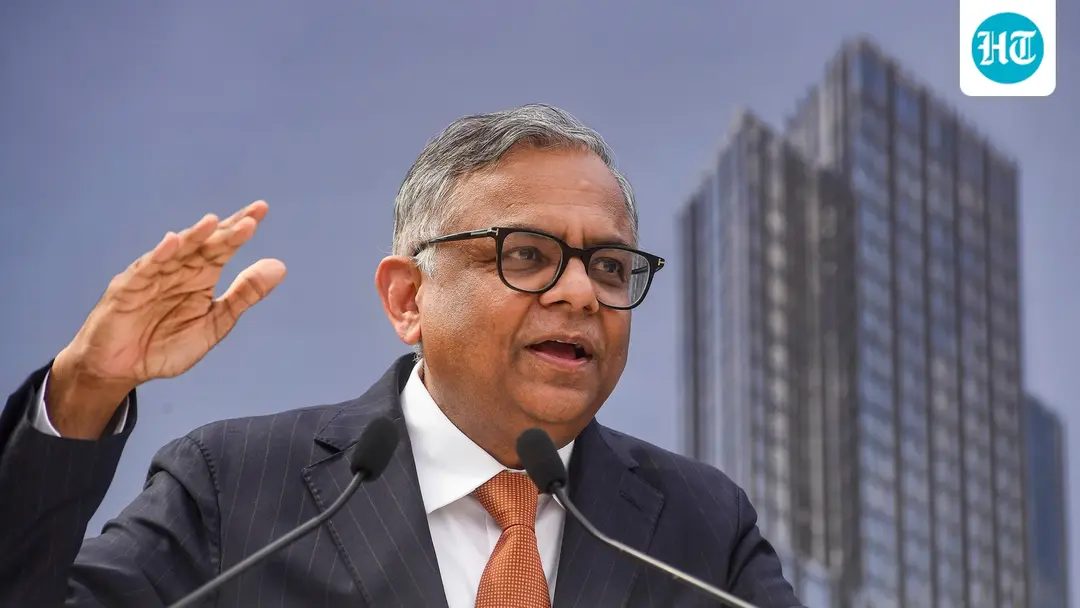
Tata Trusts wants Tata Sons to seek RBI review of listing order
Tata Trusts wants Tata Sons to explore all options, including asking the Reserve Bank of India to reconsider and clarify its decision directing the holding company to go public, before taking legal recourse, two group executives said. RBI's Saturday letter rejected Tata Sons' plea to surrender its registration, which would force a public share sale. The central bank is understood to have filed a caveat in the Bombay High Court on Monday. Tata Sons' board meets on 17 September.
Source
Hindustan Times — India · read the original report ↗
Desk check · some claims need care
What the desk checked (5)
- Tata Trusts wants Tata Sons to ask the RBI to reconsider and clarify its listing decision before going to court. — Attributed to two unnamed group executives, including a direct quote in the source; not officially confirmed.
- RBI filed a caveat in the Bombay High Court on Monday over the Tata Sons listing. — Stated in source as 'understood to have', hedged and without named official sourcing.
- RBI's Saturday letter rejected Tata Sons' request to surrender its registration, forcing a public share sale. — Appears in source as reported fact; no document or official statement cited.
- Trustees Venu Srinivasan and Vijay Singh now support listing Tata Sons. — Attributed to a second unnamed executive; positions of individuals not independently confirmed in source.
- Tata Sons board meets on 17 September, the first since N. Chandrasekaran said on 12 August he would not seek a third term. — Dates appear in source; the 12 August statement is presented as previously reported.
Analysts’ view opinion
This is not merely a listing dispute — it is a regulator tightening its grip on the ownership structure of India's largest conglomerate's holding company. With the RBI rejecting the surrender of registration and reportedly filing a caveat in the high court, the matter could turn into a protracted legal contest. Tata Trusts' preference for first seeking reconsideration and clarity looks like an attempt to reduce uncertainty before litigation begins.
- A listing would put a public market price on Tata Sons, which could reshape how group companies are valued and how cheaply the group raises debt.
- The core economic argument for staying private is control — a public listing brings disclosure obligations and continuous shareholder pressure.
- Liquidity for minority shareholders is the clearest gain from listing; the cost falls mainly on trust and family control of the holding company.
- Visible division among trustees, with some now favouring listing, adds governance uncertainty that investors may price as risk.
- Coming during a leadership transition, the dispute could slow decision-making and delay large capital plans.
What to watch — The 17 September Tata Sons board meeting — whether the board backs a request for reconsideration or leans towards the legal route.
The story does not establish the RBI's stated reasons for rejecting the surrender request, any timeline for a listing, or where the Tata Sons board finally stands.
Deep dive
Research brief · 8 facts · 9 dates · exam-readyThe brief
Context
Tata Sons, the unlisted holding company of the Tata Group, had asked the Reserve Bank of India to let it surrender its registration — a move that would remove the regulatory requirement pushing it towards a public listing. The RBI rejected that request in a letter on Saturday, effectively keeping the pressure on Tata Sons to proceed with a public share sale. Tata Trusts, the main shareholder chaired by Noel Tata, wants the company to first ask the RBI to reconsider and explain its decision before going to court. The RBI is understood to have filed a caveat in the Bombay High Court on Monday, and the Tata Sons board meets on 17 September to discuss the options.
Key facts
- RBI's letter on Saturday rejected Tata Sons' request to surrender its registration, a step that would force it to proceed with a public share sale.
- The RBI is understood to have filed a caveat in the Bombay High Court on Monday to ensure it is heard before any judicial order on Tata Sons' listing.
- Tata Trusts wants Tata Sons to ask the RBI to reconsider and clarify its rejection before taking the legal route, two group executives said.
- Tata Sons' board meeting is scheduled for 17 September, where these options are expected to be discussed.
- N. Chandrasekaran said on 12 August that he will not seek a third term at the helm of the conglomerate; the 17 September meeting is the first since then.
- Two trustees — Venu Srinivasan and retired defence secretary Vijay Singh — have changed their earlier position and now support listing Tata Sons.
- Vijay Singh was removed from the Tata Sons board in September last year; Srinivasan remains one of Tata Trusts' two nominees on the board.
- The Tata Sons board comprises Chandrasekaran, Noel Tata, Venu Srinivasan, group CFO Saurabh Agrawal and independent directors Harish Manwani and Anita Marangoly George.
Timeline
- September 2024Vijay Singh is removed from the Tata Sons board.
- October 2024Noel Tata takes over as chairman of Tata Trusts.
- A few months agoVijay Singh files a complaint against a smaller trust linked to Sir Ratan Tata Trusts (SRTT); Venu Srinivasan complains that the number of permanent members at SRTT breaches rules.
- After the complaintsThe Maharashtra charity commissioner stops SRTT from holding board meetings or making official decisions.
- 12 AugustN. Chandrasekaran says he will not seek a third term as Tata Sons chairman.
- SaturdayRBI writes to Tata Sons rejecting its plea to surrender its registration.
- 12 SeptemberMint reports that Tata Sons could seek court intervention as Noel Tata and most trustees want it to remain private.
- MondayRBI is understood to have filed a caveat in the Bombay High Court.
- 17 SeptemberTata Sons board meeting scheduled to discuss the response to the RBI order.
Who has a stake
- Tata Sons — Faces a forced public share sale after the RBI rejected its plea to surrender registration; must decide at its 17 September board meeting whether to seek review or go to court.
- Tata Trusts (chair Noel Tata) — As main shareholder, wants Tata Sons to stay private and wants the RBI first asked to reconsider and clarify before legal recourse.
- Reserve Bank of India — Its regulatory decision is under challenge; has filed a caveat in the Bombay High Court to be heard before any order.
- N. Chandrasekaran, Tata Sons chairman — Leads the board that must choose whether to back Tata Trusts against the RBI; has said he will not seek a third term.
- Trustees Venu Srinivasan and Vijay Singh — Have shifted position to support listing Tata Sons, splitting the Trusts' stance.
- Bombay High Court — Likely forum for a legal tussle between the RBI and India's largest conglomerate.
- Maharashtra charity commissioner — Acting on complaints, has stopped Sir Ratan Tata Trusts from holding board meetings or taking official decisions.
Why it matters
A listing of Tata Sons would open India's largest conglomerate's holding company to public shareholders and disclosure norms, altering how the group is controlled by Tata Trusts. The RBI's refusal to allow surrender of registration, and its pre-emptive caveat in the Bombay High Court, sets up a possible protracted regulator-versus-conglomerate legal battle. It also lands amid a leadership transition and open discord among Tata Trusts trustees.
UPSC angle
Prelims pointers
- RBI rejected Tata Sons' plea to surrender its registration in a letter dated Saturday, keeping the public listing requirement alive.
- A caveat is filed in a court to ensure the filing party is heard before any order is passed; RBI filed one in the Bombay High Court.
- Tata Trusts is the main shareholder of Tata Sons; Noel Tata became its chairman in October 2024.
- N. Chandrasekaran announced on 12 August that he will not seek a third term as Tata Sons chairman.
- The Maharashtra charity commissioner regulates public charitable trusts such as Sir Ratan Tata Trusts (SRTT).
- Tata Sons board: Chandrasekaran, Noel Tata, Venu Srinivasan, Saurabh Agrawal (CFO), Harish Manwani and Anita Marangoly George.
Mains framing
The Tata Sons listing dispute pits a financial regulator's classification-based mandate against a promoter structure built on private, trust-led control. The RBI's rejection of Tata Sons' request to surrender its registration removes the exit route from the public-listing obligation, while Tata Trusts, whose chair Noel Tata and most trustees prefer to remain private, wants the company to first seek reconsideration and a reasoned clarification from the central bank before litigating. The regulator's caveat in the Bombay High Court signals it expects and is prepared for a court fight, raising questions about how regulatory discretion should be exercised and explained for systemically significant entities. Complicating matters are governance strains inside Tata Trusts — two trustees have switched to supporting listing, complaints have frozen decision-making at Sir Ratan Tata Trusts under the Maharashtra charity commissioner, and Tata Sons is simultaneously managing a chairman succession after Chandrasekaran declined a third term. The way forward, as indicated in the source, is engagement first: a formal request to the RBI to review and explain its order, with judicial recourse only if that fails, alongside resolving trustee-level disagreement so the shareholder and the board speak with one voice.
Key terms
- Caveat
- A filing in court by a party seeking to be heard before any order is passed in a matter it expects to be litigated; RBI filed one in the Bombay High Court.
- Tata Sons
- The unlisted holding company of the Tata Group, now under RBI-driven pressure to make a public share sale.
- Tata Trusts
- The philanthropic trusts that are the main shareholder of Tata Sons, chaired by Noel Tata since October 2024.
- Surrender of registration
- Tata Sons' request to give up its RBI registration, which would have removed the listing obligation; the RBI rejected it.
- Sir Ratan Tata Trusts (SRTT)
- A Tata trust barred by the Maharashtra charity commissioner from holding board meetings or making official decisions after trustee complaints.
- Maharashtra charity commissioner
- The state authority overseeing public charitable trusts, which acted on complaints against SRTT.
Practice questions
- Should regulators be required to give reasoned, public explanations when rejecting an entity's request to surrender its registration? Discuss with reference to the Tata Sons case.
- Examine the governance challenges that arise when a philanthropic trust structure controls a large conglomerate's unlisted holding company.
- What is a caveat in judicial procedure, and what does a regulator's pre-emptive filing of one signal about impending litigation?
Grounded only in the source report — figures and dates are the source's, not inferred.