
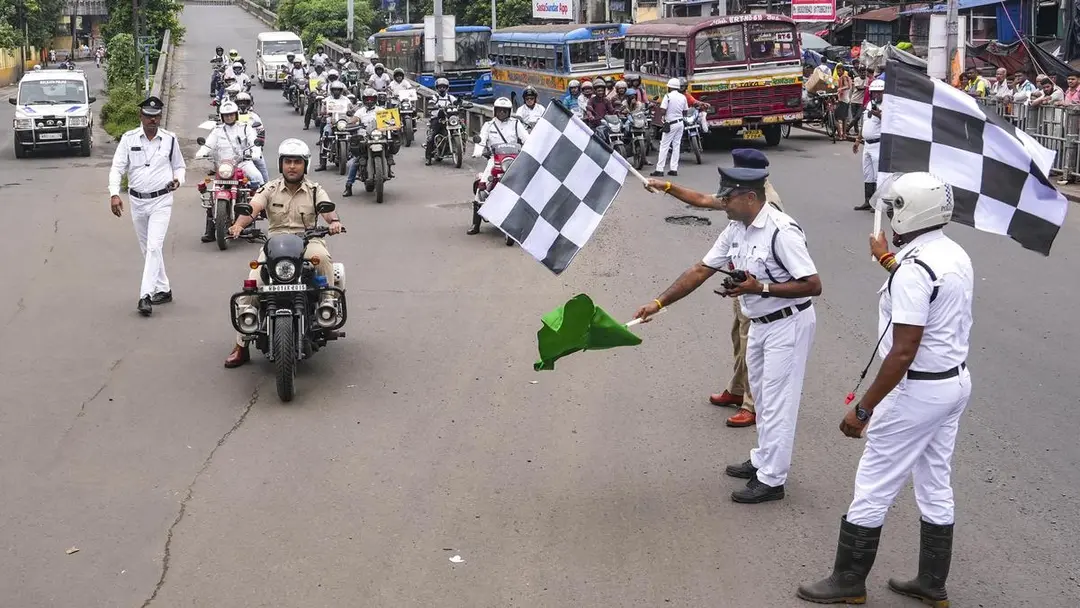
Bengal panel examines proposals to rename Kolkata roads
A 10-member committee set up by the West Bengal government is examining proposals to rename roads, bridges and public places, including Kolkata's Lenin Sarani, Karl Marx Sarani and Ho Chi Minh Sarani. The panel, headed by Swami Pradiptananda of Bharat Sevashram, known as Kartik Maharaj, will hold its first meeting after Durga Puja. No name has been officially changed so far and any decision will follow the committee's recommendations, a Kolkata Municipal Corporation official said on Monday.
Source
The Hindu — National · read the original report ↗
Desk check · compared with the source
What the desk checked (5)
- A 10-member West Bengal government committee headed by Swami Pradiptananda (Kartik Maharaj) is examining proposals to rename roads, bridges and public places. — Attributed in source to a Kolkata Municipal Corporation official; figure of 10 members appears in source.
- Lenin Sarani, Karl Marx Sarani and Ho Chi Minh Sarani are under consideration for renaming. — Attributed to the KMC official and to Kartik Maharaj, who told reporters the three roads 'will be renamed'.
- Tathagata Roy proposed alternative names including Debaprasad Ghosh, Michael Madhusudan Dutt or Rangalal Bandyopadhyay, and Martin Luther King Jr. — Attributed to the KMC official; individual suggestions appear in source.
- Lenin Sarani was earlier Dharmatala Street, renamed in 1970 during Lenin's birth centenary; Circular Garden Reach Road became Karl Marx Sarani the following year. — Historical detail stated in source without separate attribution.
- No road name has been officially changed and the final decision follows the panel's recommendations, which go to the state Assembly. — Attributed to the KMC official and Kartik Maharaj respectively.
Analysts’ view opinion
బెంగాల్లో రోడ్ల పేర్ల మార్పు ఎప్పుడూ కేవలం పరిపాలనా అంశం కాదు — అది సాంస్కృతిక, రాజకీయ ప్రతీకల యుద్ధం. లెనిన్, మార్క్స్, హో చి మిన్ పేర్లు తొలగించే ప్రతిపాదనలు వామపక్షాల నాలుగు దశాబ్దాల బెంగాల్ వారసత్వాన్ని ప్రశ్నించడమే. గమనార్హం, ఈ కమిటీను ఏర్పాటు చేసింది రాష్ట్ర ప్రభుత్వమే — అయినా అధ్యక్షుడు కార్తిక్ మహారాజ్, సభ్యుడు తథాగత రాయ్ (బీజేపీ మాజీ రాష్ట్ర అధ్యక్షుడు) వంటి పేర్లు ఉండటంతో, పేర్ల మార్పు ఎజెండా సాధారణంగా బీజేపీ చెప్పే హిందూ-జాతీయవాద చట్రంలో నడుస్తున్నట్టు కనిపిస్తోంది.
- వామపక్ష చిహ్నాలను తొలగించడం సీపీఎం-వామపక్ష కూటమికి ఒక ఉద్వేగపూరిత ప్రచార అంశాన్ని ఇస్తుంది — ఎన్నికల బలం క్షీణించినా, సాంస్కృతిక వారసత్వ రక్షణ పేరుతో మళ్లీ వార్తల్లోకి వచ్చే అవకాశం.
- కమిటీ నిర్మాణమే రాజకీయ సందేశం: మతపరమైన సంస్థ ప్రతినిధి నేతృత్వం, ముఖ్యమంత్రి సలహాదారు, కేఎంసీ కమిషనర్ కలిసి ఉండటం — అధికార పక్షం ఈ ఎజెండాను వ్యతిరేకించకుండా, దానిపై యాజమాన్యం చూపే వ్యూహంగా చదవవచ్చు.
- "జాతీయవాద ముస్లిం" పేర్లను ప్రత్యామ్నాయంగా సూచించడం — వ్యతిరేకతను తగ్గించే ప్రయత్నంగా చూపబడినా, ఎవరు 'ఆమోదయోగ్య' చరిత్ర పురుషులు అని నిర్ణయించే అధికారంపై వివాదాన్ని రేపే అవకాశం ఎక్కువ.
- అంతిమ నిర్ణయం అసెంబ్లీకి వెళ్తుందని కమిటీ అధ్యక్షుడు చెప్పడం అంటే, ఈ చర్చ శాసనసభ వేదికపైకి — అంటే బహిరంగ రాజకీయ ఘర్షణలోకి — తీసుకురాబడుతుంది.
- అధికారిక వర్గం "ఇంకా ఏ నిర్ణయమూ జరగలేదు" అని నొక్కి చెప్పడం, ప్రభుత్వం ఇంకా తన స్థానాన్ని ఖరారు చేసుకోకుండా వెసులుబాటు ఉంచుకుంటున్న సంకేతం.
What to watch — దుర్గా పూజ తర్వాత జరిగే తొలి సమావేశంలో ఏ ప్రతిపాదనలు ముందుకు వస్తాయి, మరీ ముఖ్యంగా రాష్ట్ర ప్రభుత్వం మరియు తృణమూల్ నాయకత్వం ఈ సిఫారసులను బహిరంగంగా సమర్థిస్తారా లేక దూరం పాటిస్తారా — అదే అసలైన రాజకీయ సూచిక.
ఈ కథనం ఏ పేరూ అధికారికంగా మారినట్టు నిరూపించదు; ప్రభుత్వం లేదా అధికార పార్టీ అధికారిక వైఖరి, ఇతర పార్టీల స్పందనలు, కమిటీ ఏర్పాటు వెనుక రాజకీయ ఉద్దేశం — ఇవేవీ ఇందులో స్థిరపడలేదు.
Deep dive
Research brief · 8 facts · 4 dates · exam-readyThe brief
Context
The West Bengal government has constituted a 10-member committee to examine proposals for renaming roads, bridges and public places across the state. Among the names under consideration are three prominent Kolkata thoroughfares named after communist figures — Lenin Sarani, Karl Marx Sarani and Ho Chi Minh Sarani. These names date to the early 1970s, when Dharmatala Street was renamed Lenin Sarani during Lenin's birth centenary celebrations. The panel, headed by Swami Pradiptananda (Kartik Maharaj) of Bharat Sevashram, is to hold its first meeting after Durga Puja, and no name has been officially changed so far.
Key facts
- The committee has 10 members and was set up by the West Bengal government to examine renaming of roads, bridges and public places.
- It is headed by Swami Pradiptananda, popularly known as Kartik Maharaj of Bharat Sevashram.
- Members include former Meghalaya Governor Tathagata Roy, Chief Minister's Adviser Subrata Gupta and KMC Commissioner Smita Pandey.
- The three Kolkata roads under consideration are Lenin Sarani, Karl Marx Sarani and Ho Chi Minh Sarani.
- Lenin Sarani was earlier Dharmatala Street, renamed in 1970 during Lenin's birth centenary celebrations; Circular Garden Reach Road became Karl Marx Sarani the following year.
- Kartik Maharaj said the panel's recommendations would be sent to the state Assembly.
- Tathagata Roy proposed renaming Lenin Sarani after mathematician and former Bharatiya Jana Sangh president Debaprasad Ghosh.
- A KMC official said on September 14, 2026 that no decision has been taken and no road name has been officially changed so far.
Timeline
- 1970Dharmatala Street in Kolkata is renamed Lenin Sarani during celebrations marking Lenin's birth centenary.
- 1971 (the following year)Circular Garden Reach Road is renamed Karl Marx Sarani.
- September 14, 2026A KMC official says the 10-member state committee is examining renaming proposals and that no name has been changed yet.
- After Durga Puja (date not stated in the source)The committee is expected to hold its first meeting, when Kolkata road renaming proposals are likely to be taken up.
Who has a stake
- West Bengal government — Set up the 10-member committee; will act on its recommendations regarding renaming of roads and public places.
- Kolkata Municipal Corporation (KMC) — Civic body whose roads are involved; its Commissioner Smita Pandey is a panel member and officials are briefing on the process.
- Swami Pradiptananda (Kartik Maharaj), Bharat Sevashram — Heads the panel; says the relevance of personalities will be judged against Indian and Bengali heritage, sanskriti and culture.
- Tathagata Roy, former Meghalaya Governor and former BJP state chief — Panel member proposing specific replacements, including removal of the Lenin statue and renaming after Sardar Vallabhbhai Patel.
- West Bengal Legislative Assembly — Body to which the committee's recommendations will be sent, per Kartik Maharaj.
- Kolkata's residents and historians — Concerns raised over whether changing long-established names could erase or alter aspects of the city's political and cultural history.
Why it matters
Street names are markers of public memory, and Kolkata's communist-era toponyms are tied to a specific phase of the state's political history. The proposed exercise has already raised questions over whether replacing long-established names would erase or alter aspects of the city's political and cultural heritage, making it a test of how governments handle contested commemoration.
UPSC angle
Prelims pointers
- A 10-member West Bengal committee headed by Swami Pradiptananda (Kartik Maharaj) of Bharat Sevashram is examining road renaming proposals.
- Lenin Sarani was formerly Dharmatala Street, renamed in 1970 on Lenin's birth centenary.
- Circular Garden Reach Road was renamed Karl Marx Sarani a year after Lenin Sarani.
- Panel members include Tathagata Roy (former Meghalaya Governor), Subrata Gupta (CM's Adviser) and Smita Pandey (KMC Commissioner).
- Debaprasad Ghosh, suggested for Lenin Sarani, was a mathematician and former Bharatiya Jana Sangh president.
- Committee recommendations are to be sent to the West Bengal Assembly; no name has been changed as of September 14, 2026.
Mains framing
The proposal to rename Kolkata's Lenin Sarani, Karl Marx Sarani and Ho Chi Minh Sarani illustrates how toponymy becomes an arena of political contestation over public memory. The names were conferred in 1970-71, marking the ideological imprint of that era; the present 10-member state panel, headed by Kartik Maharaj, says it will judge the relevance of such personalities against Indian and Bengali heritage, sanskriti and culture, with suggestions ranging from Debaprasad Ghosh and Michael Madhusudan Dutt to Martin Luther King Jr. and Sardar Vallabhbhai Patel, alongside proposals to replace names of certain Muslim figures with those described as "nationalist Muslims". Critics counter that erasing long-established names may efface layers of the city's political and cultural history and reduce commemoration to a partisan exercise. The procedural safeguards in this case — a multi-member committee including the civic commissioner and the CM's adviser, an explicit statement that no name has yet been changed, and referral of recommendations to the state Assembly — point to a way forward in which renaming decisions rest on transparent criteria, documented historical justification, public consultation with residents of the affected localities, and legislative deliberation rather than executive fiat.
Key terms
- Sarani
- Bengali word for road or avenue, used in Kolkata street names such as Lenin Sarani and Karl Marx Sarani.
- Kolkata Municipal Corporation (KMC)
- The civic body governing Kolkata; its Commissioner Smita Pandey is a member of the renaming panel.
- Bharat Sevashram
- The religious organisation to which panel head Swami Pradiptananda, known as Kartik Maharaj, belongs.
- Bharatiya Jana Sangh
- Party whose former president Debaprasad Ghosh, a mathematician, has been proposed as the new name for Lenin Sarani.
- Titumir bus stand
- Bus stand in Barasat near Kolkata for which alternative names such as Qazi Abdul Wadud, Begum Rokeya and S. Wajed Ali were proposed.
Practice questions
- Renaming of streets and public places is often described as a contest over public memory. Discuss with reference to the West Bengal committee examining Kolkata's road names.
- What institutional safeguards should govern decisions to rename roads and public places, and why is legislative scrutiny important?
- Examine the argument that altering long-established place names can erase aspects of a city's political and cultural history.
Grounded only in the source report — figures and dates are the source's, not inferred.