
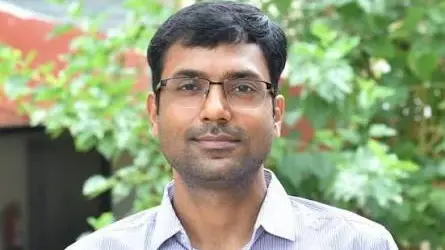
JEE topper researches mosquito brains at IIT Kanpur
Nitin Gupta, All India Rank 1 in IIT-JEE 2000, studied computer science at IIT Kanpur and completed a PhD in bioinformatics and systems biology at UC San Diego in 2009. He worked as a postdoctoral researcher at the National Institutes of Health from 2010 to 2014. Citing the film 'Swades' as inspiration, he returned to India in 2014 as a professor at IIT Kanpur, where his team studies how brains process odours in locusts, flies and mosquitoes.
Source
Cinema · read the original report ↗
Desk check · compared with the source
What the desk checked (5)
- Nitin Gupta was All India Rank 1 in IIT-JEE 2000 and studied computer science at IIT Kanpur. — Stated in source without named attribution; consistent across the article.
- He completed a PhD in bioinformatics and systems biology at UC San Diego in 2009 and was a postdoctoral researcher at the National Institutes of Health from 2010 to 2014. — Figures and dates appear in source; no document cited.
- A 2023 paper in Nature Communications by Gupta and colleagues studied neurons in the antennal lobe of Aedes aegypti mosquitoes. — Attributed to a named journal and year in the source.
- The Treadwill mental health programme was tested on 598 people in India, with symptom reduction among those completing at least half. — Figure appears in source; study details and authorship not specified.
- A Print analysis of 20 IIT-JEE toppers between 2000 and 2019 found 12 working outside India. — Attributed to The Print; underlying data not provided.
Analysts’ view opinion
This reads as a personal inspiration story, but through a policy lens it is a data point on where India's research system stands on reverse brain drain. An analysis cited in the story found 12 of 20 JEE toppers between 2000 and 2019 working outside India — which makes Nitin Gupta's return the exception, not the rule. His move from computer science into neuroscience, and from mosquito olfaction into a mental-health programme, shows how much depends on institutions that allow researchers to cross disciplinary walls. But this is one individual's experience and should not be read as systemic success.
- The finding that most tracked JEE toppers work abroad revives an old policy question about what domestic return the state gets on its heavy investment in elite technical education.
- The story attributes Gupta's return to the pull of a film rather than any incentive scheme — which itself points to a gap in deliberate policy design for attracting researchers home.
- A computer science graduate moving into bioinformatics, electrophysiology and neuroscience is unusual in an Indian academic structure with fairly rigid departmental boundaries.
- Mosquito olfaction research is basic science, but in a country carrying a heavy vector-borne disease burden it could have long-run public health policy value.
- A programme tested on 598 people and aimed at those who cannot easily reach a doctor or psychiatrist signals interest in low-cost, scalable interventions — though this remains a small trial.
What to watch — Watch whether institutional policy shifts towards attracting overseas researchers and funding interdisciplinary labs with stable, long-horizon grants and equipment support.
The story does not establish how Gupta's research is funded, whether any specific government scheme influenced his return, or whether the mental-health programme works at scale.
Deep dive
Research brief · 8 facts · 8 dates · exam-readyThe brief
Context
Nitin Gupta topped the IIT-JEE in 2000 (All India Rank 1) and, instead of the conventional path into technology firms or Silicon Valley, moved from computer science into biology. He did a PhD in bioinformatics and systems biology at the University of California, San Diego (completed 2009), then worked as a postdoctoral researcher at the National Institutes of Health from 2010 to 2014, taking up electrophysiology. Citing the film 'Swades' as an influence, he returned to India in 2014 as a professor at IIT Kanpur, his own alma mater, choosing research over industry. His lab studies how brains of locusts, flies and mosquitoes process odours and translate them into behaviour.
Key facts
- Nitin Gupta secured All India Rank 1 in the IIT-JEE in 2000 and studied computer science at IIT Kanpur.
- He completed a PhD in bioinformatics and systems biology at the University of California, San Diego in 2009, working on proteins and genomes.
- After the PhD he spent a few months in a cognitive neuroscience laboratory at UC San Diego studying bodily changes preceding action for rewards like food or money.
- From 2010 to 2014 he was a postdoctoral researcher at the National Institutes of Health, where he took up electrophysiology — the electrical activity of neurons.
- He returned to India in 2014 and joined IIT Kanpur as a professor, choosing research over industry; he cited the film 'Swades' as an inspiration to return.
- A 2023 paper in Nature Communications by Gupta and colleagues studied neurons in the antennal lobe of the Aedes aegypti mosquito using intracellular electrophysiology, neuron structure analysis and immunohistochemistry.
- His team helped build 'Treadwill', a mental-health programme for people with limited access to doctors or psychiatrists; it was tested on 598 people in India.
- In the Treadwill trial, those who completed at least half the programme showed reduced anxiety and depression symptoms compared with those on the waiting list.
Timeline
- 2000Nitin Gupta tops the IIT-JEE with All India Rank 1 and joins IIT Kanpur for computer science.
- During IIT yearsHis interest gradually shifts towards biology, leading him to UC San Diego.
- 2009Completes PhD in bioinformatics and systems biology at UC San Diego; research focused on proteins and genomes.
- After PhD (a few months)Works in a cognitive neuroscience lab at UC San Diego on bodily changes before acting on desire for food or money.
- 2010 to 2014Postdoctoral researcher at the National Institutes of Health; begins studying electrophysiology.
- 2014Returns to India and joins IIT Kanpur as a professor, choosing research over industry.
- 2023Paper in Nature Communications on Aedes aegypti antennal lobe neurons and odour discrimination.
- Recent researchStudies neuromodulation, including how a female mosquito's attraction to human odour changes after a blood meal.
Who has a stake
- Nitin Gupta — IIT-JEE 2000 topper turned neuroscientist; his career choice reframes what 'success' after an IIT degree can mean.
- IIT Kanpur — Hosts his laboratory studying odour processing in locusts, flies and mosquitoes; gains from retaining top research talent.
- UC San Diego and the National Institutes of Health — Institutions where he trained in bioinformatics, systems biology, cognitive neuroscience and electrophysiology.
- Public health researchers — Understanding how mosquito brains process human chemical cues could inform how mosquitoes are attracted or repelled.
- People with limited access to mental health care in India — Potential users of Treadwill, tested on 598 people, which reduced anxiety and depression symptoms among those completing half the programme.
- IIT aspirants and young researchers — His trajectory offers a model of moving across disciplines and returning to India for research.
Why it matters
India's debate over brain drain often focuses on whether its brightest students return; a ThePrint analysis of 20 JEE toppers from 2000 to 2019 found 12 working abroad, making Gupta's return notable. His work also shows the value of interdisciplinary science — computing skills applied to neurons, insect olfaction and, through Treadwill, digital mental health for underserved populations.
UPSC angle
Prelims pointers
- Nitin Gupta: All India Rank 1, IIT-JEE 2000; computer science at IIT Kanpur; professor at IIT Kanpur since 2014.
- PhD in bioinformatics and systems biology, UC San Diego, completed 2009; postdoc at National Institutes of Health, 2010-2014.
- Antennal lobe: the part of the mosquito brain where odour information is processed.
- 2023 Nature Communications paper studied neurons in the antennal lobe of Aedes aegypti.
- Treadwill: mental-health support programme his team helped create; tested on 598 people in India.
- ThePrint analysis: of 20 IIT-JEE toppers (2000-2019), 12 were working outside India.
Mains framing
The story of Nitin Gupta, IIT-JEE 2000 topper, illustrates two persistent themes in Indian higher education: the narrow career funnel that channels engineering talent into technology firms abroad, and the thin but growing stream of researchers who return to build laboratories at home. The source notes that thousands of IIT graduates contribute at NASA and Silicon Valley firms such as Oracle, Intel and Microsoft, and that of 20 JEE toppers between 2000 and 2019, 12 worked outside India — evidence that elite selection does not automatically translate into domestic research capacity. Gupta's path — computer science at IIT Kanpur, bioinformatics and systems biology at UC San Diego, electrophysiology at the NIH, and a 2014 return to IIT Kanpur — shows how interdisciplinary mobility can produce work of both basic and applied value: mapping how neurons in the Aedes aegypti antennal lobe discriminate odours, and how a female mosquito's attraction to human odour changes after a blood meal. The same underlying question, how a brain interprets information and acts on it, underlies Treadwill, a mental-health programme tested on 598 people in India for those who cannot easily reach a doctor or psychiatrist. The way forward suggested by the case is institutional: research environments, cross-disciplinary flexibility and role models that make basic science a visible career choice for high-scoring students.
Key terms
- IIT-JEE
- The entrance examination for admission to the Indian Institutes of Technology; Gupta ranked first in it in 2000.
- Bioinformatics and systems biology
- Fields at the meeting point of computing and biology; Gupta's PhD subject, focused on proteins and genomes.
- Electrophysiology
- The study of electrical activity in neurons, which Gupta began during his NIH postdoctoral work.
- Antennal lobe
- Region of the insect brain, including the mosquito's, where odour-related information is processed.
- Neuromodulation
- How an organism's internal state alters the way it senses and responds to odours.
- Treadwill
- A programme Gupta's team helped develop to give mental-health support to people with poor access to psychiatric care.
Practice questions
- Does India's elite engineering education system adequately channel talent into basic scientific research? Discuss with reference to the career paths of IIT-JEE toppers.
- How can interdisciplinary research, such as the application of computing to neuroscience, strengthen India's scientific and public health capabilities?
- Digital mental-health interventions like Treadwill are being tested in India. Examine their potential and limits in addressing gaps in access to psychiatric care.
Grounded only in the source report — figures and dates are the source's, not inferred.