
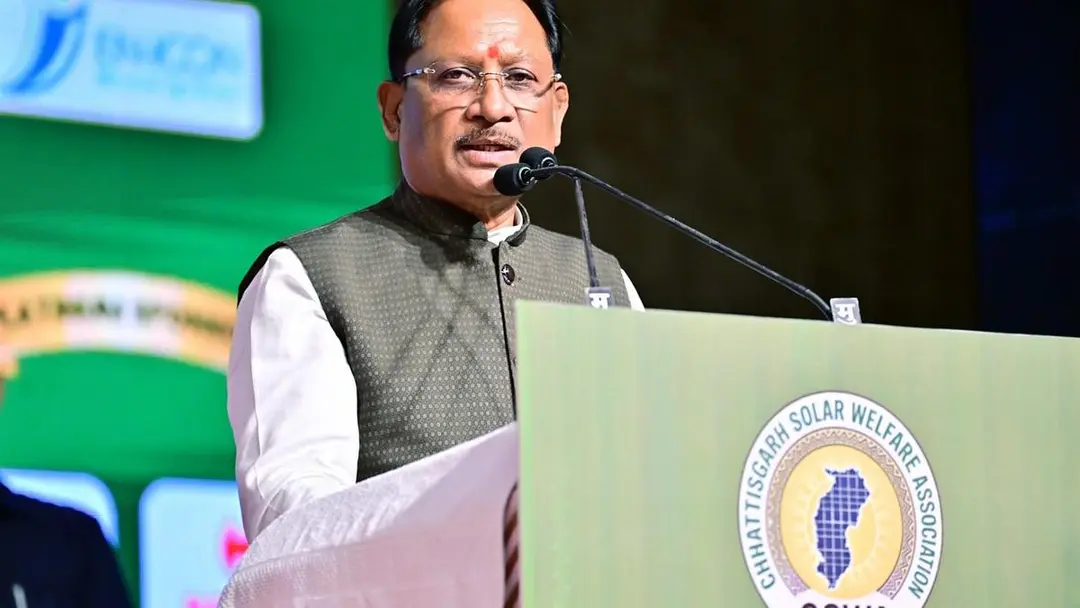
Chhattisgarh launches TIN portal for tribal tin collectors
The Chhattisgarh government on August 31, 2026 launched the Tribal Incentives on Natural Resources (TIN) portal to ensure a fair, transparent price for tin ore collected by tribal communities in Bastar, Chief Minister Vishnu Deo Sai said. The platform brings registration, quality testing, price determination and payment under one system. An official said tin prices will be linked to the London Metal Exchange, with payments made directly to bank accounts through DBT. Six procurement centres currently operate in Bastar division.
Source
Chhattisgarh — CM & govt · read the original report ↗
Desk check · compared with the source
What the desk checked (5)
- Chhattisgarh launched the TIN (Tribal Incentives on Natural Resources) portal on Monday, August 31, 2026. — Attributed to Chief Minister Vishnu Deo Sai; date appears in source.
- All of India's tin ore is in Chhattisgarh's Bastar district. — Attributed to an unnamed CMDC official; not independently verifiable here.
- Tin price will be linked to the London Metal Exchange with payments via Direct Benefit Transfer. — Quoted from an unnamed official.
- CMDC purchased 8,707.2 kg of tin ore in 2024-25 paying about ₹90.82 lakh, and 20,895.335 kg in 2025-26 paying about ₹3.81 crore. — Figures appear in source, attributed to an unnamed CMDC official.
- Six procurement centres operate in Bastar division; three more proposed in Bastar, Dantewada and Sukma. — Attributed to the same unnamed official.
Analysts’ view opinion
The TIN portal is best read as a calibrated political move aimed at Bastar's tribal voters. Cutting out intermediaries, pegging the price to the London Metal Exchange and routing payments through DBT is a familiar formula for claiming "transparency" as a government achievement. With Chief Minister Vishnu Deo Sai himself a leader from a tribal background, the "Mineral-to-Livelihood" framing gives the ruling side a credibility instrument in tribal belts.
- Bastar has long been a politically sensitive and closely contested tribal region, which raises the political value of schemes that put money directly into beneficiaries' hands.
- The language of "reducing dependence on intermediaries" is politically potent — it implies, without saying so, that earlier arrangements shortchanged collectors.
- Proposing three more centres in Bastar, Dantewada and Sukma on top of the existing six is visible distributive politics at the local level.
- Official figures showing procurement and payments rising sharply over two years are ready-made material for government messaging.
- Linking prices to international rates earns the government credit when markets are favourable, but the same link could invite criticism if tin prices fall — an angle the opposition may seize.
What to watch — Watch how tribal cooperatives and local leaders absorb the new system, and whether digital registration and banking integration actually work in remote pockets.
The story rests on government and CMDC accounts; it does not establish the portal's real-world impact, nor does it carry any beneficiary or opposition response or independent verification of implementation.
Deep dive
Research brief · 8 facts · 5 dates · exam-readyThe brief
Context
Chhattisgarh's Bastar district holds all of India's tin ore, according to a Chhattisgarh Mineral Development Corporation Limited (CMDC) official, and the ore is either mined directly by CMDC or collected by tribal residents and sold through cooperatives. Tribal collectors have historically depended on intermediaries, facing opaque pricing and delayed payments. On August 31, 2026, the State government launched the Tribal Incentives on Natural Resources (TIN) portal to bring registration, quality testing, price determination and payment into one digital system. Chief Minister Vishnu Deo Sai described it as a "Mineral-to-Livelihood" initiative rather than merely a procurement platform.
Key facts
- The TIN (Tribal Incentives on Natural Resources) portal was launched by the Chhattisgarh government on Monday, August 31, 2026.
- A CMDC official said all the tin ore in India is in Chhattisgarh's Bastar district.
- Tin prices on the portal will be linked to the London Metal Exchange (LME) to reflect prevailing international market prices.
- Payments will go directly to beneficiaries' bank accounts through Direct Benefit Transfer (DBT), cutting dependence on intermediaries.
- CMDC currently procures tin through six centres in Bastar division; three more collection and procurement centres are proposed in Bastar, Dantewada and Sukma.
- In 2024-25, CMDC purchased 8,707.2 kg of tin ore and paid around Rs 90.82 lakh to tribal beneficiaries.
- In 2025-26, procurement rose to 20,895.335 kg with payments of around Rs 3.81 crore.
- The portal features digital registration, quality testing, QR-based verification, banking integration and SMS alerts for collectors.
Timeline
- 2024-25CMDC purchased 8,707.2 kg of tin ore, paying about Rs 90.82 lakh to tribal beneficiaries.
- 2025-26Procurement rose to 20,895.335 kg, with payments of about Rs 3.81 crore.
- August 31, 2026Chhattisgarh government launches the TIN portal for tin ore procurement from tribal collectors.
- September 1, 2026Report on the launch published.
- Proposed (date not stated in the source)Three additional collection and procurement centres in Bastar, Dantewada and Sukma.
Who has a stake
- Tribal tin collectors of Bastar — Fair, internationally benchmarked prices, direct payments and less dependence on intermediaries.
- Chhattisgarh Mineral Development Corporation Limited (CMDC) — Runs procurement centres and can now monitor procurement, stocks and payments in real time.
- Chief Minister Vishnu Deo Sai and the State government — Delivering on a "Mineral-to-Livelihood" promise linking Bastar's mineral value to tribal incomes.
- Cooperatives and intermediaries — Their role in the tin ore supply chain is reduced by digital registration and DBT payments.
- Collectors in remote areas of Dantewada and Sukma — Proposed new centres would let them sell produce locally rather than travelling long distances.
Why it matters
Mineral wealth in tribal districts has long generated value that rarely reached the communities that collect the ore. By benchmarking tin prices to the London Metal Exchange and routing money through DBT, the TIN portal attempts to convert a natural-resource endowment into measurable household income in Bastar, a region also marked by remoteness and conflict. The near-doubling of procurement volumes between 2024-25 and 2025-26 suggests formalising the trade can expand participation.
UPSC angle
Prelims pointers
- TIN portal = Tribal Incentives on Natural Resources, launched by Chhattisgarh on August 31, 2026.
- All of India's tin ore is in Bastar district, Chhattisgarh, per a CMDC official.
- Tin prices under TIN are linked to the London Metal Exchange (LME).
- Payments to tribal collectors are routed via Direct Benefit Transfer (DBT).
- CMDC operates six tin procurement centres in Bastar division; three more proposed in Bastar, Dantewada and Sukma.
- Chhattisgarh Chief Minister: Vishnu Deo Sai; he called TIN a "Mineral-to-Livelihood" initiative.
Mains framing
The TIN portal illustrates how digital public infrastructure can be used to correct information and bargaining asymmetries in resource-dependent tribal economies. The underlying problem is structural: tin ore collected by tribal residents of Bastar passed through cooperatives and intermediaries, where opaque price discovery and payment delays eroded the collector's share. TIN responds with three levers — a transparent price anchored to the London Metal Exchange, end-to-end digitisation (registration, quality testing, QR-based verification, SMS alerts, online transaction records), and DBT into beneficiary accounts, with CMDC able to track procurement, stocks and payments in real time. The reported rise in procurement from 8,707.2 kg (Rs 90.82 lakh) in 2024-25 to 20,895.335 kg (Rs 3.81 crore) in 2025-26 indicates growing formal engagement, while three proposed centres in Bastar, Dantewada and Sukma address the access constraint faced by remote collectors. The way forward, on the evidence in the source, lies in expanding procurement centres so that local sale is feasible, ensuring quality testing is credible to collectors, and sustaining the "Mineral-to-Livelihood" logic of the Chief Minister's framing — that value from Bastar's minerals accrues to tribal households rather than to the chain between mine and market.
Key terms
- TIN portal
- Tribal Incentives on Natural Resources: Chhattisgarh's digital platform covering registration, testing, pricing and payment for tin ore procurement.
- CMDC
- Chhattisgarh Mineral Development Corporation Limited, the State body that mines tin directly or procures it from tribal collectors.
- London Metal Exchange (LME)
- International metals exchange whose prices will be the benchmark for tin paid to Bastar's tribal collectors.
- Direct Benefit Transfer (DBT)
- Mechanism transferring payment straight into a beneficiary's bank account, reducing intermediaries and delays.
- Mineral-to-Livelihood
- Chief Minister Vishnu Deo Sai's framing of TIN as converting Bastar's mineral value into tribal family income.
- QR-based verification
- Portal feature letting collectors track quantity purchased, price determined and payment status of their consignment.
Practice questions
- How can digital procurement platforms such as Chhattisgarh's TIN portal reduce intermediary capture in tribal resource economies? Discuss with reference to price benchmarking and DBT.
- "Mineral wealth in scheduled areas has rarely translated into local livelihoods." Examine this in light of the TIN portal initiative in Bastar.
- What role can international price benchmarks like the London Metal Exchange play in domestic procurement of minerals from primary collectors? Discuss the benefits and risks.
Grounded only in the source report — figures and dates are the source's, not inferred.