
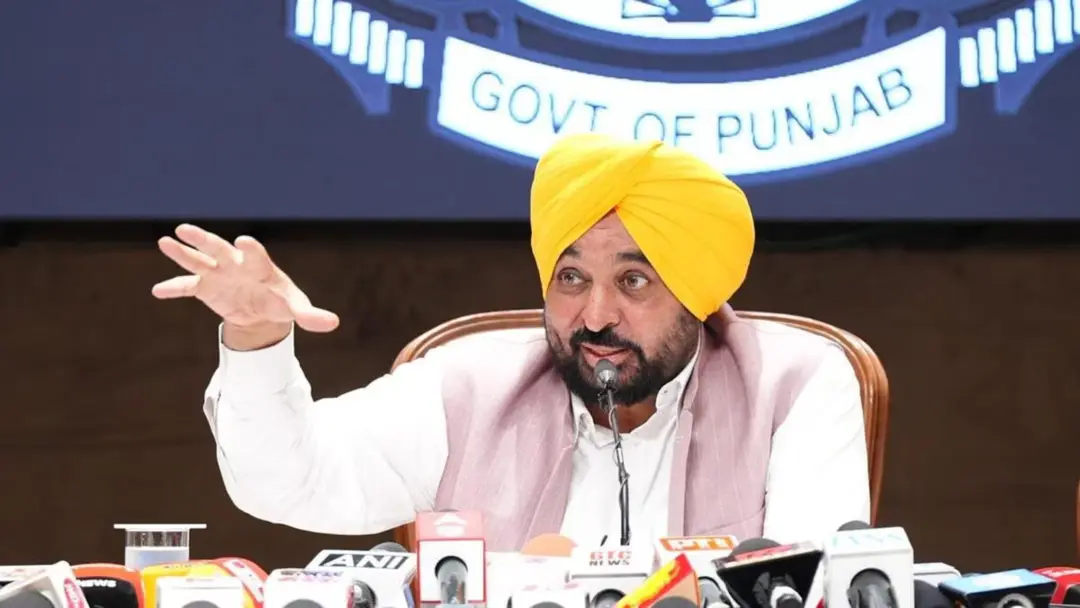
Punjab runs five-pillar strategy against drugs under Mann
Punjab's 'Yudh Nashean Virudh' campaign, led by Chief Minister Bhagwant Singh Mann, combines police, teachers, youth, community volunteers and health workers in a five-pillar strategy. Between March 2025 and September 2026, the Anti-Narcotics Task Force registered 61,824 FIRs and made 81,433 arrests. A 14-week anti-drug curriculum is being taught to 7.5 lakh students in 3,600 schools. Admissions to government de-addiction and rehabilitation centres rose from over 12,200 in 2024 to nearly 34,000 in 2025.
Source
News18 — India · read the original report ↗
Desk check · some claims need care
What the desk checked (5)
- Punjab's Anti-Narcotics Task Force registered 61,824 FIRs and made 81,433 arrests between March 2025 and September 2026 — Figures appear in source but no official document or spokesperson is cited; the date range extends into a future period as printed.
- A 14-week anti-drug curriculum is taught to 7.5 lakh students in 3,600 schools; 7,000 teachers sensitised in Amritsar, Tarn Taran and Fazilka — Stated in source as government activity, no named official attribution.
- Over 51,000 tip-offs via the Safe Punjab WhatsApp helpline since March 1, 2025 led to over 25,000 drug-related arrests — Figure appears in source, attributed generally to the campaign rather than a named authority.
- Admissions to government de-addiction and rehabilitation centres rose from over 12,200 in 2024 to nearly 34,000 in 2025, an increase of over 170% — Internally consistent with the stated percentage; source of the data not specified.
- Punjab has 547 OOAT centres, 219 de-addiction centres and 91 rehabilitation centres — Unattributed figures presented as current status in the source.
Analysts’ view opinion
Drugs have been a defining issue in Punjab politics for over a decade, and tackling them was central to the promises that brought AAP to power in 2022. Presenting 'Yudh Nashean Virudh' as a five-pillar system — pairing FIR and arrest numbers with schools, village committees and rehab capacity — is therefore as much narrative-building ahead of an electoral cycle as it is administration. The strongest read is that combining enforcement with prevention and treatment widens the political coalition of support; the vulnerability is that if numbers are offered as proof of outcome, the opposition gets an easy counter: many arrests, supply unchanged.
- The Mann government is converting the anti-drug drive into its core governance identity, since it was among AAP's headline commitments to Punjab voters.
- The five-pillar model spreads both responsibility and credit across police, teachers, youth, communities and health staff — politically useful because it frames the campaign as participatory rather than purely policing.
- Village and ward defence committees plus a helpline-based tip-off system give the government direct grassroots reach, which matters administratively and as a mobilisation network.
- The rise in de-addiction admissions from about 12,200 to nearly 34,000 is presented as growing trust in government facilities, but critics could read the same figure as evidence of the scale of the problem — one statistic, two political readings.
- The story is built largely on the government's own framing and data; no opposition response or independent assessment is recorded in it.
What to watch — Watch how opposition parties contest these figures as the electoral calendar tightens, and whether questions shift to action against big supply networks and the quality of treatment at rehabilitation centres.
The story sets out programme design and official figures but does not establish whether drug use in Punjab has actually declined or how voters will judge the effort, and it carries no independent verification or opposition rebuttal.
Deep dive
Research brief · 8 facts · 6 dates · exam-readyThe brief
Context
Punjab, a border state long associated with heroin and synthetic drug trafficking, launched 'Yudh Nashean Virudh' (war against drugs) under Chief Minister Bhagwant Singh Mann on March 1, 2025. The campaign moves beyond conventional police crackdowns to a five-pillar or 'Big 5' framework combining police enforcement, school teachers, youth peer networks, community volunteers and health workers. The stated aim is to simultaneously break drug supply chains, prevent addiction, ease citizen reporting and expand treatment and rehabilitation. The story, published September 21, 2026, sets out enforcement, education and de-addiction figures claimed under the campaign.
Key facts
- Between March 2025 and September 2026, Punjab's Anti-Narcotics Task Force (ANTF) registered 61,824 FIRs and made 81,433 arrests.
- Recoveries since launch include 3,918 kg heroin, 991 kg opium, 47 tons of poppy husk, 1,416 kg ganja and 65 lakh tablets and capsules.
- Punjab Police conducted 79,293 public meetings in the same March 2025-September 2026 period.
- A 14-week anti-drug curriculum is being taught to 7.5 lakh students across 3,600 schools by trained teachers.
- First phase of teacher sensitisation targets nearly 25,000 teachers from 13 districts; 7,000 already sensitised in Amritsar, Tarn Taran and Fazilka.
- By September 2026, about 1.25 lakh members had joined nearly 15,000 Village and Ward Defence Committees; over 50,000 VDC members trained on the Nasha Mukti App.
- Since March 1, 2025, over 51,000 citizen tip-offs on the Safe Punjab WhatsApp Helpline (97791-00200) led to over 25,000 drug-related arrests.
- Punjab has 547 OOAT centres, 219 de-addiction centres and 91 rehabilitation centres; admissions rose from over 12,200 in 2024 to nearly 34,000 in 2025, an increase of over 170%.
Timeline
- March 1, 2025Safe Punjab WhatsApp Helpline (97791-00200) launched as part of Yudh Nashean Virudh; citizen tip-off reporting begins.
- 2024Admissions to government de-addiction and rehabilitation centres stood at over 12,200.
- 2025Admissions to government de-addiction and rehabilitation centres rose to close to 34,000, an increase of over 170%.
- March 2025 to September 2026ANTF registers 61,824 FIRs, makes 81,433 arrests; police hold 79,293 public meetings.
- By September 2026Around 1.25 lakh members enrolled in nearly 15,000 Village and Ward Defence Committees.
- September 21, 2026Story detailing the five-pillar 'Big 5' strategy published.
Who has a stake
- Punjab Chief Minister Bhagwant Singh Mann and state government — Political credibility rests on showing that the anti-drug campaign delivers enforcement, prevention and recovery outcomes rather than slogans.
- Anti-Narcotics Task Force (ANTF) and Punjab Police — Enforcement backbone: dismantling supply networks, arresting peddlers and conducting community outreach meetings.
- School teachers — Tasked with delivering the 14-week curriculum and identifying early signs of mental-health distress and vulnerability to substance abuse.
- Students and youth in schools and colleges — Primary target of prevention via curriculum, peer engagement, sports, cultural festivals and mental-health clubs.
- Village and Ward Defence Committee members — Grassroots vigilance: reporting peddling and identifying victims needing help, using the Nasha Mukti App.
- People with substance-use disorders and their families — Access to OOAT, de-addiction and rehabilitation centres, and reduced stigma in seeking institutional treatment.
- Health workers at government facilities — Trained to run revamped treatment centres with skilling and creative activities to sustain patients through recovery.
Why it matters
Drug abuse in Punjab is both a public-health and law-and-order challenge, and the campaign's design tests whether enforcement, school-level prevention, community vigilance and de-addiction care can work as one system rather than separate silos. The over 170% jump in admissions to government de-addiction and rehabilitation centres between 2024 and 2025 suggests that destigmatisation and expanded capacity can bring long-term users into formal care. For policy debate nationally, it offers a state-level template of demand reduction running alongside supply-side policing.
UPSC angle
Prelims pointers
- 'Yudh Nashean Virudh' is Punjab's war-against-drugs campaign under CM Bhagwant Singh Mann; Safe Punjab WhatsApp Helpline launched March 1, 2025 (97791-00200).
- ANTF stands for Anti-Narcotics Task Force; it registered 61,824 FIRs and made 81,433 arrests between March 2025 and September 2026.
- OOAT = Outpatient Opioid Assisted Treatment; Punjab has 547 OOAT centres, 219 de-addiction centres, 91 rehabilitation centres.
- 14-week anti-drug curriculum covers 7.5 lakh students in 3,600 schools.
- Nearly 15,000 Village and Ward Defence Committees with about 1.25 lakh members by September 2026; over 50,000 trained on the Nasha Mukti App.
- De-addiction/rehab admissions: over 12,200 (2024) to nearly 34,000 (2025), a rise of over 170%.
Mains framing
Punjab's 'Yudh Nashean Virudh' illustrates a shift from a purely coercive, police-station-centred anti-drug approach to an integrated supply-plus-demand strategy. The causes it addresses are layered: entrenched trafficking networks, peer influence and social acceptance of drug use among the young, weak grassroots reporting channels, and stigma that kept users away from treatment. The response pairs enforcement (61,824 FIRs, 81,433 arrests, large heroin, opium and poppy-husk seizures) with prevention through a 14-week school curriculum for 7.5 lakh students, teacher sensitisation for early detection of vulnerability, youth-led and peer-based engagement using sports, culture and recovered persons, community vigilance through nearly 15,000 Village and Ward Defence Committees and a WhatsApp helpline, and expanded treatment via OOAT, de-addiction and rehabilitation centres. The sharp rise in institutional admissions indicates growing willingness to seek care. The implications are that sustainability depends on trained human capacity, follow-up after de-addiction to prevent relapse, protecting citizen informants, and ensuring that arrest-heavy enforcement does not criminalise users rather than traffickers. The way forward, as the campaign's own logic suggests, lies in treating police stations, schools, villages and health facilities as interconnected parts of one system, with continuous training, monitoring of outcomes beyond FIR and admission counts, and reintegration support for those in recovery.
Key terms
- Yudh Nashean Virudh
- Punjab government's 'war against drugs' campaign under CM Bhagwant Singh Mann, built on a five-pillar or 'Big 5' framework.
- ANTF (Anti-Narcotics Task Force)
- Punjab Police's specialised unit for narcotics enforcement; registers FIRs, makes arrests and carries out drug seizures.
- OOAT centres
- Outpatient treatment centres for opioid dependence; Punjab currently has 547 such centres alongside 219 de-addiction and 91 rehabilitation centres.
- Village and Ward Defence Committees (VDCs)
- Community vigilance bodies in villages and urban wards; nearly 15,000 with about 1.25 lakh members by September 2026.
- Nasha Mukti App
- Mobile application used by community volunteers to report drug peddling and victims needing help; over 50,000 VDC members trained in it.
- Safe Punjab WhatsApp Helpline
- Citizen tip-off channel (97791-00200) launched March 1, 2025; over 51,000 tip-offs led to more than 25,000 drug-related arrests.
Practice questions
- Examine how Punjab's five-pillar 'Yudh Nashean Virudh' strategy balances supply-side enforcement with demand reduction, and assess the limits of arrest-based metrics in measuring success.
- The sharp rise in admissions to government de-addiction centres in Punjab is attributed to destigmatisation and expanded capacity. Discuss the role of public health infrastructure and community participation in tackling substance abuse.
- Community bodies such as Village and Ward Defence Committees are increasingly used for grassroots vigilance. Critically evaluate the benefits and risks of citizen-led enforcement support in anti-narcotics policy.
Grounded only in the source report — figures and dates are the source's, not inferred.