
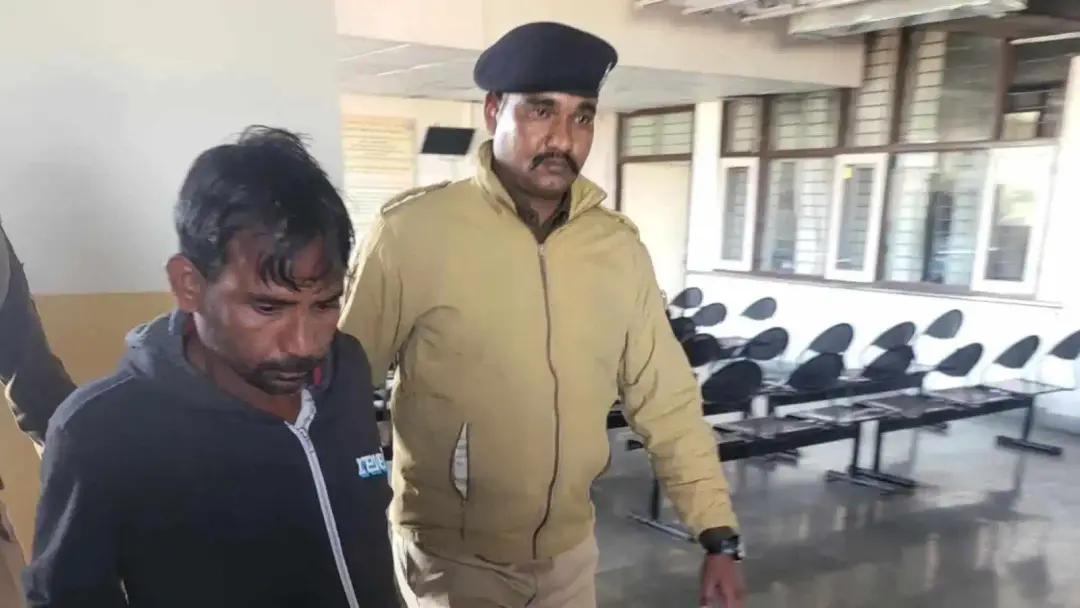
Cab driver gets third life term in Mohali rape-murder case
A Chandigarh court on Tuesday sentenced cab driver Monu Kumar, 39, to life imprisonment for the rape and murder of a 60-year-old woman, his third conviction on such charges. The victim, an Alzheimer's patient staying in Mohali, left home on February 27, 2024, and her body was found the next morning in Sector 54. Arrested on May 6, 2024, he was convicted on a CFSL DNA report. The court said it was not a 'rarest of rare case'.
Source
Indian Express — Cities · read the original report ↗
Desk check · compared with the source
What the desk checked (5)
- A Chandigarh court on Tuesday sentenced cab driver Monu Kumar (39) to life imprisonment for the rape and murder of a 60-year-old woman. — Attributed to court proceedings reported by the source; date given only as 'Tuesday'.
- The victim left home on February 27, 2024, and her body was found the next morning near Government School, Sector 54; postmortem confirmed sexual assault and strangulation. — Specific dates and postmortem findings appear in the source, attributed to police and postmortem examination.
- Monu Kumar was arrested on May 6, 2024; his blood sample of May 8, 2024 was matched by CFSL, with the report completed by Dr D S Yadav on August 30, 2024. — Figures, dates and the forensic scientist's name appear in the source; no independent verification possible.
- He was earlier convicted on November 27, 2025 in the 2010 murder of a 22-year-old MBA student and on August 21 in the 2022 murder of a 40-year-old woman. — Dates appear in the source; the year for the August 21 conviction is not specified.
- The court held that the case was not a 'rarest of rare case'. — Directly quoted from the court order in the source.
Analysts’ view opinion
The legally significant part of this verdict is not the sentence but the reasoning behind it. Despite a third conviction, the court declined to treat the case as "rarest of rare", holding it could not conclude that sparing the convict's life would endanger the community — a position consistent with the Indian principle that death remains the exception, not the rule. At the same time, the case illustrates how a conviction can rest on forensic evidence alone, without eyewitnesses or a confession.
- The story states all three convictions rested on DNA evidence rather than eyewitness testimony or confession, underlining the growing weight of scientific proof within a chain of circumstantial evidence.
- The "rarest of rare" threshold is the line Indian sentencing practice draws before capital punishment; the court's view that prior convictions did not cross it reflects the requirement of individualised sentencing assessment.
- With the victim being an Alzheimer's patient, there was no possibility of her own testimony, making postmortem, medical and forensic material central to the prosecution case.
- The FIR was registered under Section 302 IPC, consistent with the ordinary rule that the law in force on the date of the offence applies.
- A convict retains the right of appeal, and prosecuting authorities may in law seek enhancement — so the sentencing position is not necessarily final at this stage.
What to watch — Watch whether an appeal is filed, particularly any challenge to the finding that this was not a "rarest of rare" case, and whether the three life sentences are clarified as running concurrently or consecutively.
The story does not establish the full text of the order, the exact form of sentencing in the other two cases, or whether any appeal has actually been filed.
Deep dive
Research brief · 8 facts · 10 dates · exam-readyThe brief
Context
A Chandigarh court on Tuesday sentenced 39-year-old cab driver Monu Kumar to life imprisonment for the rape and murder of a 60-year-old woman who was staying with her son in Mohali. The woman, an Alzheimer's patient who had come from her village in Uttar Pradesh for a religious pilgrimage, left home on February 27, 2024 and was found strangled the next morning in a jungle area near Government School, Sector 54. This is Monu Kumar's third conviction for rape and murder; all three convictions rest on DNA evidence rather than eyewitness testimony or confession. Despite the three convictions, the court held that the case was not a "rarest of rare case" warranting the death penalty.
Key facts
- Monu Kumar, 39, a cab driver, was sentenced to life imprisonment by a Chandigarh court on Tuesday for the rape and murder of a 60-year-old woman.
- It is his third conviction on rape and murder charges; all three rest on DNA evidence, not eyewitness testimony or confession.
- The victim, an Alzheimer's patient from a village in Uttar Pradesh, had come to Chandigarh for a religious pilgrimage a few months earlier and stayed with her son in Mohali.
- She left home on February 27, 2024; her body was found the next morning in a jungle area near Government School, Sector 54, strangled and with multiple blunt force injuries.
- The postmortem confirmed sexual assault followed by murder; an FIR was registered under Section 302 of the IPC with the accused unknown.
- Monu Kumar was arrested on May 6, 2024; his discarded clothes were recovered from a jungle area of village Dhanas and his blood sample was taken on May 8, 2024.
- The CFSL forensic report completed by senior forensic scientist Dr D S Yadav on August 30, 2024 was the prosecution's most powerful evidence.
- The court order said the case 'cannot be classified as a rarest of rare case' and that it would be difficult to hold the convict so dangerous that sparing his life would endanger the community.
Timeline
- July 31, 2010A 22-year-old MBA student is found murdered; Monu Kumar was later convicted for her rape and murder.
- January 12, 2022A 40-year-old woman is found dead; Monu Kumar was later convicted for her rape and murder.
- February 27, 2024The 60-year-old Alzheimer's patient leaves her son's home in Mohali and never returns.
- February 28, 2024 (next morning)Her body is found in a jungle area near Government School, Sector 54; she had been strangled; FIR under IPC Section 302 registered against an unknown accused.
- May 6, 2024Monu Kumar is arrested; his clothes are recovered from a jungle area of village Dhanas.
- May 8, 2024His blood sample is collected and sent to the Central Forensic Science Laboratory for comparative analysis.
- August 30, 2024Dr D S Yadav, senior forensic scientist, completes the CFSL forensic examination report.
- August 21Monu Kumar is convicted a second time, for the rape and murder of the 40-year-old woman.
- November 27, 2025Monu Kumar is convicted for the murder and rape of the 22-year-old MBA student.
- Tuesday (as reported)Chandigarh court awards him a third life term; the family's wait had lasted two and a half years.
Who has a stake
- The victim's family, especially her son — Waited two and a half years through investigation, arrest, forensic examination, chargesheet and trial; the son said 'A mother's love is what is missed'.
- Monu Kumar, the convict — Now faces a third life sentence for rape and murder; escaped the death penalty as the court did not find it a 'rarest of rare case'.
- Chandigarh Police — His arrest in this case led them to solve two more murders he had committed over the previous 15 years.
- Central Forensic Science Laboratory (CFSL) and Dr D S Yadav — The DNA report completed on August 30, 2024 became the prosecution's decisive evidence in a case with no eyewitness or confession.
- The Chandigarh court — Had to weigh three convictions against the 'rarest of rare' threshold for capital punishment and chose life imprisonment.
- Elderly and cognitively impaired persons — The victim was a 60-year-old Alzheimer's patient who left home alone, underlining the vulnerability of such persons.
Why it matters
The case shows how forensic DNA analysis can convict in cases with no eyewitness or confession, and how one arrest can unlock cold cases stretching back 15 years. It also puts the judicial 'rarest of rare' doctrine under scrutiny, since a court declined the death penalty for a man convicted thrice of rape and murder. The two-and-a-half-year wait for the family highlights the pace of investigation and trial in serious sexual violence cases.
UPSC angle
Prelims pointers
- Section 302 of the Indian Penal Code deals with punishment for murder; the FIR in this case was registered under it.
- CFSL (Central Forensic Science Laboratory) conducted the comparative DNA analysis of the accused's blood sample against biological evidence from the victim.
- 'Rarest of rare case' is the judicial test for awarding the death penalty; the court held this case did not meet it.
- Key dates: incident February 27, 2024; body found next morning; arrest May 6, 2024; blood sample May 8, 2024; CFSL report August 30, 2024.
- Earlier convictions of Monu Kumar: November 27, 2025 (2010 murder of a 22-year-old MBA student) and August 21 (2022 murder of a 40-year-old woman).
- The victim was a 60-year-old Alzheimer's patient from Uttar Pradesh staying with her son in Mohali.
Mains framing
The Mohali rape-murder conviction illustrates both the promise and the limits of India's criminal justice response to sexual violence. With no eyewitness and no confession, the prosecution's case rested entirely on scientific evidence: clothes recovered from a jungle area of Dhanas, a blood sample taken on May 8, 2024, and a CFSL DNA report completed on August 30, 2024 — the same evidentiary route that secured all three of Monu Kumar's convictions and allowed police to reopen murders committed over the previous 15 years. This underlines the value of investing in forensic capacity, prompt collection and preservation of biological evidence, and DNA-linked case databases that can connect serial offences across years and jurisdictions. At the same time, the case raises harder questions: the vulnerability of elderly and cognitively impaired persons such as an Alzheimer's patient who wandered from home; the two-and-a-half-year wait the family endured through investigation, chargesheet and trial, pointing to the need for time-bound proceedings and victim support; and the sentencing question, where the court declined to treat even a third conviction for rape and murder as a 'rarest of rare case', holding that it could not be said sparing his life would endanger the community. The way forward lies in strengthening forensic infrastructure and investigation quality rather than relying on the severity of punishment alone, alongside faster trials and protective measures for at-risk persons.
Key terms
- CFSL (Central Forensic Science Laboratory)
- Government forensic laboratory that carried out the comparative DNA analysis linking the accused's blood sample to evidence from the victim's body and clothing.
- Rarest of rare case
- Judicial standard for imposing the death penalty; the court held this case did not qualify, so life imprisonment was awarded.
- Section 302, IPC
- Indian Penal Code provision on punishment for murder, under which the FIR in this case was registered against an unknown accused.
- Postmortem examination
- Medical autopsy that here confirmed sexual assault followed by murder, along with strangulation and multiple blunt force injuries.
- DNA evidence
- Biological identification evidence that linked Monu Kumar to all three rape-murder cases in the absence of eyewitnesses or a confession.
- Alzheimer's disease
- A degenerative condition affecting memory and cognition; the victim was a patient and left her son's home in Mohali on February 27, 2024.
Practice questions
- Discuss the role of forensic and DNA evidence in securing convictions in sexual violence cases where eyewitness testimony or confession is absent, with reference to recent instances.
- Critically examine the 'rarest of rare' doctrine in sentencing. Should repeat convictions for rape and murder alter its application?
- What institutional measures are needed to protect elderly and cognitively impaired persons from violent crime, and to reduce delays between the offence and the verdict?
Grounded only in the source report — figures and dates are the source's, not inferred.