
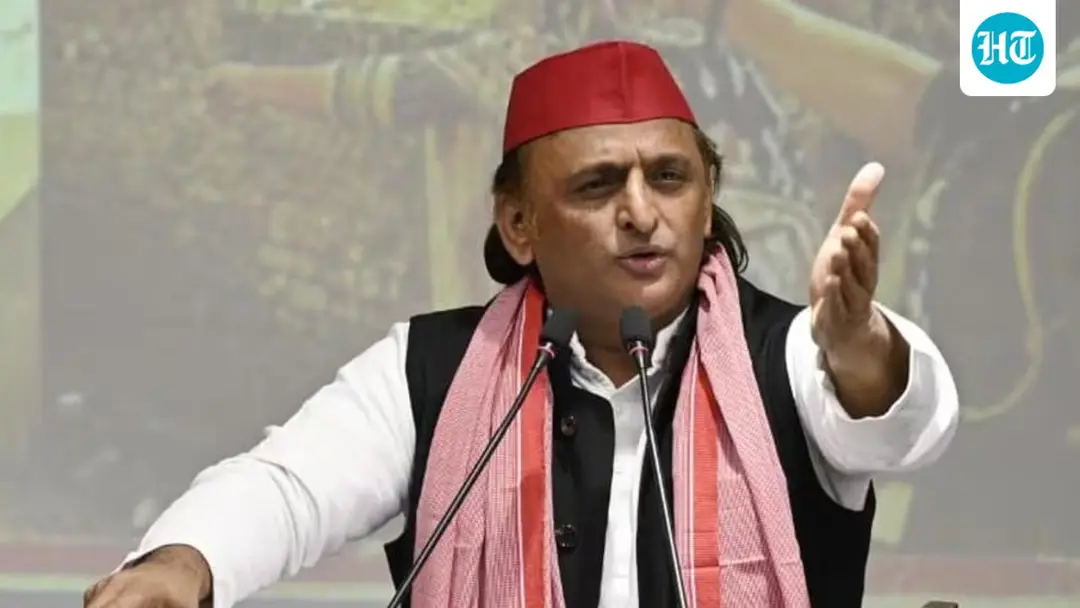
No elections under CEC Gyanesh Kumar, says Akhilesh Yadav
Samajwadi Party national president Akhilesh Yadav on Wednesday attacked the Election Commission and demanded that no future elections be held under Chief Election Commissioner Gyanesh Kumar. At a press conference he cited reports that two election commissioners objected 14 times in 10 months to Commission decisions. He alleged that during the Special Intensive Revision, over 100 votes were cancelled on one person's signature and signatures were forged to delete Muslim and SP voters' names.
Source
Hindustan Times — India · read the original report ↗
Desk check · some claims need care
What the desk checked (5)
- Two election commissioners formally objected 14 times in 10 months to Commission decisions — Yadav cites 'reports'; no document or official source named in the text — unverified secondhand claim.
- More than 100 votes were cancelled on a single person's signature during the SIR — Allegation attributed to Yadav only; no data or official record cited in the source.
- Signatures were forged to delete names of Muslim and Samajwadi Party voters — Unsubstantiated allegation by Yadav, flagged as 'allegedly' in the source.
- No officer from PDA communities was given key 2027 UP poll responsibilities — Claim made by Yadav; no administrative source or figure provided.
- Election Commission says differing views are normal but decisions are unanimous — Attributed to the Commission via a linked report; appears in source as a referenced rebuttal.
Analysts’ view opinion
Two years out from the 2027 Uttar Pradesh election, Akhilesh Yadav appears to have settled on his campaign frame: the fight is not only against the BJP but against the credibility of the machinery that runs the vote. By bundling reported internal objections at the Election Commission with allegations about SIR deletions and the absence of PDA officers in poll duties, he is building a single story aimed at consolidating his social coalition. The demand that no election be held under the current CEC is not practically achievable — it is a signalling and pressure play.
- The SP is clearly making the "stolen vote" narrative a core campaign plank — it pre-loads an explanation for defeat and frames any win as beating the system.
- Linking alleged deletion of Muslim and SP voters with the claim that no PDA-community officer got key poll duties is a direct attempt to harden his Pichhda-Dalit-Alpsankhyak arithmetic.
- With Uddhav Thackeray also seeking the CEC's removal, this can shift from an SP grievance to a shared opposition demand, giving Akhilesh national space within the INDIA bloc.
- The BJP and the Commission both push back; the EC's line that differing views are normal while decisions remain unanimous is an attempt to recast the row as routine institutional process.
- Rhetoric such as "this will be the last election in UP" energises cadre but risks sounding overstated to undecided voters.
What to watch — Watch whether other INDIA bloc parties take this demand onto a joint platform or it stays an SP–Shiv Sena (UBT) refrain, and how the Commission responds next on the SIR complaints.
The claims about commissioners' objections, forged signatures and mass deletions remain allegations as reported here — they are not independently verified, and the story establishes nothing about any action against the CEC.
Deep dive
Research brief · 8 facts · 5 dates · exam-readyThe brief
Context
Samajwadi Party national president Akhilesh Yadav has attacked the Election Commission of India, saying no future elections should be held under Chief Election Commissioner Gyanesh Kumar. His remarks follow reports of internal differences inside the poll body, with two election commissioners said to have formally objected 14 times in 10 months to Commission decisions. The attack also draws on opposition grievances over the Special Intensive Revision (SIR) of electoral rolls and comes ahead of the 2027 Uttar Pradesh assembly elections. The Election Commission has said differing views are normal but decisions are unanimous, and has issued a point-by-point rebuttal on SIR deletions, Form 6 and the voter database.
Key facts
- Akhilesh Yadav, SP national president, demanded on Wednesday that no future elections be held under current CEC Gyanesh Kumar.
- He cited reports that two election commissioners formally objected 14 times in the last 10 months to Commission decisions.
- He alleged that in several instances more than 100 votes were cancelled on a single person's signature, beyond the permitted limit.
- He alleged signatures of people who could not write their names were forged to delete Muslim and Samajwadi Party voters' names during SIR.
- Yadav said no action was taken against any official on his party's complaints, showing the Commission is not impartial.
- He alleged not a single officer from PDA (Pichhda, Dalit, Alpsankhyak) communities was given key election-related responsibility for the 2027 UP assembly polls.
- The Election Commission, amid the row, said differing views are normal but decisions are unanimous.
- Yadav promised that a future SP government will fully compensate families who lost homes and shops in recent demolition drives in Ayodhya.
Timeline
- Last 10 months (as reported)Two election commissioners formally objected 14 times to decisions made by the Election Commission.
- Recent (date not stated in the source)Special Intensive Revision (SIR) of electoral rolls; SP alleges mass deletions on forged single signatures.
- Wednesday (date not stated in the source)Akhilesh Yadav's press conference at SP headquarters demanding no elections under CEC Gyanesh Kumar.
- Alongside the rowUddhav Thackeray seeks the CEC's removal; Election Commission issues point-by-point rebuttal.
- 2027Uttar Pradesh assembly elections, for which administrative preparations are under way.
Who has a stake
- Election Commission of India — Its institutional credibility and claim of impartiality are questioned; it has publicly rebutted charges and said decisions are unanimous.
- CEC Gyanesh Kumar — Faces opposition demands that no elections be held under him; Uddhav Thackeray has sought his removal.
- Two election commissioners (unnamed) — Reported to have objected 14 times in 10 months, at the centre of the alleged internal differences.
- Akhilesh Yadav and Samajwadi Party — Allege unaddressed complaints and deletion of their voters' names; stake in the 2027 UP assembly elections.
- Voters flagged in SIR, including Muslim and SP voters — Allegedly lost names from electoral rolls through forged signatures, affecting voting rights.
- BJP — Targeted by Yadav, who says people will give it a befitting reply in upcoming elections.
- Families hit by Ayodhya demolitions — Lost homes and shops; promised full compensation by a future SP government.
Why it matters
A demand that elections not be held under a sitting Chief Election Commissioner strikes at the perceived neutrality of a constitutional body that conducts India's polls. If allegations of mass deletions during electoral roll revision and of internal dissent going unheard gain traction, public trust in the electoral process itself weakens ahead of the 2027 Uttar Pradesh polls. The Commission's rebuttal that decisions are unanimous shows the dispute is now a public contest over institutional integrity.
UPSC angle
Prelims pointers
- Gyanesh Kumar is the current Chief Election Commissioner referred to in the story.
- SIR stands for Special Intensive Revision of electoral rolls.
- PDA in Samajwadi Party usage = Pichhda (backward), Dalit, Alpsankhyak (minorities).
- Form 6 relates to the voter database/enrolment issues cited in the Election Commission's rebuttal.
- Uttar Pradesh assembly elections are due in 2027.
- Uddhav Thackeray has also sought the CEC's removal amid the Election Commission row.
Mains framing
The controversy raises the question of how far perceptions of partisanship inside a constitutional body can damage electoral legitimacy. Akhilesh Yadav's charges rest on three planks: reported internal dissent, with two commissioners objecting 14 times in 10 months, which he reads as members of an independent body losing the freedom to act justly; alleged SIR irregularities, including over 100 deletions on a single signature and forged signatures targeting Muslim and SP voters, with no action against officials; and alleged exclusion of PDA-community officers from key election duties for the 2027 UP polls. The Election Commission counters that differing views are normal while decisions remain unanimous, and has offered a point-by-point rebuttal on SIR deletions, Form 6 and the voter database. The implication is a widening trust deficit in which electoral outcomes may be contested on process grounds rather than results. The way forward, on the evidence in the story, lies in transparent disclosure of how roll deletions were verified, accountability for officials where signatures were misused, a documented record of internal dissent and its resolution, and confidence-building with parties before the 2027 elections, rather than demands and denials traded through press conferences.
Key terms
- Chief Election Commissioner (CEC)
- Head of the Election Commission of India; the post currently held by Gyanesh Kumar, whose conduct the opposition is contesting.
- Special Intensive Revision (SIR)
- An intensive revision exercise of electoral rolls during which SP alleges wrongful deletions of voters' names.
- PDA
- Samajwadi Party's coalition formulation of Pichhda (backward classes), Dalit and Alpsankhyak (minorities).
- Form 6
- Form linked to voter enrolment/database matters addressed in the Election Commission's point-by-point rebuttal.
- Election Commission of India
- Constitutional body that conducts elections; says differing internal views are normal but its decisions are unanimous.
Practice questions
- Internal dissent within the Election Commission has become a public political issue. Examine how transparency about such dissent affects the credibility of India's electoral process.
- Discuss the concerns raised by opposition parties over the Special Intensive Revision of electoral rolls and the safeguards needed to prevent wrongful deletion of voters' names.
- 'Demands for a Chief Election Commissioner's removal reflect a deeper trust deficit in institutions.' Critically analyse with reference to recent developments.
Grounded only in the source report — figures and dates are the source's, not inferred.