
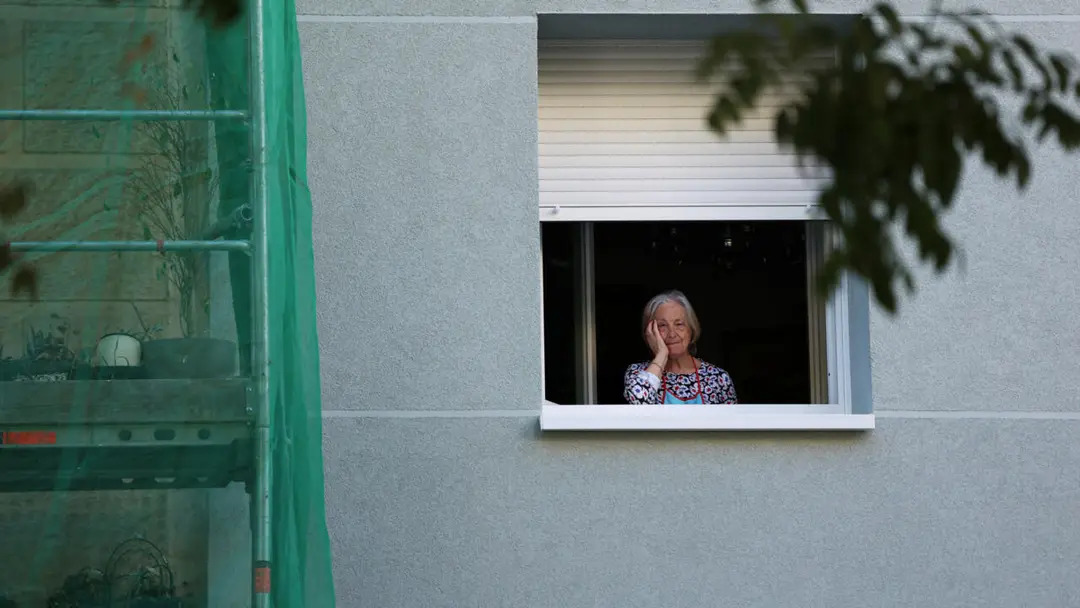
Evicted 87-year-old Spanish pensioner to return home after deal
The eviction of 87-year-old Maricarmen Abascal in Madrid, which triggered nationwide protests, has ended in a deal with the property's owners, her lawyer Beatriz Duro said on Monday. Abascal can return to her Retiro apartment after leaving hospital, where she is treated for exhaustion. Supporters say the firm raised her rent 275 percent to 2,650 euros monthly after 70 years in the home. Prime Minister Pedro Sanchez's government presents a housing package to cabinet on Tuesday.
Source
France 24 · read the original report ↗
Desk check · compared with the source
What the desk checked (5)
- Maricarmen Abascal, 87, can return to her Madrid apartment after a deal with the property's owners. — Attributed to her lawyer Beatriz Duro, who said the agreement still needs to be signed.
- The real estate firm raised her monthly rent by 275 percent to 2,650 euros ($3,000). — Attributed in the source to 'supporters', not to official documentation.
- Around 100 tents have been set up in Puerta del Sol since Saturday night and tens of thousands have protested nationwide. — Figures appear in source as reporter description; no official crowd estimate cited.
- Average rental price reached 15.10 euros per square metre in August, nearly doubling in a decade. — Attributed to real estate portal Idealista; purchase figure attributed to official data.
- Spain is short of 700,000 homes. — Attributed to a Bank of Spain estimate based on the demand-construction gap.
Analysts’ view opinion
On the surface this is the story of one 87-year-old's home; strategically it is a marker of housing affordability becoming an internal-stability issue in a major European state. Roughly 100 tents in Madrid's Puerta del Sol and tens of thousands protesting nationwide suggest a movement that an individual settlement is unlikely to defuse. For a Sanchez government without a parliamentary majority, Tuesday's cabinet package is as much a test of governing capacity as of housing policy — especially after a similar bill was defeated earlier this year.
- The private deal resolves one case but not the structural demands on the street: a rent freeze, indefinite contracts and anti-eviction protections.
- With the Bank of Spain estimating a shortfall of 700,000 homes, this is substantially a supply problem that decrees cannot fix quickly, so grievance is likely to persist.
- The coalition's lack of a majority, and its dependence on Sumar and other parties, makes the legislative outcome uncertain and ties housing to government stability.
- The Catalan Tenants' Union rejecting a "sham decree", and Barcelona's linking of rents to overtourism, shows housing fusing with regional, tourism and migration policy debates.
- Protesters' anger at investment funds and capital creates a regulatory-risk signal that property firms and foreign investors in Spanish real estate will be weighing.
What to watch — Watch whether Tuesday's cabinet package contains genuine anti-eviction and rent-control measures and can find a parliamentary majority — if not, the Sol encampment could grow rather than fade.
The story itself notes the agreement is not yet signed, and it does not establish the package's contents, its chances in parliament, or how long the mobilisation will last.
Deep dive
Research brief · 8 facts · 6 dates · exam-readyThe brief
Context
Spain's long-running housing affordability crisis erupted into mass protest after the eviction last Wednesday of 87-year-old Maricarmen Abascal from the Madrid flat she had occupied for 70 years. The wheelchair-using pensioner was removed on a stretcher after the real estate firm owning the flat raised her rent by 275 percent to 2,650 euros a month, according to supporters. Tens of thousands protested nationwide and about 100 tents were pitched in Madrid's Puerta del Sol. Her lawyer said on Monday a deal with the owners will let her return home, as Prime Minister Pedro Sanchez's government prepares a housing package for cabinet.
Key facts
- Maricarmen Abascal, 87, was evicted last Wednesday from the Madrid apartment where she had lived for 70 years; she uses a wheelchair and was removed on a stretcher.
- Supporters say the real estate firm owning her flat raised the monthly rent by 275 percent to 2,650 euros ($3,000); she had always paid her rent.
- Lawyer Beatriz Duro said on Monday a deal was reached with the owners, with rent "similar to what she had been paying", allowing Abascal to return to her Retiro flat after hospital treatment for exhaustion.
- Around 100 tents have been set up in Madrid's Puerta del Sol square since Saturday night; tens of thousands have protested across Spain.
- About 2,000 protesters gathered in Barcelona on Monday night during a visit by Sanchez, demanding a rent freeze, indefinite contracts and anti-eviction measures.
- Average rental price in Spain has almost doubled over the past decade, reaching 15.10 euros per square metre in August (Idealista).
- Purchase prices stand at 2,355 euros per square metre, up more than 50 percent in a decade, according to official figures.
- The Bank of Spain estimates the country of around 50 million people is short of 700,000 homes, based on the demand-construction gap.
Timeline
- Last WednesdayMaricarmen Abascal, 87, is evicted from her Madrid apartment of 70 years, removed on a stretcher.
- Saturday night onwardsProtesters set up roughly 100 tents in Madrid's Puerta del Sol; tens of thousands protest across Spain.
- Sunday nightProtesters including 29-year-old Carlota camp overnight in Sol demanding people be put before investment funds.
- MondayLawyer Beatriz Duro announces a deal with the owners; around 2,000 protest in Barcelona during Sanchez's visit.
- TuesdaySanchez government to present a new housing package to cabinet.
- Earlier this yearA similar housing bill was defeated in parliament.
Who has a stake
- Maricarmen Abascal — The 87-year-old evictee, hospitalised for exhaustion, who can return to her Retiro flat at a rent similar to before if the deal is signed.
- Beatriz Duro (Abascal's lawyer) — Negotiated the deal, credits "social mobilisation" and hopes it changes the paradigm on housing.
- The real estate firm owning the apartment — Raised rent 275 percent to 2,650 euros; showed "goodwill" in settling, per Duro.
- Pedro Sanchez's Socialist government — Under popular pressure to pass a housing package; lacks a parliamentary majority.
- Sumar and other parties — Far-left junior coalition partner and other parties in talks needed to pass a housing law.
- Catalan Tenants' Union — Spokeswoman Carme Arcarazo rejects a "sham decree", demands rent freeze, indefinite contracts, anti-eviction rules.
- Spanish tenants and young renters — Face nearly doubled rents; teacher Laura Requena, 32, says independence without flat-sharing is impossible.
Why it matters
One eviction has turned a chronic affordability problem into Spain's central political issue, showing how a single human story can force policy movement where statistics did not. The outcome — a negotiated return at the old rent — was credited to street mobilisation rather than law, underlining the weakness of tenant protections. With the coalition short of a majority and a similar bill already defeated, whether protest translates into durable legislation remains open.
UPSC angle
Prelims pointers
- Maricarmen Abascal, 87, evicted in Madrid's Retiro neighbourhood after 70 years; rent hiked 275 percent to 2,650 euros monthly.
- Puerta del Sol, Madrid: site of roughly 100 protest tents since Saturday night.
- Bank of Spain estimate: shortfall of 700,000 homes in a country of about 50 million people.
- Idealista data: average rent 15.10 euros per square metre in August, nearly double the level of a decade ago.
- Purchase price 2,355 euros per square metre, up over 50 percent in a decade (official figures).
- Spain's ruling coalition: Socialists with far-left junior partner Sumar, led by PM Pedro Sanchez.
Mains framing
Spain's housing crunch illustrates how supply shortfalls, financialised ownership and thin tenant protection combine to produce affordability shocks. The Bank of Spain puts the deficit at 700,000 homes; rents have almost doubled in a decade to 15.10 euros per square metre while purchase prices rose over 50 percent to 2,355 euros per square metre, with analysts citing scarce public housing and demand from tourism and immigration-linked population growth. The eviction of an 87-year-old tenant facing a 275 percent rent increase after 70 years exposed the absence of legal safeguards: her reprieve came from a negotiated deal credited to mass mobilisation, not statute. Protesters and the Catalan Tenants' Union demand a rent freeze, indefinite contracts and anti-eviction measures, rejecting "sticking plasters"; the government plans a cabinet package but lacks a parliamentary majority and saw a similar bill defeated earlier this year. A durable way forward would pair expanded public and rental housing supply with predictable rent regulation and procedural protections for vulnerable tenants, while building the cross-party numbers any such law requires.
Key terms
- Puerta del Sol
- Emblematic central square in Madrid where protesters pitched about 100 tents from Saturday night.
- Sumar
- Far-left junior partner in Spain's coalition government, in talks with the Socialists on a housing law.
- Catalan Tenants' Union
- Tenant organisation demanding a rent freeze, indefinite contracts and anti-eviction measures; spokeswoman Carme Arcarazo.
- Idealista
- Spanish real estate portal whose data show average rent reaching 15.10 euros per square metre in August.
- Bank of Spain
- Central bank; estimates Spain is short 700,000 homes based on the demand-construction gap.
- Retiro
- Upmarket Madrid neighbourhood where Abascal's apartment is located.
Practice questions
- Spain's housing protests show that individual cases can shift policy debates faster than aggregate data. Discuss with reference to the eviction of Maricarmen Abascal and its aftermath.
- Examine the causes of Spain's rental affordability crisis as identified in the source, and evaluate the measures demanded by tenant groups.
- "Minority governments struggle to legislate on contentious economic rights." Analyse this in the context of Spain's defeated housing bill and the new cabinet package.
Grounded only in the source report — figures and dates are the source's, not inferred.